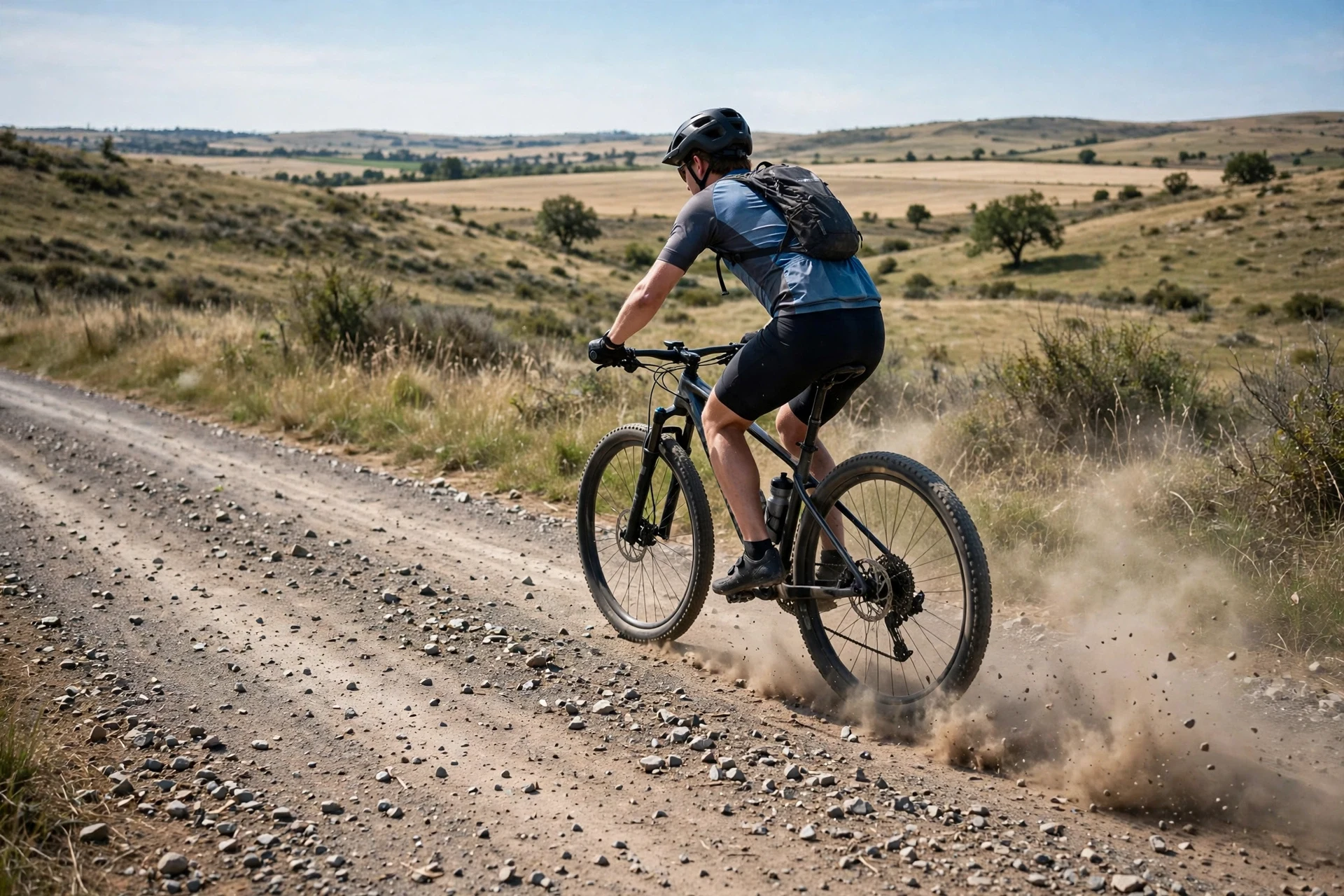
A bike helmet for riding on gravel roads should fit snugly, have good coverage at the back and sides, and stay in place when the bike rattles over loose stones. In general terms, a well-fitting mountain bike or gravel helmet with a secure retention system and a visor or glasses to keep dust out of your eyes is the right choice for gravel riding. Gravel roads are a different world from smooth tarmac: the surface moves under your wheels, the bike vibrates constantly, and a loose stone or a soft patch can catch you out with little warning. A fall on gravel often means landing on hard, sharp stones, so head protection matters even more than usual.
What Makes Gravel Roads Different for Helmets?
Gravel roads are loose and uneven, which means the bike is always moving slightly beneath you. The front wheel can slip on a patch of deep gravel, the back wheel can slide on a corner, and the constant vibration shakes the bike and everything on it, including your helmet. A helmet that fits loosely will bounce and shift with every bump, and it may end up out of position just when you need it.
Falls on gravel are also different. On tarmac you tend to slide, but on gravel you can land on sharp stones that dig in, and the loose surface can throw you sideways. That makes coverage important: a helmet that covers the back and sides of the head well gives more protection in the kinds of falls gravel riding produces. In general terms, a helmet that stays put and covers well is worth more on gravel than the lightest racing helmet.
Which Type of Helmet Is Best for Gravel Roads?
A mountain bike helmet is often the best choice for gravel roads, because it is made for rough, loose surfaces. It usually has more coverage at the back and sides than a road helmet, a visor to keep sun and dust out of your eyes, and a retention system that holds it firmly in place. Many mountain bike helmets also have better ventilation arranged to work at slower speeds, which suits gravel riding.
A gravel-specific helmet is another good option, and it sits between a road helmet and a mountain bike helmet: lighter and better ventilated than a trail helmet, but with more coverage than a pure road helmet. A standard road helmet can work too, as long as it fits snugly and stays put, but its higher cut at the back gives less protection in a fall. If you want to understand one of the safety technologies used in modern helmets, reading about what MIPS is for helmets is a useful starting point, though fit and coverage matter most on gravel.
How Should a Gravel Helmet Fit?
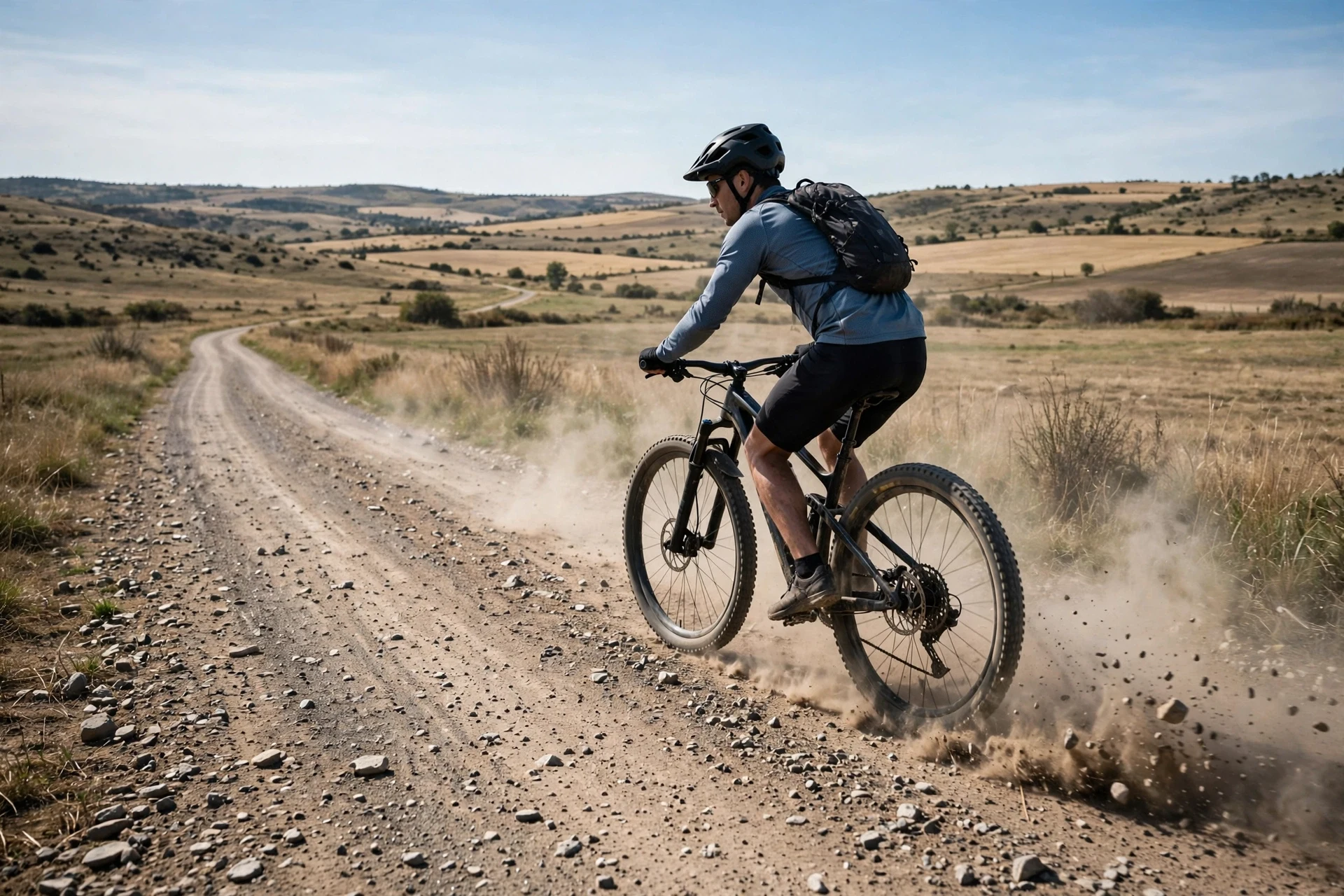
A gravel helmet should fit snugly all round, sit level just above your eyebrows, and stay in place when you shake your head. Fasten the chin strap so only one or two fingers fit underneath, and tighten the retention dial until the cradle feels firm all round. Then test it properly: shake your head from side to side and nod up and down, and the helmet should move with your head rather than lagging behind it.
It is worth testing the fit on the bike as well as standing still, because the riding position on gravel is often more upright than on the road, and that changes how the helmet sits. Ride over a rough patch and notice whether the helmet bounces or shifts. If it does, tighten the dial, adjust the straps, or try thicker fit pads. A helmet that needs constant adjustment on the ride is not fitting properly.
Do I Need a Visor on Gravel Roads?
A visor is very useful on gravel roads, because it keeps sun, dust, and stones kicked up by your own wheels or by other riders out of your eyes. Gravel dust hangs in the air behind a group of riders, and without a visor or glasses it gets straight into your eyes. A visor also helps when the sun is low, by shading your eyes on open, exposed roads.
If your helmet does not have a visor, good cycling glasses are a sensible alternative, and many gravel riders use both. Glasses keep dust out from the sides as well as the front, and they protect your eyes if a stone is kicked up. Whichever you choose, make sure the visor or glasses do not push the helmet out of position, and test them together before a long ride.
How Do I Keep Dust Out of My Helmet?
Dust is part of gravel riding, and it will get into your helmet no matter what you do. A bandana or thin skull cap under the helmet can help keep dust out of your hair and off the pads, and it also soaks up sweat on a hot day. Just make sure the layer is thin enough that it does not change the fit of the helmet.
After a dusty ride, shake the helmet out and wipe the inside with a damp cloth, and wash the pads if they come out. Dust left in the pads can irritate your skin and wear the pads out faster. In general terms, a helmet that is cleaned after dusty rides stays more comfortable and lasts longer, and it is much nicer to put on next time.
What Else Should I Carry for Gravel Riding?
Gravel riding often takes you far from help, so it is worth carrying a little more than you would on the road. A spare inner tube, a pump, and a multi-tool are the basics, because a puncture on a gravel road is common and there may be no shop nearby. Water matters too, because gravel roads are often exposed and there may be nowhere to fill up.
A small first aid kit is also sensible, since a fall on sharp stones can cause cuts and grazes even with a helmet on. Tell someone where you are going and when you expect to be back, especially if you are riding alone. The helmet protects your head, but the rest of your planning protects everything else.
Can I use a road helmet on gravel roads?
Yes, you can, as long as it fits snugly and stays in place. A mountain bike or gravel helmet gives more coverage at the back and sides, which is useful on loose surfaces, but a well-fitting road helmet is far better than no helmet.
Why does my helmet bounce on gravel roads?
It usually bounces because the fit is too loose or the retention dial is not tight enough. Tighten the dial, adjust the straps, and try thicker pads, and if it still bounces, the shell may be too big.
Should I wear glasses as well as a helmet on gravel?
Yes, glasses are a good idea. They keep dust and stones out of your eyes, which a helmet alone cannot do, and they help when the sun is low on open gravel roads.

Olivia
Writer at Helmet Today, covering helmet reviews, fit and riding safety.