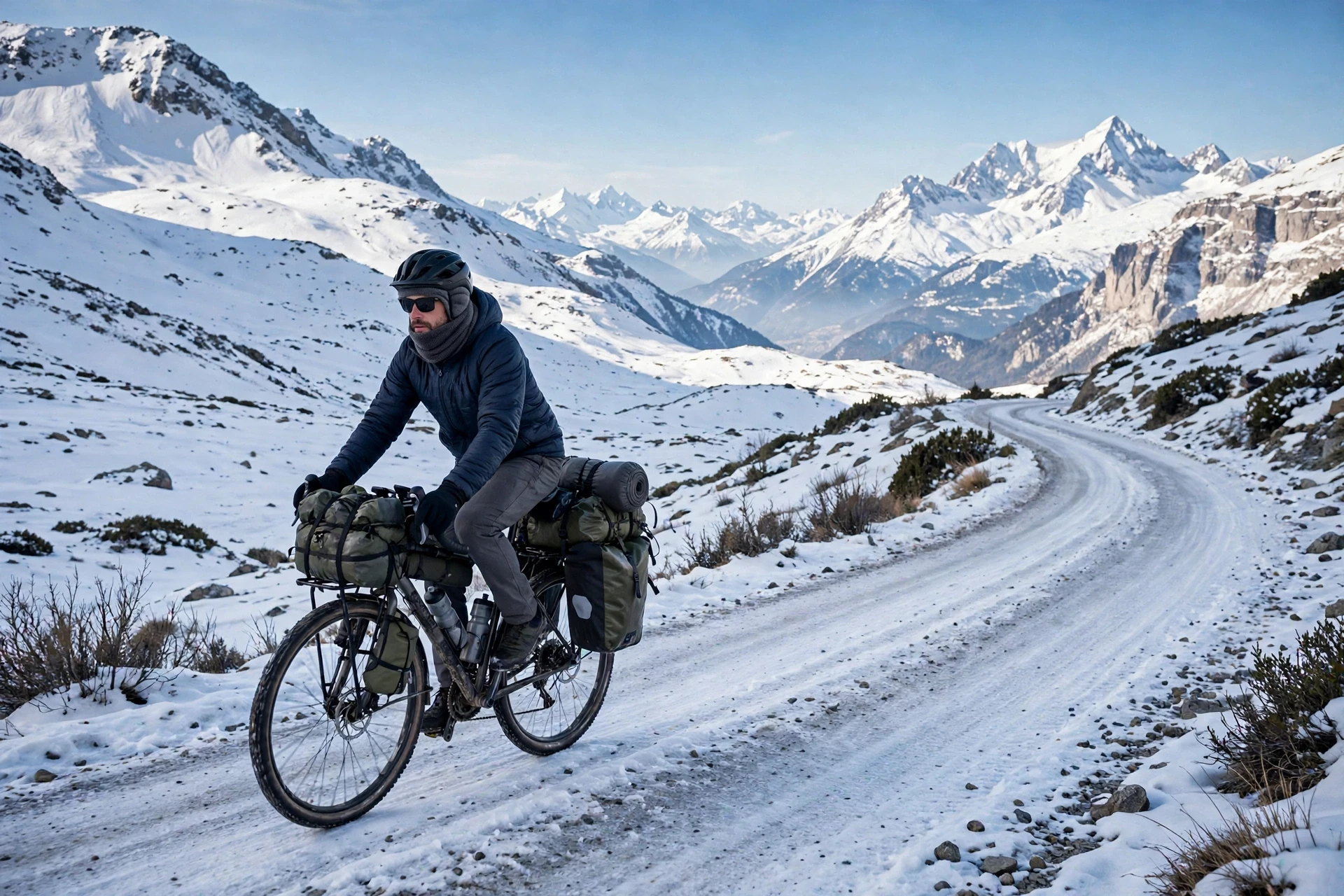
A bike helmet for touring in cold climates is a cycling helmet chosen for long rides in low temperatures, usually with fewer vents, better coverage over the ears and back of the head, and enough room underneath for a warm liner or skull cap. Cold-weather touring puts different demands on a helmet than summer riding: the rider moves more slowly, the air is cold and often wet, and a ride can last for hours, so warmth and weather protection matter as much as impact protection.
What Makes Cold-Weather Touring Different for a Cyclist?
Bike touring in cold climates usually means long days in the saddle at a steady pace, often on quiet roads or trails, with the rider carrying luggage and stopping in small towns along the way. The weather can change quickly, and a rider may face cold wind, rain, sleet, or snow in a single day. Unlike a short training ride, there is no warm car waiting at the end of an hour, so staying comfortable for five or six hours matters a great deal.
The head loses heat quickly in cold air, especially when the rider is moving and wind is flowing across it. A helmet designed for hot weather has large vents that let air flow over the head, which is exactly what you do not want on a freezing morning. In general terms, the slower pace of touring also means the rider generates less body heat than a fast racer, so the helmet needs to hold warmth in rather than dump it out.
How Does Cold Weather Change What You Need From a Helmet?
In cold weather, a helmet needs to protect the head from impact while also keeping it warm and dry. That usually means a shell with smaller vents or vents that can be closed, and a design that covers more of the head, including the ears and the back of the neck. Many riders find that a standard summer road helmet leaves the ears exposed to wind, which can be painful on a long cold descent.
The fit matters too. A cold-weather touring helmet should leave room for a thin thermal skull cap or balaclava underneath without becoming tight or unstable. If the helmet is already snug with no extra layer, adding a liner will push it up and make it sit too high, which reduces protection. If you want to understand one of the safety technologies used in modern helmets, reading about what MIPS is for helmets is a good place to start, since many touring helmets now offer it as an option.
What Kind of Helmet Works Best for Cold-Climate Touring?
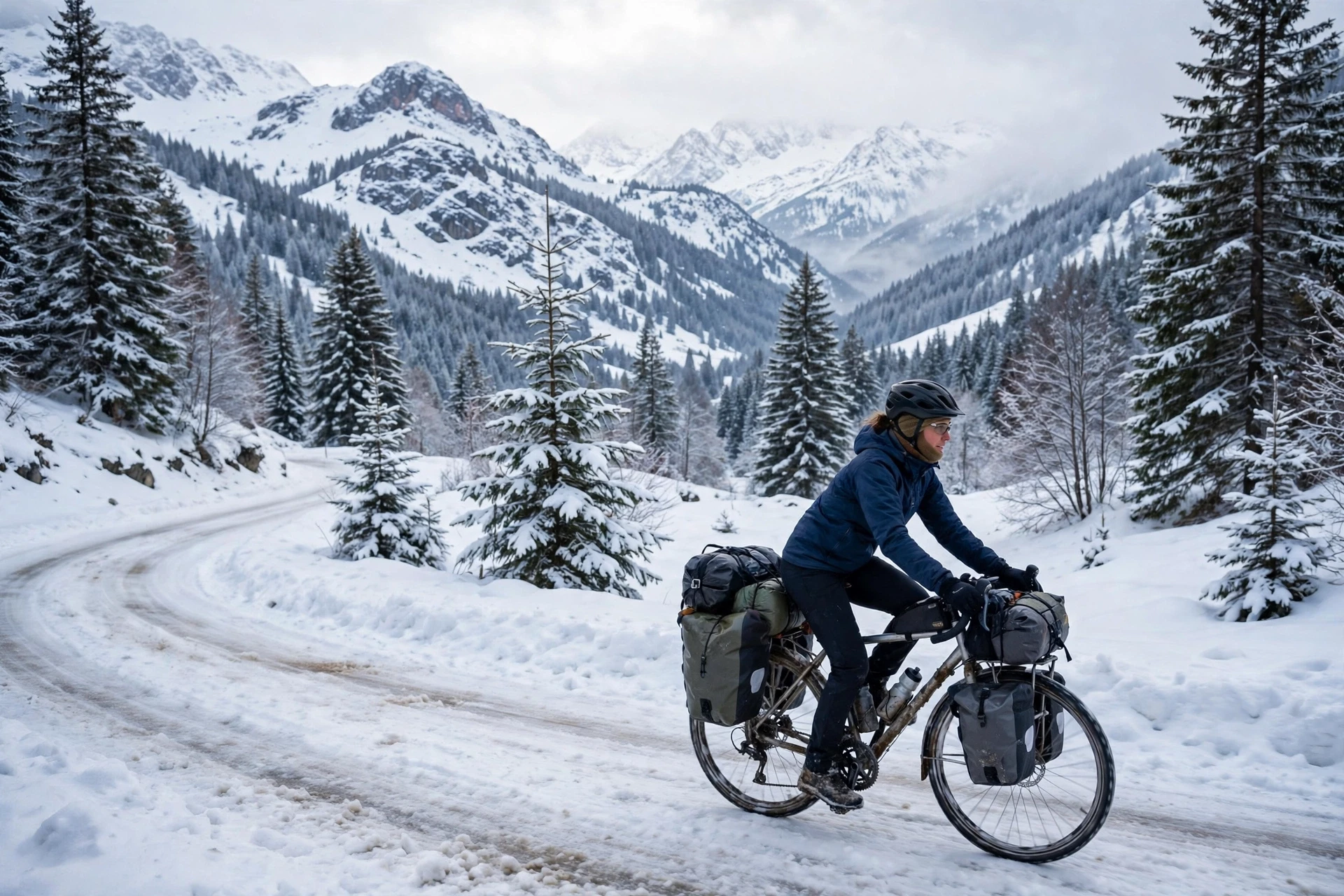
For cold-climate touring, many riders choose a helmet with a solid or mostly solid shell and adjustable vents, sometimes called an aero or urban-style helmet, because it blocks wind better than a heavily vented road helmet. Some commuter and touring helmets come with built-in ear covers or a rain cover, which can make a real difference on a wet, cold day. A helmet with a small visor can also help keep rain and snow out of the eyes.
Mountain bike helmets are another option worth considering, since they often have more coverage at the back of the head and a visor as standard. In general terms, the best helmet is the one that fits well, covers the ears and back of the head, and lets you adjust ventilation as the day warms up or the weather changes. Weight matters less on a tour than it does in a race, so a slightly heavier helmet with better coverage is usually a good trade.
How Should You Layer Under a Helmet in the Cold?
Layering under a helmet starts with a thin thermal skull cap that covers the ears, which is often enough on its own in moderately cold weather. In very cold conditions, a balaclava that covers the neck and lower face can be worn under the helmet, though it should be thin enough not to change the fit. The key is to keep the layers close-fitting so the helmet still sits level and stable on the head.
It is worth trying the helmet on with the liner before the trip, not on the first morning of the tour. Adjust the fit system and straps with the liner in place, and check that the helmet does not rock forwards or backwards. A helmet that fits well with a liner will stay put in wind and on rough roads, while a helmet that is too tight over a balaclava can cause headaches on a long day. In general terms, comfort over many hours matters more than anything else on a tour.
What About Visibility and Ventilation on Winter Tours?
Winter days are short, and touring riders often ride in low light, fog, or falling snow, so visibility matters for safety. A helmet in a bright colour, or one with reflective details, helps drivers see the rider from a distance. Some riders add a small light to the helmet or to the bike, which is useful on dark mornings and in tunnels. A bright helmet also stands out against snow, which can help if the rider needs to be found.
Ventilation still matters in the cold, because a rider who works hard on a climb will sweat, and sweat that cools inside the helmet can make the head cold. A helmet with adjustable vents lets the rider open them on climbs and close them on descents, which keeps the temperature more even. In general terms, the goal is to stay warm without getting soaked in sweat, and adjustable ventilation is the simplest way to manage that.
When Should You Replace a Cold-Climate Touring Helmet?
A cold-climate touring helmet should be replaced after a crash or a hard impact, even if it looks fine from the outside. The liner inside a helmet can be damaged by a heavy knock without any visible sign on the shell, and a helmet that has already absorbed an impact may not protect as well the next time. For that reason, a helmet that has been in a crash should be retired rather than kept in use.
Age and wear matter as well. Repeated exposure to cold, wet weather, sun, and sweat can wear down the straps, the padding, and the shell over time, and a helmet that has been used for many seasons may no longer fit as snugly as it once did. Checking the helmet before a tour is a good habit: look for cracks, frayed straps, worn padding, or a shell that feels brittle. If anything seems wrong, or if the helmet no longer fits well with a liner underneath, it is time to replace it before the next cold ride.
Do I need a special helmet for bike touring in cold climates?
Not always, but a helmet with fewer vents, more coverage, and room for a warm liner is much more comfortable on long cold rides than a heavily vented summer road helmet.
Can I wear a balaclava under my bike helmet?
Yes, in general terms a thin balaclava or skull cap works well under a helmet in cold weather, as long as it is thin enough that the helmet still fits level and snugly.
Should I close the vents on my helmet in winter?
It helps on cold descents and in wind, but it is worth opening them on climbs so sweat can escape. A helmet with adjustable vents lets you change this as conditions change.

Olivia
Writer at Helmet Today, covering helmet reviews, fit and riding safety.