A bike helmet for hill climbing should be light, well ventilated, and snug enough to stay in place on steep, slow climbs. In general terms, a light road helmet with good airflow and a secure retention system is the best choice, because climbing is hot, sweaty work and a heavy or poorly ventilated helmet will make it harder. Hill climbing is one of the hardest things you can do on a bike: you are working at full effort, moving slowly, and there is very little wind to cool you down. Your head gets hot quickly, sweat runs into your eyes, and every extra gram feels heavier. The right helmet helps with all of that, while still protecting you on the way up and the way down.
Why Does Hill Climbing Need a Different Helmet?
Hill climbing is slow and steep, which changes what you need from a helmet. At low speed there is almost no airflow, so a helmet with poor ventilation will trap heat and leave you sweating heavily within minutes. Sweat running into your eyes stings and blurs your vision, and a hot head makes the whole climb feel harder than it needs to be.
Weight matters too. On a climb, you are lifting your whole body and bike against gravity, and a heavy helmet adds to that load, even if only by a small amount. The position is different as well: on a steep climb you are often sitting upright and looking up the road, which can push a helmet with a long tail or a big visor out of position. A light helmet with good vents and a shape that suits an upright position works best.
What Makes a Good Climbing Helmet?
A good climbing helmet is light, with large vents that let air flow over your head even at low speed. The vents should be placed to catch what little air there is, and the internal channels should guide that air across your scalp rather than letting it sit still. A helmet with a sweat pad at the forehead, or a sweat gutter that directs sweat away from your eyes, is a real help on a long climb.
Fit matters as much as ventilation. The helmet should sit snugly and stay put when you stand up on the pedals and rock the bike from side to side, because a helmet that shifts with every pedal stroke is distracting. If you want to understand one of the safety technologies used in modern helmets, reading about what MIPS is for helmets is a useful starting point, though weight, vents, and fit are what you will notice most on a climb.
How Should a Climbing Helmet Fit?
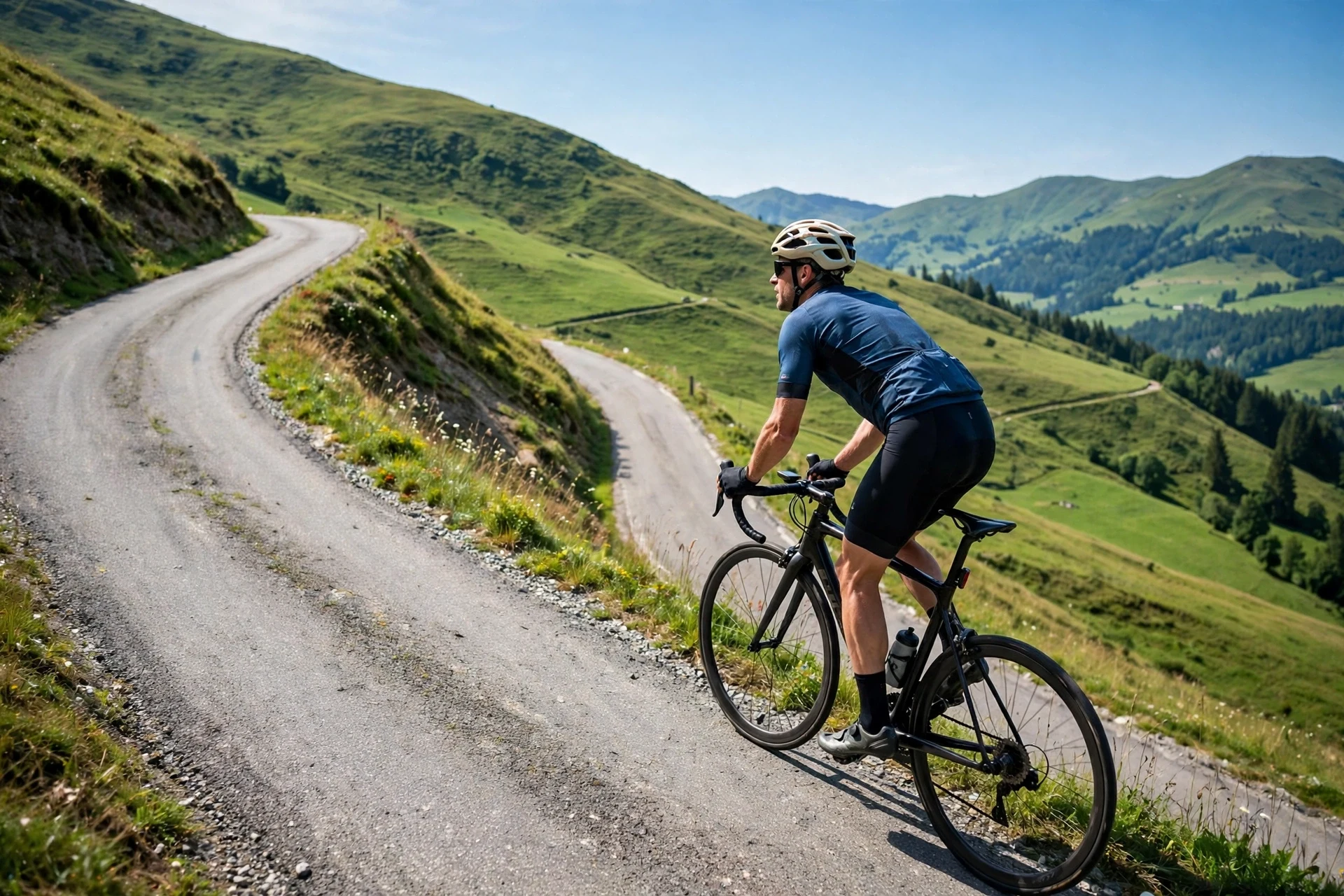
A climbing helmet should fit snugly all round, sit level just above your eyebrows, and stay in place when you shake your head. Fasten the chin strap so only one or two fingers fit underneath, and tighten the retention dial until the cradle feels firm all round. Test the fit in the climbing position, sitting upright and looking up, because that is how you will actually ride.
Check the helmet with your sunglasses on as well, because the arms of the glasses sit between the helmet and your head and can change the fit. Some helmets have a place to dock glasses in the vents when you take them off, which is handy on a climb when the light changes under trees. In general terms, the helmet should feel like it is part of your head, not something sitting on top of it.
Should I Choose a Light Helmet Over a Protective One?
You should not have to choose, because a good climbing helmet is both light and protective. Modern helmets are made to protect your head while weighing very little, and a light helmet that fits well will protect you just as well as a heavier one in the kinds of falls that happen on a climb. The danger is in choosing a helmet that is light because it has very little coverage, or one that is so minimal it leaves the back and sides of your head exposed.
The safest approach is to pick the lightest helmet that still covers your head properly and fits snugly. Do not be tempted by a helmet that is feather-light but sits high on your head, or one that has huge vents with very little material between them. Protection comes first, and lightness is a bonus, not a trade-off worth making.
How Do I Deal With Sweat While Climbing?
Sweat is unavoidable on a climb, but you can manage it. A thin skull cap or sweatband under the helmet soaks up sweat before it runs into your eyes, and it also keeps the pads cleaner. Make sure the layer is thin enough that it does not change the fit of the helmet, and choose a material that wicks sweat away rather than cotton, which holds it and gets heavy.
It also helps to keep the helmet vents clear and to tilt your head slightly from time to time, so air reaches the sweat pads. After the climb, take the helmet off at the top and let it air out, and wash the pads regularly if they come out. In general terms, a helmet that is cleaned and dried after sweaty rides stays more comfortable and smells much better.
Do I Need a Different Helmet for the Descent?
In general terms, no, the helmet you climb in is the helmet you descend in, and that is how it should be. The descent is faster and riskier than the climb, so you need the protection more than ever, and stopping at the top to change helmets is not practical. A good climbing helmet is designed to work at high speed as well as low speed, with vents that still flow air and a shape that stays stable in the wind.
Before you start the descent, do a quick check: tighten the retention dial, make sure the chin strap is fastened, and check that your glasses are secure. A helmet that felt fine on the climb can feel loose once you are moving fast, so a quick check at the top is worth the few seconds it takes. Then enjoy the reward for your climb, knowing your helmet is ready for the way down.
What is the best helmet for hill climbing?
A light road helmet with large vents and a snug, secure fit is best. It keeps your head cool at low speed, stays in place when you stand on the pedals, and still protects you on the descent.
Will a ventilated helmet keep me cool on a climb?
Yes, in general terms, good vents make a real difference, even at low speed. They let air flow over your head and carry heat away, which keeps you cooler and reduces sweat running into your eyes.
Can I wear a cap under my helmet when climbing?
Yes, a thin cycling cap or skull cap can help with sweat and sun. Just make sure it is thin enough that the helmet still fits snugly and sits level.

Olivia
Writer at Helmet Today, covering helmet reviews, fit and riding safety.