To clean a helmet after riding through insects, wipe the shell and visor gently with a soft cloth dampened in lukewarm water with a little mild soap, let any dried insects soften before wiping, and never scrape them off dry, because dry scraping can scratch the shell and visor. Insects are a normal part of summer riding, and they look worse than they are. With a gentle approach, they come off easily and leave no damage behind.
Why Do Insects Stick to a Helmet?
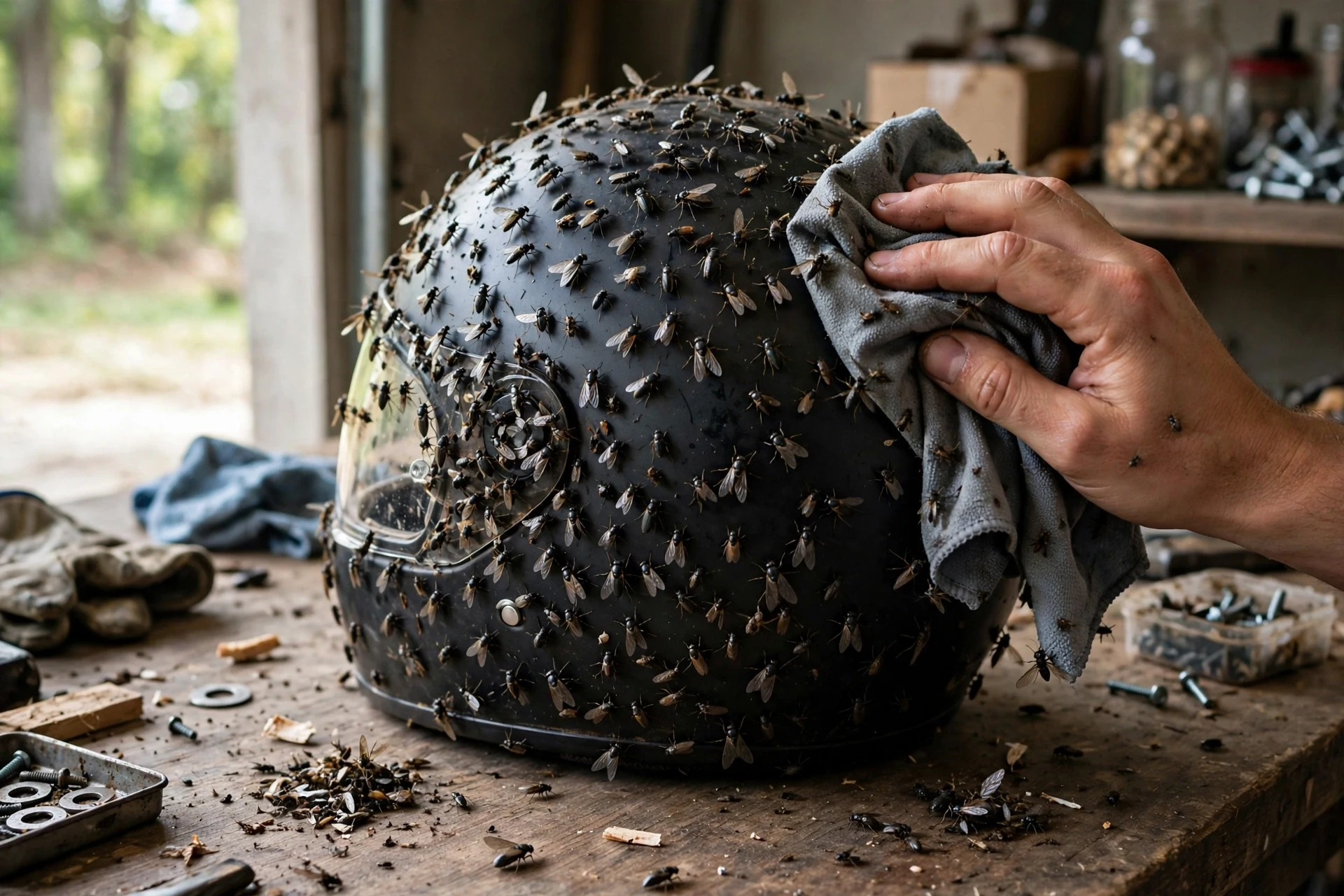
Insects stick to a helmet because they hit the shell at speed, and their bodies break apart on impact. The sticky remains dry quickly in the wind, and they bond to the surface of the shell and the visor. The faster you ride, the harder the insects hit, and the more firmly they stick. A warm summer evening, when insects are most active, can leave a helmet covered in a matter of minutes.
The worst of the mess usually lands on the front of the helmet, on the visor, and around the vents. The visor is the most important part to clean, because insects on the visor can block your vision, especially when the sun shines through them or when you ride into a low evening light. The vents can also become clogged, which reduces airflow and makes the helmet hotter to wear.
What Should You Do First After Riding Through Insects?
The first thing to do after riding through insects is to let the remains soften before you touch them. Do not wipe the helmet straight away with a dry cloth, because dry insect remains are hard and gritty, and wiping them can scratch the shell and the visor. Instead, lay a damp cloth over the worst areas for a few minutes, or hold a damp cloth against the shell to soften the remains.
Warm water works best for softening insects, but do not use hot water, which can damage the helmet. Lukewarm water with a little mild soap is enough. Once the remains have softened, they will wipe away easily with a gentle touch. If some insects are still stuck, lay the damp cloth over them for a few more minutes rather than scrubbing harder.
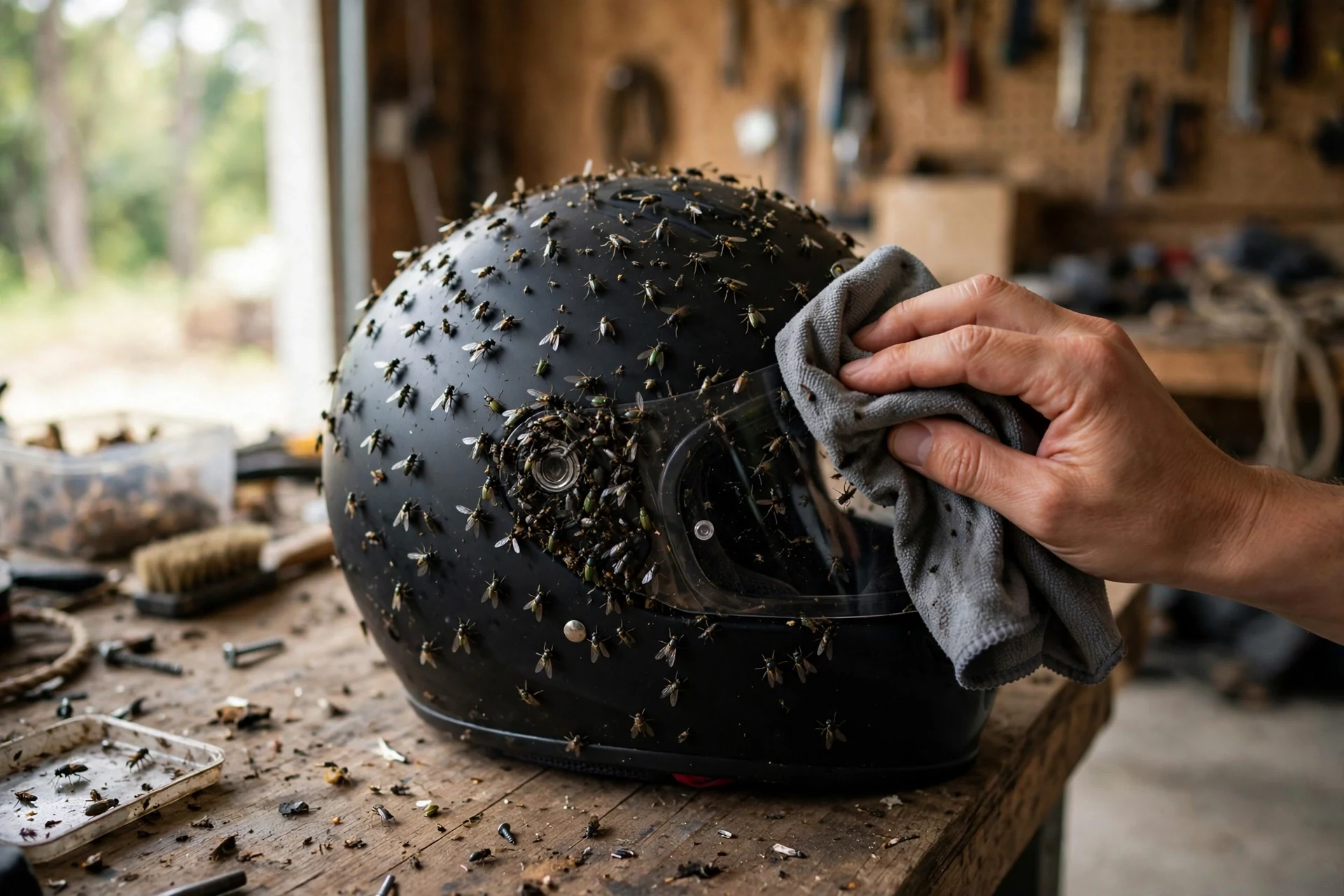
How Do You Clean Insects Off the Shell?
To clean insects off the shell, use a soft cloth dampened in lukewarm water with a small amount of mild soap. Wipe gently in one direction, lifting the softened remains off the surface rather than rubbing them around. Rinse the cloth often, so you are not dragging grit across the shell, and work in small sections until the whole helmet is clean.
For stubborn spots, lay a damp, soapy cloth over the area for five or ten minutes, then wipe again. The extra soaking time usually loosens even the driest remains. If a mark is left behind after the insect is gone, a gentle wipe with the soapy cloth is usually enough to remove it. Avoid using any abrasive cloth, sponge, or cleaner, because these can scratch the shell and dull the finish.
Once the shell is clean, wipe it with a cloth dampened in plain water to remove the soap, then dry it with a soft, clean towel. Check the whole helmet in good light, because insects can hide in the joins around the visor and the vents. A clean shell not only looks better, it also makes it easier to spot cracks or damage when you check the helmet.
How Do You Clean Insects Off the Visor?
Cleaning insects off the visor needs extra care, because the visor is the part of the helmet that affects your vision. A scratch on the visor can catch the light and distract you, so the same rule applies: soften first, then wipe gently. Lay a damp cloth over the visor for a few minutes to soften the insects, then wipe with a soft, clean cloth dampened in mild soapy water.
Use a microfibre cloth if you have one, because it is soft and will not scratch the visor. Wipe in straight lines, not circles, and rinse the cloth often. If the visor is removable, taking it off the helmet makes the job easier, because you can clean both sides without the helmet getting in the way. Check the maker’s instructions for how to remove it safely.
Never use a paper towel, a rough cloth, or a glass cleaner on a visor. Paper towels can scratch, and glass cleaners may contain chemicals that damage the visor’s coating. Mild soap and lukewarm water are enough, followed by air drying or a gentle pat with a soft towel. If the visor is badly scratched, it may need replacing, because a scratched visor can affect your vision in bright sunlight or at night.
What About the Vents and the Liner?
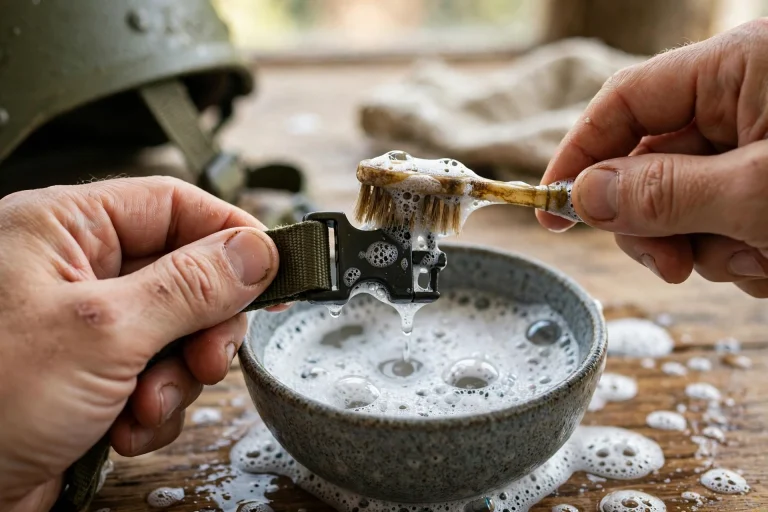
Insects often find their way into the vents, and they can also get inside the helmet if a vent is large. To clean the vents, use a soft brush, such as an old toothbrush, to loosen the remains, then wipe with a damp cloth. Work gently, and do not push anything deep into the vent, because the foam liner sits just behind it.
If an insect has got inside the helmet, take out the removable pads and check the liner. Wipe the inside of the shell with a damp cloth, and wash the pads by hand in lukewarm water with mild soap if they are dirty. Let everything air dry completely before putting the helmet back together. If you want to learn more about the safety features inside a helmet, reading about what MIPS is for helmets is a good idea while the helmet dries.
It is also worth checking the straps, because insects can get caught in the webbing and the buckle. A quick wipe with a soapy cloth, followed by a rinse with a clean damp cloth, is enough. Let the straps dry fully before the next ride, since damp straps can feel uncomfortable and may develop a smell if left wet.
How Can You Prevent Insect Build-Up?
Preventing insect build-up starts with cleaning the helmet soon after a ride. The longer insects stay on the shell, the harder they are to remove, so a quick wipe after a summer ride is the best habit you can build. Keep a soft cloth and a small bottle of water in your garage or by the door, so cleaning takes only a minute.
Finally, consider the time of day you ride. Insects are most active at dawn and dusk, especially near water and fields, so a ride at midday will usually leave fewer insects on the helmet. You cannot always choose when you ride, but knowing when insects are worst helps you plan a quick clean afterwards. With a gentle routine, insects become a minor inconvenience rather than a cleaning problem.
Can I scrape insects off my helmet with my fingernail?
No, scraping dry insects can scratch the shell and visor. Soften them first with a damp cloth, then wipe them away gently with mild soapy water.
What cleaner is safe for removing insects from a helmet?
Mild soap in lukewarm water is safe and effective. Avoid harsh solvents, glass cleaners, and abrasive sponges, which can damage the shell and the visor coating.
How do I clean insects out of helmet vents?
Use a soft brush, such as an old toothbrush, to loosen them, then wipe with a damp cloth. Do not poke anything sharp into the vents, as the foam liner sits just behind them.

Olivia
Writer at Helmet Today, covering helmet reviews, fit and riding safety.