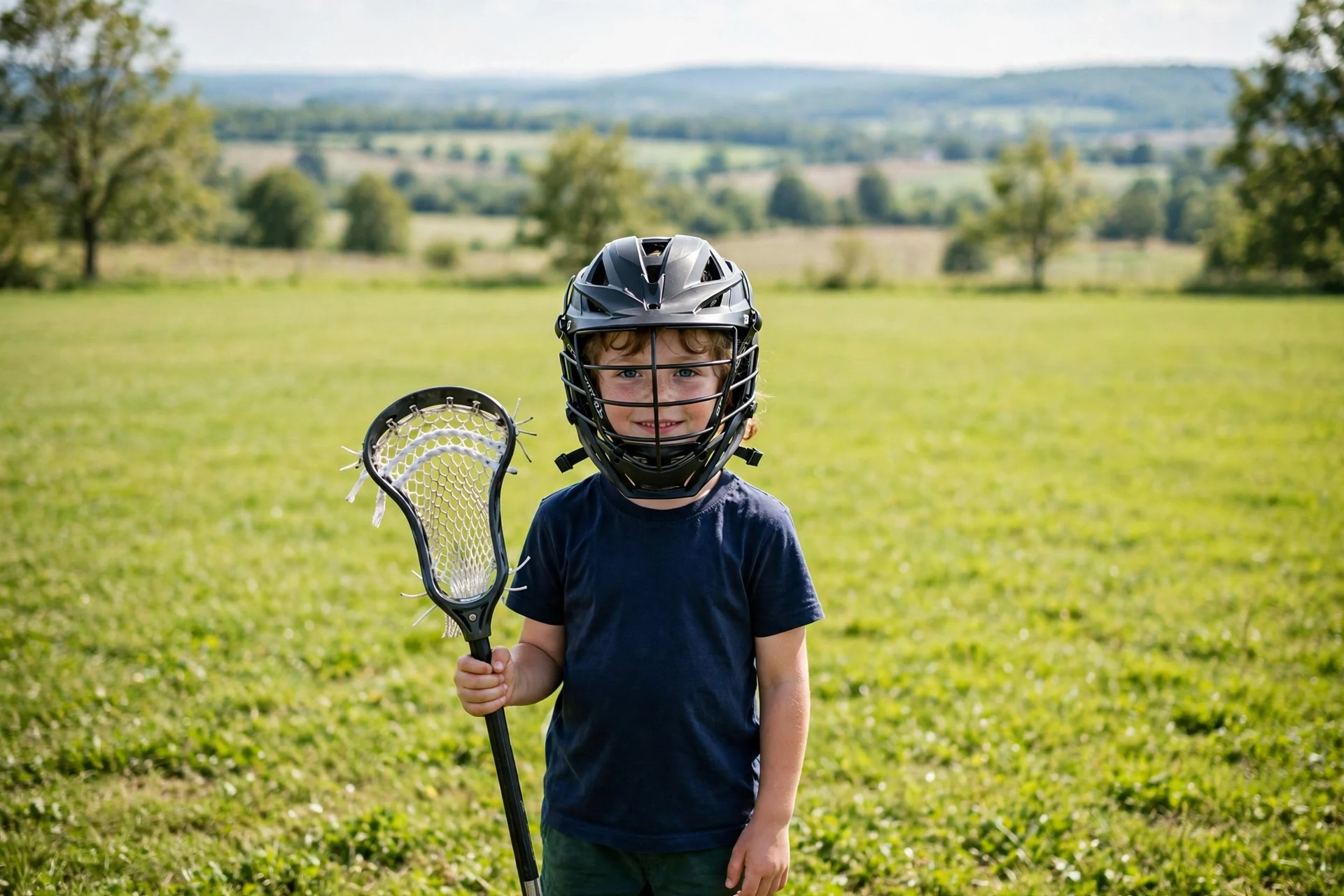
A kids helmet for lacrosse beginners is a protective helmet made for young players who are just starting lacrosse. It covers the whole head and includes a face mask, and it is designed to protect against sticks, balls, and falls on the field. For a beginner, the helmet is essential kit, because lacrosse involves a hard ball and long sticks moving quickly, and new players are still learning to control both. A helmet that fits well lets a young player focus on learning the game instead of worrying about getting hurt.
What Does a Kids Lacrosse Helmet Do?
A lacrosse helmet protects the head from the kinds of knocks that are common in the sport. A ball can travel fast even in a youth game, and sticks swing close to the head during passing, catching, and checking. The helmet’s hard shell and inner padding work together to spread out and soften the force of these impacts. In general terms, no helmet can remove all risk, but a helmet reduces the chance that an ordinary knock on the field turns into a serious head injury.
For beginners, the protection matters even more, because new players are still learning where the ball and the sticks are going. They may turn into a pass they did not expect, or hold their stick in a way that leaves the head exposed. A good beginner helmet is built to cope with these everyday knocks, and it should stay in place through a full game or practice session without needing constant adjustment.
What Should a Beginner’s Lacrosse Helmet Cover?
A beginner’s lacrosse helmet should cover the top, sides, and back of the head, sitting level so the forehead is protected without the helmet sliding down over the eyes. The face mask should cover the face fully, with bars that protect the eyes, nose, and teeth while still letting the player see the ball and other players clearly. For a child who is just starting, full face coverage is the sensible choice, because beginners are more likely to be hit by a ball or a stick they did not see coming.
The helmet should also protect the throat and the back of the neck area, since a ball or a stick can reach there during play. If you want to understand one of the safety technologies used in modern helmets, reading about what MIPS is for helmets is a good place to start, though not every kids lacrosse helmet uses that system. Checking that the helmet is made for lacrosse, rather than for another sport, is also important, because each sport’s helmet is built for different kinds of impact.
How Should a Kids Lacrosse Helmet Fit?
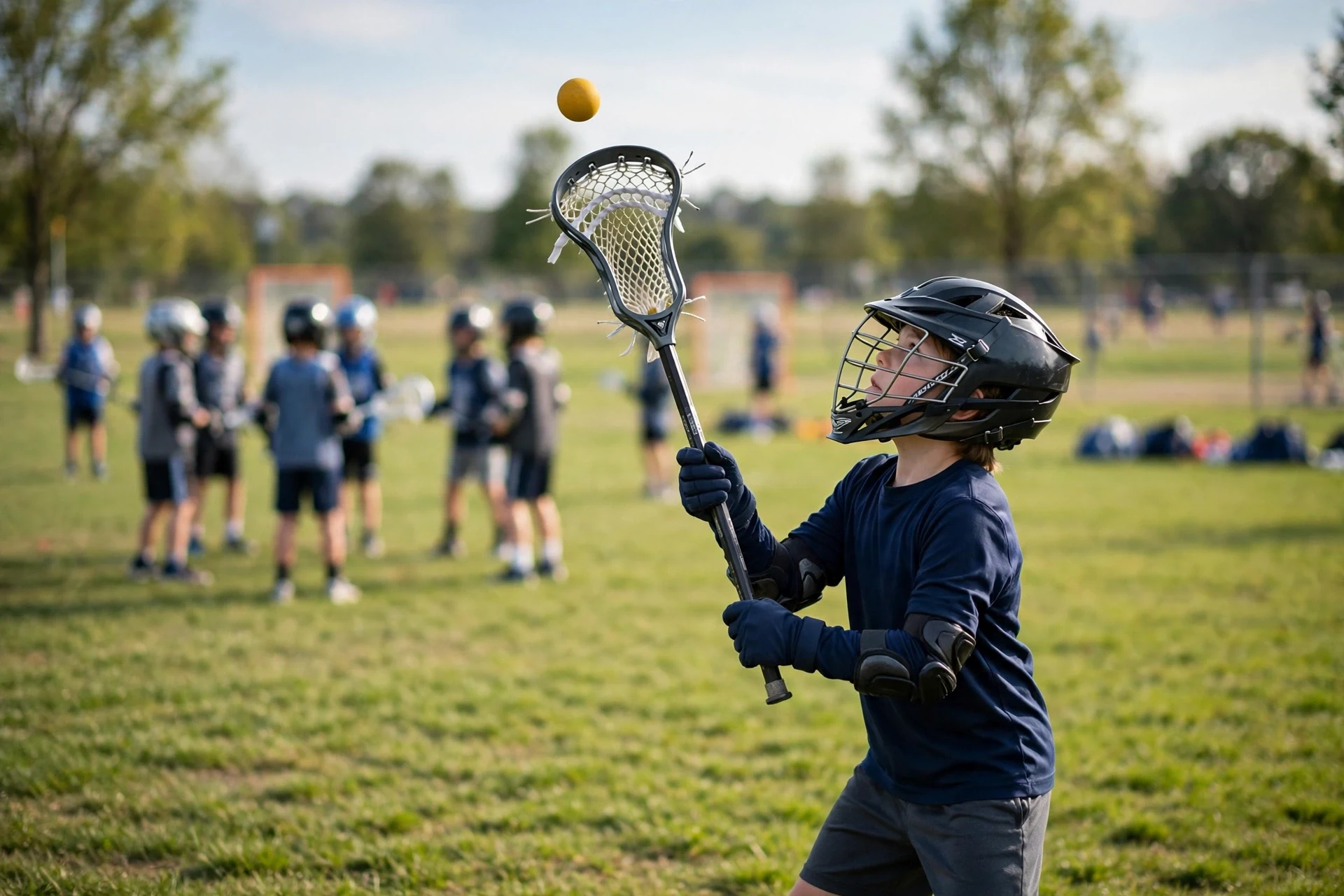
A kids lacrosse helmet should fit snugly all round the head, with no pressure points and no wobbling when the child shakes their head from side to side. It should sit level, covering the forehead, and the back should sit low enough to protect the back of the head. If the helmet can be rocked forwards or backwards easily, it is probably too loose, and it may shift during a game, which is when it is needed most.
The chin strap should be fastened snugly before the child steps onto the field, and the face mask should sit close to the face without pressing on the nose or chin. Many kids helmets can be adjusted in size, which helps as the child grows, but a helmet that is bought too big in the hope it will last longer is a poor choice, because a loose helmet protects less well. In general terms, it is better to buy a helmet that fits now and replace it later than to buy one the child has to grow into.
What Features Matter for a First Lacrosse Helmet?
For a first lacrosse helmet, the most important features are a comfortable fit, a sturdy face mask, and padding that stays in place. Look for padding that feels even all round the head, with no thin spots, and for a shell that feels solid rather than flimsy. Vents are useful because lacrosse is a warm, active sport played outdoors, and a helmet that lets heat out is more comfortable, which means the child is more likely to keep it on.
Adjustability is worth having in a beginner helmet, since kids grow quickly and a helmet with adjustable sizing can be fine-tuned as the head grows. The fastenings should be easy to use, so the helmet can be put on and taken off without a struggle, and the chin strap should be simple to tighten. A colour or a design the child likes can also help, because a helmet a child is happy to wear is a helmet that actually gets worn.
How Do You Look After a Kids Lacrosse Helmet?
Looking after a kids lacrosse helmet starts with letting it dry out after each game or practice. Lacrosse helmets get sweaty, and the padding can hold moisture, so leaving the helmet in an open kit bag or on a shelf to air dry helps keep it fresh and stops the padding from breaking down early. Wiping the shell and the face mask with a damp cloth removes dirt, grass, and sweat, and the padding can usually be wiped or rinsed if the maker allows it.
It is also worth checking the helmet regularly, looking for cracks in the shell, loose screws on the face mask, worn padding, or a chin strap that no longer holds tight. Small problems caught early can often be fixed, but a helmet with a cracked shell or a face mask that will not stay fixed should not be used. Keeping the helmet in a bag that protects it from knocks when it is not being worn is a simple habit that helps it last longer.
When Should a Kids Lacrosse Helmet Be Replaced?
A kids lacrosse helmet should be replaced after a hard impact, even if it looks fine from the outside. The padding inside a helmet can compress or crack in a heavy knock, and that damage may not be visible under the shell. A helmet that has already absorbed a hard blow may not protect as well the next time, so it is generally sensible to retire it after a serious impact and use a new one.
Growth is the other common reason to replace a kids helmet. A helmet that has become too tight, or that can no longer be adjusted to fit snugly, is no longer doing its job properly, and it may also be uncomfortable enough that the child resists wearing it. Wear and tear matters too: straps that no longer hold, padding that has gone thin, or a face mask that wobbles are all signs that the helmet has reached the end of its useful life.
Does my child need a full face mask for beginner lacrosse?
Yes, in general terms a full face mask is the sensible choice for a beginner. Young players are still learning to track the ball and the sticks around them, so a mask protects the eyes, nose, and teeth as well as the head.
Can my child use a bike helmet for lacrosse?
No, a bike helmet is not a good choice for lacrosse. Bike helmets are built for different kinds of impact and do not protect the face or the sides of the head in the way a lacrosse helmet does, and they have no face mask at all.
How do I know if my child’s lacrosse helmet fits?
It should sit level, feel snug all round without pressing anywhere, and stay put when your child shakes their head. The chin strap should be snug, and the helmet should not rock forwards or backwards easily.

Olivia
Writer at Helmet Today, covering helmet reviews, fit and riding safety.