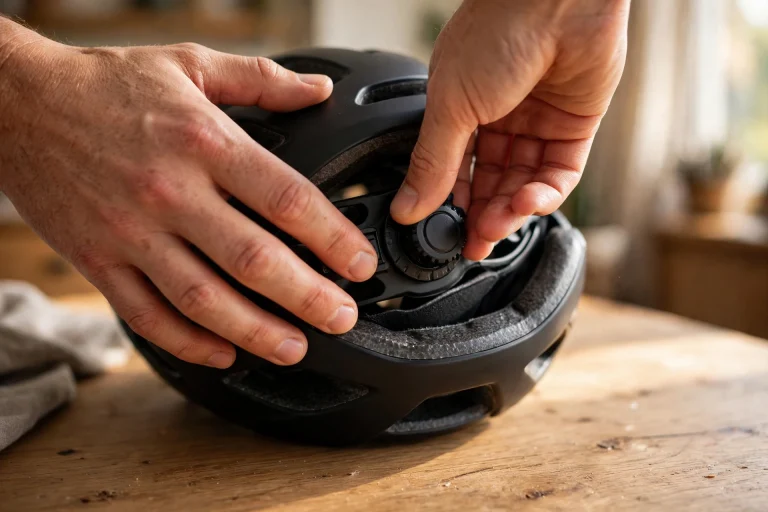
After losing weight, a helmet can feel looser because the face and head lose some soft tissue, and the fit pads sit against a slightly smaller head. In general terms, a helmet that fitted well before weight loss may now rock or slide, and the fix is usually to tighten the retention system, fit thicker pads, or, if the change is large, move down a size. Weight loss changes the body in many ways, and the head is no exception. Even a modest loss can change how a helmet grips, because helmets are made to fit closely, and a few millimetres of difference can turn a snug fit into a loose one.
Does Losing Weight Change Your Head Size?
Yes, losing weight can change the shape and size of your head, though usually only by a small amount. The skull itself does not shrink, but the soft tissue over it does: the cheeks, the temples, and the fat pads around the face and jaw can all become thinner as body fat falls. That means the circumference of the head measured over the skin can drop slightly, even though the bone underneath stays the same.
How much it changes depends on how much weight you lose and where your body stores fat. Some people notice a real difference in how hats and helmets fit after a large weight loss, while others notice almost nothing after a small one. In general terms, a loss of a few pounds is unlikely to change helmet fit much, but a larger, sustained loss often will. If your helmet used to fit perfectly and now feels roomy, weight loss is a likely cause, especially if your clothes and rings also feel looser.
Why Does My Helmet Feel Loose After Weight Loss?
A helmet feels loose after weight loss because the pads inside it were compressed against a fuller face and head, and now there is a gap where that tissue used to be. The helmet shell has not changed, and neither has the liner, but the head inside it is slightly smaller, so the helmet can rock side to side or slide forward when you move. The chin strap may also feel longer than before, because the jaw and cheeks it passes over are slimmer.
The change is often gradual, so it can be easy to miss at first. You may notice the helmet moving more on bumpy roads, or find yourself tightening the retention dial further than you used to. If you want to understand one of the safety technologies used in modern helmets, reading about what MIPS is for helmets is a useful starting point, but fit comes first: a liner system can only work as designed when the helmet stays in place, and a loose helmet may shift before it can do its job.
How Can I Tighten a Helmet After Losing Weight?
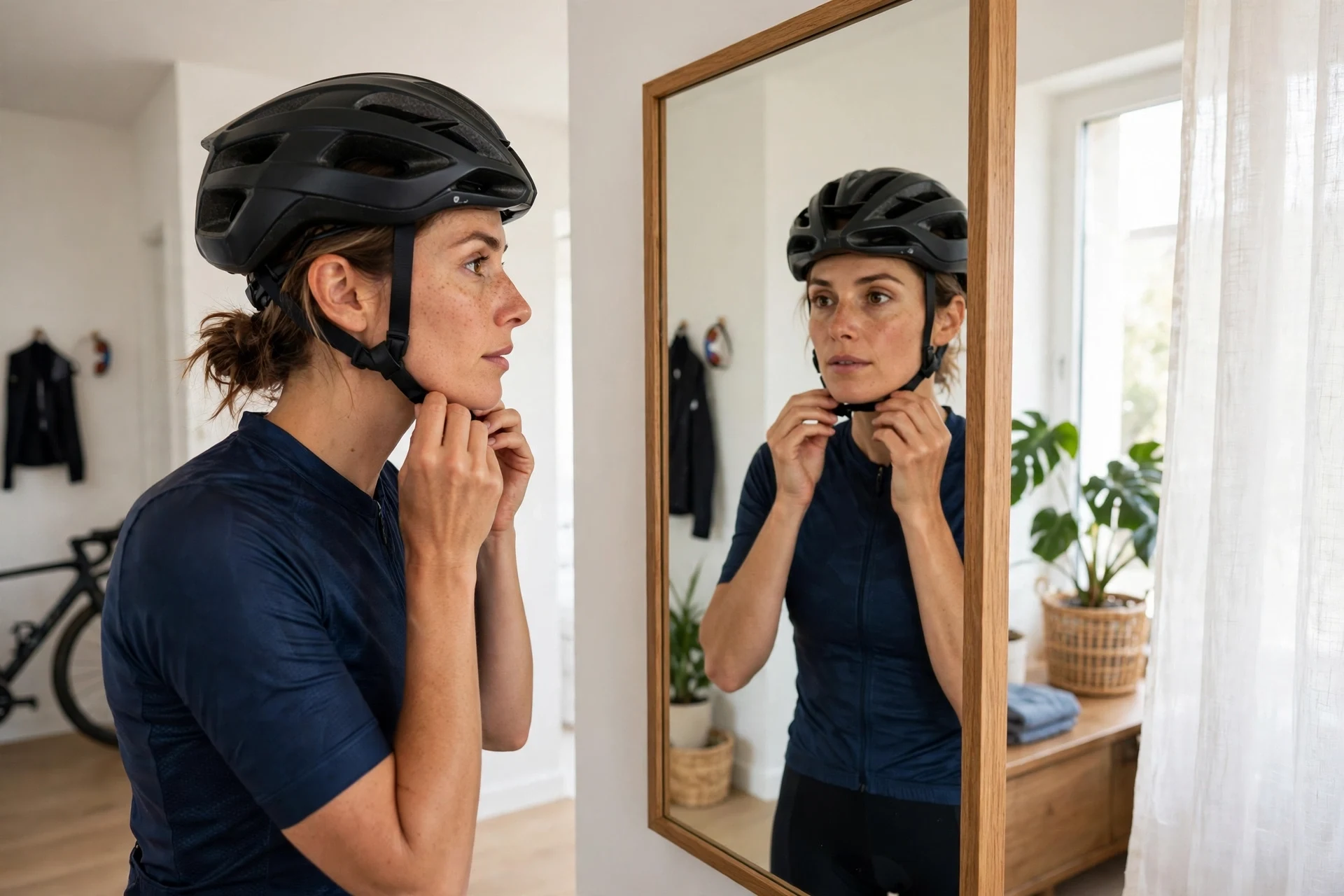
The first step is to adjust what the helmet already gives you. Turn the retention dial at the back until the cradle feels snug all round your head, and shorten the chin strap so it sits firmly under your chin with room for only one or two fingers. Then check the side straps, which should form a neat V just below each ear. These three adjustments together can often take up the slack from a modest change in head size.
If the dial is already at its tightest and the helmet still moves, try thicker fit pads. Most helmets come with pads in different thicknesses, and swapping thin pads for thicker ones at the sides, forehead, or crown can fill the new gaps. Make one change at a time and test the fit after each, shaking your head gently to check for rocking. In general terms, the helmet should move with your head, not lag behind it, and it should sit level just above your eyebrows.
When Do I Need a Smaller Helmet Size?
You need a smaller helmet size when adjustments no longer work. If the retention dial is fully tightened, the thickest pads are fitted, and the chin strap is snug, yet the helmet still wobbles or slides down over your eyes, the shell is now too big for your head. At that point, no further adjustment will make it safe, and the honest fix is to try the next size down.
Before buying, measure your head again with a soft tape just above your eyebrows and ears, and check the result against the maker’s size chart. Your old size may now sit in a different bracket, or you may be between sizes. Trying the smaller size on in person is best, because head shape matters as well as circumference. A smaller helmet should feel snug without pressure points, and it should stay put when you shake your head.
Should I Keep My Old Helmet as a Spare?
Keeping a loose helmet as a spare is tempting, but it is not a good idea if the helmet no longer fits you. A spare helmet that wobbles is no safer than the one you stopped using, and if you lend it to someone else, it may not fit them either. A helmet only protects when it fits the person wearing it, so a spare should be one that actually fits the person who might use it.
That said, if the helmet is still in good condition and the fit problem is small, it may suit another member of your household whose head it fits properly. Check the fit on them properly, with the straps fastened and the retention dial adjusted, before passing it on. If the helmet has taken a hard impact, or if it is old and worn, it should be replaced rather than passed on, whatever the fit.
How Often Should I Recheck Helmet Fit?
It is worth rechecking helmet fit whenever your body changes, and at least once a season in any case. Weight gain as well as weight loss can change the fit, and the pads inside a helmet also compress with use, so a helmet that fitted well a year ago may not fit the same way now. A quick check takes less than a minute: put the helmet on, fasten the straps, and shake your head gently.
Look out for the warning signs: the helmet rocks when you shake your head, slides forward over your eyes, or sits higher than it used to. Also check that the straps and dial still work smoothly and that the pads are not flattened or worn through. In general terms, a helmet is a piece of safety kit, not a fashion item, and its fit deserves the same regular attention as its condition.
Can losing weight make my helmet unsafe?
It can do, if the weight loss is enough to make the helmet loose. A helmet that rocks or slides may not stay in place in a fall, so check the fit and tighten it, add thicker pads, or move down a size.
How much weight loss changes helmet fit?
It varies from person to person. A small loss may change nothing, while a larger loss often makes a helmet feel roomy. The skull does not shrink, but thinner soft tissue around the face and temples can leave a gap.
Should I measure my head again after losing weight?
Yes, that is a sensible step. Measure with a soft tape just above your eyebrows and ears, compare the result with the maker’s size chart, and try the size that matches before you buy.

Olivia
Writer at Helmet Today, covering helmet reviews, fit and riding safety.