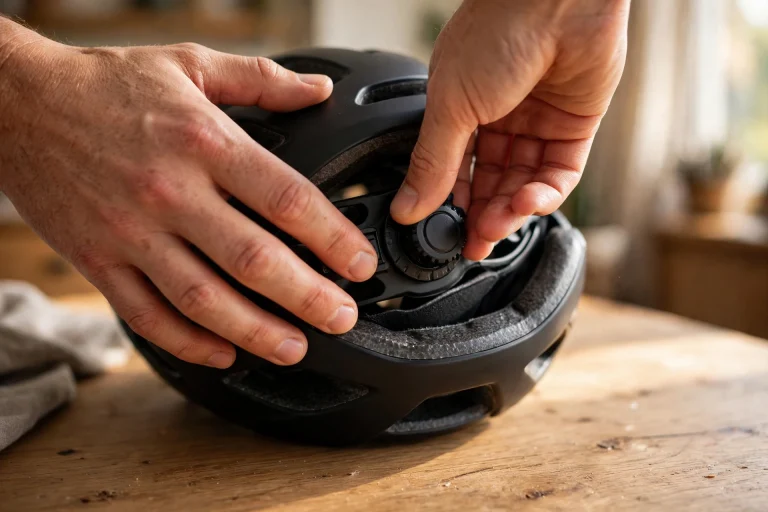
Wearing a beanie under a helmet in winter is possible, but only if the beanie is thin and the helmet still fits snugly over it. In general terms, a thick beanie lifts the helmet off your head, makes it wobble, and can leave it sitting too high to protect you properly, so a thin skull cap or a helmet made for winter use is usually a better choice. Cold weather riding is much more enjoyable with warm ears and a warm head, and many riders look for a way to add a layer under the helmet. The key is to add warmth without ruining the fit, because a helmet that no longer fits is worse than a cold head.
Can You Wear a Beanie Under a Helmet?
Yes, you can wear a beanie under a helmet, but the beanie needs to be thin, close-fitting, and free of bulky seams or a folded brim. A thin merino or synthetic skull cap works well because it adds warmth without adding much bulk. A thick knitted beanie with a folded cuff, on the other hand, adds a lot of material around the forehead and ears, and that pushes the helmet up and out.
The test is simple: put the beanie on, then put the helmet on over it and fasten the straps. The helmet should still sit level, just above your eyebrows, and it should feel snug all round without pressure points. If the helmet now sits high, rocks when you shake your head, or the chin strap no longer reaches comfortably, the beanie is too thick. In that case, try a thinner layer or a larger helmet size, and always re-check the fit with the beanie on rather than without it.
How Does a Beanie Change Helmet Fit?
A beanie changes helmet fit by adding a layer between your head and the liner, which makes your head effectively larger. Even a thin beanie adds a few millimetres all round, and a thick one can add enough bulk to change the fit by a whole size. That extra material also changes how the helmet grips your head: knit fabric is slippery compared with skin and hair, so the helmet can slide more easily on a beanie than it would on a bare head.
The position of the helmet changes too. A beanie, especially one with a folded brim, tends to push the helmet upward and backward, so it sits higher on the forehead and leaves less coverage at the front. The retention system at the back may also sit differently, because the beanie fills the space the cradle normally grips. If you want to understand one of the safety technologies used in modern helmets, reading about what MIPS is for helmets is a useful starting point, but remember that any liner system works best when the helmet fits correctly over whatever you wear underneath it.

What Is the Best Thin Layer to Wear Under a Helmet?
The best thin layer is a close-fitting skull cap or balaclava made from a thin, stretchy material such as merino wool or a synthetic wicking fabric. These are designed to sit flat against the head, cover the ears, and fit neatly under a helmet without bunching. Many cycling and ski brands make them in a helmet-friendly shape, with flat seams and no brim to get in the way.
A balaclava has the added benefit of covering the neck and lower face, which helps on very cold days, but make sure the part over the mouth does not fog your glasses or make breathing hard. A simple skull cap is often enough for most winter rides. Avoid cotton, because it holds sweat and gets cold when wet, and avoid anything with a pom-pom, a thick ribbed cuff, or a peak, since those will all push the helmet out of position.
Should I Size Up My Helmet for Winter?
Sizing up for winter is an option, but it is not always the best one. A larger helmet will fit over a beanie more easily, but it may then be too loose when you ride without the beanie in milder weather. If you only ride in winter, or if you always wear the same thin cap, sizing up can work, as long as you test the fit with the cap on and the helmet still feels snug.
Another option is to keep your normal helmet and use a thinner layer, or to look at a winter-specific helmet. Some helmets are made with less ventilation and a little extra room for a thin liner, and they keep your head warmer without needing a bigger shell. In general terms, it is better to buy a helmet that fits well with the layer you actually wear than to squeeze a thick beanie under a helmet that was never meant to take it.
Do Winter Helmets Work Better Than a Beanie?
Winter helmets can work better than a beanie under a summer helmet, because they are designed as a complete system. They usually have fewer vents, or vents that can be closed, so less cold air flows over your head. The liner is often warmer and thicker, and some models have ear covers built in, so you get warmth without adding a separate layer that changes the fit.
That said, a winter helmet is an extra purchase, and a thin skull cap under your normal helmet is a perfectly good solution for many riders. The choice depends on how cold your winters are and how often you ride in them. If you ride through a long, cold winter, a dedicated winter helmet may be worth it. If you only face a few chilly mornings, a thin cap is simpler and cheaper, and it keeps your normal helmet fitting as it should.
How Do I Keep My Ears Warm Without Ruining the Fit?
Ears are often the coldest part of the head on a winter ride, because they stick out and catch the wind. A thin skull cap that covers the ears is the simplest fix, and it adds very little bulk. Some helmets also have clip-on ear covers or winter ear pads that fit inside the shell, which warm the ears without adding a layer over the whole head.
Another option is a thin headband or ear band worn under the helmet, which covers the ears while leaving the top of the head bare, so the helmet fit changes very little. Whichever option you choose, test it with the helmet on and the straps fastened, and shake your head to check that nothing has loosened. In general terms, your ears should feel warm and covered, while the helmet still sits level and snug.
Can I wear a thick knitted beanie under my helmet?
In general terms, no, a thick knitted beanie is not a good idea under a helmet. It adds too much bulk, lifts the helmet, and can make it wobble or sit too high to protect your forehead properly.
Will a beanie make my helmet unsafe?
It can do, if the beanie is thick enough to change the fit. A thin, close-fitting cap that still lets the helmet sit level and snug is fine, but a bulky beanie that makes the helmet loose or high is not safe to ride with.
What should I wear under a helmet in very cold weather?
A thin merino or synthetic skull cap, or a thin balaclava, is the best choice. These keep your head and ears warm without adding bulk, and they wick sweat away so you stay warm rather than cold and damp.

Olivia
Writer at Helmet Today, covering helmet reviews, fit and riding safety.