To clean a helmet buckle, brush away loose dirt with an old toothbrush, wash the buckle and the surrounding straps with a cloth dampened in mild soapy water, rinse with a clean damp cloth, and let it air dry before testing that it clicks and releases smoothly. The buckle is a small part, but it holds the helmet on your head, so keeping it clean and working well is one of the most important jobs in helmet care.
Why Does a Helmet Buckle Get Dirty?
A helmet buckle gets dirty because it sits close to the skin, under the chin, where sweat, sunscreen, dust, and skin oils all collect. Every time you fasten the helmet, your fingers transfer dirt to the buckle, and every ride adds a little more. Over time, this dirt builds up inside the mechanism, where it is hard to see and easy to ignore.
Dirt in a buckle is more than a cosmetic problem. Grit and dried sweat can make the buckle stiff, so it becomes hard to fasten or release. In some cases the buckle may stick, or the release button may not work smoothly, which is a nuisance at best and a safety problem at worst. A buckle that will not fasten properly cannot hold the helmet in place in a fall.
What Do You Need to Clean a Helmet Buckle?
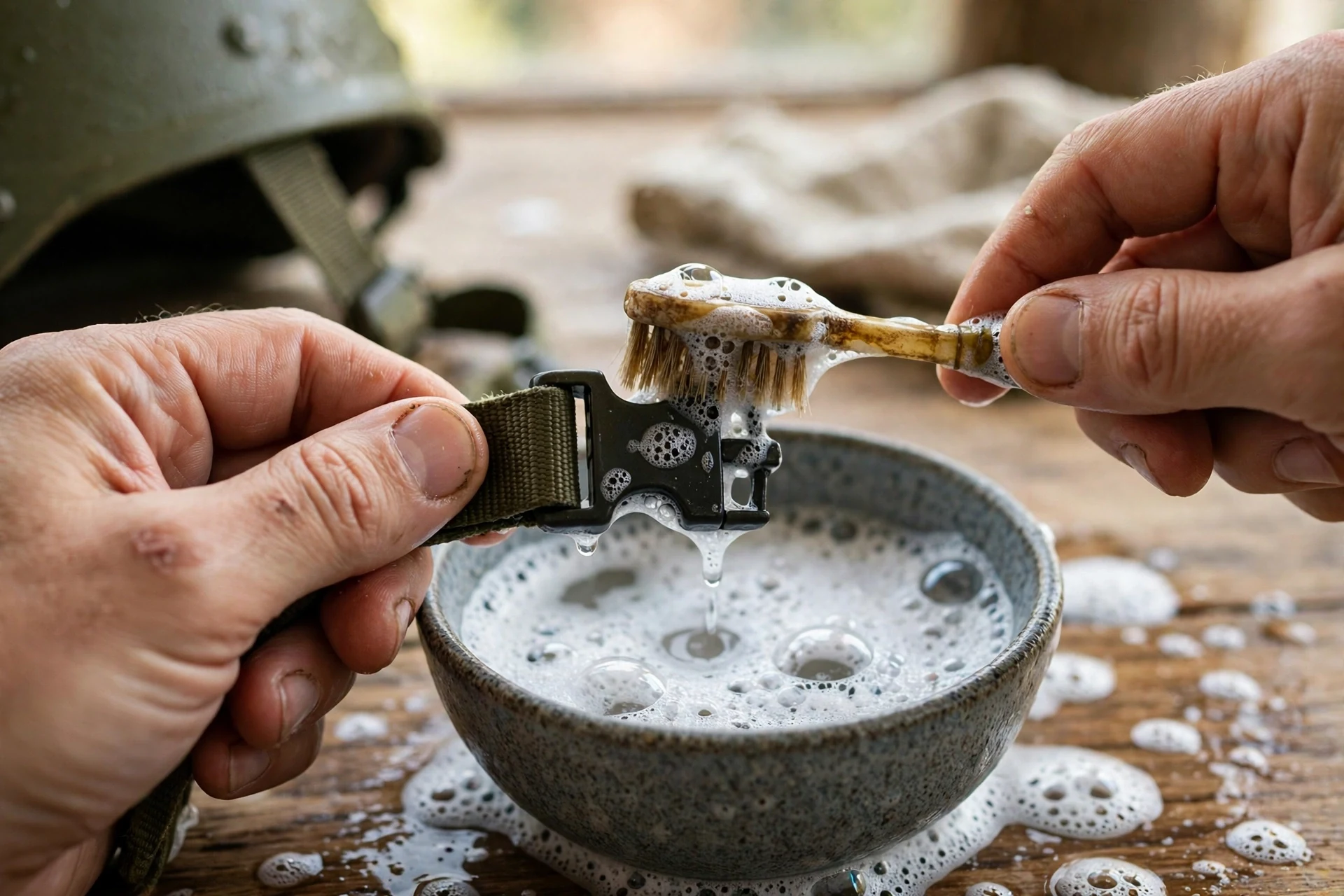
You need very little to clean a helmet buckle: a bowl of lukewarm water, a small amount of mild soap, an old soft toothbrush, and two clean cloths. The toothbrush is the most useful tool, because its bristles can reach into the small gaps and slots of the buckle where dirt hides. Choose a soft brush, not a stiff one, so you do not scratch the plastic or the metal.
A cotton bud can also be useful for cleaning inside the buckle mechanism, where even a toothbrush cannot reach. A small bowl is handy for dipping the cloth and the brush, and a dry towel is useful for wiping the buckle at the end. Avoid using anything sharp, such as a pin or a knife, to clean a buckle, because it can damage the mechanism.
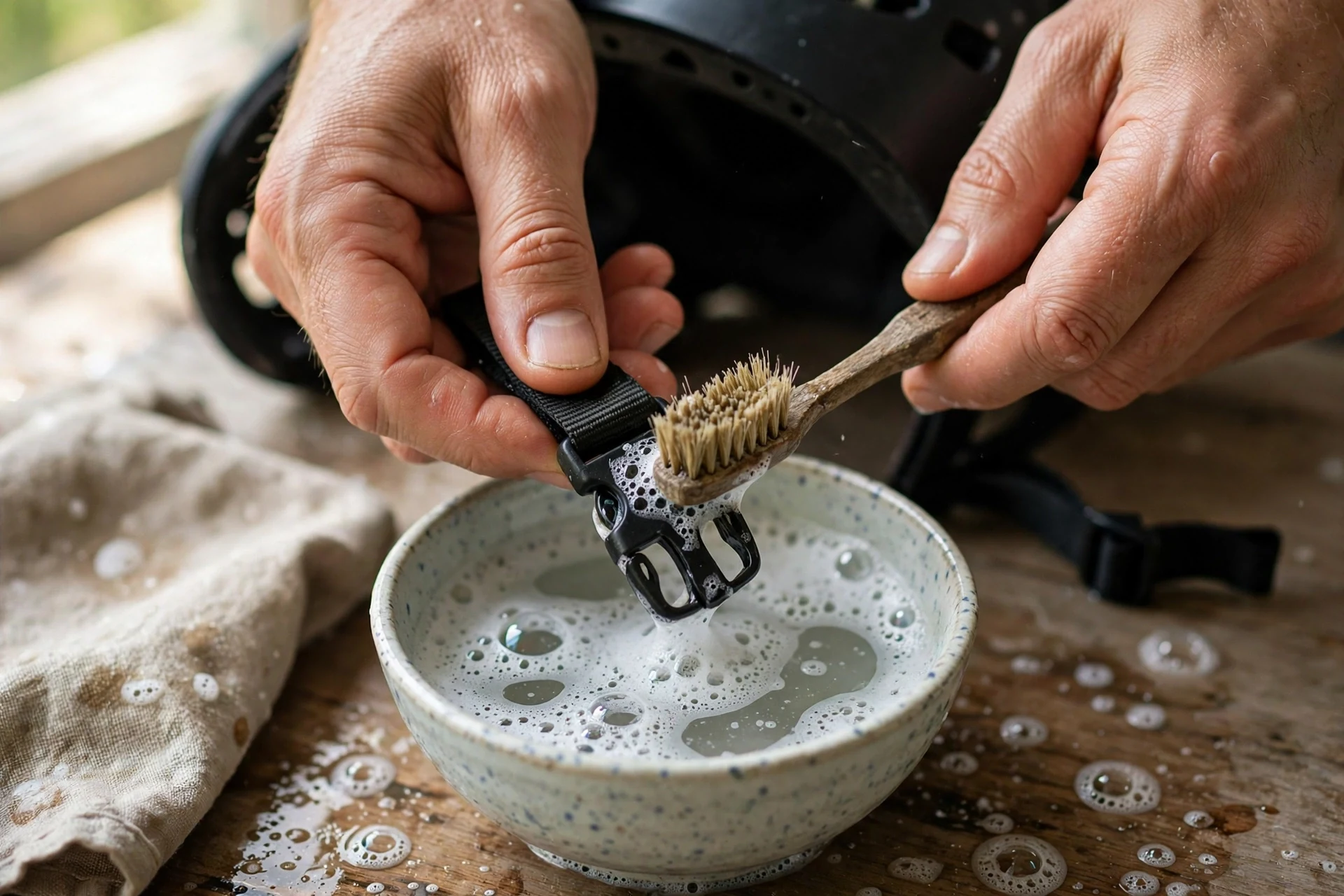
How Do You Clean a Helmet Buckle Step by Step?
Start by unfastening the buckle and brushing away loose dirt with the dry toothbrush. Work the bristles into the slots and around the release button, and tap the buckle gently to shake out any grit. This dry brushing removes most of the loose dirt before you add water, which stops you pushing grit further into the mechanism.
Next, dip the toothbrush in the mild soapy water and scrub the buckle gently, paying attention to the inside of the mechanism and the edges of the release button. Open and close the buckle a few times while it is soapy, so the soap can reach inside the moving parts. Wipe the straps on either side of the buckle with the soapy cloth, working along the webbing.
Then rinse by wiping the buckle with a cloth dampened in clean water, and work the buckle open and closed a few more times to flush out any remaining soap. Wipe the buckle dry with a clean towel, and leave the helmet open to air dry completely. Do not use a hairdryer on a hot setting, because heat can damage the plastic. Once dry, test the buckle several times to make sure it fastens and releases smoothly.
What If the Buckle Is Stuck or Stiff?
If a helmet buckle is stuck or stiff, cleaning is usually the answer. Dirt and dried sweat are the most common causes, and a thorough clean with a toothbrush and soapy water will often free it up. Work the buckle gently while it is wet with soapy water, and do not force it, because forcing a stuck buckle can break the mechanism.
If the buckle is still stiff after cleaning, check for damage. Look for cracks in the plastic, bent metal parts, or worn teeth inside the mechanism. A buckle that is cracked or deformed should not be trusted, and it may need to be replaced. Many helmet makers sell replacement buckles and straps, and a bike shop or a helmet retailer can often fit them.
In some cases, a tiny drop of silicone-based lubricant on the moving parts can help a stiff buckle, but use it sparingly and wipe away any excess. Do not use oil-based lubricants, such as general-purpose oil, because they can attract dirt and may damage the plastic. If you are unsure whether a buckle is safe, take the helmet to a shop for advice rather than risking it.
How Do You Dry and Check a Buckle After Cleaning?
After cleaning, a buckle should be dried thoroughly before the helmet is used again. Wipe it with a dry cloth, then leave the helmet in a ventilated room with the straps spread out so air can reach the buckle. The buckle should be completely dry before the helmet is stored, because moisture left inside the mechanism can cause corrosion or mould on the straps.
Once the buckle is dry, test it carefully. Fasten it and pull firmly on the straps to make sure it holds. Press the release button and check that it opens smoothly and springs back into place. Repeat this a few times. A buckle that works smoothly every time is a good sign, while one that sticks or feels gritty may need another clean.
It is also worth checking the straps while you are there. Look for fraying, worn stitching, or thinning webbing near the buckle, because the straps work with the buckle to hold the helmet in place. If you want to learn more about the safety systems that work alongside the buckle and straps, reading about what MIPS is for helmets is a useful next step.
How Often Should You Clean a Helmet Buckle?
How often you clean a helmet buckle depends on how much you ride. For a daily rider, a quick wipe of the buckle once a week is a good habit, with a thorough clean using a toothbrush once a month. For a weekend rider, a monthly clean is usually enough. In summer, when sweat is heavier, clean it more often.
It is also sensible to clean the buckle after a particularly dirty or wet ride, or after riding on dusty roads. A quick brush and wipe after such a ride takes a minute and stops dirt from building up. If you ride in winter, check the buckle regularly for salt and grit, which can cause corrosion if left for weeks.
Can I use WD-40 on a helmet buckle?
No, avoid oil-based sprays on a helmet buckle. They can attract dirt and may damage the plastic. Clean with mild soapy water, and if needed use a tiny amount of silicone-based lubricant sparingly.
How do I know if my helmet buckle needs replacing?
If the buckle is cracked, bent, will not fasten firmly, or will not release smoothly after cleaning, it needs replacing. A bike shop can usually supply and fit a replacement.
Is it safe to wash the straps with the buckle?
Yes, in general terms it is safe to wash the straps with mild soap and lukewarm water. Wipe them with a soapy cloth, rinse with a clean damp cloth, and let them air dry fully.

Olivia
Writer at Helmet Today, covering helmet reviews, fit and riding safety.