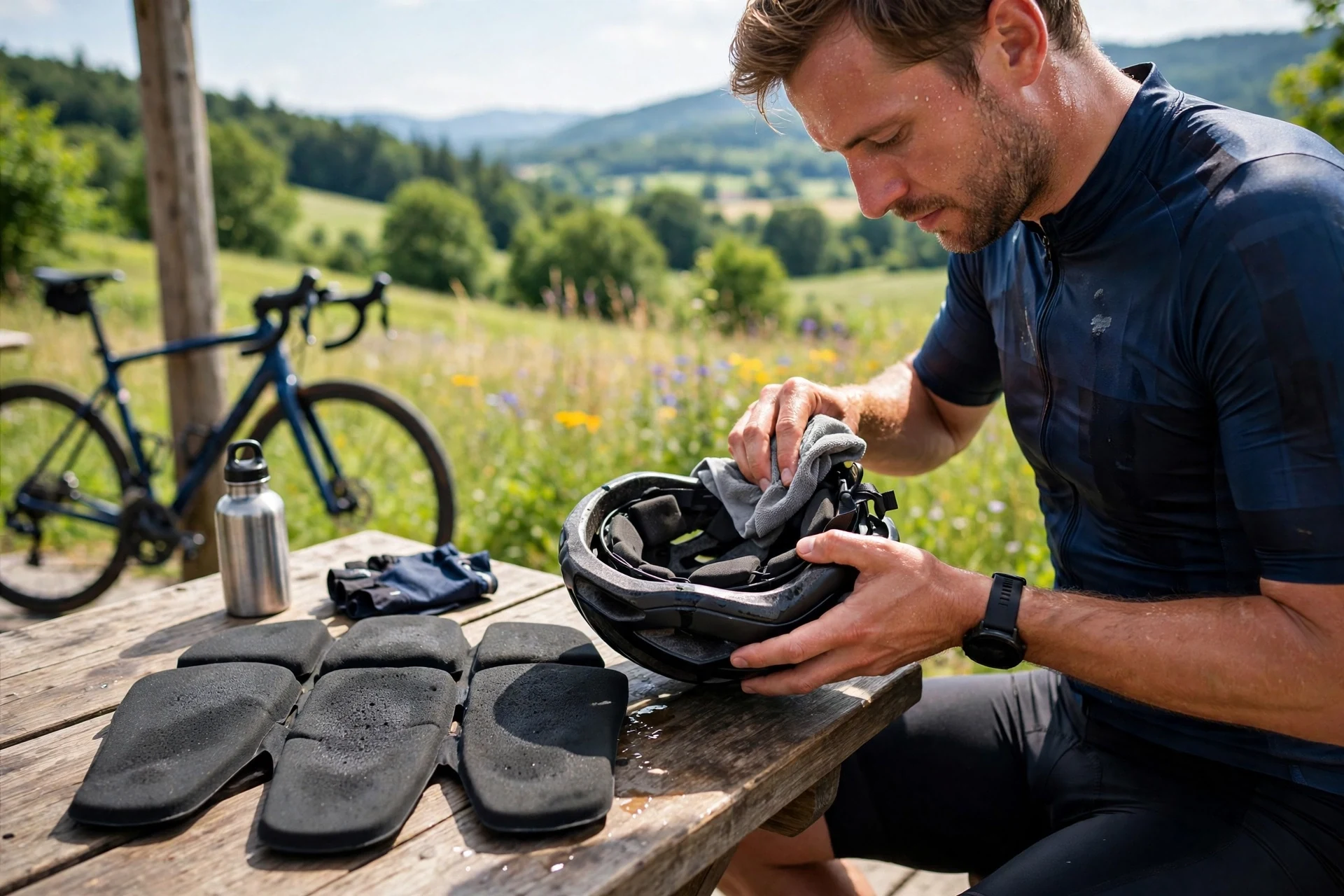
To clean a helmet after a sweaty summer ride, take out the removable pads and wash them by hand in lukewarm water with mild soap, wipe the shell and straps with a damp soapy cloth, then let everything air dry completely before the next ride. Summer sweat soaks into a helmet quickly, and if it is left to dry in the helmet it turns into a smell that is hard to remove. A quick clean after a hot ride keeps the helmet fresh and comfortable all summer long.
Why Does Summer Sweat Damage a Helmet?
Summer sweat damages a helmet because sweat is not just water. It contains salt, oils, and bacteria, and when it soaks into the foam pads inside a helmet it leaves all of these behind as the water evaporates. The salt can stiffen the fabric of the pads, the oils can break down the foam over time, and the bacteria can produce the smell that every cyclist knows too well.
A helmet that is used daily in hot weather can build up a surprising amount of sweat. The pads become damp every ride, and if the helmet is put away while still wet, the moisture has nowhere to go. In a warm house or a hot garage, bacteria multiply quickly, and the smell gets worse with each ride. The straps suffer too: sweat can make the webbing stiff and can cause skin irritation where the straps touch the face and neck.
What Should You Do Right After a Sweaty Ride?
Right after a sweaty summer ride, the best thing you can do is let the helmet air out. Take it off, open the vents, and place it somewhere with good airflow, such as a shaded spot outside or a ventilated room. Do not put it straight into a closed bag, a car boot, or a cupboard, because that traps the moisture inside and gives bacteria a warm, damp place to grow.
If the pads are very wet, take them out and lay them on a towel to dry separately. They dry faster outside the helmet, and the helmet itself dries faster without them. Give the inside of the shell a quick wipe with a clean, dry cloth to remove the worst of the sweat, and wipe the straps too. This takes less than a minute, and it makes a real difference.
If you have a long ride planned the next day, a quick wipe is not enough, and a proper wash is worth doing in the evening. But for most days, airing the helmet out straight after the ride is enough to keep it fresh, as long as you give it a thorough wash at least once a week in hot weather.
How Do You Wash the Helmet Liner?
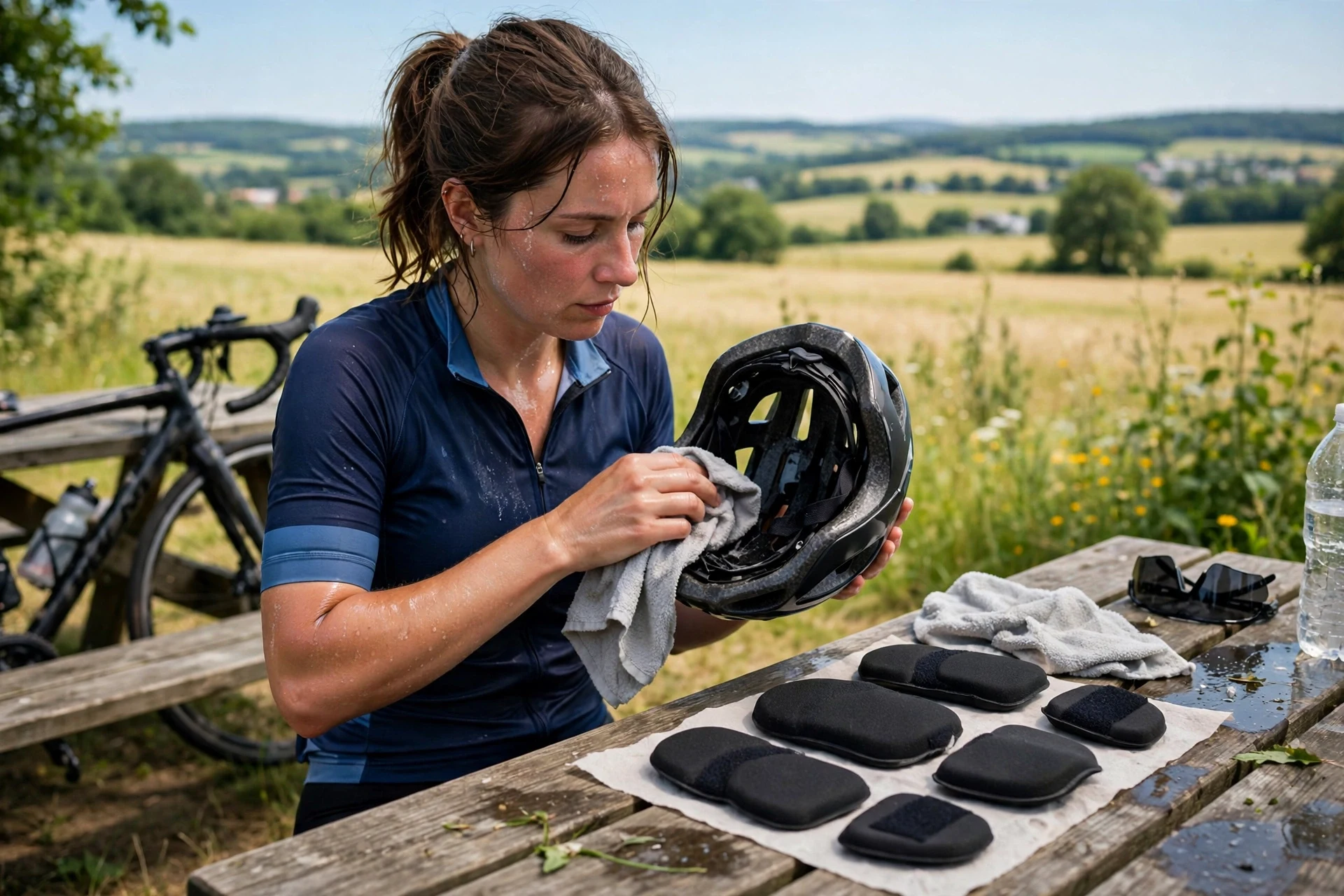
Washing the helmet liner is the most important part of cleaning after a sweaty ride. Remove the pads and any removable liner pieces, and wash them by hand in a bowl of lukewarm water with a small amount of mild soap or baby shampoo. Work the soap gently through the foam with your fingers, and let the pads soak for ten or fifteen minutes if they are very sweaty.
Rinse the pads in clean lukewarm water until the water runs clear and no soap remains. Squeeze them gently to remove the water, but do not wring them hard, because that can tear the foam or distort the shape. Press them in a clean towel to take out more moisture, then lay them flat to air dry.
How Do You Dry a Helmet Properly in Summer?
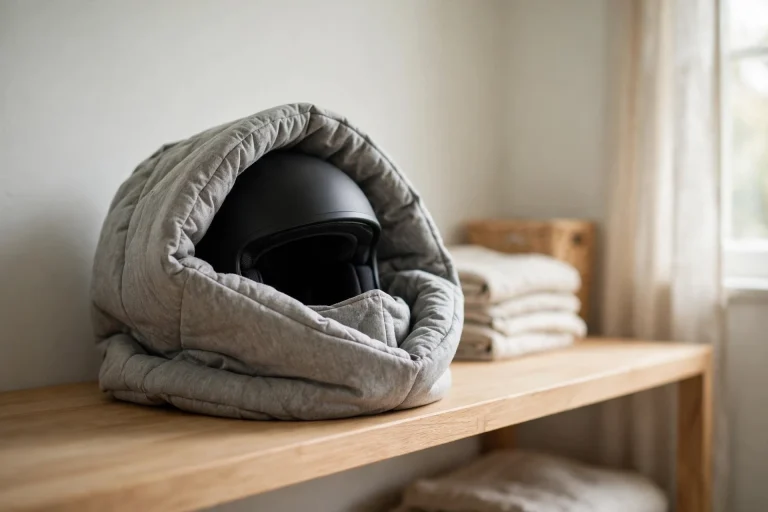
Drying a helmet properly in summer means air drying it at room temperature, out of direct sunlight. Place the helmet upside down on a towel, with the opening facing up, so warm air can move through it. Leave the pads out to dry separately, and make sure the straps are spread out so they dry evenly.
It can be tempting to leave a helmet in the sun to dry quickly, but direct sunlight can damage the shell and the foam over time. Strong sun can fade the colours, weaken some materials, and make the foam brittle. A shaded, breezy spot is a much better choice, and a fan can help if the air is still. In general terms, a helmet that dries in the shade will last longer than one that is baked in the sun.
Do not use a hairdryer on a hot setting or place the helmet near a radiator, even in summer. Heat can warp the foam liner and weaken the adhesives that hold the helmet together. If you need the helmet dry in a hurry, a fan and a dry towel are the safest tools. Once everything is fully dry, reassemble the helmet and check that the pads sit in the right places before your next ride.
How Do You Get Rid of Sweat Smell?
Sweat smell in a helmet comes from bacteria in the pads, and the best way to remove it is to wash the pads thoroughly. If a normal wash does not remove the smell, try soaking the pads for half an hour in lukewarm water with mild soap before rinsing. This gives the soap time to break down the sweat and oils that cause the smell.
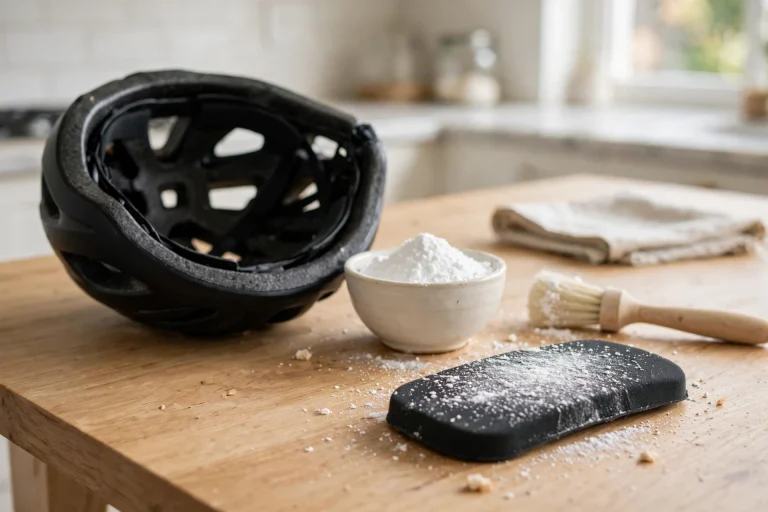
Some riders use a light sprinkle of baking soda on the dry pads, leave it for a few hours, and then shake or brush it off. This can help with mild smells, but it is not a replacement for washing, and all the powder must be removed before the helmet is worn. Never use air freshener, perfume, or antibacterial spray inside a helmet, because the chemicals can irritate your skin and may damage the liner.
Prevention matters more than cure. Airing the helmet after every ride, washing the pads weekly in hot weather, and storing the helmet somewhere with airflow will stop smells from building up in the first place. If you want to understand the safety features built into modern helmets, reading about what MIPS is for helmets is a good idea while your helmet dries.
What Should You Never Do When Cleaning a Sweaty Helmet?
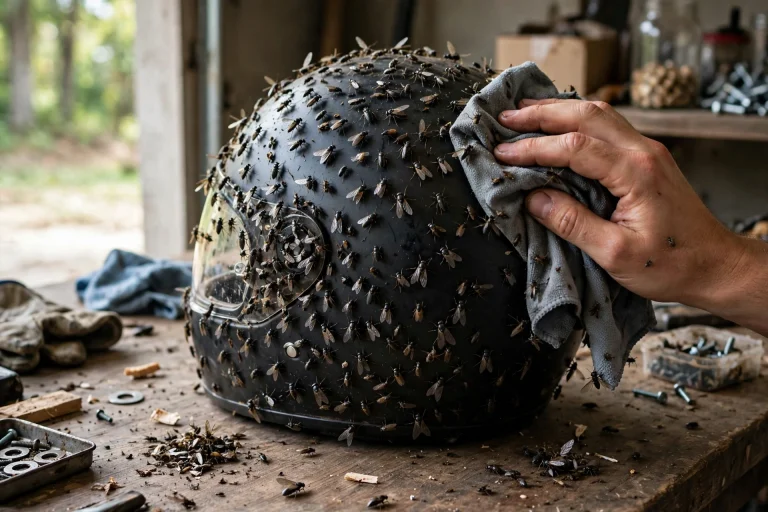
There are a few things you should never do when cleaning a sweaty helmet. Never use harsh solvents, petrol, acetone, or strong household cleaners, because these can damage the shell and the foam liner, and they may weaken the helmet in ways you cannot see. Stick to mild soap and lukewarm water, which are enough for any normal cleaning job.
Never put a helmet in a washing machine or a dishwasher. The heat, the tumbling, and the strong detergents can damage the shell, the liner, and the straps, and they can leave the helmet unsafe to use. Never dry a helmet with direct heat, and never leave it in a hot car, where temperatures can rise high enough to damage the foam.
How often should I wash my helmet in summer?
Wash the pads about once a week in hot weather, and air the helmet out after every ride. In very hot or humid conditions, you may need to wash them more often.
Can I use a hairdryer to dry my helmet?
Only on a cool setting, if at all. Hot air can damage the foam liner and adhesives, so air drying at room temperature is always the safest choice.
Why does my helmet still smell after washing?
The smell may be deep in the pads or the liner. Try a longer soak in mild soapy water, and if the smell persists, replace the pads, since worn pads hold smells more than new ones.

Olivia
Writer at Helmet Today, covering helmet reviews, fit and riding safety.