Yes, you can mend a torn helmet liner, but only when the tear is small and the liner’s protective foam underneath is still sound. The liner is the soft padding that sits against your head, and a small tear in its fabric or foam can often be stitched or glued. A tear in the hard protective foam, however, is a different matter, and a helmet with damaged protective foam should be replaced, not mended. In general terms, mend the comfort padding when the damage is minor, and replace the helmet when its protection is in doubt.
What Is a Helmet Liner?
A helmet liner is the layer inside the shell that sits against your head. It usually has two parts: a soft comfort lining made of foam and fabric, and a harder protective foam layer underneath it, often made of expanded polystyrene. The comfort lining makes the helmet feel good to wear and helps it fit snugly, while the hard foam is the part that absorbs the force of an impact. Both parts matter, but they play very different roles.
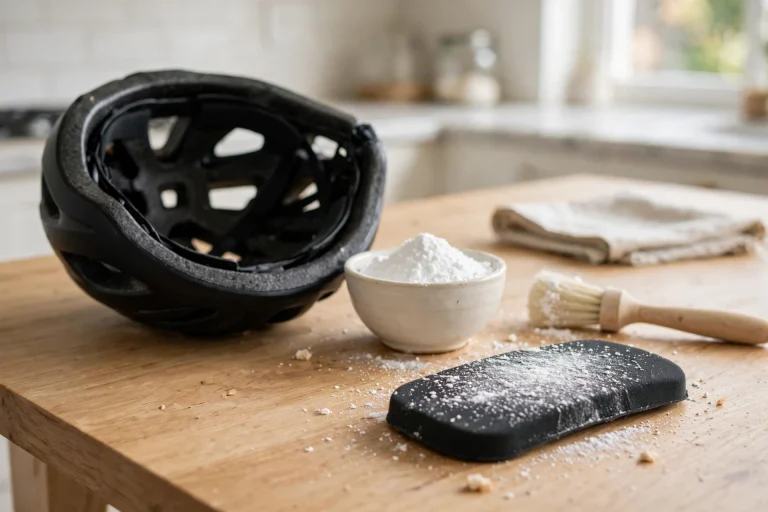
The comfort lining is usually removable, held in place with press studs, hook-and-loop tabs, or light adhesive, and it can be taken out for washing. The hard foam layer is fixed to the shell and should never be removed or altered. When people talk about mending a torn liner, they usually mean the soft comfort lining, because that is the part that can be repaired safely. A tear in the hard foam is a sign that the helmet has taken a knock, and it is not a repair job.
How Do You Tell If a Torn Liner Can Be Mended?
Start by taking the liner out of the helmet, if it is removable, and looking at the tear in good light. If the tear is in the fabric cover or in the soft foam of the comfort padding, and the hard foam underneath is smooth and whole, it can usually be mended. Measure the tear: a small tear of a few centimetres is a repair job, while a large tear, or one that runs across the whole pad, may mean the pad needs replacing instead.
Check the hard foam carefully before you mend anything. Look for cracks, dents, or areas that have gone soft or crumbly, and press the foam gently to check that it feels firm all over. If the hard foam is damaged in any way, do not mend the liner and keep using the helmet: retire the helmet instead. In general terms, a liner repair is only safe when the protection underneath is untouched, and any doubt about the hard foam means the helmet should be replaced.
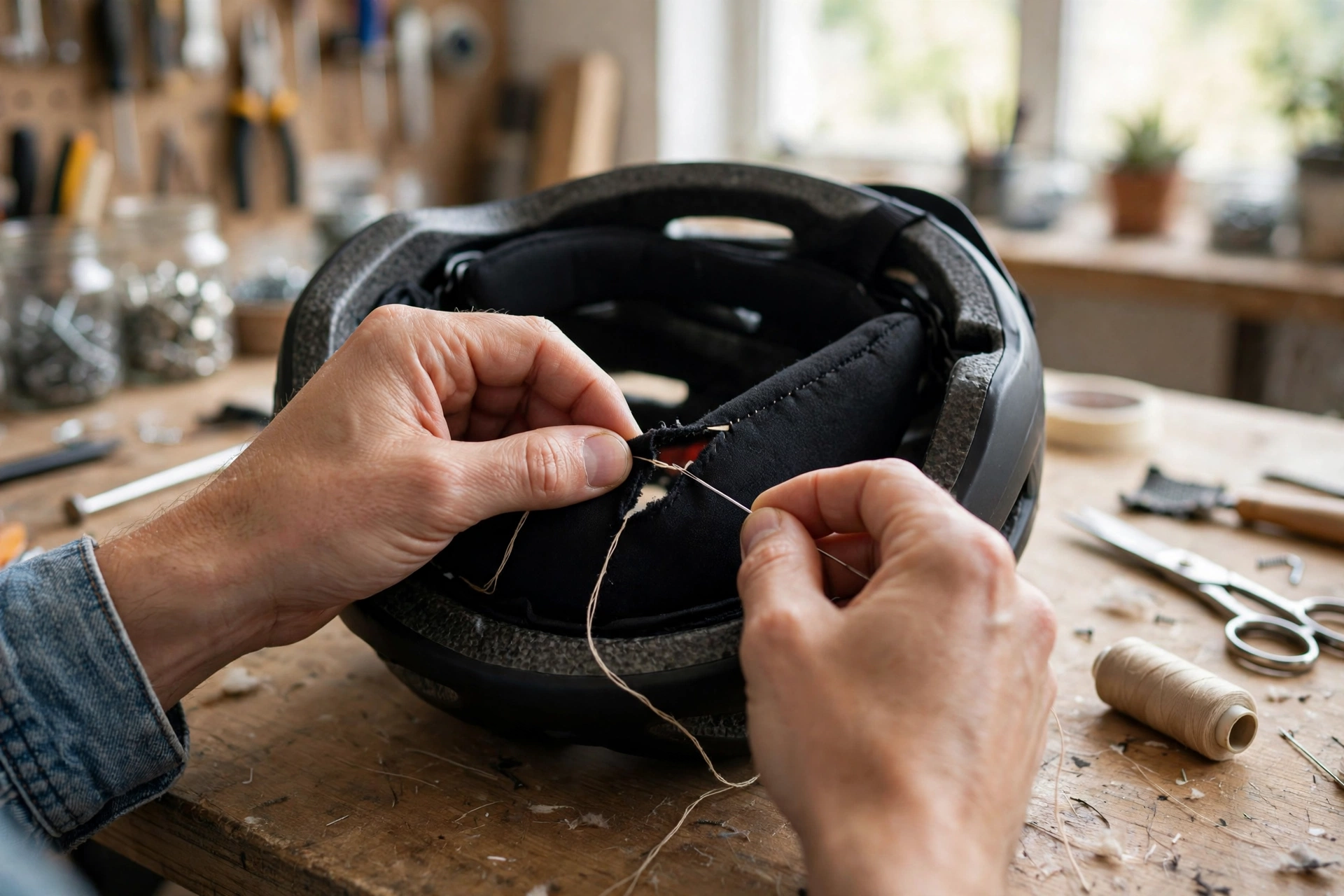
How Do You Stitch a Torn Liner?
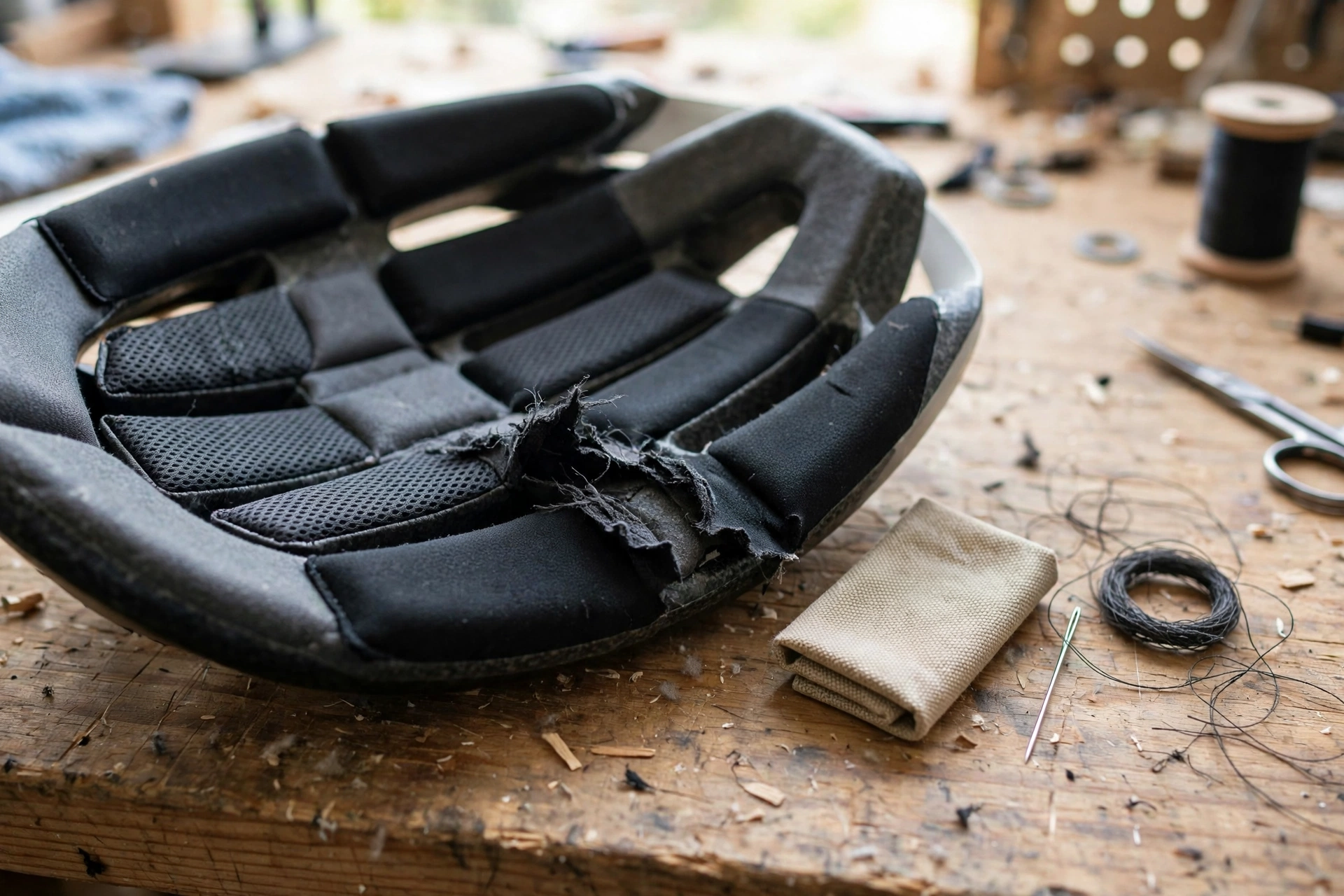
Stitching is the best way to mend a tear in the fabric cover of a liner. Use a strong thread and a needle, and sew the torn edges together with small, close stitches, working from one end of the tear to the other. Keep the stitches neat and flat, so that they do not create a ridge that presses against your head. A second row of stitches just beside the first will make the repair stronger and stop the tear from spreading.
If the tear is in the soft foam rather than the fabric, stitching may not hold, because the foam is too soft for a needle and thread. In that case, a fabric patch glued over the tear is often a better answer, as described below. After stitching, put the liner back in the helmet and try it on: it should feel smooth and comfortable, with no lump or hard edge where the repair is. If it does not feel right, adjust the stitches or try a patch instead.
How Do You Glue or Patch a Torn Liner?
A fabric patch is a good way to mend a tear in the soft foam of a liner. Cut a piece of soft fabric slightly larger than the tear, and glue it over the damaged area with a flexible fabric glue. Press it down firmly, smooth out any wrinkles, and let it dry fully before you put the liner back in the helmet. The patch should be thin and soft, so that it does not change the fit of the helmet or press against your head.
For a small tear, a thin layer of flexible fabric glue along the edges of the tear can be enough, without a patch. Apply the glue sparingly, press the edges together, and hold them until the glue sets. Do not use a hard or brittle glue, because it can leave a stiff ridge inside the helmet. If you want to understand one of the safety technologies used in modern helmets, reading about what MIPS is for helmets is a useful starting point, and a reminder that the liner works as part of the helmet’s whole safety system.
Can You Replace a Torn Liner Instead?
Yes, replacing a torn liner is often the best option, and it is usually simple. Most helmet makers sell replacement liner sets for their models, and a new liner will fit exactly and feel like new. To replace it, take out the old liner, clean the inside of the helmet, and fit the new liner in place, pressing the studs or tabs firmly until they hold. Check that the liner sits evenly all round the helmet before you wear it.
A replacement liner costs more than a stitch or a patch, but it is a proper fix, and it is worth it when the tear is large or the old liner is worn in other ways too. If a replacement liner is not available for your helmet, or if the helmet is old, it may be time for a new helmet altogether. In general terms, mend a small tear when the liner is otherwise in good condition, and replace the liner, or the helmet, when the damage is bigger or the helmet is nearing the end of its life.
When Should You Replace the Helmet Instead of Mending the Liner?
Replace the helmet instead of mending the liner whenever the hard protective foam is damaged, the shell is cracked, or the helmet has been in a crash. These are signs that the helmet’s protection has been used up, and no liner repair will make it safe again. A liner repair only fixes comfort and fit; it cannot restore the impact protection of a damaged foam layer. Trying to save such a helmet is a false economy, and it puts the wearer at risk.
Age is another reason to replace rather than mend. If the helmet is old, the foam may be weakening even without visible damage, and a new liner will not fix that. In general terms, mend the liner when the helmet is fairly new and only the soft padding is torn, and replace the helmet when anything else is wrong with it. If a helmet’s protection is ever in doubt, replace the helmet, and let the torn liner go with it.
Can I stitch a torn helmet liner?
Yes, if the tear is small and in the soft comfort lining, stitching with strong thread usually works well. Do not stitch the hard protective foam.
Can I glue a torn helmet liner?
Yes, a flexible fabric glue or a soft fabric patch works well for a tear in the soft foam. Use a thin, flexible glue and let it dry fully before wearing the helmet.
When does a torn liner mean I need a new helmet?
When the hard protective foam is cracked, dented, or soft, or the helmet has been in a crash. In those cases the helmet’s protection is in doubt and it should be replaced.

Olivia
Writer at Helmet Today, covering helmet reviews, fit and riding safety.