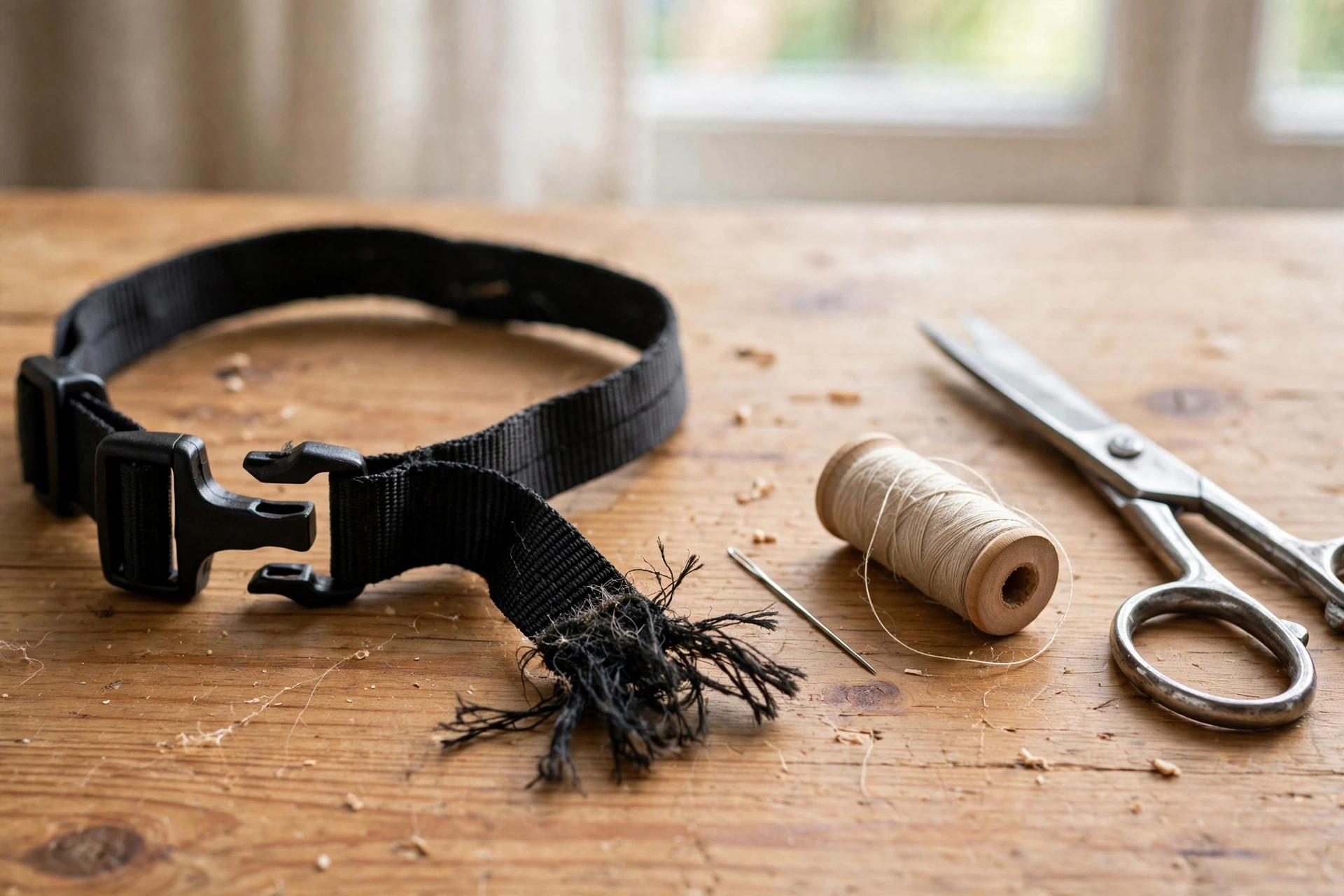
Yes, you can mend a frayed helmet strap, but only when the fraying is light and the strap is still strong. A strap with a few loose threads at the end can often be tidied up and made safe again, while a strap that is badly frayed, torn, or weakened should be replaced, not mended. The chin strap is what keeps the helmet on your head in a crash, so it is not a part to take chances with. In general terms, mend a strap when the damage is small and the strap still holds firmly, and replace it when there is any doubt.
Why Do Helmet Straps Fray?
Helmet straps fray for several reasons, and most of them come from everyday use. The strap rubs against the buckle and the helmet shell every time it is fastened and unfastened, and that friction slowly wears the fibres at the edges. Sun, sweat, and washing also weaken the webbing over time, and the cut end of the strap is the most likely place to fray, because the fibres there are exposed. A strap that is often pulled tight or caught on something will fray faster than one that is treated gently.
Storage plays a part too. A helmet left in a hot car, a damp garage, or a sunny windowsill will age faster, and its straps will show the wear sooner. Dirt and grit caught in the webbing can also act like sandpaper, wearing the fibres from the inside.
How Do You Tell If a Frayed Strap Is Safe to Mend?
Start by looking at the strap closely in good light. If only the last centimetre or so is frayed, and the rest of the strap looks and feels strong, it is usually safe to mend. Pull the strap firmly with both hands: it should not stretch, tear, or feel thin or weak.
Do not mend a strap that is frayed across most of its width, that has a tear or a cut, or that feels soft, thin, or weak anywhere along its length. A strap that has been cut by a sharp edge, or that has been damaged by heat or chemicals, should also be replaced. In general terms, if you have to ask whether the strap is still strong enough, it probably is not, and the safe choice is to replace it. If a helmet’s protection is ever in doubt, replace the helmet or the strap rather than risking a repair.
How Do You Mend a Frayed Strap End?
The simplest way to mend a frayed strap end is to seal it. Trim away the loose threads with sharp scissors, cutting straight across the strap, then seal the fresh edge so that it cannot fray again. For a nylon strap, you can pass the cut edge quickly through a flame to melt the fibres together, but do this with great care: hold the strap with pliers, work away from anything flammable, and let it cool before you touch it.
A safer method, especially for straps that are not nylon, is to use a fabric sealant or a small amount of clear glue on the cut edge, then let it dry fully. You can also fold the end over and stitch it down with strong thread, which gives a neat finish and stops the fray from spreading. Whichever method you use, check the strap afterwards by pulling it firmly. If it holds and the end stays neat, the mend has worked, and the strap can go back into use.
How Do You Stitch a Frayed Strap?
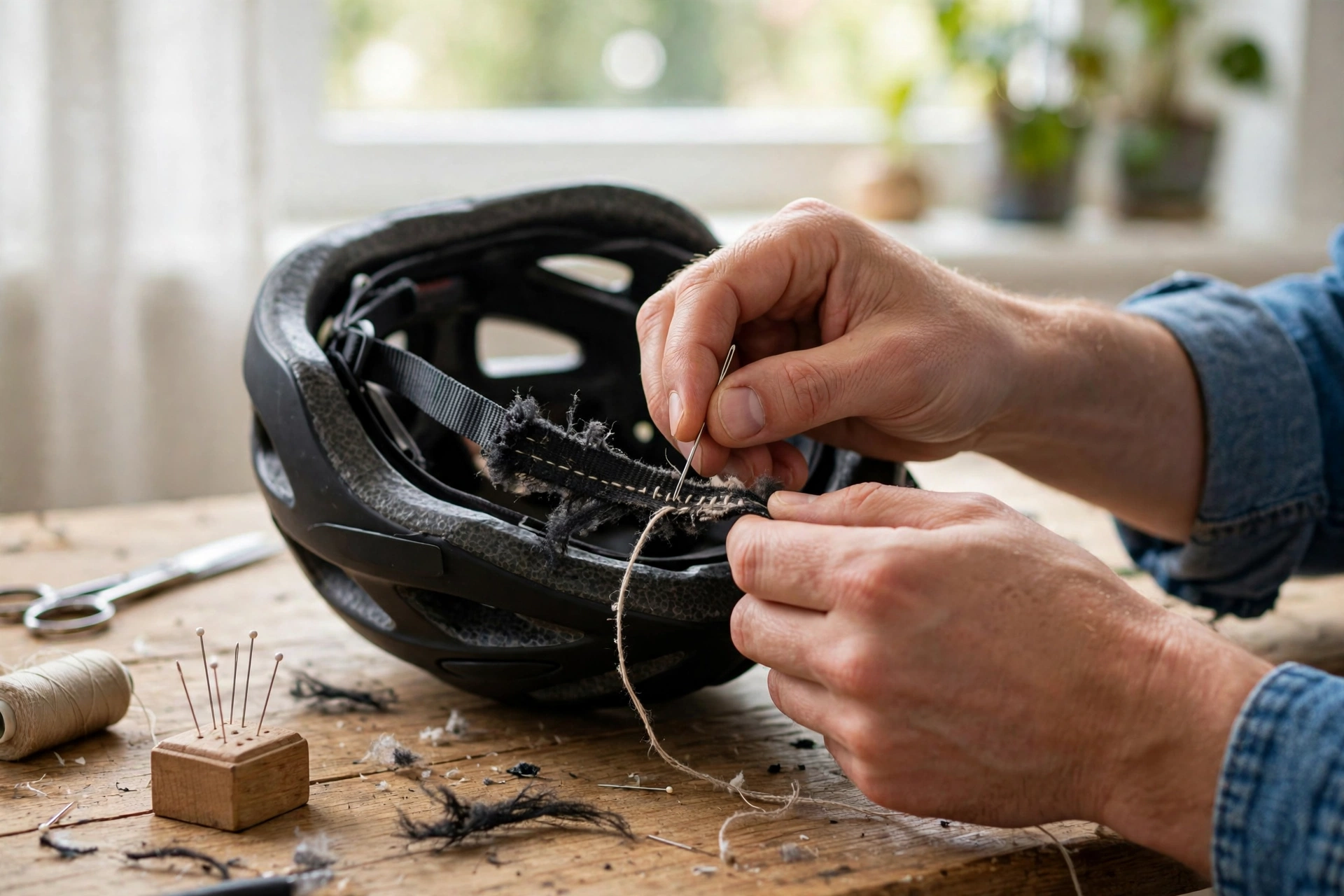
Stitching is a good way to mend a strap that is fraying along its edge or at a join. Use a strong thread, such as upholstery thread or a heavy-duty polyester thread, and a sturdy needle. Sew a row of small, tight stitches along the frayed edge, catching the loose fibres and holding them in place. Keep the stitches close together and pull them snug, but not so tight that they pucker the webbing. A second row of stitches just inside the first will make the repair stronger.
If the fray is at a join, stitch through all the layers of webbing and make sure the thread goes through solid material, not just the frayed edge. After stitching, test the strap by pulling it hard and by fastening and unfastening the buckle several times. If you want to understand one of the safety technologies used in modern helmets, reading about what MIPS is for helmets is a useful starting point, and a reminder that the strap is part of the helmet’s safety system, not just a comfort fitting.
When Should You Replace a Strap Instead of Mending It?
Replace a strap instead of mending it whenever the damage is more than light fraying at the end. A strap that is torn, cut, badly frayed across its width, or weakened anywhere along its length cannot be made safe by stitching. The same applies to a strap with broken stitching at the buckle or at the helmet, because that stitching carries the load in a crash. A new strap, fitted by the maker or by a specialist, is the only safe answer in these cases.
Many helmet makers sell replacement straps, and a bike shop or sports retailer can often fit one for you. If a replacement strap is not available for your helmet, or if the helmet is old, it may be time for a new helmet altogether. In general terms, a strap is a small part with a big job, and it is not worth mending a strap that is past its best. A new strap is inexpensive, and a helmet that stays on your head is worth far more than the money saved by a risky repair.
How Can You Stop Helmet Straps From Fraying?
Stopping straps from fraying starts with gentle handling. Fasten and unfasten the buckle carefully rather than yanking the strap, and do not pull the strap tight beyond what is needed for a snug fit. Keep the helmet out of strong sun and away from heat when you are not using it, and store it in a dry place where the straps will not be crushed or caught. A helmet bag is a simple way to protect the straps during transport and storage.
Cleaning helps too. Wash the straps now and then with mild soap and warm water, rinse them well, and let them dry in the air away from direct heat. This removes sweat, salt, and grit that wear the fibres down. Check the straps regularly as part of a quick helmet check, and deal with a small fray early, before it spreads. In general terms, a little care will keep straps in good condition for the life of the helmet, and a strap that is looked after is far less likely to need mending at all.
Can I mend a frayed helmet strap with glue?
Yes, for light fraying at the end of the strap, a fabric sealant or clear glue can seal the edge. For a badly frayed or torn strap, replace it instead.
Is it safe to melt a nylon strap end with a flame?
It can seal the fibres, but do it with great care, holding the strap with pliers and melting only the very edge. A fabric sealant or stitching is a safer method for most people.
When should a frayed strap be replaced?
When it is torn, cut, frayed across most of its width, or feels weak anywhere along its length. If the strap’s strength is ever in doubt, replace it.

Olivia
Writer at Helmet Today, covering helmet reviews, fit and riding safety.