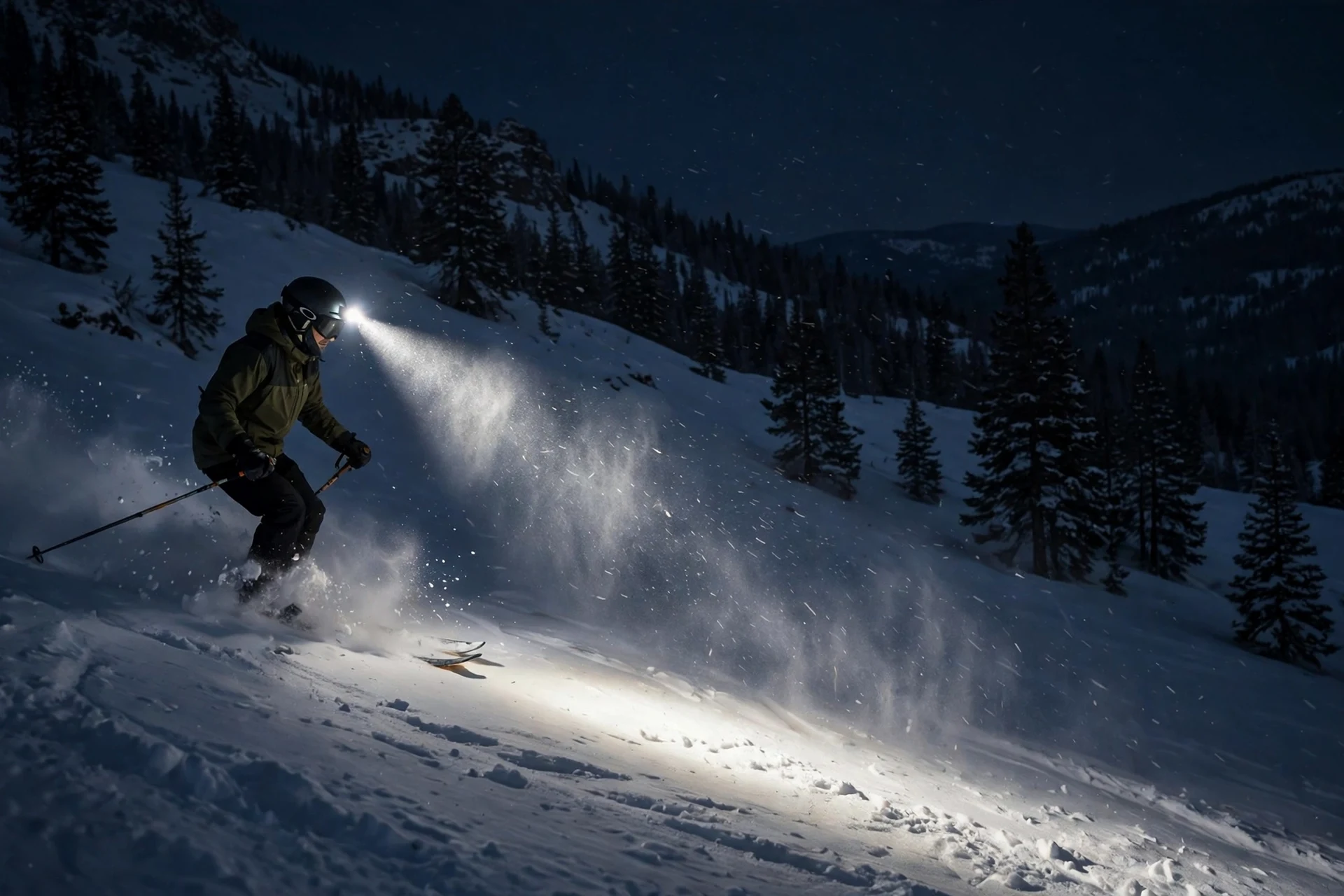
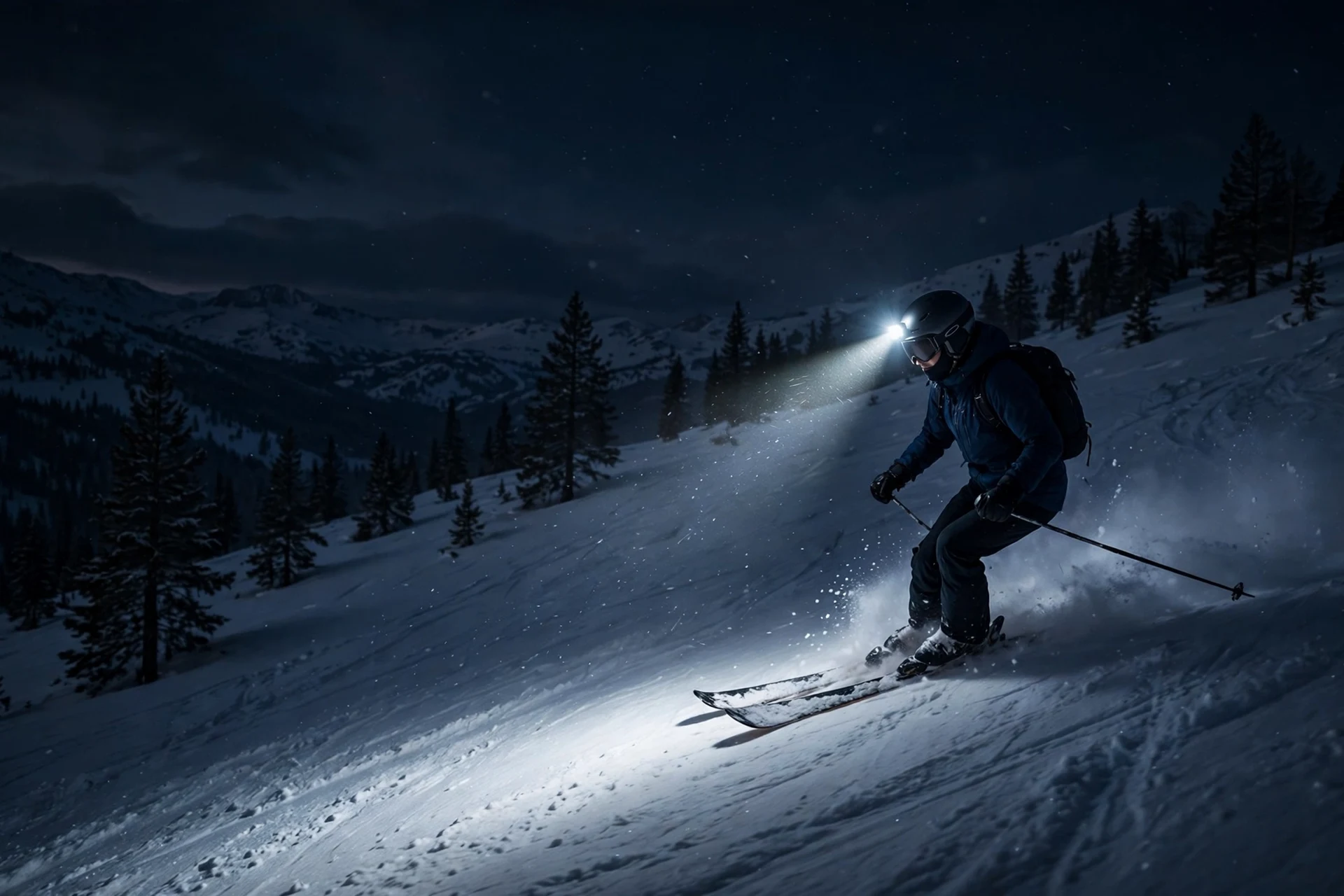
A helmet light mount lets you fix a light to your ski helmet so you can see the slope in front of you when skiing at night. In general terms, it is a small bracket or clip that holds a headlamp or a dedicated ski light firmly on the helmet, keeping your hands free and the beam pointing where your head points. Night skiing is a growing part of the sport, from floodlit resort runs to backcountry tours that finish after dark, and a good light mount matters because a light that slips, bounces, or points the wrong way is worse than no light at all.
What Is a Helmet Light Mount?
A helmet light mount is a bracket, clip, or strap system that attaches a light to the outside of a ski helmet. Some mounts are made by the helmet maker and fit a specific model, clipping into a slot or screwing into a fixing point on the shell. Others are universal: a strap that wraps around the helmet, a clamp that grips a vent, or an adhesive base that sticks to the shell and holds the light in place.
The mount’s job is simple but important. It must hold the light securely through bumps, jumps, and falls, and it must keep the beam steady so you can read the snow ahead. A light that wobbles makes it hard to judge bumps and dips, and a light that falls off mid-run leaves you skiing blind. In general terms, a mount made for your helmet model will fit more securely than a universal one, though a good universal mount can work well if it is fitted carefully.
Why Mount a Light on Your Helmet?
Mounting the light on your helmet has one big advantage over holding it or clipping it to your chest: the beam follows your gaze. Wherever you look, the light looks too, so you can scan the slope ahead, check a turn, or look down at your skis without thinking about it. A chest-mounted light, by contrast, points where your body points, which is not always where you are looking.
A helmet mount also keeps both hands free for poles and balance, which matters on steep or icy night runs. It keeps the light high up, so the beam clears your poles and your own shadow, and it keeps the light out of the way when you fall. The downside is weight: a heavy light can make the helmet feel nose-heavy, so many night skiers choose a light with a separate battery pack worn on the body. If you want to understand how helmets protect the head in a fall, reading about what MIPS is for helmets is a useful starting point, though a light mount does not change how the helmet itself protects you.
What Types of Helmet Light Mount Are There?
There are several types of helmet light mount, and the right one depends on your helmet and your light. Clip-in mounts fit into a slot or rail built into the helmet, and they are usually the neatest and most secure option. Strap mounts wrap an elastic or webbing strap around the helmet and hold a headlamp in place, which is simple and works with many helmets. Adhesive mounts stick a base plate to the shell, and the light clips on and off that plate.
Some lights come with their own mount in the box, designed to fit that light and a range of helmets. Others are sold separately, and you need to check that the mount fits both your helmet and your light. Vent mounts are best avoided, because they can block ventilation and may not hold the light firmly. Whatever type you choose, check that it does not cover a vent you need, and that it does not interfere with your goggles or their strap.
How Do You Fit a Helmet Light Mount?
Fitting a helmet light mount is usually straightforward, but it is worth doing it at home before your first night run. For a clip-in mount, follow the helmet maker’s instructions and make sure the mount clicks fully into place. For a strap mount, thread the strap through the light and around the helmet, then tighten it so the light sits flat and does not rock from side to side. For an adhesive mount, clean the shell with a suitable cleaner, let it dry, press the base on firmly, and leave it to cure for the time the maker recommends before you use it.
Once the mount is fitted, add the light and check the beam angle. The light should point slightly downwards, so the beam lands on the snow a few metres ahead, not up into the trees or down at your skis. Test the fit by shaking your head gently: if the light moves, tighten the mount or reposition it. Check that the mount does not stop the helmet sitting correctly on your head.
What Makes a Good Night Skiing Light?
A good night skiing light is bright enough to read the snow, with a beam wide enough to see the edges of the run as well as the centre. A narrow spotlight can leave the sides of the slope in darkness, which makes it hard to judge the width of the piste or to spot other skiers. Many night skiers prefer a light with both a wide flood beam and a brighter spot in the middle, so they can see near and far at once.
Battery life matters too. A light that fades halfway down a run is a real problem, so check the run time at the brightness you plan to use, and carry a spare battery or a backup light if you are going far from the lifts. Cold weather shortens battery life, so keep spare batteries warm inside your jacket. In general terms, a light with a simple, glove-friendly switch is worth choosing, because fumbling with a tiny button in thick gloves on a cold, dark slope is nobody’s idea of fun.
What Should You Check Before a Night Ski?
Before a night ski, check the light, the mount, and the helmet as a set. Charge the battery fully, test the light on its brightest setting, and check that the mount holds it firmly. Make sure the beam points where you need it, and that the light does not dazzle other skiers when you look at them.
Check the helmet itself too: the fit, the chin strap, and the goggles. Night skiing can be colder than day skiing, so make sure your goggles do not fog when you stop. In general terms, a night run deserves the same care as a day run, with a little extra attention to light and warmth, because the margin for error is smaller when you cannot see as far ahead.
Can I use a normal headlamp on my ski helmet?
Yes, in general terms, a headlamp with a strap mount works on many ski helmets. A dedicated ski light with a proper mount is usually more secure and brighter, though, so it is worth considering for regular night skiing.
Will a light mount damage my helmet?
It should not, if it is fitted as the maker intends. Avoid drilling into the shell or using a mount that presses hard on one spot, and remove adhesive mounts carefully so you do not damage the shell or its finish.
Do I need a light for floodlit night skiing?
Not always, since floodlit runs are lit by the resort. A helmet light still helps on darker stretches, in poor weather, and on the way back to the lifts, so many skiers carry one even on lit slopes.

Olivia
Writer at Helmet Today, covering helmet reviews, fit and riding safety.