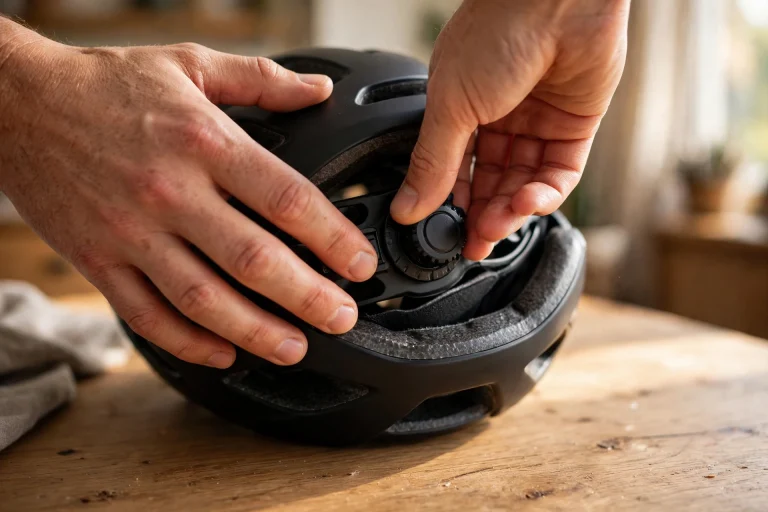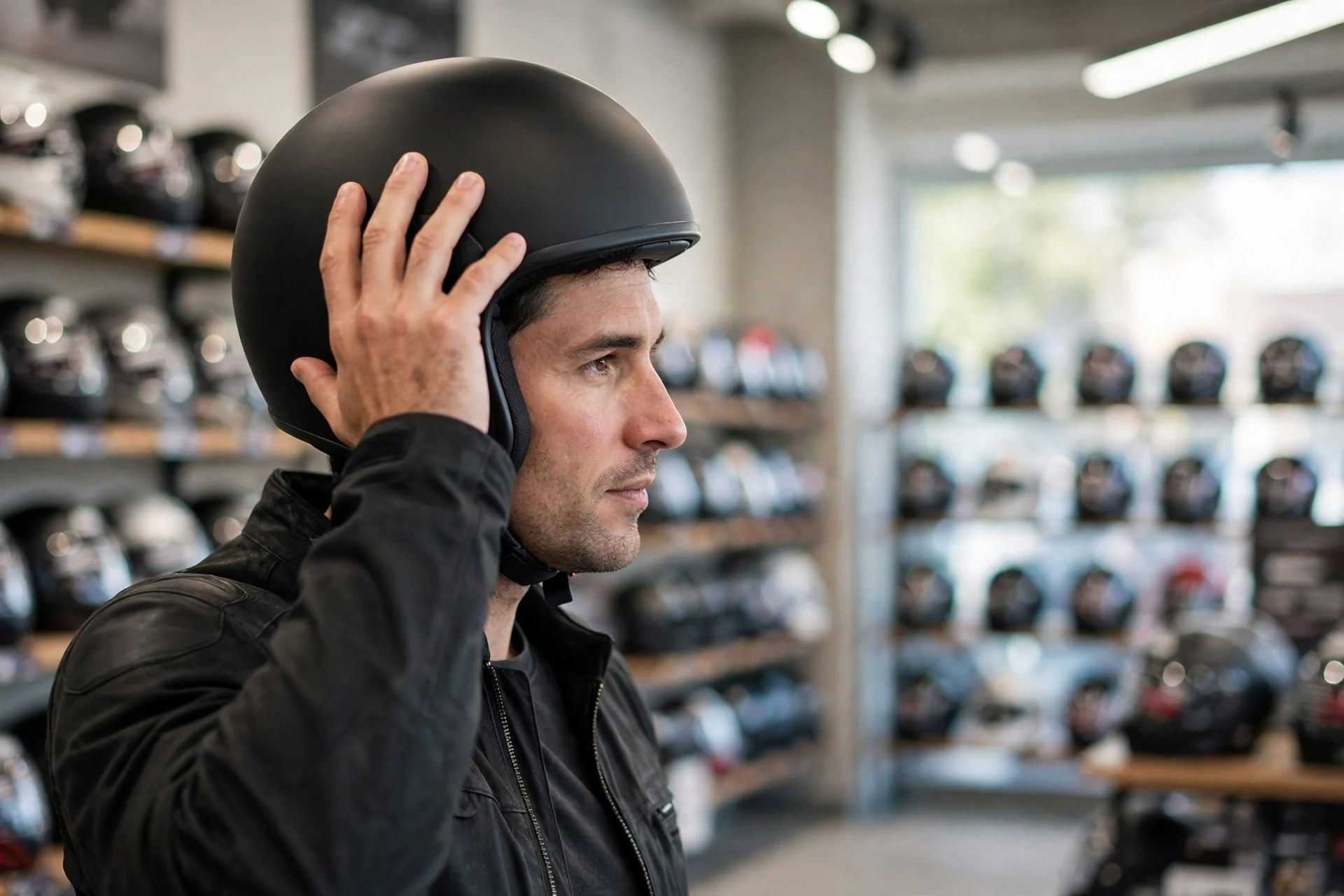
Helmet fit for riders with a round head is about finding a shell shape that matches a head that is nearly as wide as it is long. A round head needs a rounder helmet, because a helmet made for a long, oval head will press at the sides and leave gaps at the front and back. Many riders do not know their head shape until they try on a helmet that fits badly, and the usual sign is pressure at the temples or the sides of the head, even when the size seems right. The fix is usually a different shell shape, not a different size.
What Is a Round Head Shape?
A round head shape is one where the width of the head, measured from side to side, is close to its length, measured from front to back. Seen from above, the head looks more like a circle than an oval, with a broad forehead and a full shape at the sides. This is a common head shape, and it is neither better nor worse than any other, but it does affect which helmets fit well, because most helmets are made in one of a few standard shapes.
Head shape varies from person to person, and it is not always easy to judge by looking in a mirror. The clearest test is trying on helmets: if a helmet presses at the sides but feels loose at the forehead and the back, the shell is probably too narrow for a round head. In general terms, a round head suits a round or intermediate round shell, while a long oval shell is likely to feel tight at the sides.
How Does a Round Head Change Helmet Fit?
A round head changes helmet fit because the widest part of the head meets the narrowest part of the helmet. In a helmet made for a long oval head, the shell is longer front to back and narrower side to side, so a round head pushes against the sides and leaves empty space at the forehead and the back. That pressure can cause headaches on a long ride, and the gaps can let the helmet shift, which is a problem in a crash.
Going up a size does not fix the problem, because a bigger helmet in the same shape is still narrow at the sides, and it will feel loose where it should be snug. The result is a helmet that presses in the wrong places and moves in the wrong ways. If you want to understand one of the safety technologies used in modern helmets, reading about what MIPS is for helmets is a good place to start, though shell shape matters more than any single technology for a round head.
How Can You Tell If a Helmet Suits a Round Head?
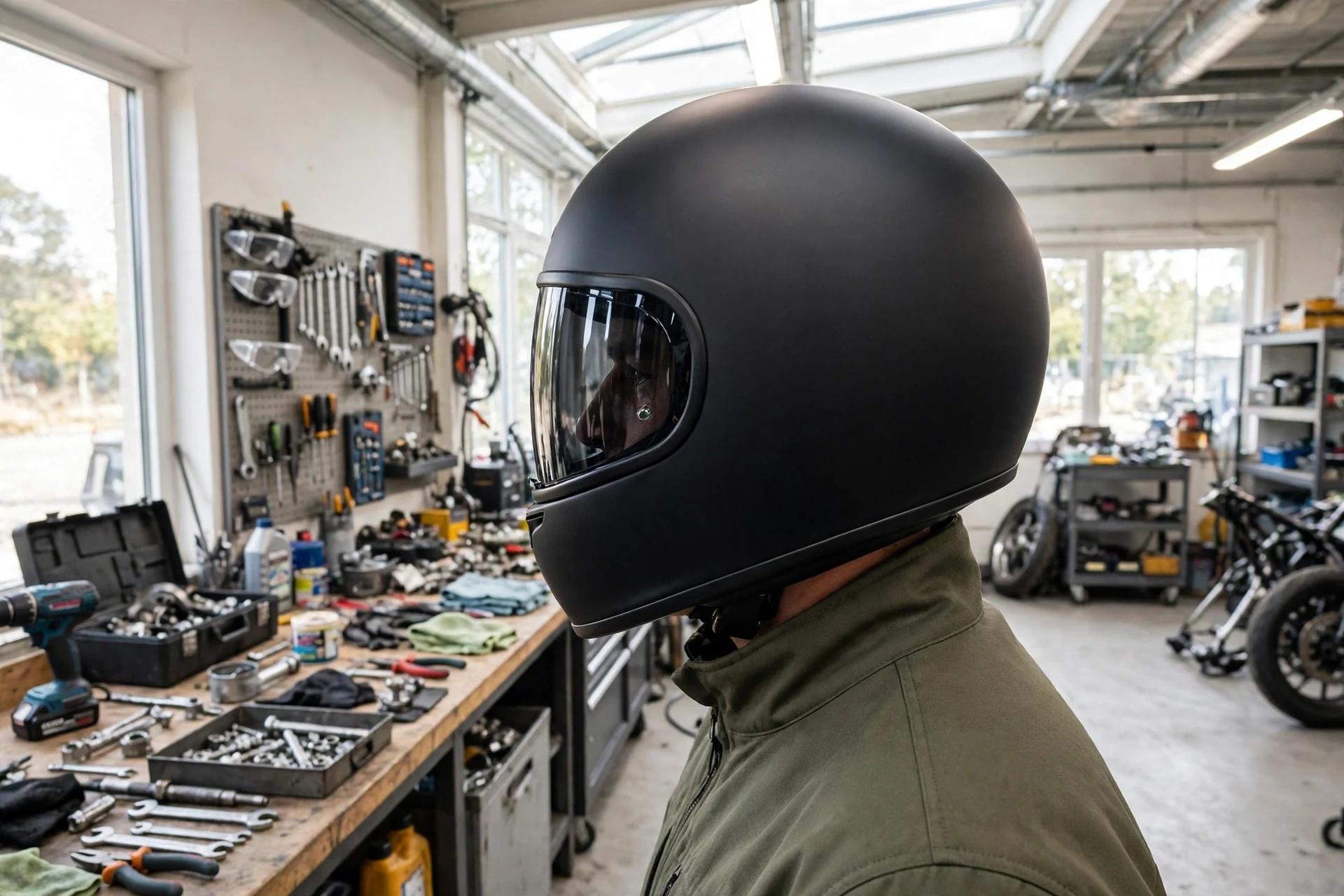
You can tell a helmet suits a round head when it feels snug and even all round, with no pressure at the sides and no gaps at the forehead or the back. It should sit level, covering the forehead without slipping down over the eyes, and it should stay put when you shake your head from side to side. If the helmet presses at the temples after a few minutes, the shell is probably too narrow for your head shape.
A simple check is to wear the helmet for ten or fifteen minutes before deciding, because pressure that feels minor at first can become a headache on a long ride. The cheek pads should press gently and evenly, and the chin strap should fasten snugly without pulling the helmet out of shape. In general terms, a helmet that suits a round head feels comfortable straight away, with even pressure all round rather than tight spots at the sides.
What Features Help a Round Head Fit Better?
For a round head, the most helpful feature is a shell made in a round or intermediate round shape, since that matches the head instead of fighting it. Some helmet makers offer different shell shapes, and some offer the same model in more than one shape, so it is worth asking or checking the maker’s description before buying. A helmet with adjustable padding can also help, because thicker or thinner pads can fine-tune the fit in small steps.
Removable cheek pads and crown pads are useful, because swapping them lets the rider adjust the fit at the sides without changing the shell. Vents and a light weight matter too, since a helmet that fits well but feels heavy or hot will still be uncomfortable on a long ride. The best approach is to try on several shapes in the same size, and to choose the one that feels even all round, rather than the one with the most features.
What Mistakes Do Riders with a Round Head Make?
The most common mistake riders with a round head make is buying a bigger size to escape the pressure at the sides. A bigger helmet in the same narrow shape is still narrow at the sides, and it will be loose at the forehead and the back, so it presses where it should not and moves where it should not. The right fix is a rounder shell, not a bigger size, and it is worth trying a different model rather than a different size.
Another common mistake is buying a helmet online without trying it on, or choosing a helmet because a friend likes it. Head shape is personal, and a helmet that fits a friend’s oval head may not fit a round head at all. Rushing the choice is a mistake too: a helmet that feels fine for a minute in a shop can press painfully after an hour on the road, so it is worth wearing it for a while before deciding.
When Should You Try a Different Helmet Shape?
You should try a different helmet shape when your current helmet presses at the sides, leaves gaps at the front or back, or gives you a headache on longer rides. These are signs that the shell shape does not match your head, and changing size alone is unlikely to fix them. Trying a rounder shell in the same size is the simplest next step, and it often solves the problem straight away.
A helmet should also be replaced after a hard impact, even if it looks fine from the outside, because the liner inside can compress or crack in a heavy knock. Wear and tear matters too: padding that has gone thin, straps that no longer hold, or a shell that feels brittle are all signs that the helmet has reached the end of its useful life. In general terms, the right helmet for a round head is one that feels even, stays put, and is comfortable for the whole ride.
How do I know if I have a round head?
Try on helmets and notice where they press. If helmets press at the sides but feel loose at the forehead and back, your head is likely round. A round or intermediate round shell should feel even all round.
Should I buy a bigger helmet for a round head?
No, in general terms a bigger size does not fix a shape problem. A bigger helmet in the same narrow shape will still press at the sides and be loose elsewhere, so a rounder shell in your usual size is the better choice.
Do all helmet brands fit round heads the same way?
No, shell shapes vary between brands and models. One brand’s round shape may fit differently from another’s, so it is worth trying on several helmets and choosing the one that feels even all round.

Olivia
Writer at Helmet Today, covering helmet reviews, fit and riding safety.