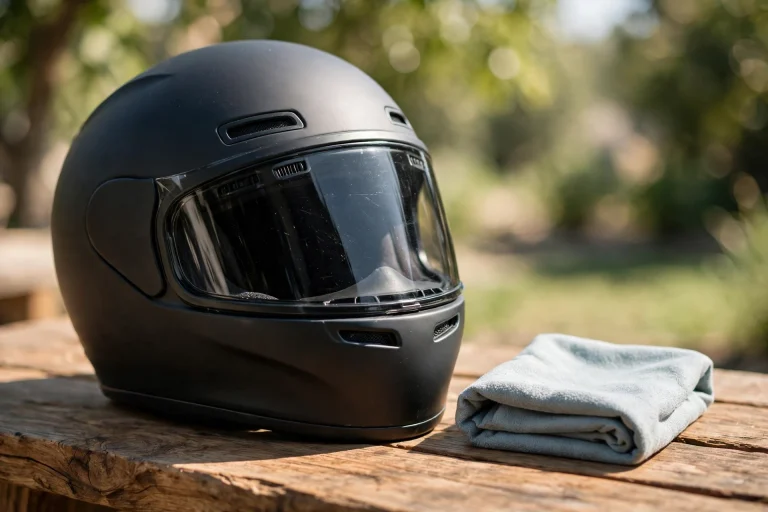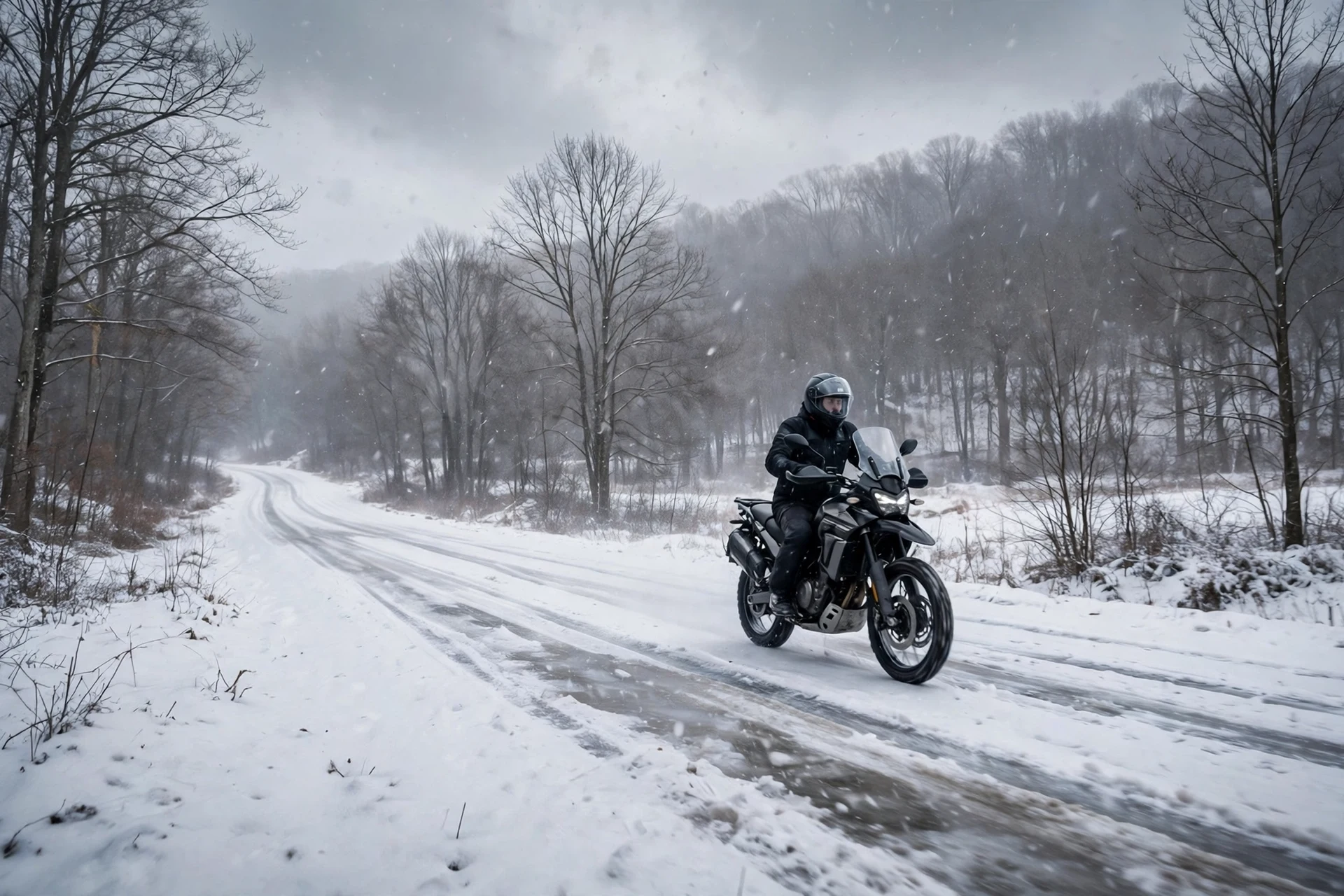
A clear visor is the best choice for winter riding. In general terms, a clear visor lets through the maximum amount of light, which matters in winter when daylight is short, the sun sits low, and much of your riding may happen in grey, dim, or dark conditions. Winter brings its own visor problems, though: cold air, rain, snow, and the fogging that happens when warm breath meets a cold lens. A clear visor solves the light problem, but it still needs the right care and the right anti-fog treatment to keep your view sharp through the cold months.
Why Is a Clear Visor Best in Winter?
Winter daylight is weaker and shorter than summer daylight, and many winter rides happen in overcast weather, at dawn, or after dark. A clear visor makes the most of whatever light is available, so you can see the road surface, spot ice and wet patches, and read road markings and signs as early as possible. In winter, the road surface itself is the main hazard, and seeing it clearly is more important than cutting glare.
A tinted visor, by contrast, cuts light that you can ill afford to lose in winter. Even a light tint can make a grey afternoon feel darker, and a dark tint can be genuinely dangerous on an unlit road. A clear visor also makes it easier to see in tunnels, under bridges, and in the shade of trees or buildings, where winter light can drop suddenly. For that reason, most riders who ride through the winter keep a clear visor fitted for the whole season.
What Is the Fogging Problem in Winter?
Fogging is the most common visor problem in winter. It happens when warm, moist air from your breath hits the cold inside surface of the visor and condenses into tiny water droplets. The result is a misty film that can blur your vision in seconds, often at the worst moment, such as when you stop at a junction or slow down in traffic and the airflow through the helmet drops.
The problem is worse on cold, damp days, and it is worse still if you are breathing hard or wearing a balaclava that directs your breath upwards. A fogged visor is not just annoying; it can hide a hazard until it is too late to react. That is why winter riders treat anti-fog measures as essential kit, not as an optional extra, and why the clear visor you choose for winter is only half the story.

How Do You Stop a Clear Visor Fogging?
The most effective anti-fog solution for most riders is a Pinlock insert, a second lens that fits inside the visor and creates a double-glazed effect. The air trapped between the two layers stays dry, so condensation cannot form on the inner surface. Pinlock inserts are made to fit specific visors, so you need the right one for your helmet model, and the seal around its edge must be kept clean for it to work properly.
Other options include anti-fog sprays and wipes, which leave a thin coating that stops droplets forming, and a breath guard or chin curtain, which deflects your breath away from the visor. A balaclava with a breath deflector can help too. In general terms, a combination works best: a Pinlock insert for the worst days, plus good helmet ventilation to keep fresh air moving across the inside of the visor. Whatever you use, test it before a long ride, because an anti-fog treatment that fails halfway through a cold commute is worse than useless.
What About Rain and Snow on a Clear Visor?
Rain and snow are a fact of winter riding, and a clear visor will get wet. At speed, the airflow usually clears light rain from the visor, but in slow traffic or heavy rain, droplets can sit on the lens and distort your view. A water-repellent treatment, applied to the outside of the visor, can help rain bead up and blow off more easily, and many riders reapply it through the winter as it wears off.
Snow is a different problem, because flakes can stick to a cold visor and build up. Brushing snow off with a gloved hand can scratch the lens, so it is better to let the airflow clear it, or to stop and wipe it gently with a soft cloth. In general terms, keeping the visor clean is even more important in winter than in summer, because salt spray, grit, and road grime from winter roads can leave a film that scatters light from headlights and makes night riding much harder.
How Should You Clean a Clear Visor in Winter?
Cleaning a clear visor in winter needs a gentle touch. Rinse it first with lukewarm water to wash off grit, salt, and insects, then wipe it with a soft microfibre cloth or a cleaner made for helmet visors. Avoid hot water, which can damage anti-fog coatings, and avoid paper towels or rough cloths, which can leave fine scratches that scatter light. If the visor has a Pinlock insert, follow the maker’s advice, since the insert is more delicate than the visor itself.
It is also worth cleaning the inside of the visor regularly, because a film of breath residue and dust builds up there over time and makes fogging worse. When you are not riding, store the helmet somewhere dry and not too cold, so the visor and its coatings are not left in freezing conditions for long periods. If you want to understand how helmets protect the head in a crash, reading about what MIPS is for helmets is a useful starting point, though no visor treatment can replace a well-fitting helmet.
When Should You Replace a Clear Visor?
A clear visor should be replaced when scratches, clouding, or coating damage start to affect your vision. In winter, fine scratches from grit and from wiping snow and salt off the lens can build up quickly, and each one scatters a little light. At night, that scatter shows up as a halo around every headlight and street light, which is tiring and can hide the road ahead.
Check the visor in good light before the winter season starts, and again halfway through it. Look through it at a bright light and see whether the view is sharp or hazy. If the anti-fog coating is peeling, the Pinlock seal is failing, or the visor no longer sits tightly in its pivots, it is time for a new one. In general terms, a visor is a consumable part, and a fresh clear visor is one of the cheapest ways to improve your vision on a winter ride.
Can I use a tinted visor in winter?
You can on a bright winter day, but a clear visor is better for most winter riding. Winter light is weak and short, and a tint cuts light you need to see ice, wet patches, and road markings.
Does a Pinlock insert work in very cold weather?
In general terms, yes. A Pinlock insert is designed to stop fogging in cold, damp conditions, and it is the most popular anti-fog solution for winter riders, provided it is the right fit and the seal is clean.
How do I stop my visor fogging at traffic lights?
Crack the visor open slightly at a stop to let fresh air in, and make sure your breath guard is in place. A Pinlock insert or anti-fog treatment helps too, since fogging is worst when airflow stops.

Olivia
Writer at Helmet Today, covering helmet reviews, fit and riding safety.