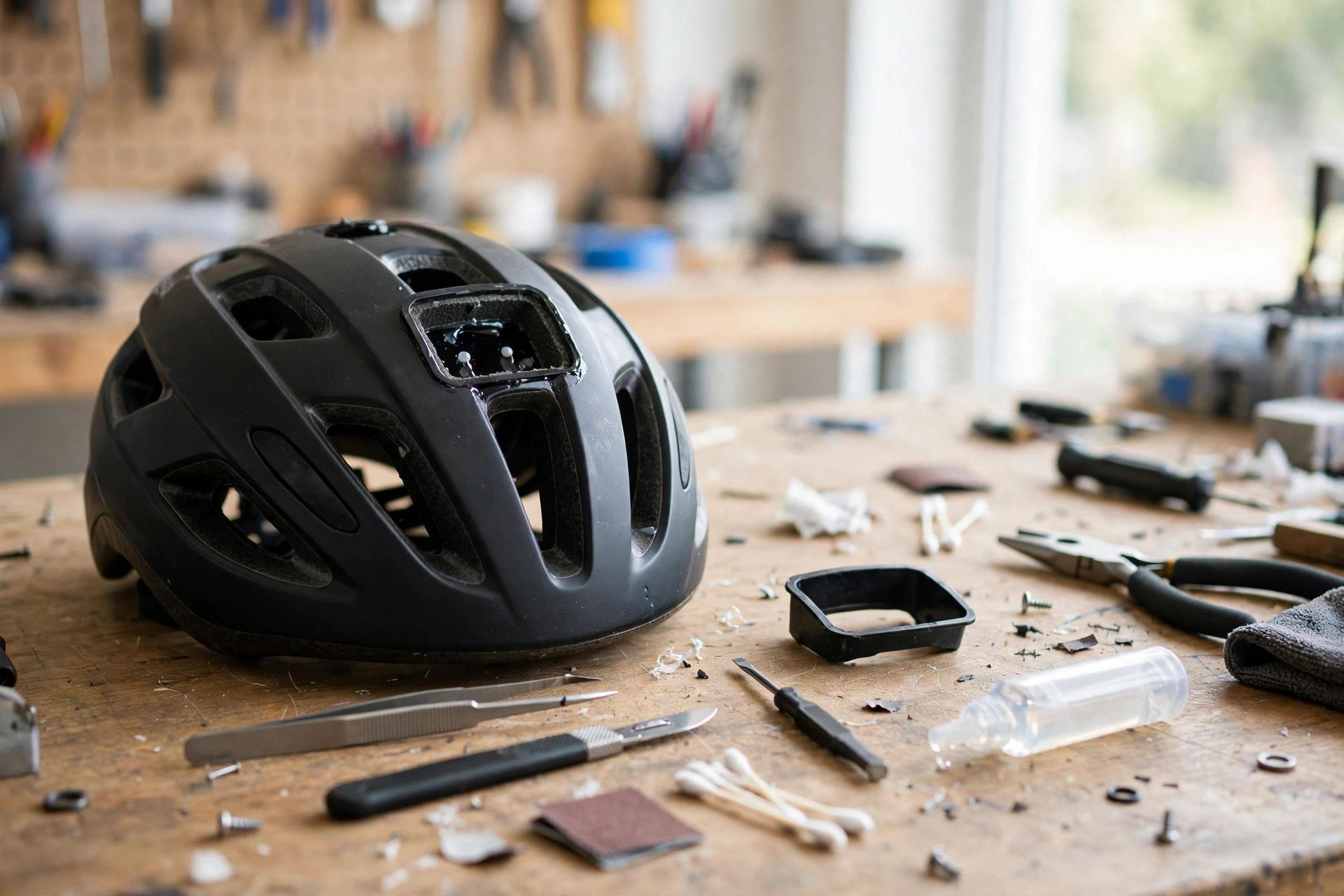
Yes, you can often repair a helmet vent cover, and in many cases it is a simple job that needs no special tools. The vent cover is the small plastic piece that sits over a vent in the helmet shell, and it can crack, come loose, or go missing without affecting the helmet’s protection. The repair is worth doing when the shell and liner underneath are still sound. If the shell around the vent is cracked, or the liner is damaged, the helmet should be replaced rather than repaired.
What Is a Helmet Vent Cover?
A helmet vent cover is the small cap, grille, or slider that sits over a vent opening in the helmet’s shell. Its job is to control airflow and to keep out rain, dirt, and insects while still letting air pass through. Some covers are fixed in place, while others slide open and closed so you can adjust the ventilation to suit the weather. They are usually made of light plastic and are held in place with small clips, screws, or a friction fit.
The vent cover is not part of the helmet’s protective structure. The protection comes from the shell and the liner underneath, while the cover is a comfort and weather part that can be replaced on its own. That is why a broken cover is usually a minor problem rather than a safety problem. In general terms, the cover is a small part with a simple job, and fixing it is a small job too.
How Do You Tell If a Vent Cover Can Be Repaired?
Start by taking a close look at the cover and at the helmet around it. If the cover is cracked but still in one piece, it can often be glued. If it is loose because a clip has snapped, it may be held in place with tape or a small amount of glue, or a replacement cover may be the better answer. If the cover is missing altogether, a replacement is usually the simplest fix. In each case, the repair depends on the cover itself, not on the helmet.
Before you repair anything, check the shell and the liner around the vent. Look for cracks running out from the vent opening, dents in the shell, or damage to the liner that you can see through the opening. If anything seems wrong with the shell or liner, do not repair the cover and keep using the helmet. In general terms, a vent cover repair is only safe when the helmet itself is sound, and if its protection is ever in doubt, the helmet should be replaced.
How Do You Glue a Cracked Vent Cover?
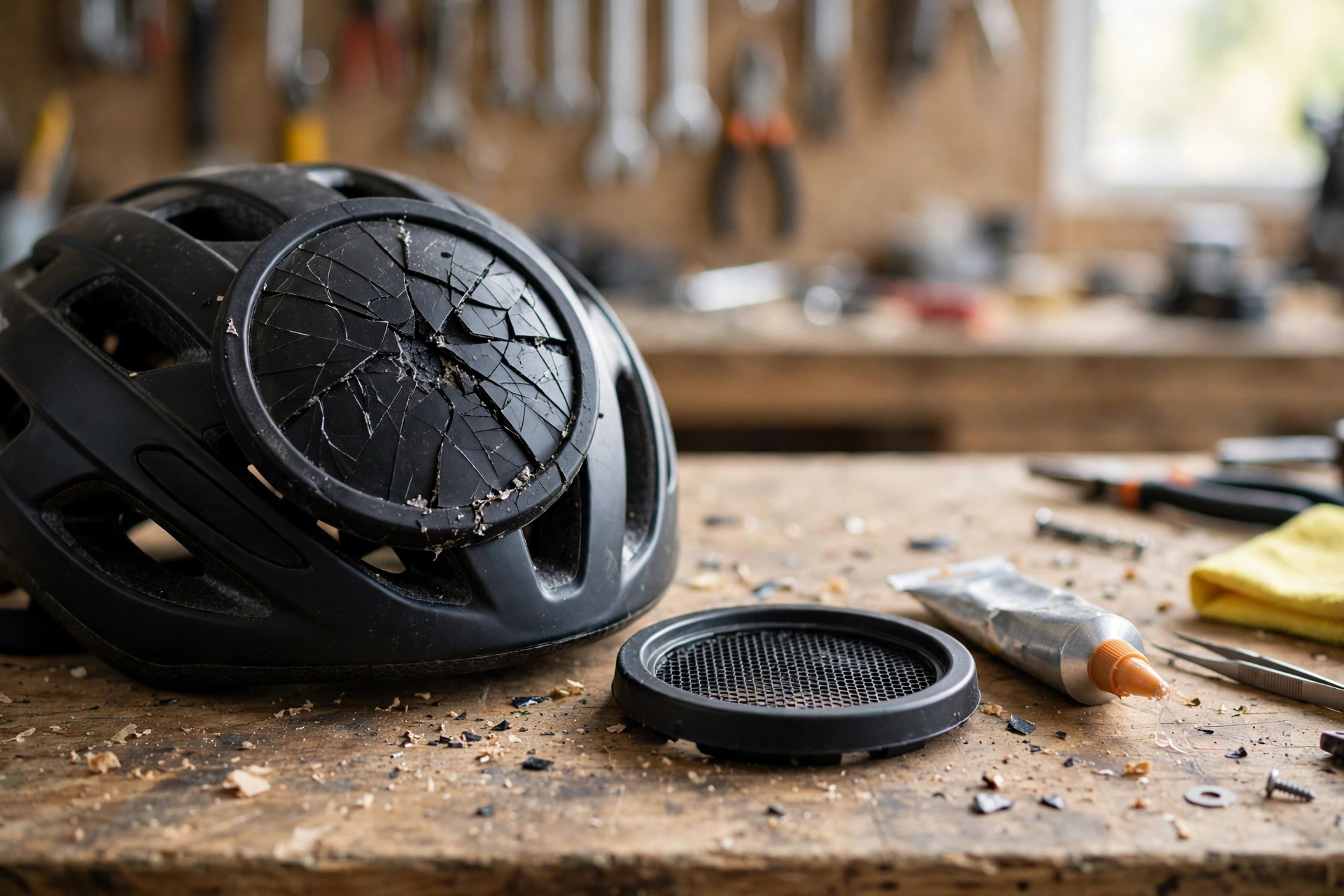
Gluing a cracked vent cover is straightforward if you take your time. First, clean both sides of the break with warm soapy water and let them dry fully, because glue will not hold well on a dirty or greasy surface. Use a glue made for plastic, such as an epoxy or a plastic repair adhesive, and apply a thin layer along the break. Press the pieces together firmly and hold them until the glue starts to set, then leave the cover alone until the glue has cured fully, following the time on the packet.
Once the glue has cured, check the repair by fitting the cover back on the helmet and pressing it gently. It should sit flat and stay in place without wobbling. If the crack opens up again, the cover may be too damaged to save, and a replacement is the better option. Do not use so much glue that it blocks the vent or drips on to the liner. A neat, thin glue joint is stronger and looks better than a thick, messy one.
How Do You Fit a Replacement Vent Cover?
Fitting a replacement vent cover is usually the best fix when the original is lost or broken beyond repair. The first step is to find the helmet’s make and model, which is usually printed on a label inside the helmet. With that information, check the maker’s website or ask at a bike shop or sports retailer for a spare cover. Many makers sell vent covers as spare parts, and they are usually inexpensive.
To fit the new cover, line up its clips with the holes or slots in the shell and press it gently into place until it clicks. Test the cover by opening and closing it, if it is a slider, and by pressing it lightly to check that it stays put. If you want to understand one of the safety technologies used in modern helmets, reading about what MIPS is for helmets is a useful starting point, and a reminder that the cover is only a small part of the helmet’s safety system.
What If No Replacement Cover Is Available?
If the maker no longer stocks a cover for your helmet, there are still a few options. A cover from a similar model by the same maker may fit, so it is worth asking a shop to try one. Some shops keep a box of spare parts from old helmets, and a cover from a different helmet may fit well enough to do the job. Universal vent covers are also sold by some retailers, though you should check the size and clip positions carefully before buying.
If no cover fits at all, you can cover the vent opening from the inside with a small piece of fine mesh or strong tape as a temporary measure. This will keep out rain and insects, though it will not look as neat as a proper cover and it may reduce airflow a little.
When Should You Replace the Helmet Instead?
Replace the helmet instead of repairing the vent cover whenever the damage goes beyond the cover itself. A cracked shell, a damaged liner, a strap that no longer holds, or a helmet that has been in a crash are all reasons to retire it, even if the vent cover looks like the only problem. The cover is a small, replaceable part, while the shell and liner are the parts that save your head.
Age is another reason to replace rather than repair. If the helmet is old, the plastic may be brittle, and a new cover may not hold in a weakened shell. In that case, the money spent on parts would be better spent on a new helmet. In general terms, repair the cover when the helmet is otherwise sound and fairly new, and replace the helmet when anything else is wrong with it. If its protection is ever in doubt, replace it.
Can I repair a helmet vent cover with glue?
Yes, in general terms. A plastic repair glue or epoxy usually works for a cracked cover, as long as the shell and liner underneath are sound.
Where can I buy a replacement vent cover?
From the helmet maker, a bike shop, or a sports retailer. You will need the helmet’s make and model, which is usually printed on a label inside the helmet.
Can I wear a helmet with a missing vent cover?
Yes, if the shell and liner are sound. A missing cover is a comfort issue, but fit a replacement when you can, and replace the helmet if its protection is ever in doubt.

Olivia
Writer at Helmet Today, covering helmet reviews, fit and riding safety.