Helmet fit for riders with a shaved head is about getting a snug, even fit on a smooth scalp with no hair to cushion or grip the helmet. A shaved head changes how a helmet sits, because hair normally adds a thin layer of padding and friction, and without it, a helmet can feel looser, slipperier, or less comfortable. The good news is that most riders with a shaved head can get a good fit with the right size and padding, as long as they check the fit carefully instead of relying on the size they wore when they had hair.
How Does a Shaved Head Change Helmet Fit?
A shaved head changes helmet fit because hair plays a small but real part in how a helmet grips. Hair adds friction between the scalp and the padding, and it fills tiny gaps between the head and the shell. Without hair, the scalp is smooth, so a helmet can slide more easily, and a size that felt snug before may now feel slightly loose. The difference is usually small, but it is enough to matter at speed, where wind and movement can shift a helmet that is not held firmly.
A shaved head also changes how the padding feels against the skin. Without hair, the padding sits directly on the scalp, so any rough seam, hard edge, or uneven padding is easier to feel. In general terms, a helmet that felt comfortable with hair may feel less so without it, and a helmet that pressed in one spot may now press harder. That is why riders with a shaved head often need to pay more attention to padding and to the shape of the shell.
What Problems Do Riders with a Shaved Head Face?
The most common problem for riders with a shaved head is a helmet that slips or shifts. Because the scalp is smooth, the helmet has less grip, and it can rock forwards or backwards when the rider shakes their head or rides at speed. A helmet that moves around is distracting, and it may not stay in the right place during a crash, which is when it matters most. A snug fit and the right padding are the usual fix.
Comfort is the other common problem. Without hair, sweat sits directly on the scalp and can make the helmet feel sticky or itchy, and the padding can rub the skin raw on a long ride. Some riders also find that a helmet presses on the scalp in a way they did not notice before. If you want to understand one of the safety technologies used in modern helmets, reading about what MIPS is for helmets is a good place to start, though padding and fit matter more than any single technology for a shaved head.
How Should a Helmet Fit on a Shaved Head?
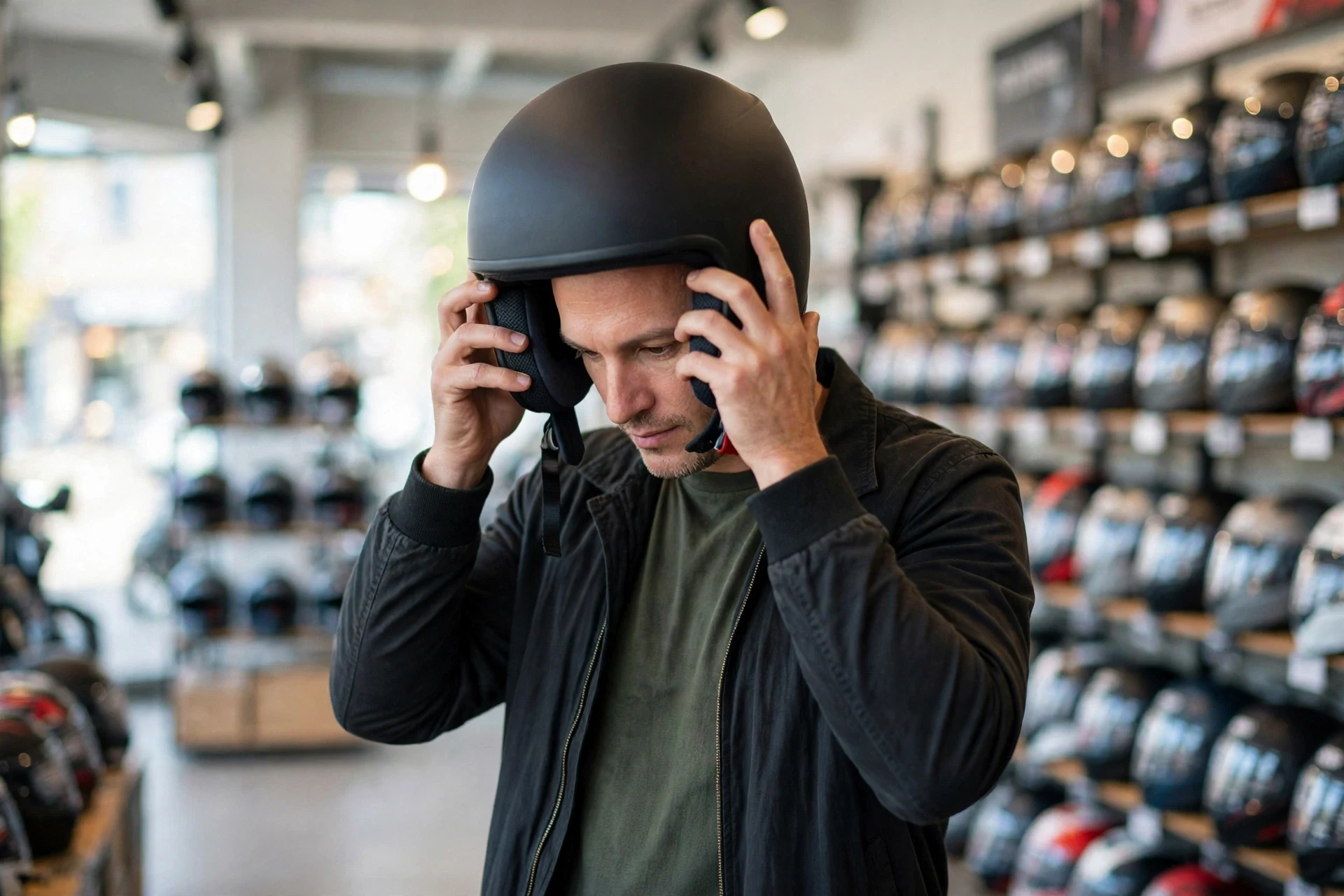
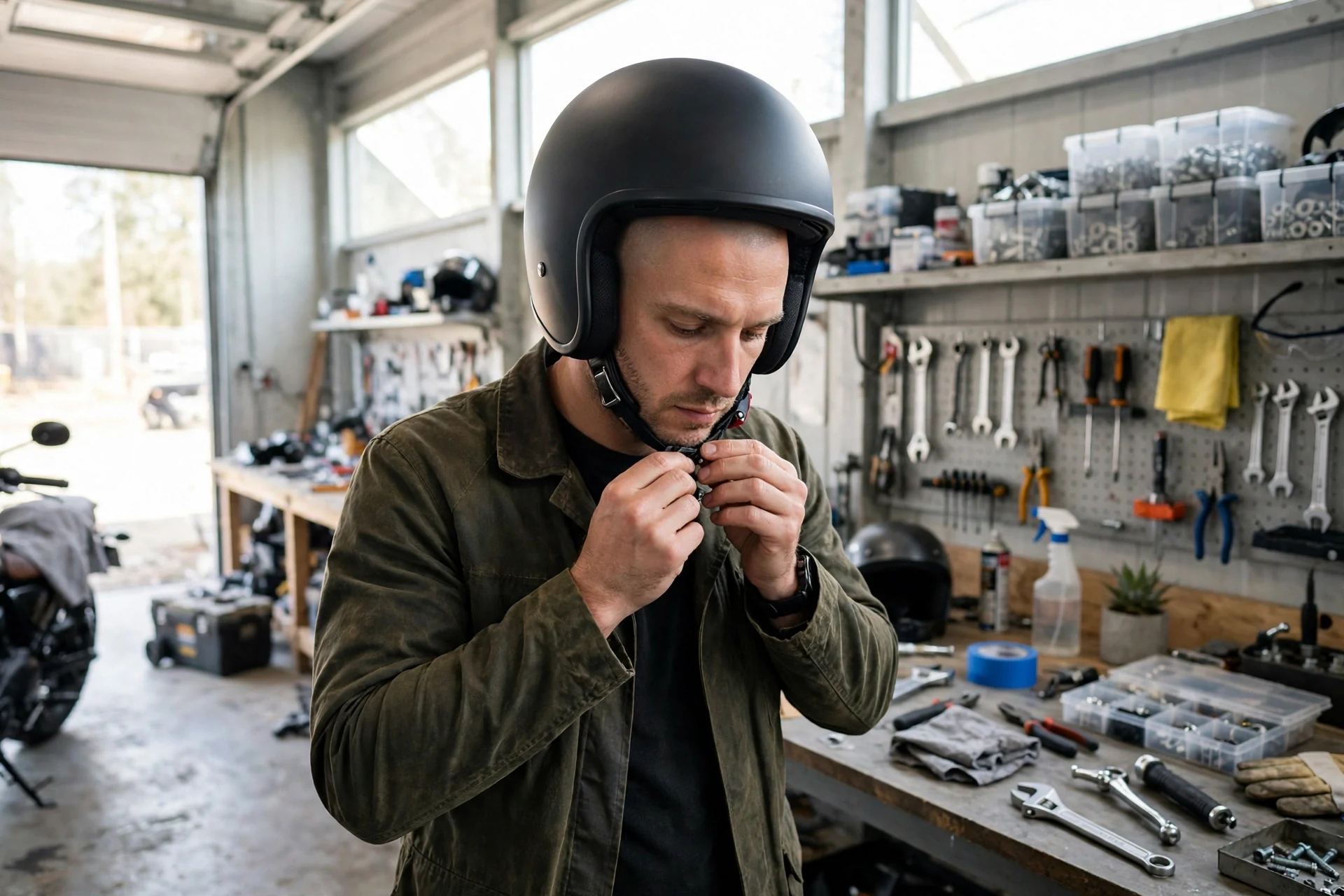
A helmet on a shaved head should fit snugly all round, with no pressure points and no wobbling when the rider shakes their head from side to side. It should sit level, covering the forehead without slipping down over the eyes, and the back should sit low enough to protect the back of the head. The shake test matters more than usual: if the helmet moves easily on a smooth scalp, it is probably too loose, even if it is the size the rider has always worn.
The chin strap should be fastened snugly, and the cheek pads should press gently and evenly on the face, since they help hold the helmet steady when the scalp offers little grip. Trying the helmet on with a thin skull cap or balaclava can help some riders, because it adds a layer of grip and comfort, but the fit should be checked with whatever will actually be worn on the ride. In general terms, a helmet that feels secure on a shaved head during the shake test is a good sign.
What Padding Works Best for a Shaved Head?
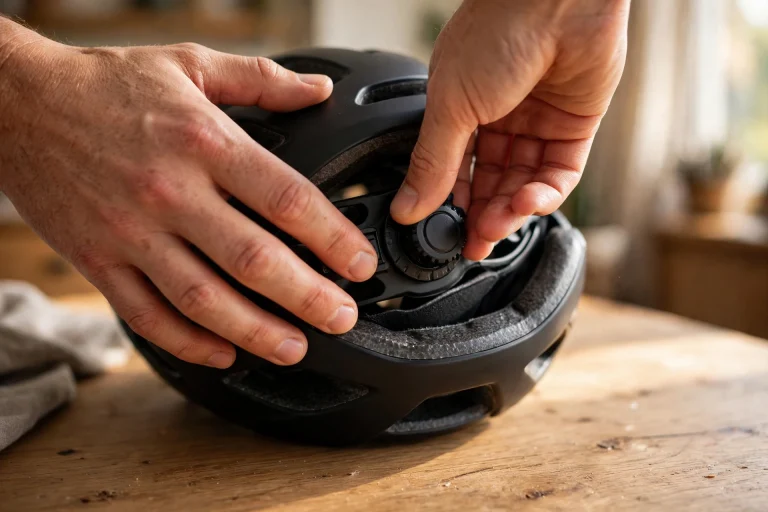
For a shaved head, soft, smooth padding works best, because it sits directly against the skin. Look for padding that feels even all round the head, with no hard seams or rough edges, and for a liner that can be removed and washed, since sweat builds up faster on bare skin. A removable liner also lets the rider swap in thicker or thinner pads to fine-tune the fit, which is useful when the difference between sizes is small.
Some riders find that a thin, moisture-wicking skull cap under the helmet improves both grip and comfort, because it stops the helmet sliding on a sweaty scalp and keeps sweat out of the eyes. Others prefer to wear the helmet directly on the skin and choose a helmet with a soft, seamless liner. Either approach can work, and the right choice is the one that feels comfortable and stays secure on a long ride. Trying both is the simplest way to decide.
How Do You Keep a Helmet Comfortable on a Shaved Head?
Keeping a helmet comfortable on a shaved head starts with keeping the liner clean. Sweat and skin oils build up quickly on bare skin, so washing the liner regularly, if it is removable, keeps it fresh and stops it from becoming itchy or smelly. Wiping the inside of the helmet with a damp cloth after a ride also helps, and letting the helmet air dry between rides stops moisture from sitting in the padding.
It is also worth checking the fit from time to time, because a liner that has compressed with use can make a helmet feel looser on a smooth scalp. Replacing worn cheek pads or crown pads can restore a snug fit without buying a whole new helmet.
When Should You Change Helmet Size or Padding?
You should change helmet size or padding when the helmet no longer stays put on a shaved head, even with the chin strap fastened snugly. If the helmet rocks forwards or backwards easily, or if it slides down over the eyes when you ride, the fit is too loose, and thicker pads or a smaller size may be needed. A helmet that moves around is distracting, and it may not protect the head properly in a crash.
A helmet should also be replaced after a hard impact, even if it looks fine from the outside, because the liner inside can compress or crack in a heavy knock. Wear and tear matters too: padding that has gone thin, straps that no longer hold, or a shell that feels brittle are all signs that the helmet has reached the end of its useful life. In general terms, a helmet that fits a shaved head well is one that feels snug, stays put, and is comfortable for the whole ride.
Do I need a smaller helmet if I shave my head?
Not always. Hair adds only a thin layer, so many riders keep the same size, but some find the helmet feels slightly looser. Check the fit with the shake test, and try thicker pads before buying a smaller size.
Should I wear a skull cap under my helmet?
It can help. A thin, moisture-wicking skull cap adds grip on a smooth scalp, keeps sweat out of your eyes, and can make the helmet feel more comfortable. Try it on a short ride first to see if it suits you.
Does a shaved head make a helmet less safe?
No, in general terms a shaved head does not make a helmet less safe, as long as the fit is snug. The key is to check the fit carefully, since a helmet that slips on a smooth scalp protects less well than one that stays put.

Olivia
Writer at Helmet Today, covering helmet reviews, fit and riding safety.