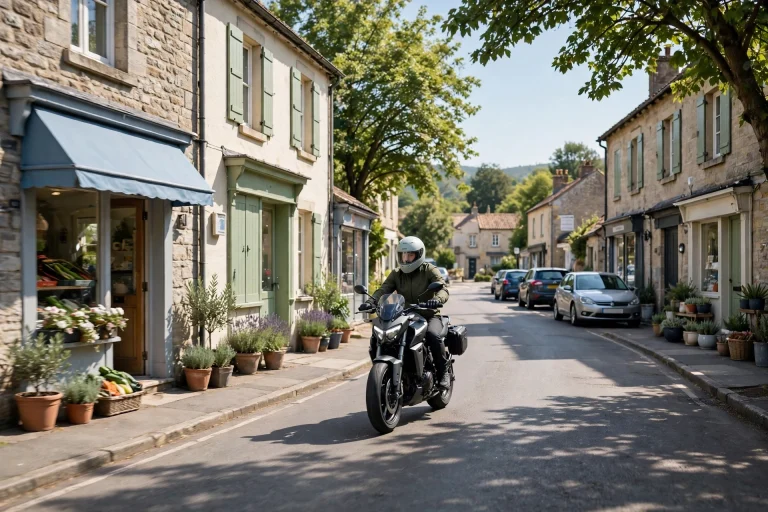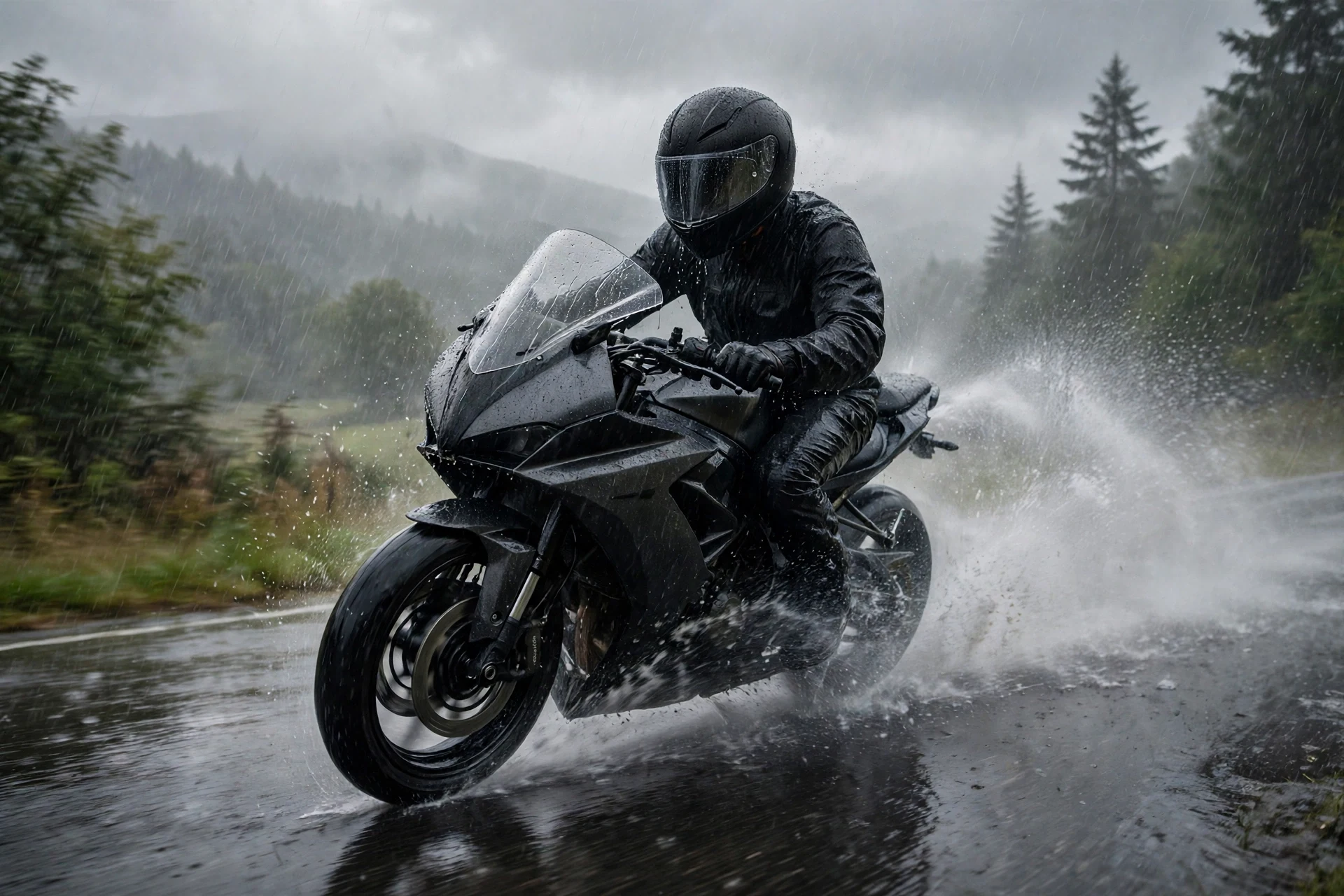
A motorcycle helmet for riding in heavy rain needs a good visor seal, a clear anti-fog visor, and vents you can close, because staying dry and being able to see matter as much as impact protection when the rain is coming down hard. In general terms, a full-face helmet with a watertight visor and a breath guard will keep you drier and safer than an open-face helmet in a downpour. Heavy rain changes riding completely: the road gets slippery, spray from other vehicles cuts visibility, and cold water finds every gap in your kit. The right helmet does not make rain riding easy, but it does make it much more manageable.
What Makes a Helmet Good for Heavy Rain?
A good rain helmet starts with the visor. It should seal tightly against the shell when closed, with no gap for water to run in, and it should have a clear visor that stays clear in the wet. Many riders fit an anti-fog insert on the inside of the visor, which stops it misting up from your breath on a cold, wet day. A visor that fogs or leaks is a serious problem in heavy rain, because you cannot simply lift it to see.
Vents matter too. A helmet with vents you can close keeps rain from running in through the top and front, while a helmet with fixed open vents will let water drip onto your head. The shell itself should shed water rather than soaking it up, and the liner should be one that dries out rather than staying soggy. A chin curtain or breath guard helps as well, by keeping spray and your own breath away from the inside of the visor.
Is a Full-Face Helmet Best in Heavy Rain?
Yes, in general terms a full-face helmet is the best choice for heavy rain. It covers your whole face, so rain, spray, and road grit cannot hit your eyes and cheeks, and the visor gives you a clear window to look through. An open-face helmet leaves your face exposed, so rain stings your skin, runs into your eyes, and makes it hard to keep them open at speed.
A modular or flip-up helmet is a reasonable middle ground, because it gives full-face cover when closed and can be opened when you stop. Just make sure the chin bar locks firmly when closed, and that the seal around it is tight enough to keep water out. If you want to understand one of the safety technologies used in modern helmets, reading about what MIPS is for helmets is a useful starting point, though rain protection comes from the visor, the seals, and the vents rather than from the liner.
How Do I Keep My Visor Clear in the Rain?
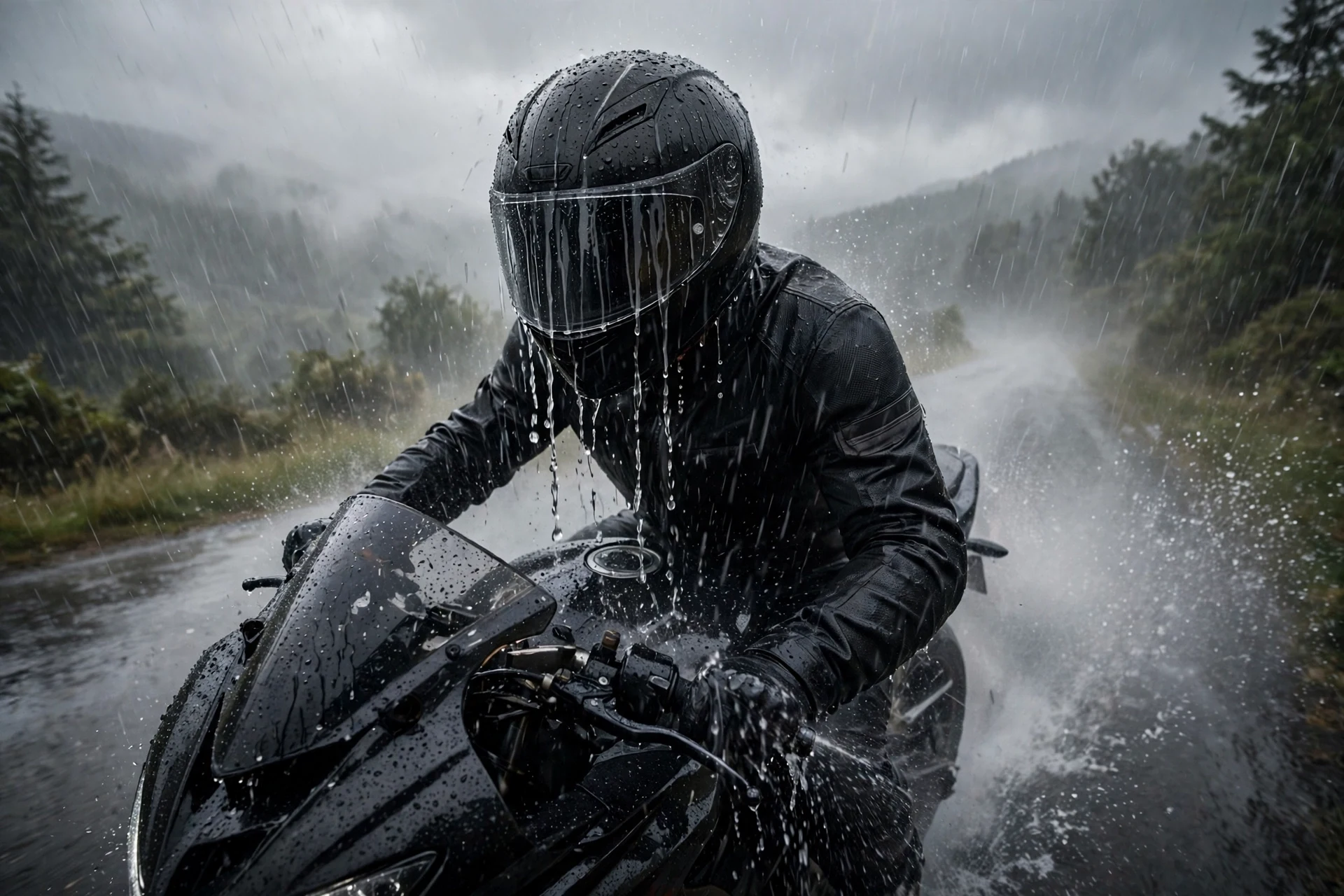
Keeping the visor clear is the biggest challenge in heavy rain. An anti-fog insert on the inside stops misting, while a water-repellent coating on the outside helps rain run off in beads instead of sitting as a sheet. Some riders also fit a small visor wiper, or use their gloved finger to wipe the visor at low speed, though that takes practice and should never be attempted at high speed.
The helmet’s ventilation plays a part too. Opening the vents slightly can help clear fog, but in heavy rain that lets water in, so it is a balance. A breath guard that directs your breath down and away from the visor often helps more than open vents. Before a wet ride, check that the visor is clean and the seal is free of dirt, because a dirty seal lets water in and a dirty visor scatters light and makes glare worse.
What Should I Wear With a Helmet in Heavy Rain?
A helmet works best in rain as part of a waterproof system. A waterproof jacket with a collar that fits under the helmet, and a neck tube or balaclava, will stop water running down your neck and into the helmet from below. Without that, rain can run down the back of your neck and soak the liner, even if the helmet itself is watertight.
Gloves matter too, because wet, cold hands are slower on the brakes and throttle. Waterproof gloves with a cuff that fits over the jacket sleeve will keep water out of the glove, and a glove with a visor wipe on the finger is handy for clearing the visor. In general terms, the helmet keeps your head and eyes protected, but the rest of your kit has to do its share if you want to stay warm and dry.
How Do I Look After a Helmet After a Wet Ride?
After a wet ride, take the time to dry the helmet properly. Wipe the outside with a soft cloth, open the vents, and leave the helmet somewhere warm and airy with the visor open, so air can circulate inside. Remove the liner if it comes out, and let it dry separately rather than leaving it damp inside the shell, where it can develop a smell.
Do not dry a helmet on a radiator or with a hair dryer on high heat, because strong heat can damage the liner and the shell. Check the visor seal and the vents for grit or dirt washed in by the rain, and clean the visor with a proper cleaner rather than a dry cloth, which can scratch it. A helmet that is dried and cleaned after wet rides will last longer and stay more comfortable.
Is It Safe to Ride a Motorcycle in Heavy Rain?
Riding in heavy rain is possible, but it is riskier than riding in the dry, and it calls for extra care. The road is more slippery, especially in the first minutes of rain when oil and dust mix with water, and braking distances get longer. Visibility is worse for you and for other drivers, so keeping a bigger gap to the vehicle ahead and riding more slowly is sensible.
A good helmet helps, but it cannot fix the road. In general terms, if the rain is so heavy that you cannot see clearly, or if there is standing water deep enough to cause aquaplaning, the safest choice is to pull over and wait. No journey is worth riding blind, and a short stop for the worst of the rain to pass is often the best decision a rider can make.
Can I ride with my visor open in the rain?
In general terms, no, it is not a good idea. Rain and spray will hit your eyes and make it hard to see, and at speed the rain can sting. Keep the visor closed and rely on an anti-fog insert to stay clear.
Will rain damage my motorcycle helmet?
Rain alone will not damage a good helmet, but leaving it wet can cause smells and wear the liner. Dry it properly after each wet ride, with the vents open and the liner removed if possible.
What is the best visor for riding in rain?
A clear visor with an anti-fog insert and a water-repellent coating is the best choice. A tinted visor is a poor idea in rain, because heavy cloud and spray already cut the light.

Olivia
Writer at Helmet Today, covering helmet reviews, fit and riding safety.