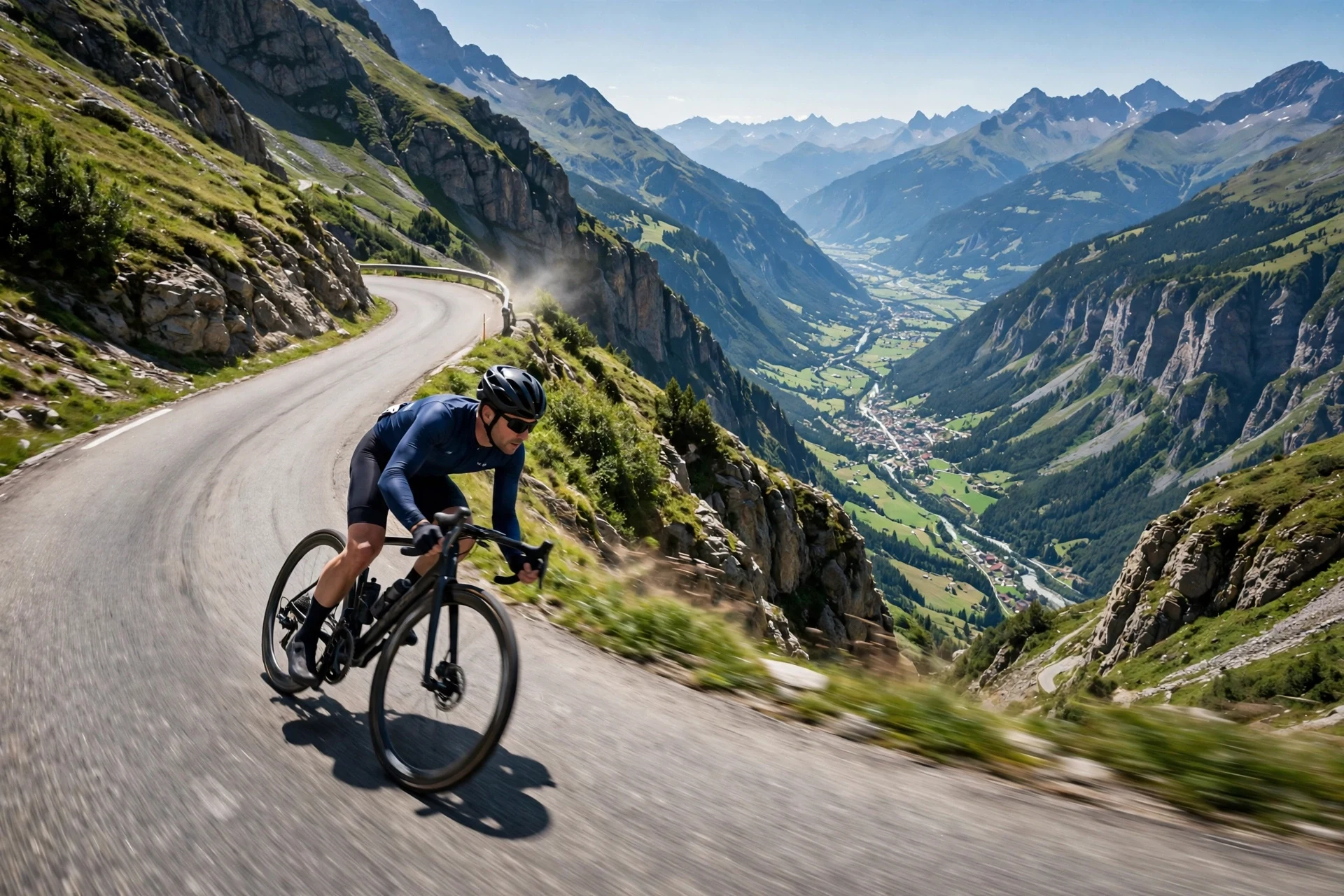
Descending safely on a bike starts with a helmet that fits snugly, sits level, and stays in place at speed, because a descent is fast, and a loose or poorly positioned helmet can shift, block your vision, or fail to protect you in a fall. In general terms, a well-fitting road helmet with the straps fastened properly and the retention dial tightened is the most important piece of safety kit for any descent. Descending is the reward for climbing, but it is also the riskiest part of the ride. Speeds are high, corners come up quickly, and a small mistake can have serious consequences. Your helmet is your last line of defence, and it needs to be ready before you start down.
Why Is Helmet Fit More Important on a Descent?
Helmet fit matters more on a descent because speed and wind make every flaw in the fit obvious. A helmet that is slightly loose will lift and shift in the wind, pulling your head back or sliding forward over your eyes just when you need to see the road ahead. At high speed, even a small shift can block your view of a corner or a hazard, and it is very distracting when you need to concentrate.
The forces in a fall are also greater on a descent, because you are travelling faster. A helmet that is not sitting in the right place, or one that can move around on your head, may not be covering the part of your head that hits the ground. That is why the fit check before a descent matters so much: the helmet should be snug, level, and fastened, with no wobble when you shake your head.
How Should I Check My Helmet Before a Descent?
Before a descent, do a quick check that takes less than a minute. Put the helmet on, fasten the chin strap so only one or two fingers fit underneath, and tighten the retention dial until the cradle feels firm all round. Shake your head gently from side to side and nod up and down: the helmet should move with your head, not lag behind it.
Check the position in a mirror or by feel: the front edge should sit just above your eyebrows, and the helmet should sit level, not tilted back. Make sure your glasses are secure and that the straps form a neat V below each ear. If you want to understand one of the safety technologies used in modern helmets, reading about what MIPS is for helmets is a useful starting point, but on a descent, the fit check you do with your own hands matters most.
What Type of Helmet Is Best for Descending?
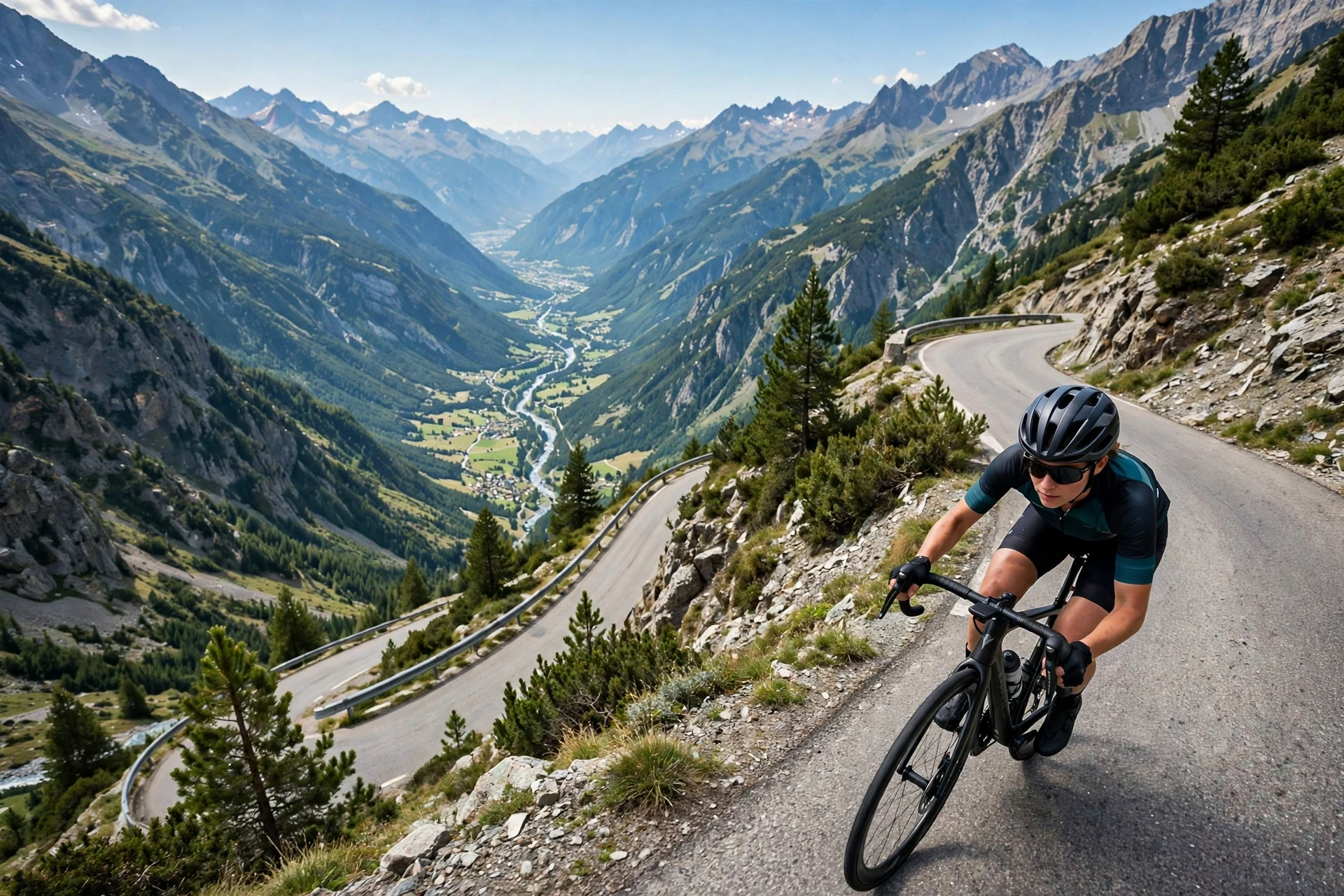
A standard road helmet that fits well is the best choice for most descents. It is light, well ventilated, and shaped to stay stable at speed, and it gives good coverage of the forehead, sides, and back of the head. An aero helmet, with a smoother shape and fewer vents, can be even more stable in the wind, but it is warmer and less comfortable on a long climb before the descent.
A mountain bike helmet with more coverage at the back can be a good choice on rough or loose descents, where a fall is more likely to involve the back of the head. Whatever style you choose, the fit matters more than the model: a well-fitting standard helmet will protect you better than an expensive aero helmet that rocks or sits too high. Choose the helmet that fits your head and stays put at speed.
How Do I Ride Safely on a Descent?
Safe descending starts before the descent, with a bike check as well as a helmet check. Make sure your brakes work well, your tyres are pumped up, and your wheels are secure. On the descent itself, keep your hands on the brakes, look well ahead to the next corner, and brake before the corner rather than in it, so you enter the bend at a speed you can control.
Your position matters too. Keep your weight back and low, with your hands relaxed on the bars, and look where you want to go rather than at the edge of the road. Stay in your lane on blind corners, because a car or another rider could be coming the other way. In general terms, a descent is not a race unless you are in one: ride within your limits, and leave a margin for the unexpected.
What Should I Do If My Helmet Moves During a Descent?
If your helmet starts to move during a descent, slow down gently and, when it is safe to do so, pull over and fix it. Do not try to adjust the straps or the dial with one hand while riding at speed, because taking a hand off the bars on a descent is dangerous. Brake smoothly, find a safe place to stop, and then tighten the retention dial and check the straps.
If the helmet keeps moving even after you have tightened everything, it is probably the wrong size or shape for your head, and you should not rely on it for fast descents. Ride the rest of the way down slowly and carefully, and sort out the fit before your next ride. In general terms, a helmet that moves at speed is a warning sign, not something to ignore.
When Should I Replace a Helmet After a Descent Crash?
Replace your helmet after any crash in which your head hits the ground, even if the helmet looks fine from the outside. The liner inside can compress or crack in an impact, and that damage may not be visible under the shell. A helmet that has already absorbed a hard blow may not protect as well the next time, so it is generally sensible to retire it and use a new one.
Also replace a helmet if the straps, dial, or pads are damaged, or if the shell is cracked or dented. Check the helmet after every ride that involves a fall, however minor it seemed at the time. A helmet is a single-use piece of safety kit in a serious impact, and replacing it after a crash is a small price for the protection it gives you.
Should I tighten my helmet before a descent?
Yes, always do a quick fit check at the top. Tighten the retention dial, fasten the chin strap snugly, and make sure the helmet sits level and does not wobble when you shake your head.
Is it safe to descend with a loose helmet?
In general terms, no. A loose helmet can shift in the wind, block your vision, and fail to protect your head in a fall. Fix the fit before you start down, or ride down slowly and carefully.
Can I use the same helmet for climbing and descending?
Yes, the same well-fitting road helmet works for both. Climb in it, check the fit at the top, and descend in it: stopping to change helmets is not practical or necessary.

Olivia
Writer at Helmet Today, covering helmet reviews, fit and riding safety.