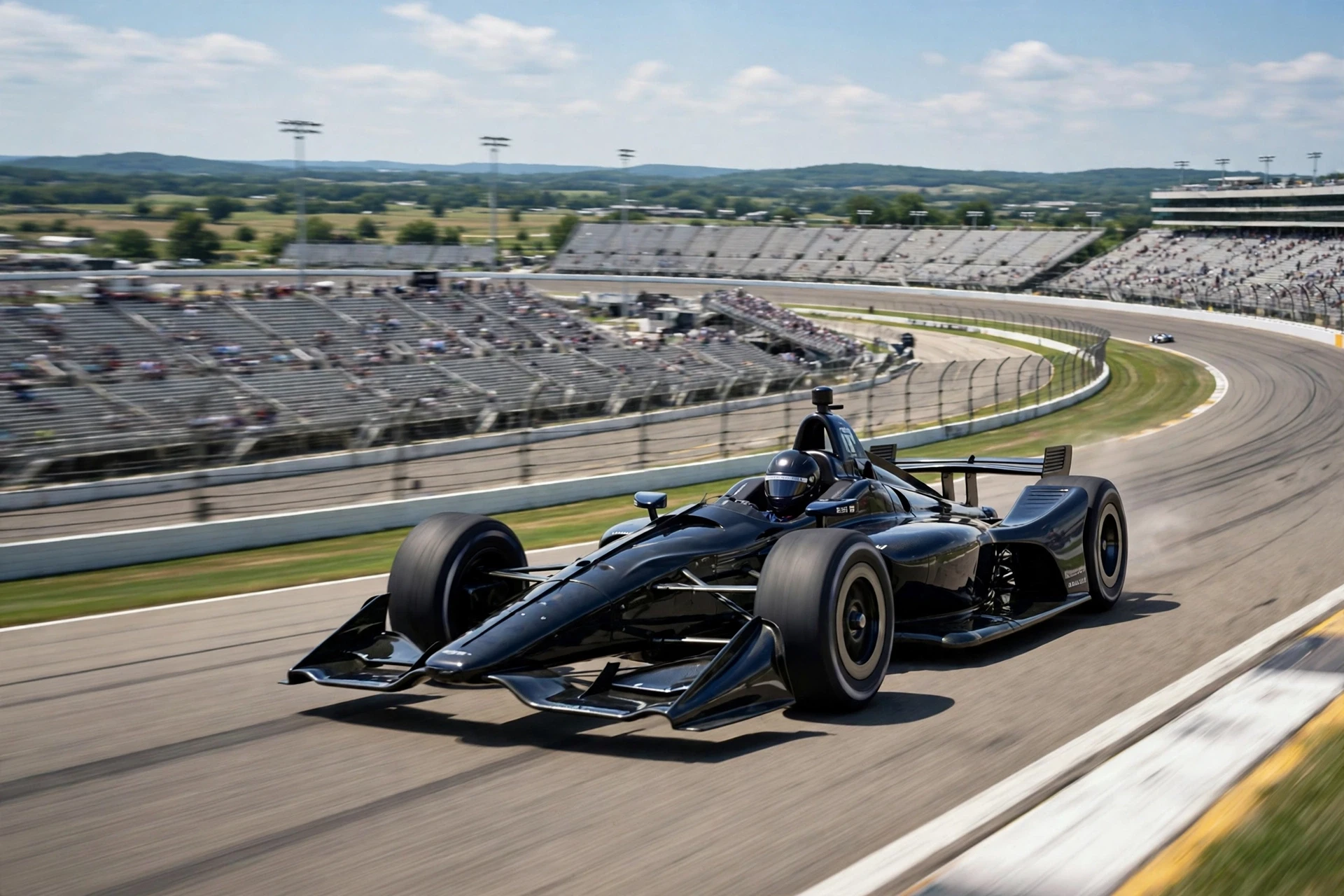
An IndyCar helmet is a full-face racing helmet worn by drivers in the IndyCar Series, built to protect the head in open-wheel racing at very high speeds, where the driver’s head is exposed to the wind and to debris from the track. IndyCar races take place on ovals, road courses, and street circuits, and the cars can reach speeds of over 230 miles per hour, so the helmet has to be light, strong, and able to cope with extreme forces.
What Is IndyCar Racing?
IndyCar is a form of open-wheel racing based in the United States, best known for the Indianapolis 500, one of the most famous motor races in the world. The cars are single-seaters with open wheels, a bit like Formula 1 cars, and they race on a mix of high-speed ovals, twisting road courses, and tight street circuits in city centres. A season includes all three types of track, so drivers and their kit have to cope with very different conditions.
Because the cars are open-wheel and the driver’s head sits above the bodywork, the helmet is exposed to the full force of the wind at high speed, as well as to stones, rubber, and other debris thrown up from the track. Crashes can happen at very high speeds, and a car can hit the wall, spin, or become airborne. In general terms, the helmet is a critical piece of safety kit in a sport where the driver is more exposed than in a closed car.
How Is an IndyCar Helmet Different From Other Racing Helmets?
An IndyCar helmet is a full-face helmet with a very strong, lightweight shell, usually made from carbon fibre, and a visor designed to stay clear and stable at high speed. The helmet has to be aerodynamic, because at over 200 miles per hour even a small amount of drag or lift can strain the driver’s neck and make the car harder to control. The shape is therefore smooth and carefully designed to cut through the air.
The helmet also has to work with a HANS device, the head and neck restraint that limits how far the head can move in a crash, and with the radio system that connects the driver to the team. Ventilation matters too, because the driver works hard in a hot cockpit, but the vents must not let in debris or create drag. If you want to understand one of the safety technologies used in modern helmets, reading about what MIPS is for helmets is a good place to start, though professional motorsport helmets use their own specialised systems.
What Safety Standards Do IndyCar Helmets Meet?
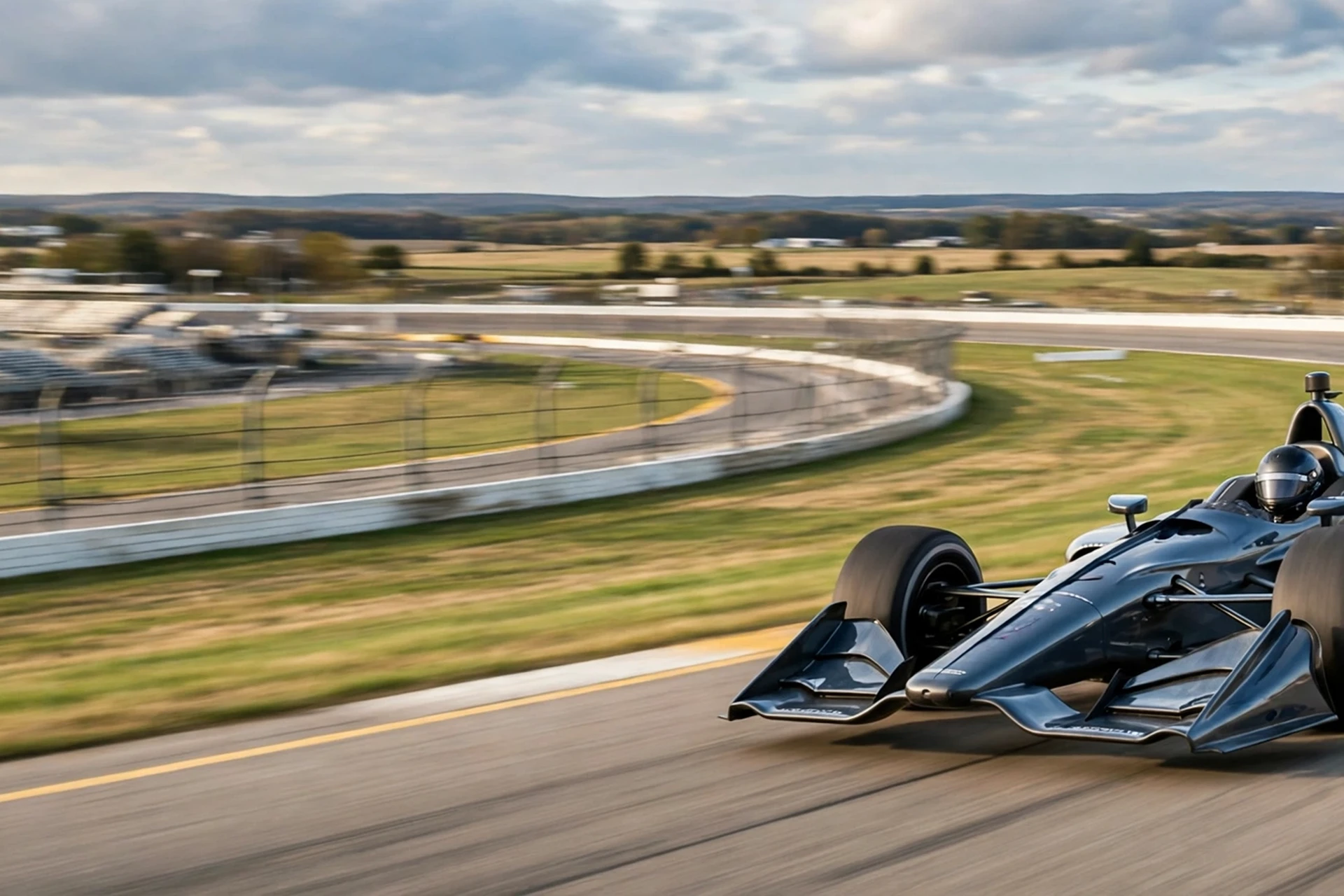
IndyCar helmets are built to the highest motorsport safety standards, and they must pass strict tests for impact absorption, penetration, and fire resistance before they can be used in a race. The shell is designed to protect against both a direct impact with a wall or another car and a strike from debris, which is a particular risk in open-wheel racing where parts can come loose in a crash.
Since the introduction of the aeroscreen, a windscreen-like device fitted in front of the cockpit, the driver’s head has extra protection from debris, but the helmet remains essential. The HANS device works with the helmet to protect the neck, and the helmet’s fire-resistant lining gives the driver time to get out of the car if there is a fire. In general terms, the helmet is one part of a safety system that also includes the car, the track barriers, and the driver’s race suit.
How Does an IndyCar Driver See and Communicate?
An IndyCar helmet has a wide visor that gives the driver a clear view of the track ahead and of cars alongside, which matters when racing wheel to wheel at high speed. The visor must stay free of fog, oil, and rubber, and drivers use tear-off strips that can be pulled away during the race to reveal a clean layer. On ovals, where the speeds are highest, a clear visor is essential for judging distances and spotting a crash ahead.
Communication is handled by a radio built into the helmet, with earpieces and a microphone that let the driver talk to the team on the pit wall. The team gives information about strategy, fuel, tyres, and traffic, while the driver reports on how the car feels. The radio has to work clearly despite the noise of the engine and the wind, so the earpieces are designed to block out background sound while letting the team come through.
What Is It Like to Wear an IndyCar Helmet?
Wearing an IndyCar helmet means having a close-fitting, snug helmet on for the whole race, often for two hours or more in heat and high G-forces. On an oval, the driver is pushed sideways by the banking for lap after lap, and the helmet adds weight that the neck has to support, so drivers train their neck muscles specifically for this. The helmet can feel hot and tight, but it is a familiar part of the job for a professional driver.
The helmet also affects how the driver hears and feels the car. Engine noise is muffled by the earpieces, and the driver relies on the radio and on feel through the steering wheel and the seat to judge what the car is doing. In general terms, a helmet that fits well and stays comfortable lets the driver concentrate on racing, while a poor fit becomes a distraction at the worst possible time.
When Should an IndyCar Helmet Be Replaced?
An IndyCar helmet should be replaced after a crash or a hard impact, even if it looks fine from the outside. The liner inside a helmet can be damaged by a heavy knock without any visible sign on the shell, and a helmet that has already absorbed an impact may not protect as well the next time. Professional teams inspect helmets after every race and retire them after any serious incident.
Age and wear matter as well. The padding, straps, and visor can wear down over a season of use, and the helmet may no longer fit as snugly as it once did. Teams also replace helmets when safety standards change, so that drivers are always using kit that meets the latest rules. In general terms, a helmet is a piece of safety equipment with a working life, and it should be replaced before it stops doing its job properly.
Do IndyCar drivers wear full-face helmets?
Yes, IndyCar drivers wear full-face helmets that cover the whole head and face, with a wide visor, a radio system, and fittings for a HANS device.
What is the aeroscreen in IndyCar?
The aeroscreen is a windscreen-like device fitted in front of the cockpit that helps protect the driver’s head from debris, working alongside the helmet rather than replacing it.
How fast do IndyCar cars go?
In general terms, IndyCar cars can reach speeds of over 230 miles per hour on high-speed ovals, which is why the helmet must be both very strong and very aerodynamic.

Olivia
Writer at Helmet Today, covering helmet reviews, fit and riding safety.