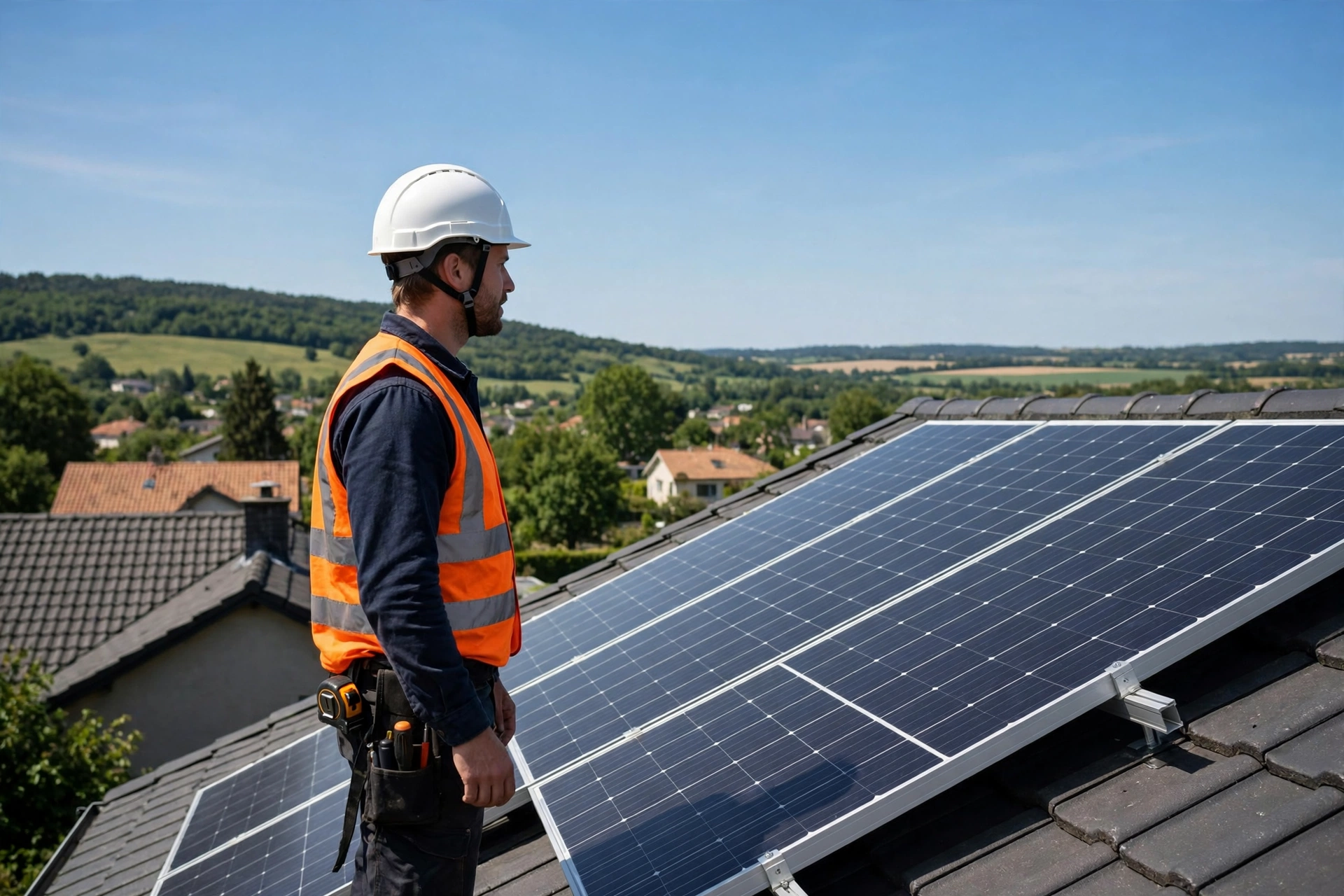
A solar panel installer helmet is a work helmet worn by people who fit solar panels on roofs, and it protects the head from falling tools, bumps against roof frames, and other knocks on a busy installation site. It is a type of hard hat, built for work at height, with a secure fit and often a chin strap so it stays on when the installer leans or bends. Installing solar panels means working on roofs, carrying panels and rails, and using tools in tight spaces. The head is exposed to knocks from above and from the sides, and a helmet is one of the most basic pieces of safety kit on the job. In general terms, any work on a roof where things can fall or where the head can strike a hard surface calls for head protection.
What Is a Solar Panel Installer Helmet?
A solar panel installer helmet is a hard hat designed for work on roofs and construction sites. It usually has a hard outer shell that can take a knock from a falling object, with a suspension system inside that spreads the force of an impact across the head. The shell is often made from a tough plastic that resists cracks and can cope with sun and weather, because solar installers spend long hours outdoors.
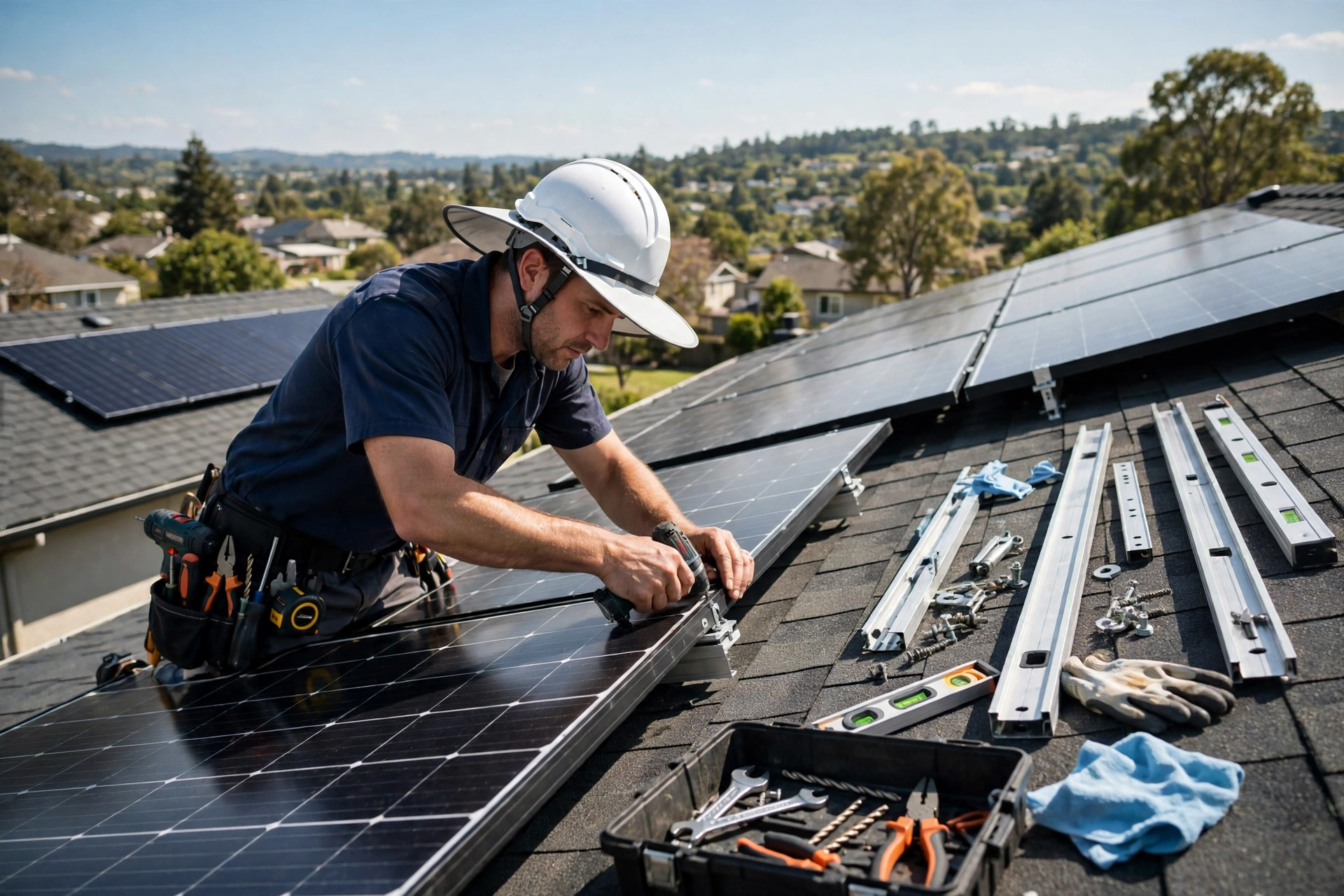
Unlike a basic hard hat, a helmet for solar work is often chosen with a chin strap, so it stays on when the installer leans over a roof edge or works with the head tilted. Many installers also add a sun brim or a neck shade, because working on a bright roof in summer can be hot and tiring.
How Is It Different from a Standard Hard Hat?
A solar panel installer helmet is similar to a standard hard hat, but it is usually chosen with features that suit roof work. A standard hard hat often has no chin strap, and it can fall off when the wearer bends forward or looks down, which is a common position on a roof. A helmet with a chin strap stays in place, which matters when the installer is working near a roof edge or carrying a panel with both hands.
Ventilation is another difference. Solar installers work in direct sun, often for hours, and a helmet with vents helps the head stay cooler. Some helmets are also made to work with other kit, such as safety glasses and gloves, without getting in the way. If you want to understand one of the safety technologies used in modern helmets, reading about what MIPS is for helmets is a good place to start, though work helmets do not always use that system. In general terms, the right helmet for solar work is one that stays on, stays comfortable in the sun, and protects the head from knocks.
What Protection Does It Offer on a Roof?
A solar panel installer helmet protects the head from several hazards on a roof. The most obvious is falling objects: tools, bolts, and offcuts can drop from above, and a panel that slips can swing into the head. The hard shell spreads the force of a knock, and the suspension inside absorbs some of it, so the head is less likely to be hurt. The helmet also protects against bumps, such as hitting the head on a roof frame, a scaffold pole, or the edge of a panel.
The helmet also offers some protection from the sun, because the shell shades the head and a brim or neck shade keeps the sun off the face and neck. This matters on a long summer day, when heat can make a worker tired and less alert. In general terms, a helmet does not protect against every hazard on a roof, and it cannot replace safe working practices, but it does reduce the risk of head injury from the knocks and falling objects that are common on a solar installation.
What Should a Solar Panel Installer Helmet Fit Like?
A solar panel installer helmet should fit snugly all round the head, without pressure points and without wobbling when the installer moves. It should sit level, and the suspension inside should hold it steady so it does not slip forward over the eyes or back off the forehead. The fit system, often a dial or a ratchet at the back, should be easy to adjust, even with gloves on.
The chin strap should be fastened snugly before climbing onto the roof, because a loose strap can let the helmet come off at the worst moment. It is worth testing the fit with any other kit that will be worn, such as safety glasses or a headlamp, because layers underneath can change how the helmet sits. Trying the helmet on and moving around in it, bending and looking up and down, is a good way to check that it stays in place. In general terms, comfort matters too: a helmet that pinches or feels heavy will be taken off, and a helmet that is not worn offers no protection at all.
What Other Kit Goes With It?
A solar panel installer helmet is usually worn with other safety kit. Safety glasses protect the eyes from dust and flying bits when drilling or cutting, and gloves protect the hands from sharp panel edges and hot surfaces. Safety boots with a good grip help on a roof, and a harness is often used when working near a roof edge, to stop a fall. High-visibility clothing helps the installer be seen by others on site, especially when vehicles are moving around.
The helmet works as part of this whole set: it protects the head, while the other kit protects the eyes, hands, feet, and body. Some helmets have slots for attaching earmuffs or a face shield, so the kit can be combined without getting in the way. No single item does the whole job on its own, and the helmet should be checked along with the rest of the kit before each job. If any item is damaged or missing, it should be replaced before work starts.
When Should a Solar Panel Installer Helmet Be Replaced?
A solar panel installer helmet should be replaced after a hard impact, even if it looks fine from the outside. The shell can crack or weaken in a heavy knock, and the suspension inside can stretch or break, and that damage may not be visible at a glance. A helmet that has already absorbed a hard blow may not protect as well the next time, so it is generally sensible to retire it after a serious impact and use a new one.
Do solar panel installers need a helmet?
Yes, in general terms a helmet is essential for solar panel installers. Working on a roof exposes the head to falling tools, bumps against frames, and knocks from panels, and a helmet reduces the force of those impacts.
Why does a solar installer helmet need a chin strap?
Because installers lean, bend, and look down a lot on a roof, and a helmet without a chin strap can fall off. A chin strap keeps the helmet in place when the installer is working near a roof edge or carrying a panel.
Can a solar installer helmet be used with other safety kit?
Yes, most work helmets have slots for earmuffs, a face shield, or a headlamp, and they are designed to be worn with safety glasses, gloves, and boots as part of a full safety kit.

Olivia
Writer at Helmet Today, covering helmet reviews, fit and riding safety.