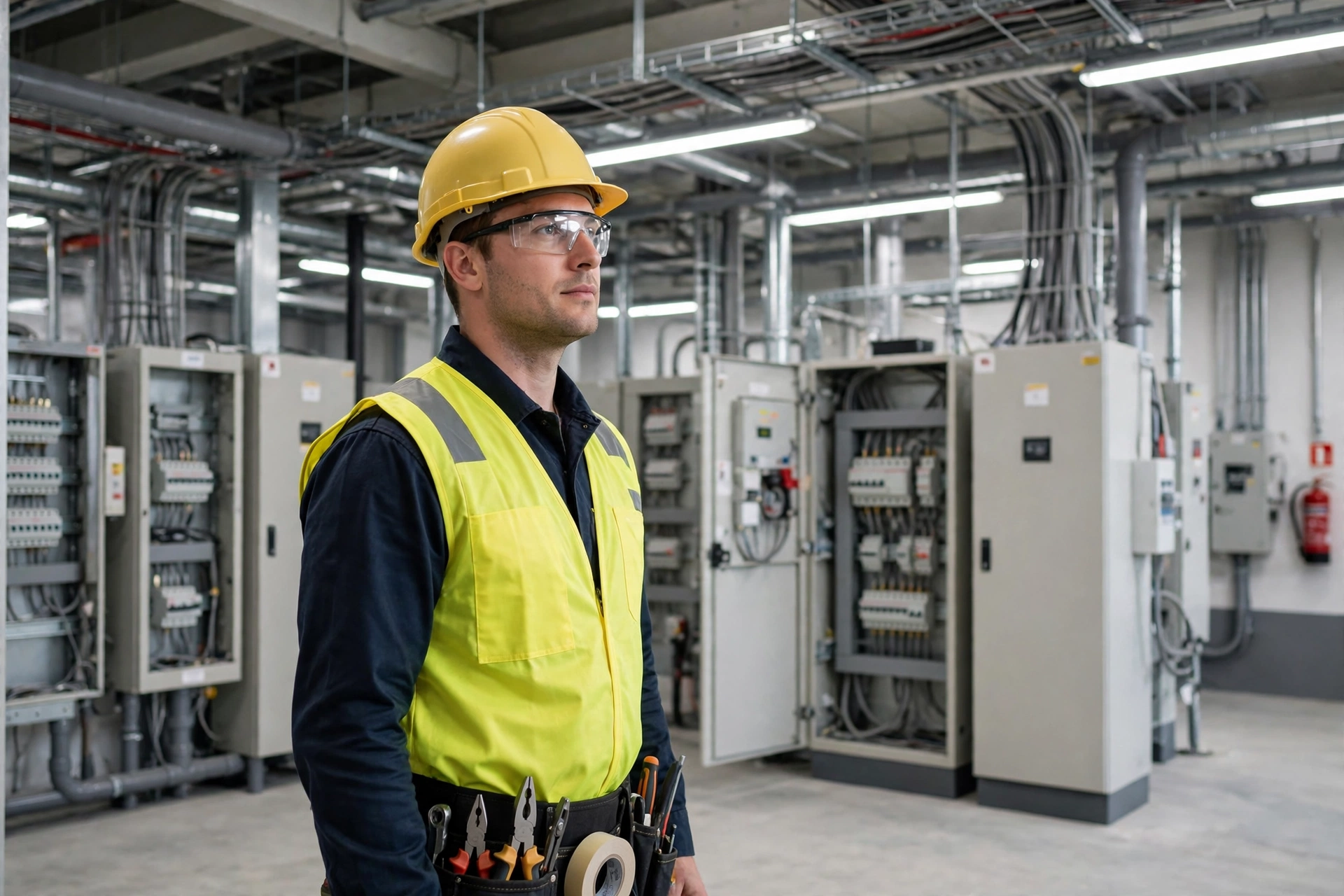
An electrician helmet is a work helmet worn by electricians to protect the head from bumps and falling objects, and, in the case of electrical helmets, to give insulation against electric shock. It is a type of hard hat, built for work on building sites and in electrical installations, where the head can strike a hard surface or come close to live parts. Electricians work in lofts, on ladders, in plant rooms, and on building sites, often in tight spaces with low ceilings and exposed cables. A helmet protects the head from knocks in these spaces, and an electrically insulating helmet adds protection against contact with live parts. In general terms, any electrical work where the head could touch a live conductor calls for a helmet with electrical insulation.
What Is an Electrician Helmet?
An electrician helmet is a hard hat designed for electrical work. It usually has a hard outer shell that can take a knock from a falling object or a bump against a beam, with a suspension system inside that spreads the force of an impact across the head. What sets an electrical helmet apart is that its shell is made to insulate against electricity, so it does not conduct a current if it touches a live part, and it has no metal parts, such as vents or rivets, that could carry a current to the head.
Electrician helmets are often worn with other kit, such as safety glasses and insulated gloves, and they may have slots for attaching earmuffs or a face shield. Some have a short brim all round to keep rain and debris off the face, while others have a longer brim at the back. The shell is often made from a tough plastic that resists cracks and can cope with everyday knocks on site.
How Does It Protect Against Electrical Hazards?
An electrician helmet protects against electrical hazards by insulating the head. In general terms, the shell is made from a material that does not conduct electricity, and it is built without metal vents or fixings that could create a path for a current. If the helmet touches a live part, the insulation helps stop the current from reaching the head, which is the most important job of an electrical helmet.
It is important to understand the limits of this protection. A helmet is not a substitute for switching off the power, testing that a circuit is dead, or using insulated tools and gloves. It is one layer of protection, and it works best as part of a safe way of working. A helmet that has been damaged, drilled, or painted may no longer insulate properly, so it should be checked regularly and replaced if it is damaged. If you want to understand one of the safety technologies used in modern helmets, reading about what MIPS is for helmets is a good place to start, though work helmets do not always use that system.

What Is the Difference Between a Hard Hat and an Electrician Helmet?
A standard hard hat and an electrician helmet look similar, but they are built for different risks. A standard hard hat is designed mainly to protect against falling objects and bumps, and it may have metal vents or rivets that are fine for general site work. An electrician helmet is built to insulate as well, so it has no metal parts that could conduct electricity, and its shell is tested for electrical insulation.
This difference matters in practice. An electrician who wears a standard hard hat with metal vents near live parts may not have the protection they need, because the metal could carry a current to the head. In general terms, anyone working near live electrical parts should use a helmet made for electrical work, not a general-purpose hard hat. The helmet should be chosen for the job, and if the work changes, the helmet may need to change too.
What Should an Electrician Helmet Fit Like?
An electrician helmet should fit snugly all round the head, without pressure points and without wobbling when the electrician moves. It should sit level, and the suspension inside should hold it steady so it does not slip forward over the eyes or back off the forehead. The fit system, often a dial or a ratchet at the back, should be easy to adjust, even with gloves on.
The chin strap, where one is fitted, should be fastened snugly before starting work, because a loose strap can let the helmet come off when the electrician bends or looks up. It is worth testing the fit with any other kit that will be worn, such as safety glasses or earmuffs, because layers underneath can change how the helmet sits. Trying the helmet on and moving around in it, bending and looking up and down, is a good way to check that it stays in place. In general terms, comfort matters too: a helmet that pinches or feels heavy will be taken off, and a helmet that is not worn offers no protection at all.
What Features Should an Electrician Look For?
An electrician should look for a helmet with electrical insulation and no metal parts, a comfortable suspension, and a fit that can be adjusted with gloves on. Ventilation is worth thinking about, because electrical work often takes place in warm plant rooms and lofts, and a well-ventilated helmet helps the head stay cooler. Slots for attaching earmuffs or a face shield are useful when the work involves noisy tools or cutting, and a headlamp clip can help in dark spaces.
A short brim all round can keep rain and debris off the face when working outdoors, and a light colour can help the electrician be seen on site. The shell should be tough enough to cope with everyday knocks, and it should be easy to clean, because electrical work can be dusty. In general terms, the best helmet is the one that suits the job: it should insulate, fit well, work with the rest of the kit, and be comfortable enough to wear all day.
When Should an Electrician Helmet Be Replaced?
An electrician helmet should be replaced after a hard impact, even if it looks fine from the outside. The shell can crack or weaken in a heavy knock, and the suspension inside can stretch or break, and that damage may not be visible at a glance. A helmet that has already absorbed a hard blow may not protect as well the next time, so it is generally sensible to retire it after a serious impact and use a new one.
Do electricians need a special helmet?
Yes, in general terms electricians working near live parts need a helmet made for electrical work, with insulation and no metal parts that could conduct a current. A standard hard hat may not give that protection.
Does an electrician helmet protect against electric shock?
It gives insulation that helps stop a current reaching the head if the helmet touches a live part, but it is not a substitute for switching off the power, testing that a circuit is dead, and using insulated tools and gloves.
Can an electrician helmet be used with other safety kit?
Yes, most electrician helmets have slots for earmuffs or a face shield, and they are designed to be worn with safety glasses and insulated gloves as part of a full safety kit.

Olivia
Writer at Helmet Today, covering helmet reviews, fit and riding safety.