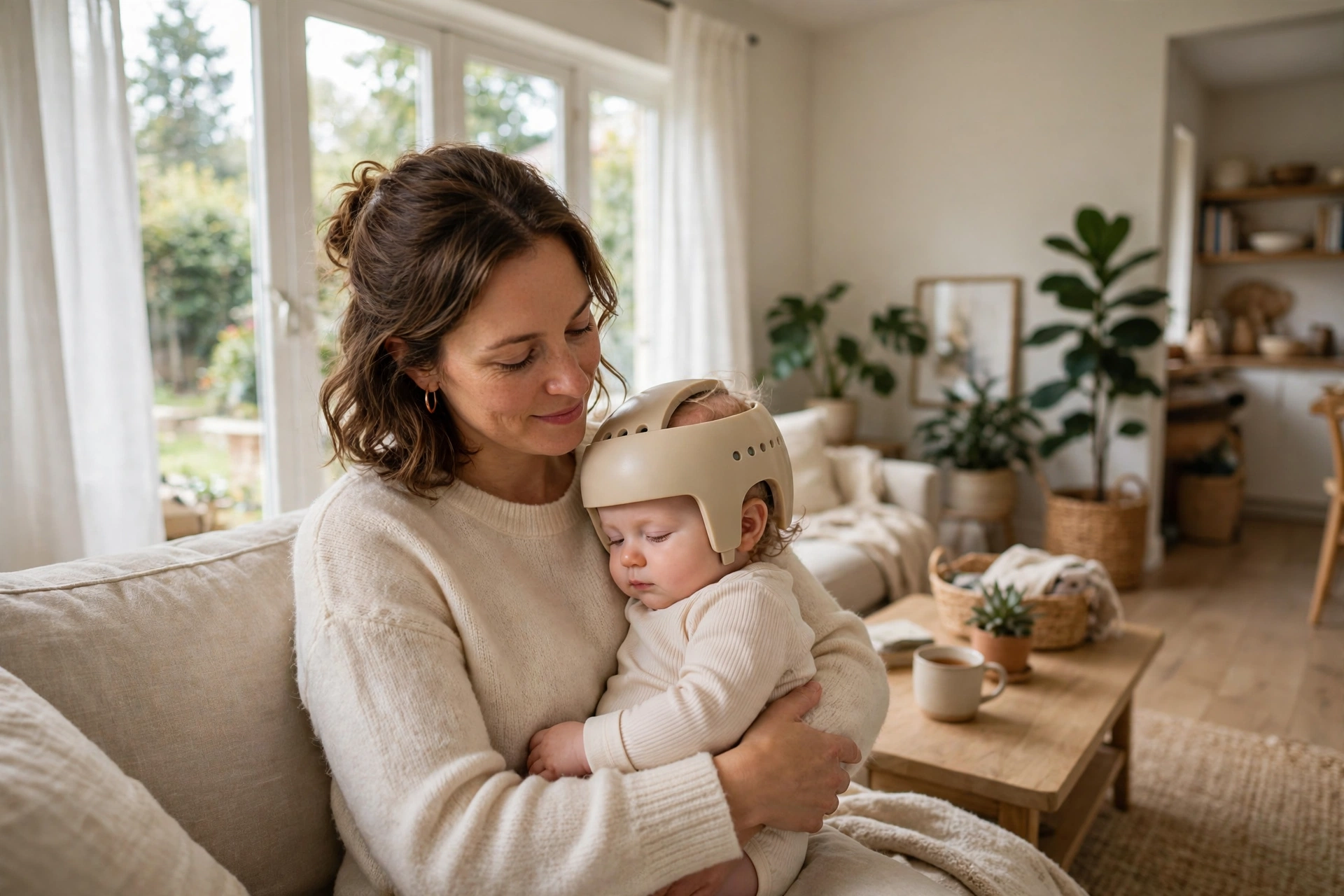
A cranial helmet wearing schedule is the daily wearing plan a clinician sets for a baby’s cranial helmet, usually built up gradually over time. In general terms, the schedule starts with shorter wearing periods and increases towards most of the day and night, with breaks for cleaning, skin checks, and feeding, and families should follow their own clinician’s guidance rather than any general timetable. Cranial helmets, sometimes called cranial remoulding helmets, are custom-made helmets worn by some babies to gently guide head shape as they grow. The schedule matters because the helmet only works while it is worn, yet the baby’s skin and comfort need regular breaks too.
What Is a Cranial Helmet?
A cranial helmet is a lightweight, custom-made helmet fitted to a baby’s head, designed to gently guide the shape of the skull as the baby grows. It is usually made from a firm outer shell with a soft foam lining, shaped to the baby’s head from a scan or a mould. The helmet is not a protective helmet like a bike or sports helmet, and it is not meant to guard against impacts; its purpose is to give the growing skull gentle guidance in a particular direction.
Cranial helmets are prescribed by a clinician, and the fit is checked and adjusted regularly as the baby grows. The helmet is made for one baby only, and it should never be shared or passed on. In general terms, families who use a cranial helmet work closely with their clinician throughout the process, and the helmet is one part of a wider plan that may also include positioning advice and regular check-ups.
What Is a Cranial Helmet Wearing Schedule?
A cranial helmet wearing schedule is the plan for how many hours a day the baby wears the helmet, and how that time is spread across the day and night. In general terms, clinicians often aim for the helmet to be worn for most of the day and night, with short breaks, because the helmet guides head shape only while it is on. The exact number of hours varies from baby to baby, and the schedule is set by the clinician who prescribed the helmet.
The schedule is not fixed from the first day. It is usually built up in stages, and it is reviewed at follow-up appointments, where the fit and the baby’s skin are checked. Families should follow their own clinician’s guidance on hours, breaks, and any changes to the schedule, since the plan is tailored to the individual baby and to how the treatment is progressing.

How Is a Wearing Schedule Built Up?
A wearing schedule is usually built up gradually, starting with shorter periods so the baby can get used to the helmet. In general terms, the first days may involve wearing the helmet for a few hours at a time, with breaks in between to check the skin and let the baby settle. Over the following days and weeks, the wearing time is increased step by step, as advised by the clinician, until the target hours are reached.
This gradual build-up helps the baby adjust to the feel and warmth of the helmet, and it gives parents time to learn how to fit it, remove it, and check the skin underneath. If the baby seems uncomfortable, or if the skin shows redness that does not fade, families should contact their clinician rather than pushing on with the schedule. In general terms, a gentle, gradual start is kinder for the baby and makes the routine easier to keep up.
What Does Daily Life Look Like With a Cranial Helmet?
Daily life with a cranial helmet follows a simple routine: the helmet is worn according to the schedule, with breaks for cleaning, skin checks, feeding, and bathing. Many families find that babies adjust quickly, and the helmet becomes part of the daily pattern, like any other item of clothing. The baby can usually play, sleep, and be held as normal while wearing it, though the clinician can advise on any activities to take care with.
It helps to keep the routine steady, with the helmet put on and taken off at similar times each day, so the baby gets used to the pattern. If you want to understand one of the safety technologies used in modern helmets, reading about what MIPS is for helmets is a good place to start, though cranial helmets are a different kind of helmet and do not use that system. In general terms, a calm, regular routine makes the wearing schedule easier for both the baby and the family.
How Do Families Keep the Helmet Clean and Comfortable?
Keeping a cranial helmet clean is part of the daily routine. The helmet should be cleaned as the clinician advises, usually by wiping the inside with a clean, damp cloth and letting it air dry, and the baby’s head should be washed regularly too. A clean helmet is more comfortable, smells fresher, and is kinder to the baby’s skin, so a quick clean during each break is worth the effort.
Comfort also depends on fit, which is why follow-up appointments matter. As the baby grows, the helmet may need adjusting, and the clinician can trim or reshape the lining to keep the fit right. Families should check the skin under the helmet at each break, looking for redness or soreness, and contact their clinician if anything does not look right. In general terms, a clean helmet that fits well is far easier for a baby to wear for the hours the schedule asks for.
When Does Cranial Helmet Treatment End?
Cranial helmet treatment ends when the clinician judges that the goals of the treatment have been met, or that the baby has grown past the stage where the helmet can help. The length of treatment varies a great deal from baby to baby, and it is reviewed at regular appointments, where the clinician checks the head shape, the fit of the helmet, and the baby’s growth. Families should not stop the treatment on their own, but should follow the clinician’s advice on when to finish.
As the end of treatment approaches, the clinician may suggest reducing the wearing hours gradually, rather than stopping all at once. A final check-up confirms that the helmet is no longer needed, and the family can then keep the helmet as a keepsake or dispose of it as advised. In general terms, the end of treatment is a decision made with the clinician, based on the baby’s individual progress, not on a fixed calendar date.
How many hours a day does a baby wear a cranial helmet?
That depends on the individual baby and the clinician’s plan. In general terms, the schedule often builds up to most of the day and night, with breaks for cleaning and skin checks, and families should follow their own clinician’s guidance.
Can a baby sleep in a cranial helmet?
In general terms, wearing schedules often include sleep, but families should follow their own clinician’s advice. The clinician who prescribed the helmet can confirm what is right for the individual baby.
What should I do if the helmet leaves red marks?
Check the skin at each break, and contact your clinician if redness does not fade or the skin looks sore. Do not adjust the helmet yourself or change the schedule without your clinician’s advice.

Olivia
Writer at Helmet Today, covering helmet reviews, fit and riding safety.