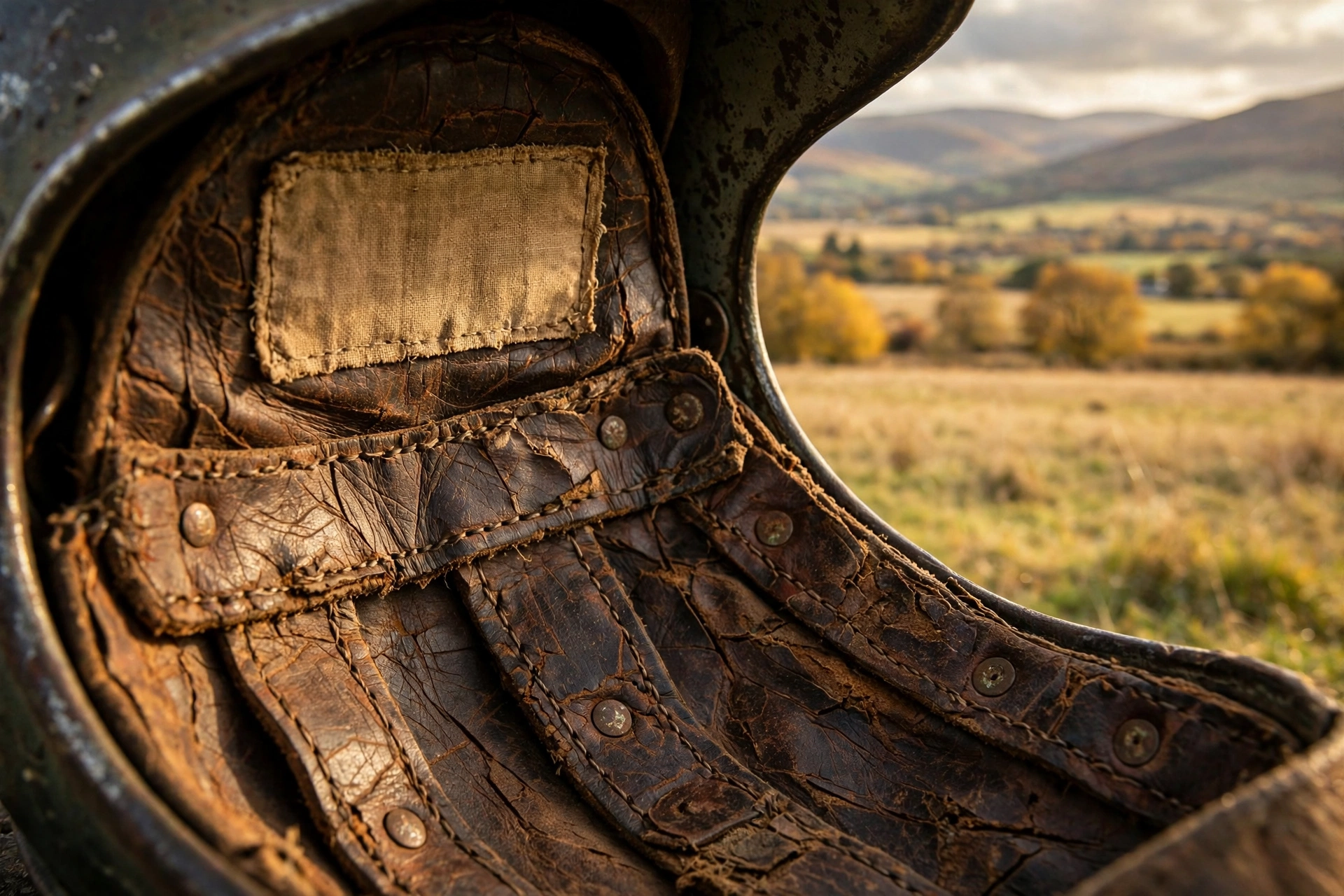
In general terms, you can date a vintage helmet by checking its maker’s label, stamps, and model markings, then comparing its shape, materials, and features with known examples from different eras. Labels, shell materials, liner styles, and fastenings all changed over time, so a combination of clues usually narrows the date down to a decade or a narrower range. Dating a helmet takes patience, since labels fade and parts are sometimes replaced. The most reliable dates come from several clues that all point to the same period.
What Clues Does a Maker’s Label Give?
A maker’s label is often the best clue to a vintage helmet’s date. Many helmets carry a label inside the shell or on the liner with the maker’s name, a model name, and sometimes a place of manufacture. Some labels include a date code, a batch number, or a patent number that can be looked up. Even a label with no date can help, since makers changed their labels, logos, and addresses over the years.
Start by photographing the label clearly and noting every word on it, including small print. Compare the label with examples in collector books, museum collections, and online forums, where other collectors may have dated the same label. If the label is missing or unreadable, the helmet will be harder to date, but the shape and materials can still give useful clues. In general terms, a clear label is the fastest route to a reliable date.
How Do Materials Help Date a Vintage Helmet?
Materials help date a vintage helmet because makers used different materials in different eras. Early helmets were often made from leather, cork, or canvas, while later helmets used early plastics, fibreglass, and then modern composites. A leather shell with a cork liner points to an early period, while a smooth fibreglass shell with a foam liner is likely to be much later. The type of strap, buckle, and rivet can also suggest a period.
Look closely at the liner as well. Early liners were often made from leather or fabric, sometimes with a simple suspension system, while later liners used foam and adjustable pads. The stitching, the colour of the materials, and the way parts are fixed together can all hint at when the helmet was made. In general terms, materials are a strong clue, but they should be checked against other evidence, since some makers kept using old materials for longer than others.

How Does the Helmet’s Shape Give Away Its Age?
The shape of a vintage helmet can give away its age, since helmet designs changed as safety thinking and manufacturing methods developed. Early motorcycle helmets were low, rounded, and close-fitting, while later designs became taller, with more coverage around the ears and the back of the head. Sports helmets also changed shape over time, with face guards, vents, and padding appearing in different decades.
Compare the helmet’s silhouette with dated photographs, old catalogues, and museum examples. A helmet that matches the shape in a photograph from a known year is likely to be from around that time. If you want to understand one of the safety systems used in modern helmets, reading about what MIPS is for helmets is a useful starting point, though vintage helmets were made long before such systems existed. Shape alone is not proof, but it is a useful clue when combined with labels and materials.
What Do Stamps, Stickers, and Standards Marks Tell You?
Stamps, stickers, and standards marks can help date a vintage helmet because safety standards were introduced at known times. A helmet carrying a particular standard mark cannot be older than the year that standard was introduced, which gives a useful earliest date. Makers’ stamps, import marks, and inspection stickers can also narrow the range, since these changed over time and in different countries.
Check the inside of the shell, the straps, and the liner for any stamped numbers or letters, and photograph them clearly. Some numbers are date codes that can be decoded with a maker’s guide, while others are batch or model numbers. Be cautious with stickers, since these can be added later, but a standard mark stamped into the shell is usually reliable. In general terms, standards marks are best used as a earliest-date clue rather than an exact year.
How Can Old Catalogues and Photographs Help?
Old catalogues and photographs are a powerful tool for dating a vintage helmet, since they show exactly what was sold and worn in a given year. A maker’s catalogue from a known year may list your helmet’s model by name, with a picture that matches its shape and features. Old race photographs, team pictures, and magazine adverts can also place a helmet design in a particular period.
Search collector libraries, online archives, and museum collections for images that match your helmet. Note the year of each source and look for details such as the badge, the vent pattern, or the strap style. If the same helmet appears in catalogues from several years, the date range can be narrowed further. In general terms, a catalogue match is one of the strongest pieces of evidence you can find.
When Should You Ask an Expert to Date a Helmet?
You should ask an expert to date a helmet when the clues are unclear, the label is missing, or the helmet may be rare or valuable. A specialist dealer, a museum curator, or an experienced collector may recognise a model at a glance, or know where to find the right catalogue. They can also spot a fake or a helmet made from mixed parts, which can be hard for a beginner to detect.
When asking an expert, provide clear photographs of the helmet from every angle, including close-ups of labels, stamps, and the liner. Describe where the helmet came from and anything you know about its history. In general terms, an expert opinion is worth seeking before buying or selling a helmet that may be valuable, since a reliable date can make a real difference to its price and its story.
Can the colour of a helmet help date it?
Yes, sometimes. Makers used different paint colours and finishes in different eras, and some colours were only offered for a short time. Colour alone is not proof, but it can support other clues such as labels and materials.
What if a vintage helmet has no label at all?
A helmet with no label is harder to date, but shape, materials, and construction can still narrow it down. Compare it with dated examples in books and museum collections, and ask an expert if the helmet seems unusual or valuable.
Can a helmet be dated by its chin strap alone?
Not on its own, since straps are often replaced. A strap can support a date suggested by other clues, but it should not be relied on by itself, especially if it looks newer than the rest of the helmet.

Olivia
Writer at Helmet Today, covering helmet reviews, fit and riding safety.