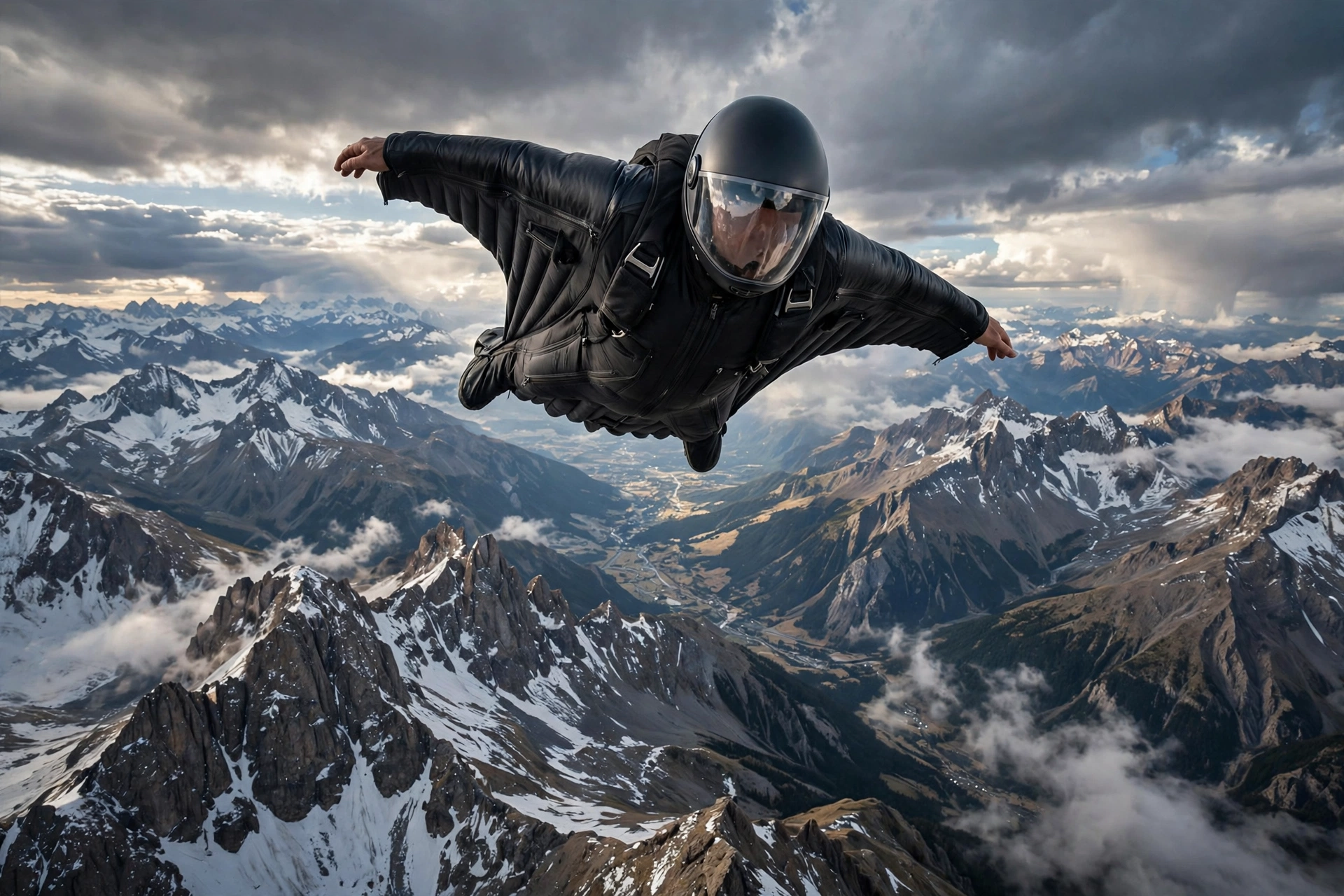
A wingsuit helmet is a lightweight, low-profile helmet worn by wingsuit flyers to protect the head during flight and landing. It is built to fit snugly under the wingsuit hood, resist wind at high speed, and stay in place through every stage of a jump. Wingsuit flying puts the head at the front of the body, facing the wind, so a helmet must be smooth, secure, and free of anything that could catch the air. In general terms, it is a specialist piece of skydiving kit rather than a general-purpose helmet.
What Is a Wingsuit Helmet?
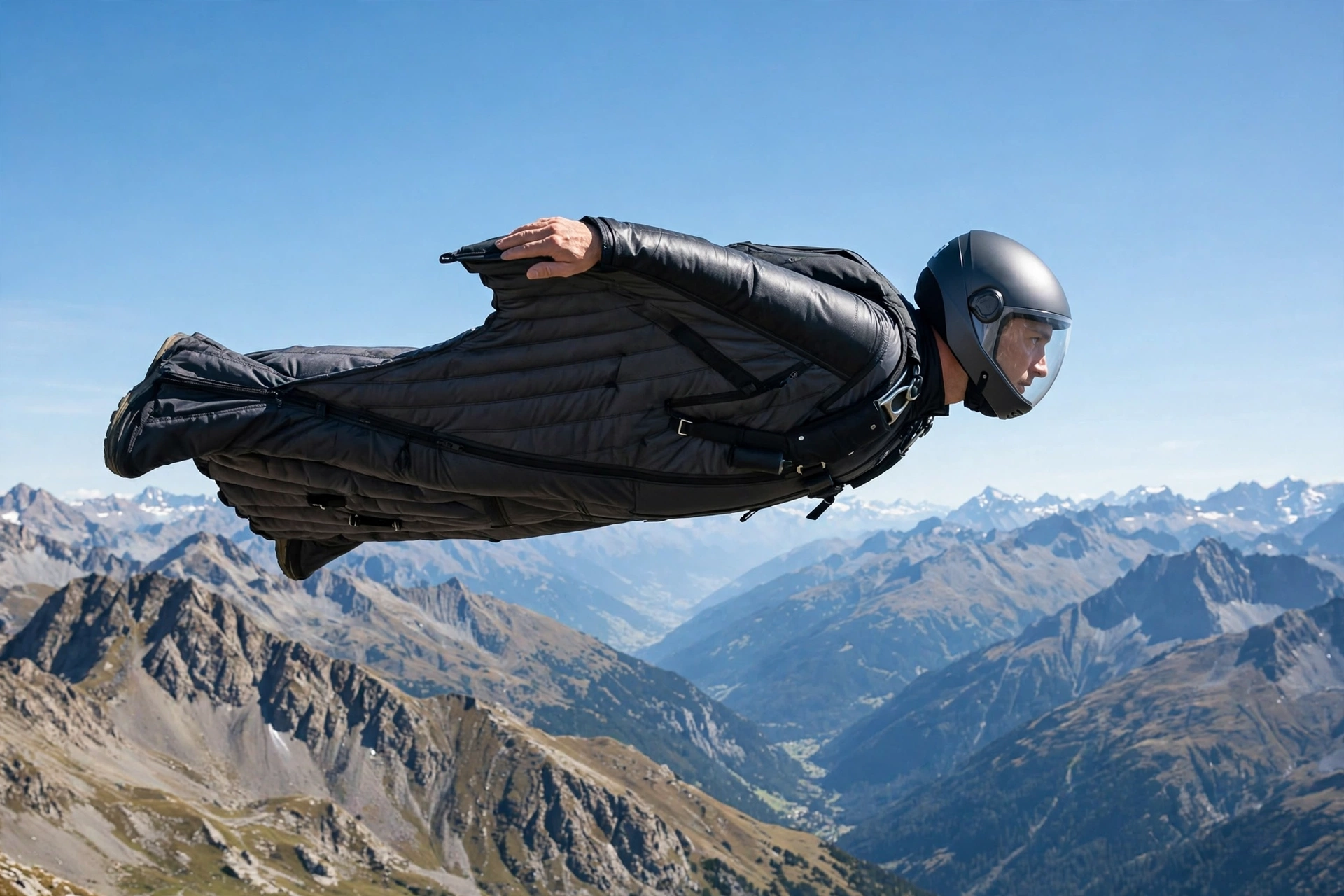
A wingsuit helmet is a small, close-fitting helmet designed for the demands of wingsuit flight. It is usually made from a light shell with a thin, comfortable liner, and it often has a full-face or open-face shape with a clear visor. The shape is smooth and rounded, with no bulky vents or peaks, so that air flows cleanly over it and does not create drag or lift that could pull the head around in flight.
Unlike a motorcycle helmet, a wingsuit helmet is made to be worn with a parachute rig, a wingsuit, and often an audible altimeter. It has to sit neatly under the wingsuit hood and work with the harness straps around the neck and shoulders. Some flyers choose a full-face helmet for extra protection and wind cover, while others prefer an open-face helmet with goggles for a wider view and easier communication on the ground.
Why Do Wingsuit Flyers Wear a Helmet?
Wingsuit flyers wear a helmet to protect the head from impacts during the jump, the flight, and the landing. The head can strike the aircraft door on exit, bump against the rig during freefall, or hit the ground on a landing that does not go as planned. A helmet cushions the skull in these moments and reduces the chance of a cut or a more serious head injury.
A helmet also shields the flyer from wind, cold, and noise at high speed. In wingsuit flight, the face meets the airflow directly, and at the speeds involved the wind can be painful and can make it hard to see. If you want to understand one of the safety technologies used in modern helmets, reading about what MIPS is for helmets is a good place to start, though most wingsuit helmets do not use that system. A visor or goggles keep the eyes clear and let the flyer focus on flying the suit.
How Should a Wingsuit Helmet Fit?
A wingsuit helmet should fit very snugly, with the liner in contact with the head all round and no loose spots that would let the helmet shift in the wind. It should sit level, covering the forehead, and it should not lift or rock when the flyer shakes their head. At the speeds of wingsuit flight, even a small amount of movement can be distracting, so the fit needs to be checked carefully before every jump.
The chin strap should be fastened firmly, and the helmet should feel secure without pressing painfully on the temples or the top of the head. It is worth trying the helmet on with the wingsuit hood and the parachute rig, since these can change how the helmet sits. A helmet that fits well on its own but moves once the hood is up is not the right choice for flying.
What Types of Wingsuit Helmet Are There?
The two main types of wingsuit helmet are full-face and open-face. A full-face helmet covers the chin and jaw as well as the top of the head, and it usually has a built-in visor. It gives the most protection and the best wind cover, and many experienced flyers prefer it for that reason. It also keeps the face warm at altitude, where the air is cold.
An open-face helmet covers the top and sides of the head but leaves the face open, so the flyer wears goggles for eye protection. It is lighter, cooler, and easier to talk through on the ground, which suits some flyers, especially when learning. In general terms, either type can work well, and the choice often comes down to personal comfort, the kind of flying planned, and the conditions on the day.
How Do You Look After a Wingsuit Helmet?
A wingsuit helmet should be kept clean and dry between jumps. Wipe the shell with a damp cloth to remove dirt and dust, and clean the visor with a soft cloth and a cleaner made for visors, since scratches can spoil the view in flight. The liner can be wiped down or removed and washed if the maker allows it, which helps keep the helmet fresh after many jumps in warm weather.
Check the helmet before every jump. Look for cracks in the shell, a visor that no longer locks or seals, a chin strap that is frayed, or padding that has gone flat. Store the helmet in a bag or case away from direct sunlight and strong heat, and keep it away from fuel, solvents, and sharp objects. A helmet that is looked after will last longer and perform better when it is needed.
When Should a Wingsuit Helmet Be Replaced?
A wingsuit helmet should be replaced after any hard impact, even if the damage is not easy to see. The foam liner inside a helmet is designed to absorb energy once, and after a heavy knock it may not protect as well again. A helmet that has hit the aircraft door hard, struck the ground, or been dropped onto a hard floor is best retired.
Wear and age are also reasons to replace a helmet. If the liner has flattened, the visor no longer fits cleanly, or the shell shows cracks or deep scratches, the helmet is past its best. In general terms, a helmet used for many jumps a year will wear out sooner than one used now and then, so it is worth checking it at the start of each season and replacing it when it no longer fits or protects as it should.
Do wingsuit flyers have to wear a helmet?
In general terms, a helmet is standard kit for wingsuit flying, and most drop zones and flying groups expect one to be worn. Even where no rule states it plainly, the risks of exit, flight, and landing make a helmet a sensible choice for every jump.
Can I use a motorcycle helmet for wingsuit flying?
It is not a good idea. A motorcycle helmet is heavy, bulky, and shaped for the road rather than the air, and it can catch the wind and pull at the head in flight. A helmet made for skydiving or wingsuit flying is lighter, smoother, and made to work with a parachute rig.
Do I need a visor on a wingsuit helmet?
Not always, but most flyers use one. A visor or goggles protect the eyes from wind, cold, and dust at speed, and they make it much easier to see clearly during flight and landing. An open-face helmet should always be worn with goggles.

Olivia
Writer at Helmet Today, covering helmet reviews, fit and riding safety.