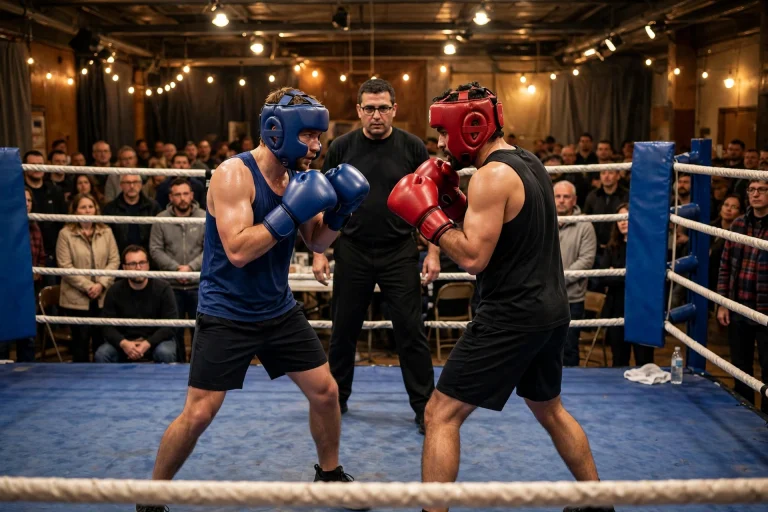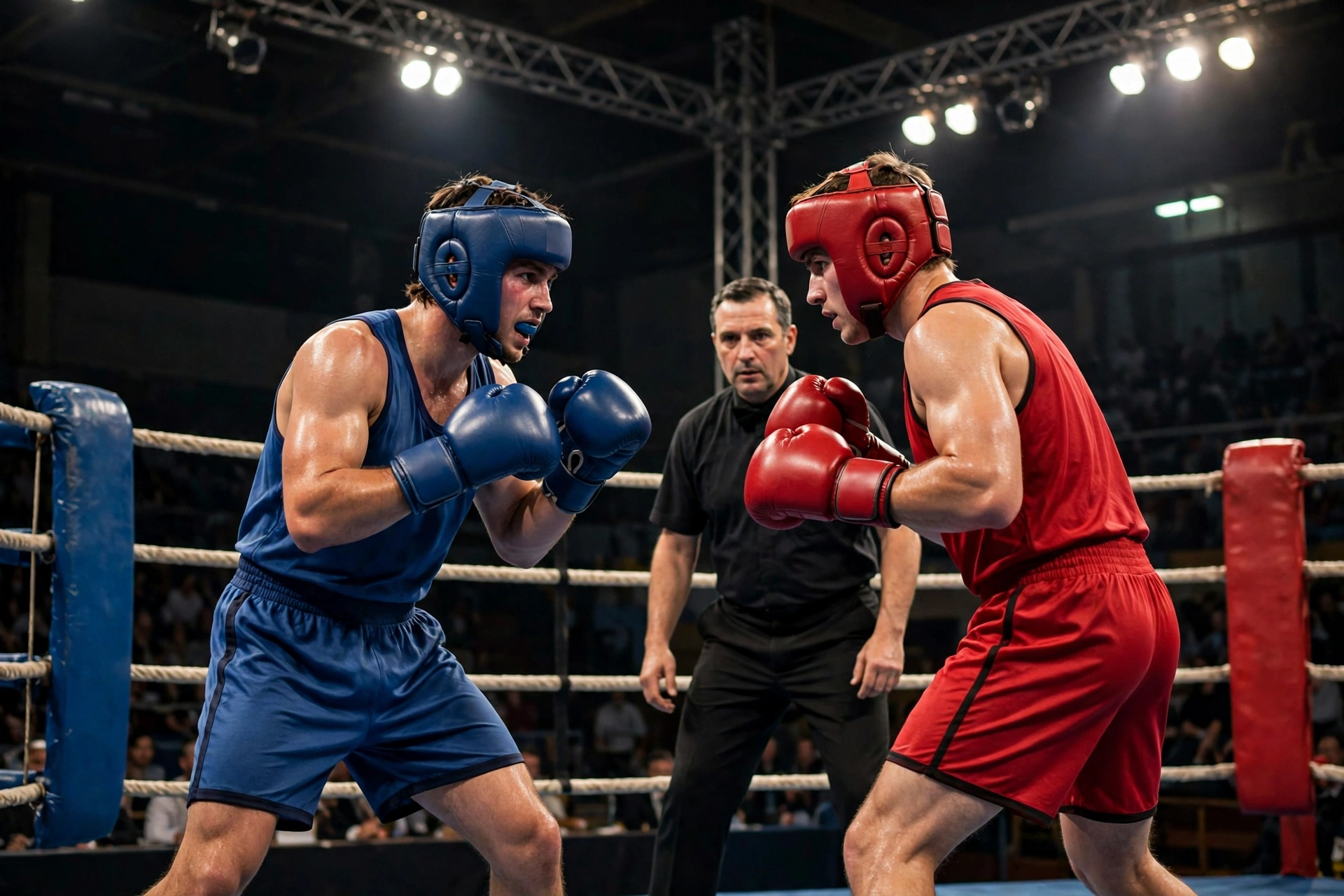
Headgear for amateur boxing competition is padded protective headgear worn by amateur boxers during sanctioned bouts to guard the head from cuts, bruises, and glancing blows. It covers the forehead, temples, cheeks, and the back of the head with thick foam padding, while leaving the eyes and mouth clear. Amateur boxing is scored on clean, controlled punches, and headgear is part of the safety kit that lets boxers compete at full effort with less risk of a cut stopping the bout. In general terms, it is standard equipment for many amateur competitions.
What Is Headgear for Amateur Boxing Competition?
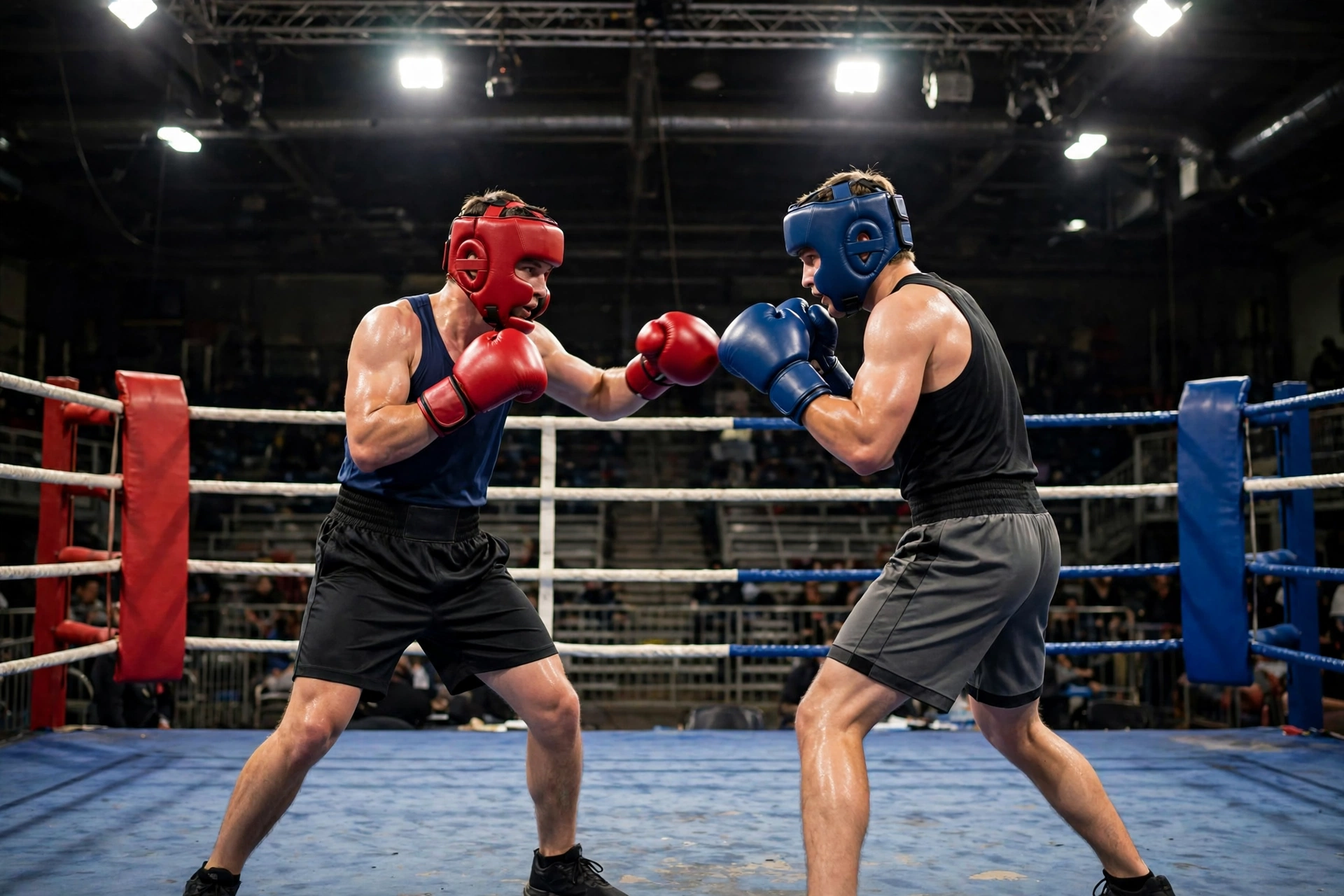
Headgear for amateur boxing competition is a padded guard made from foam and a tough outer covering, shaped to fit closely round the head. It usually has a padded band across the forehead, cups over the ears, and padding down the cheeks and across the back of the head. The design leaves the eyes open for a clear view and the mouth free for breathing and for the mouthguard, which is worn underneath.
Competition headgear is made to meet the rules of the body running the event, which may set standards for the thickness of the padding, the size of the eye opening, and how the headgear fastens. It is often heavier and more protective than the headgear used for light training, because a competition bout involves harder, faster punches. The headgear fastens with laces or straps at the back and a chin strap, so it stays firmly in place through every round.
Why Do Amateur Boxers Wear Headgear in Competition?
Amateur boxers wear headgear in competition to reduce cuts and bruises to the head and face. A boxing glove striking bare skin can split the skin over the forehead or the cheekbone, and a cut can end a bout early. The padding of the headgear spreads the force of a punch and gives the skin a softer surface to meet, which helps keep the boxer in the fight.
Headgear also protects the ears and the temples from glancing blows, and it can soften the impact of a punch that lands awkwardly. If you want to understand one of the safety technologies used in modern helmets, reading about what MIPS is for helmets is a good place to start, though boxing headgear relies on thick foam padding rather than that system. It is important to know that headgear does not make boxing safe on its own, and it does not remove the risk of head injury, but it is a useful part of the safety kit for amateur bouts.
How Should Competition Boxing Headgear Fit?
Competition boxing headgear should fit snugly all round the head, with the padding in contact with the forehead, the temples, and the back of the head. It should sit level, with the eye opening lined up so the boxer can see clearly in every direction, including upward and to the sides. The cheek padding should sit close to the face without pressing on the eyes or blocking the view.
The fastenings should be secure enough that the headgear does not shift when a punch lands. Laces at the back should be tied firmly, and the chin strap should be snug but not so tight that it makes breathing or swallowing hard. It is worth trying the headgear on with a mouthguard in place, since that is how it will be worn in the bout, and checking the fit again after a few rounds of training once the padding has settled.
What Types of Amateur Boxing Competition Headgear Are There?
The most common type of competition headgear is the open-face style, which covers the forehead, cheeks, ears, and the back of the head, but leaves the face open. It gives a wide field of vision and good airflow, which suits most amateur bouts. The padding on the cheeks is shaped to guard the cheekbones without closing off the boxer’s view of incoming punches.
There is also headgear with a cheek bar or a nose bar, which adds a padded bar across the cheek or in front of the nose for extra protection. This type is often used by boxers who are more worried about cuts, or by younger boxers in their first bouts. In general terms, either style can work well, but the choice must meet the rules of the competition, since some events only allow certain designs.
How Do You Look After Competition Boxing Headgear?
Competition boxing headgear should be wiped down after every bout or training session to remove sweat and dirt. A damp cloth with mild soap is usually enough for the outer covering, and the inside should be wiped too, then left to air dry away from direct heat. Letting the headgear dry fully before putting it away helps prevent odours and keeps the foam in good shape.
Check the headgear regularly for wear. Look for split seams, torn covering, flattened padding, or laces and straps that no longer hold firmly. The padding over the forehead and cheeks takes the most punishment, so it is worth pressing it gently to check that it still springs back. A headgear that is looked after will last longer, but it should never be kept in use once the padding has gone flat.
When Should Competition Boxing Headgear Be Replaced?
Competition boxing headgear should be replaced when the padding has flattened or the covering has split, since it can no longer spread the force of a punch as it should. A headgear that has been through many hard bouts may look sound from the outside while the foam inside has lost its spring. If punches feel sharper than they used to, or the headgear shifts during sparring when it used to stay put, it is time for a new one.
It should also be replaced if it no longer meets the rules of the competition, for example if the padding has worn thin or a strap has been repaired in a way that changes the fit. In general terms, it is worth checking the headgear before every competition and replacing it when it no longer fits snugly or protects as it should, since a bout is not the place to find out that headgear has worn out.
Is headgear always worn in amateur boxing competition?
Not always. Rules differ by country, age group, and the body running the event. Many amateur competitions still require headgear, while some senior men’s events have removed it, so it is worth checking the rules of the event before entering.
Does boxing headgear stop concussion?
No. Headgear reduces cuts and bruises and can soften glancing blows, but it does not remove the risk of concussion or other head injury from a hard punch. Good defence, good refereeing, and proper medical cover matter just as much as the headgear itself.
Can I use training headgear for a competition?
It depends on the rules of the event. Training headgear is often similar in design, but competition headgear may need to meet specific standards for padding and fit. It is worth checking with the coach or the event organisers before the bout, rather than finding out on the day.

Olivia
Writer at Helmet Today, covering helmet reviews, fit and riding safety.