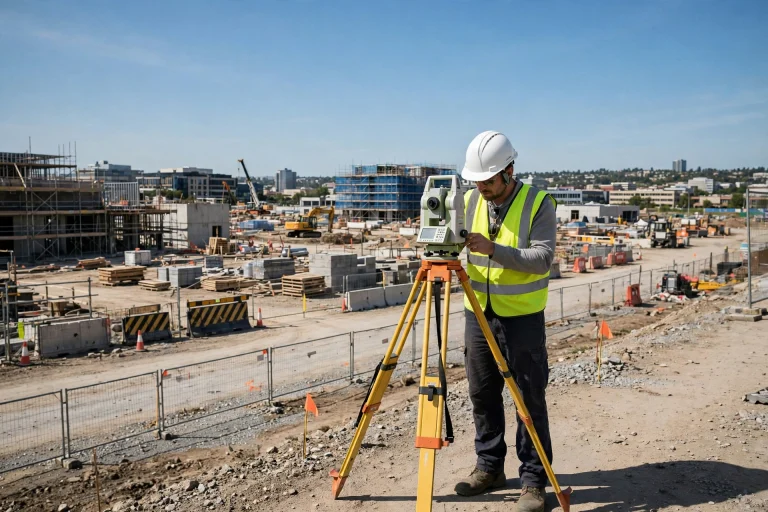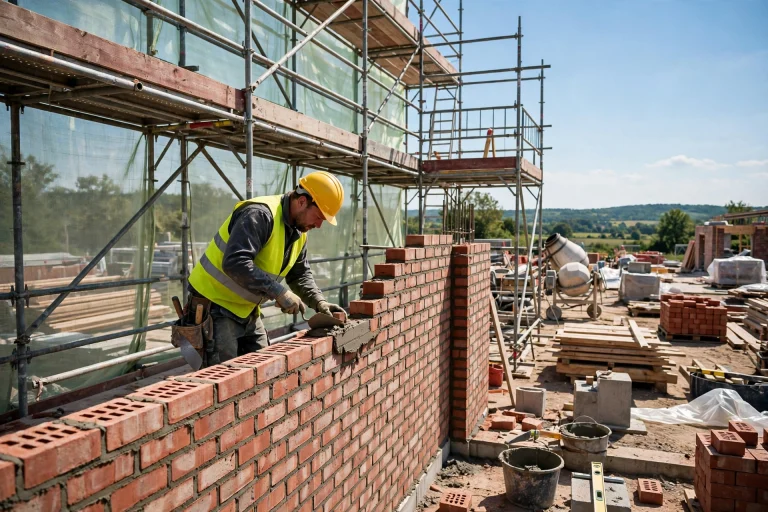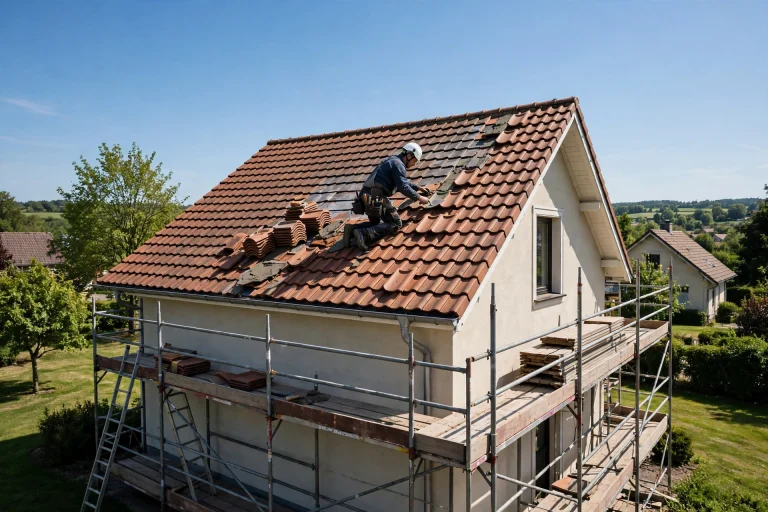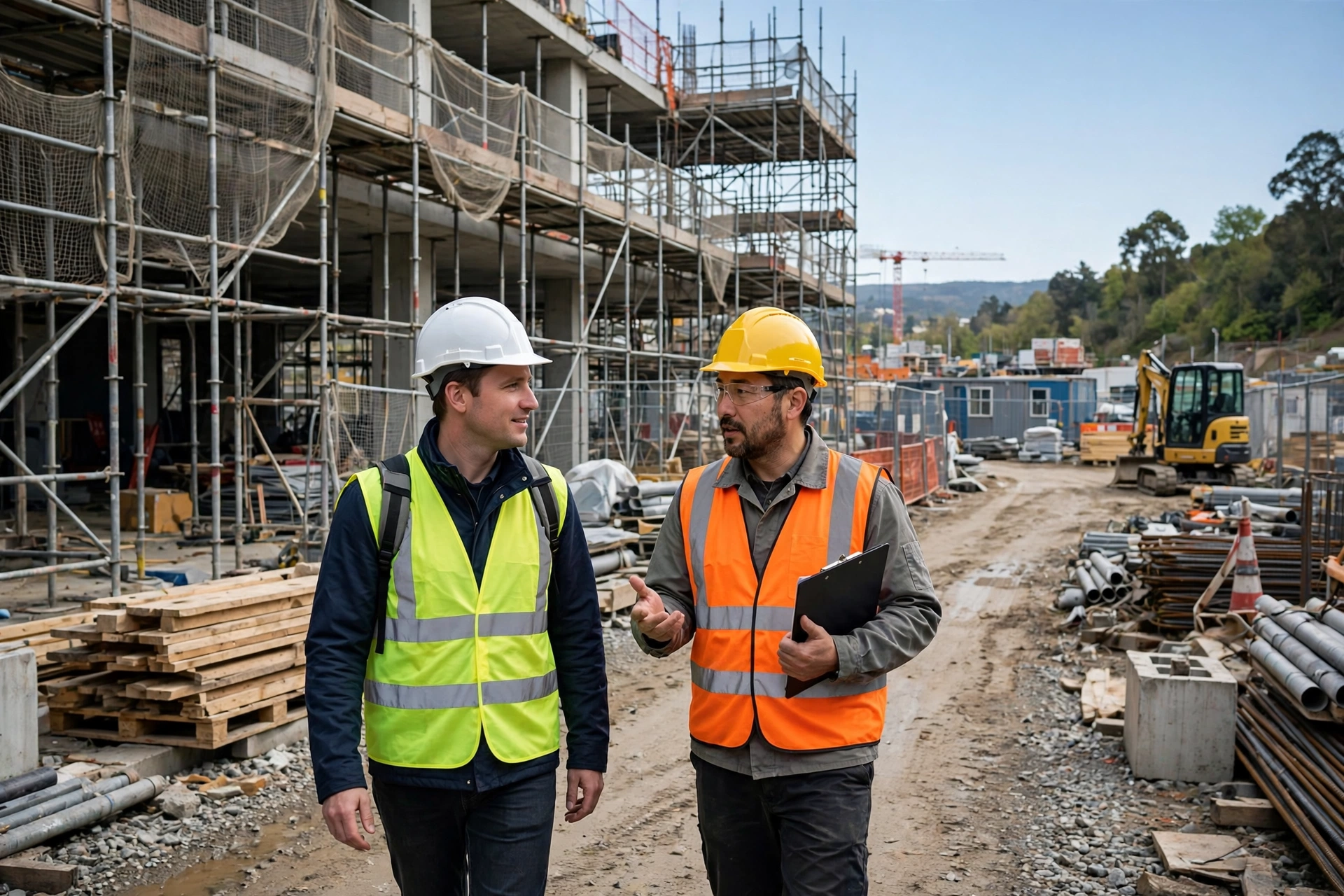
A construction site visitor helmet is a hard hat given to a visitor so their head has basic protection while they walk around a building site. It is not a fashion item. It is the same kind of safety helmet that workers wear, although it may be a different colour so everyone on site can tell the wearer is a visitor. If you are invited onto a construction site, you should expect to be handed one before you go past the gate, and you should wear it for the whole visit.
Construction sites are busy places with risks above head height. Materials are lifted, scaffolding is put up and taken down, and small items can fall from above. A visitor helmet spreads the force of a falling object and protects against bumps under low beams. It will not make a site safe on its own, but it is one of the simplest pieces of protection you can wear.
Who needs a visitor helmet on a construction site?
Anyone who is not a regular worker on the site usually counts as a visitor. That includes clients, architects, engineers, surveyors, inspectors, delivery drivers who leave their vehicle, journalists, students on a site tour, and friends or family members who have been given permission to look around. If you are not part of the site team, you should assume you need a visitor helmet.
Some sites keep a stock of visitor helmets in a range of sizes near the site office. Others ask visitors to bring their own hard hat. If you visit sites often, it is worth having your own, because a helmet that fits you is more comfortable and more likely to stay in place. A borrowed helmet is better than no helmet, but check that the adjustment dial works and the shell has no cracks.
Children should not be taken onto a live construction site in general terms, even with a helmet. If a group is given a supervised tour, the site team will set strict rules and provide helmets that fit smaller heads.
What colour is a visitor helmet?
There is no single worldwide rule for visitor helmet colours, but white is the most common choice for visitors in many countries. White helmets are easy to spot, and on some sites white is also used for managers, engineers, and supervisors. Other sites use a bright colour such as yellow, orange, or green for visitors so they stand out from the workforce.
The colour itself does not change how much protection the helmet gives. What matters is the standard it meets and the condition it is in. Some sites use colour coding, for example yellow for general workers and blue for technical staff. When you arrive, ask what the colours mean on that site.
How should a visitor helmet fit?
A visitor helmet should sit level on your head, low on your forehead, with the front edge about two finger widths above your eyebrows. It should feel snug but not tight, and it should not slide forward over your eyes or tip back when you bend over. Most hard hats have an adjustment dial or a sliding strap at the back, so take a moment to set it before you walk onto the site.
The chin strap, if one is fitted, should be used at height, in windy conditions, or anywhere the helmet might fall off. Fasten it snugly under your chin, leaving just enough room to fit a finger between the strap and your skin.
What standard should a visitor helmet meet?
In general terms, a good visitor helmet should meet a recognised safety standard for industrial head protection. In Europe, that is often EN 397, which covers shock absorption, penetration resistance, and protection against lateral forces. In the United States, the common standard is ANSI/ISEA Z89.1, which sets out similar tests for Type I and Type II helmets. Other countries have their own standards, but the ideas are the same.
You do not need to memorise the standard numbers, but it is worth a quick look inside the shell. A genuine safety helmet will have a label showing the standard, the manufacturer, the date of manufacture, and the size range. If there is no marking at all, ask the site team for a different one.
Some visitor helmets also offer extra features, such as protection against electrical contact or against molten metal splash. These are marked with extra symbols on the label. Some modern helmets also use a slip layer that lets the shell move slightly in an angled impact, an idea similar to MIPS in sports helmets. For a short visit, basic impact protection is what matters most.
When should you replace a visitor helmet?
Hard hats do not last forever. Sunlight, heat, cold, and everyday knocks wear down the plastic over time, even if the helmet looks fine. Most manufacturers suggest replacing a hard hat after about five years, and sooner if it has taken a hard knock or shows signs of damage.
Before you put on a borrowed visitor helmet, give it a quick check. Look for cracks, dents, or deep scratches, and check that the suspension is not frayed or missing parts. If the shell feels brittle or makes a cracking sound, do not use it. A damaged helmet should be thrown away, not passed on to the next visitor.
If a helmet takes a heavy impact, for example if something falls on it or it is dropped from height onto a hard surface, it should be replaced even if there is no visible damage. The plastic may have weakened in ways you cannot see. Never drill holes in a hard hat, paint it with solvent-based paint, or stick heavy labels on it, because these can weaken the shell.
What else should visitors wear on a construction site?
A helmet is only one part of visitor safety. Most sites will also ask you to wear a high-visibility vest so that plant operators and drivers can see you. Sturdy closed shoes or safety boots are usually required, and open-toed shoes, sandals, and high heels are not allowed.
Eye protection may be needed in areas where cutting, grinding, or drilling is taking place. The site team should provide safety glasses if they are required. Gloves are less common for visitors, but you may be offered them if you will be touching materials or climbing ladders. Hearing protection is needed near loud machinery, so carry ear plugs or ear defenders if the site provides them.
Above all, follow the site rules. Stay on marked walkways, keep away from lifting zones, never walk under a load, and listen to your guide. A helmet protects your head, but paying attention protects the rest of you.
Do visitors always need a helmet on a construction site?
Yes, in general terms, visitors need a helmet whenever they enter a live construction area. Some sites have a safe viewing area or a site office where no helmet is needed, but once you pass into the work zone, a helmet is required.
Can I wear my own hard hat instead of a visitor helmet?
Yes, if your hard hat meets a recognised safety standard and is in good condition. Tell the site team when you arrive, and they will check it. A cycling helmet or a climbing helmet is not a substitute for a construction hard hat.
What should I do if the visitor helmet does not fit?
Ask the site team for a different size or a helmet with an adjustable suspension. Do not wear a helmet that is too loose or too tight, because it may slip off or fail to protect you. If no helmet fits, the site manager may limit your visit to safe areas only.

Olivia
Writer at Helmet Today, covering helmet reviews, fit and riding safety.