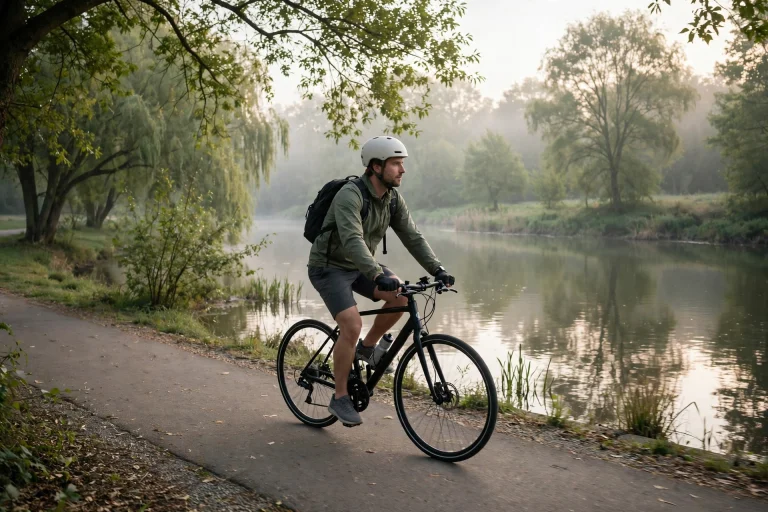
A rider with low vision should wear a well-fitting cycle helmet, just like any other cyclist, because the helmet gives head protection if they fall or are involved in a crash. Low vision means sight that is reduced even with glasses or contact lenses, but the rider can still see enough to cycle. There is no special helmet for low vision. What matters is a good fit, good visibility to other road users, and a setup that works with the rider’s glasses, visor, or other visual aids.
Many people with low vision cycle safely and confidently, often with a few practical changes. They may ride on quieter roads, use a familiar route, ride in daylight, or ride with a friend. A helmet is a simple part of that setup. It does not need to be expensive or unusual. It needs to fit well, stay in place, and work with whatever the rider uses to see.
What type of helmet works best for a rider with low vision?
A standard cycle helmet that meets a recognised safety standard is the right choice. Look for a helmet certified to a standard such as EN 1078 in Europe or CPSC in the United States, and check the label inside the shell. A road cycling helmet is light and well ventilated, which suits longer rides, while a helmet with more coverage at the back and sides can give a little extra protection.
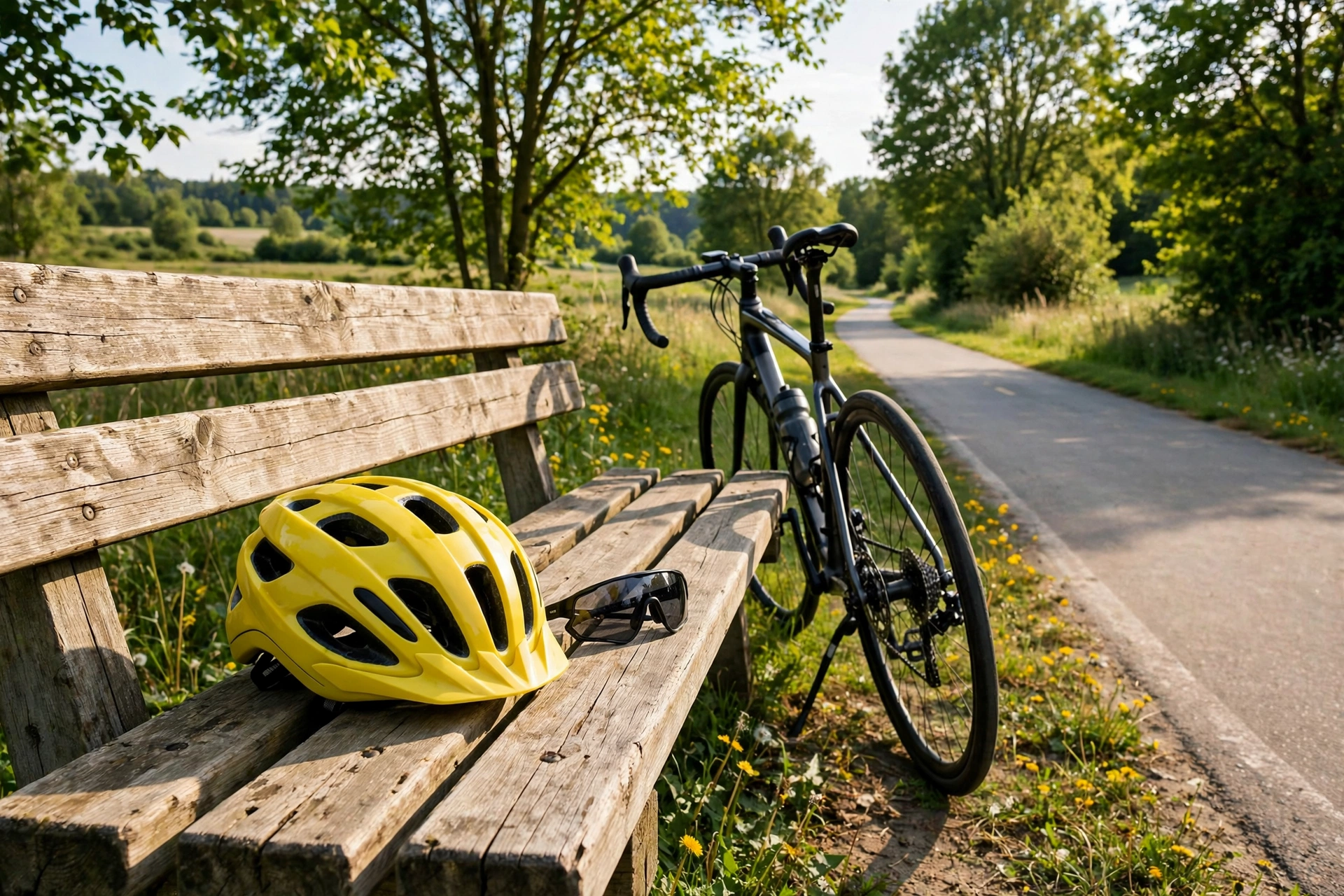
Colour matters for a rider with low vision, but in the opposite way from what you might expect. A bright helmet in white, yellow, or orange helps other road users see the rider, which is important if the rider’s own vision is limited. A helmet with reflective details is also useful in low light. Avoid a dark helmet if you ride in traffic, because it makes you harder to spot.
How should the helmet fit with glasses or a visor?
The helmet should sit level on the head, low on the forehead, with the front edge about two finger widths above your eyebrows. It should feel snug all the way around, without pressing hard in one spot. If the rider wears glasses, try the helmet on with the glasses in place, and check that the arms sit flat without pressing into the temples.
Some helmets have a visor that can help with glare, and some riders prefer a helmet with a small peak that shades the eyes from bright sun. If the rider uses a tinted lens or a special filter for their vision, the helmet should not push the glasses out of position. A helmet with a dial adjustment at the back makes it easier to fine-tune the fit with glasses on, and the chin strap should be fastened snugly under the chin.
What riding setup helps a rider with low vision?
Route choice is often the biggest help. Familiar, quiet roads with good surfaces and clear markings are easier than busy, unfamiliar routes. A cycle path or a traffic-free trail is a good place to build confidence. Riding in daylight, when contrast and colours are clearest, is usually easier than riding at dusk or in poor weather.
Riding with a friend or a group also helps, because other riders can call out hazards and give directions. Some riders use a mirror on the handlebars or on the helmet to check behind them, and some use a bright flag or a light on the bike to make themselves more visible. A helmet-mounted light can help the rider see the road ahead in low light, and it also helps others see the rider.
Can a rider with low vision use a tandem or a trike?
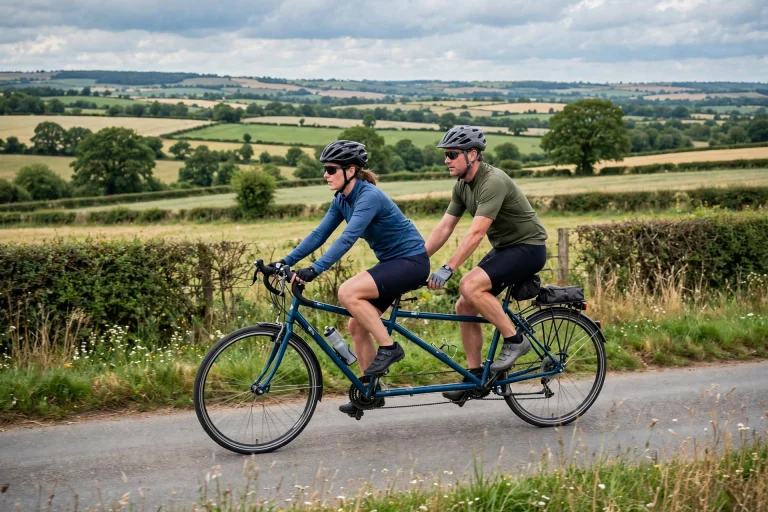
Yes. A tandem is a good option for a rider whose vision is not enough for solo cycling, because the sighted captain steers and the stoker pedals from the back. Both riders wear a cycle helmet, and the pair uses clear calls for bumps, turns, and stops. Many tandem clubs welcome riders with low vision and can pair them with an experienced captain.
A tricycle or a recumbent trike is another option, because it is stable at low speed and does not need to be balanced in the same way as a two-wheeled bike. A trike rider still needs a helmet, because a fall or a collision can still cause a head injury. Some trike riders choose a helmet with extra coverage at the back, because the riding position is more reclined than on an upright bike.
What else should a rider with low vision wear?
Bright, high-visibility clothing helps other road users see the rider, which matters when the rider’s own vision is limited. A bright jacket or a high-visibility vest is a good idea, and reflective details help in low light. Gloves protect the hands in a fall and improve grip on the handlebars, which is useful if the rider needs to brake quickly.
Eye protection is worth considering too. Clear cycling glasses protect the eyes from wind, insects, and debris, and they also protect the eye area in a fall. Some helmets include a slip layer such as MIPS to reduce rotational forces in an angled impact, which is a useful extra for any rider. If the rider uses a special lens or filter, check that it works well with the helmet and the glasses together.
When should a rider with low vision get advice before cycling?
In general terms, it is wise to talk to an eye care professional or a clinician before starting to cycle, or before changing how you ride. They can advise on whether cycling is suitable for your level of vision, and whether there are any conditions that make it unsafe. A cycling coach or a local cycling club can also advise on routes, skills, and equipment.
It also helps to have your vision checked regularly, because low vision can change over time. If your vision gets worse, you may need to change your routes, ride only in daylight, or switch to a tandem. There is no shame in changing how you ride. The goal is to keep cycling safely and enjoyably, with a helmet that fits and a setup that suits your sight.
Is there a special helmet for riders with low vision?
No, there is no special helmet for low vision. A standard cycle helmet that fits well and meets a recognised safety standard is the right choice, ideally in a bright colour so other road users can see the rider easily.
Can a rider with low vision cycle on the road?
Many riders with low vision cycle on the road safely, often on quiet, familiar routes in daylight. It depends on the level of vision and on local rules, so check the rules where you live and talk to an eye care professional if you are unsure.
Should the helmet be different for a tandem stoker with low vision?
No. The stoker wears the same kind of cycle helmet as any other rider. The captain should check the stoker’s helmet fit before the ride, and the pair should agree on clear calls for hazards, turns, and stops.

Olivia
Writer at Helmet Today, covering helmet reviews, fit and riding safety.