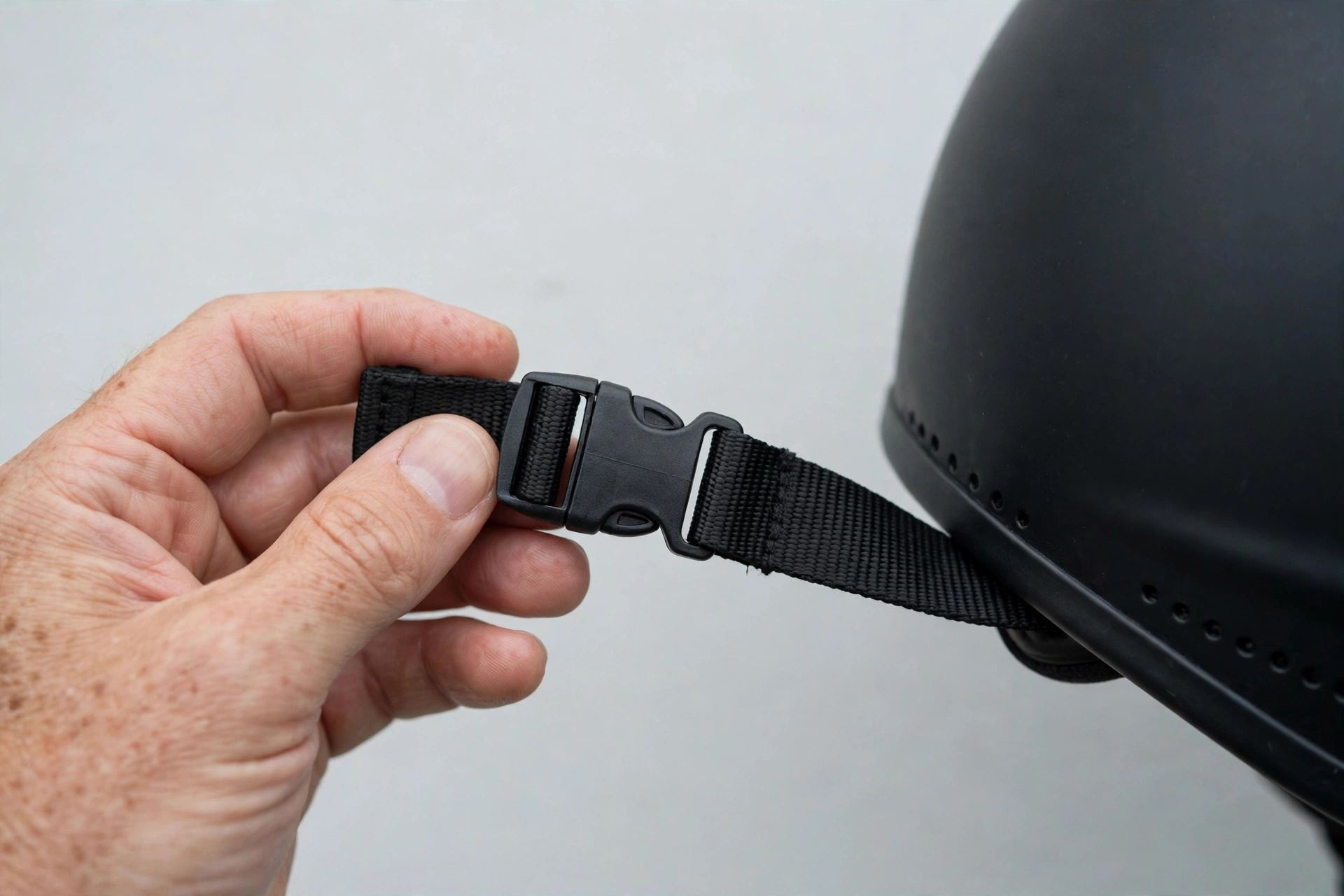
A helmet buckle is most often made from strong plastic, though metal buckles are also used, and the material is chosen to hold the chin strap firmly while staying light, rust-free, and easy to use with one hand. In general terms, the buckle is a small but important part of the helmet: it keeps the strap closed, and if the strap comes loose, the helmet cannot stay on the head in a fall. Buckles are found on almost every helmet with a chin strap, from motorcycle and cycling helmets to work and sports helmets, and the material used depends on the type of helmet and the job it has to do.
What Materials Are Helmet Buckles Made From?
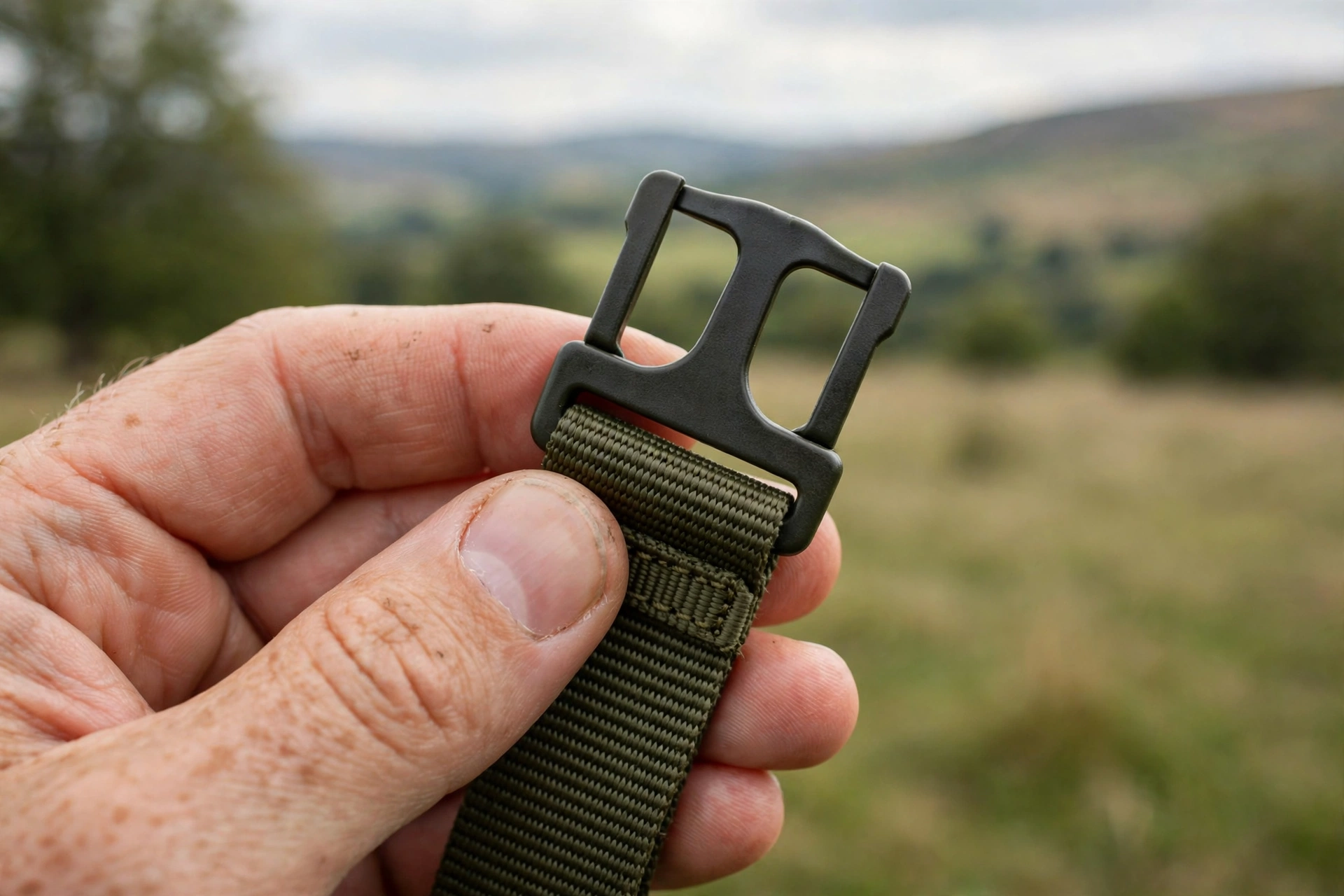
Most helmet buckles are made from a tough moulded plastic, such as nylon or a similar engineering plastic, which is strong for its weight and does not rust or corrode. The plastic is moulded into shape in a factory, which lets makers produce buckles in large numbers at a low cost, and in a range of shapes that suit different straps and helmets. Plastic buckles are the standard choice on cycling, ski, and many motorcycle helmets.
Metal buckles are also used, most often made from stainless steel or aluminium, and sometimes from brass. Metal buckles are heavier than plastic ones, but they are very strong and hard-wearing, and they are common on work helmets and on some motorcycle helmets. In general terms, the choice between plastic and metal comes down to weight, cost, and the conditions the helmet will be used in.
How Is a Plastic Helmet Buckle Made?
A plastic helmet buckle is usually made by injection moulding, a process in which melted plastic is forced into a metal mould shaped like the buckle, then cooled until it hardens. The buckle comes out of the mould as a finished piece, or in two halves that are clipped together, and any rough edges are trimmed away. The process is fast and repeatable, which is why plastic buckles can be made cheaply in large numbers.
The buckle is then tested for strength, to make sure it will hold under the pull of the chin strap and will not crack in cold weather. In general terms, a good plastic buckle is designed to be strong enough for its job, but also to release easily when the rider presses the release catch. That balance between holding firm and releasing on demand is the key to a good buckle design.
How Is a Metal Helmet Buckle Made?
A metal helmet buckle is usually made by stamping, casting, or bending sheet metal into the shape of the buckle, then finishing it to remove sharp edges. Stainless steel buckles are often stamped from a flat sheet and folded into shape, while cast buckles are made by pouring molten metal into a mould. The buckle is then polished or coated to protect it from rust and to give it a smooth finish that will not snag the strap.
Metal buckles are heavier than plastic ones, but they are very durable and can last the life of the helmet. In general terms, they are chosen where strength and long life matter more than weight, such as on work helmets used on building sites. If you want to understand one of the safety technologies used in modern helmets, reading about MIPS is a good place to start, though the buckle itself is a separate part of the helmet’s safety system.
Why Does the Buckle Material Matter?
The buckle material matters because the buckle is the part that keeps the helmet on the head. If the buckle breaks or slips open, the strap comes loose and the helmet can fall off in a fall, which is why the buckle must be strong enough to hold under force and reliable enough to stay closed. A buckle that cracks in cold weather or corrodes in rain is a safety problem, not just a nuisance.
The material also affects comfort and ease of use. A plastic buckle is light and warm to the touch, and it can be worked with gloved hands, while a metal buckle can feel cold in winter and may be heavier under the chin. In general terms, the best buckle is the one that holds firmly, releases easily, and suits the conditions the helmet will be used in, whether that is a daily commute or a building site.
How Do You Look After a Helmet Buckle?
Looking after a helmet buckle is mostly a matter of keeping it clean and checking it from time to time. Dirt, mud, and grit can build up in the mechanism and make it stiff or hard to release, so the buckle should be rinsed with clean water and left to dry, and any grit should be brushed out gently. Harsh cleaners should be avoided, since they can damage the plastic or the coating on a metal buckle.
The buckle should be checked for cracks, wear, or a loose catch, because a buckle that does not click shut firmly should not be trusted. If the buckle is damaged, it should be replaced, following the maker’s instructions, rather than repaired. As with any helmet, a hard impact means the helmet itself should be replaced, even if the buckle still looks fine, because damage to the shell or the main liner may not be visible.
What Should You Check Before Buying a Helmet Buckle?
Before buying a replacement buckle, or a helmet with a new type of buckle, it is worth checking that the buckle fits the strap and that it clicks shut firmly. The buckle should be easy to fasten and release with one hand, even while wearing gloves, and it should not slip open when the strap is pulled. It should also sit comfortably under the chin, without digging in or rubbing the skin.
It is also worth checking that the buckle is made for the type of helmet it will be used on, since buckles come in different sizes and shapes. In general terms, a replacement buckle should match the original as closely as possible, and it should be fitted following the maker’s instructions. A buckle that does not fit the strap properly is not safe to use, however strong its material may be.
Are plastic helmet buckles strong enough?
In general terms, yes. Plastic buckles used on helmets are made from tough engineering plastics and tested to hold the chin strap firmly. They are the standard choice on most cycling, ski, and motorcycle helmets.
Do metal buckles last longer than plastic ones?
In general terms, metal buckles are very durable and can last the life of the helmet, but a good plastic buckle will also last for years if it is looked after. The choice depends more on weight, cost, and use than on lifespan alone.
Can a broken helmet buckle be replaced?
Yes, in general terms. Many buckles can be replaced with a matching spare, following the maker’s instructions. If the strap itself is damaged, the whole strap may need replacing instead.

Olivia
Writer at Helmet Today, covering helmet reviews, fit and riding safety.