Poron XRD is a soft, flexible foam used inside some helmets to absorb impact energy, and it is different from ordinary foam because it stays soft and comfortable in everyday use but firms up instantly when it is hit hard. It belongs to a family of materials known as impact-absorbing foams, and it is most often found as padding, inserts, or comfort layers inside a helmet rather than as the main protective liner. Its job is to add an extra layer of energy absorption, especially against repeated smaller knocks, while staying light and flexible enough to wear all day.
Poron XRD is a brand name, and like many branded materials it is easy to misunderstand. It is not a replacement for the hard EPS foam liner that does the heavy work in a serious crash, and a helmet that contains it is not automatically safer than one that does not. This guide explains what Poron XRD is in general terms, how it works, and where it is used in helmets.
What Exactly Is Poron XRD?
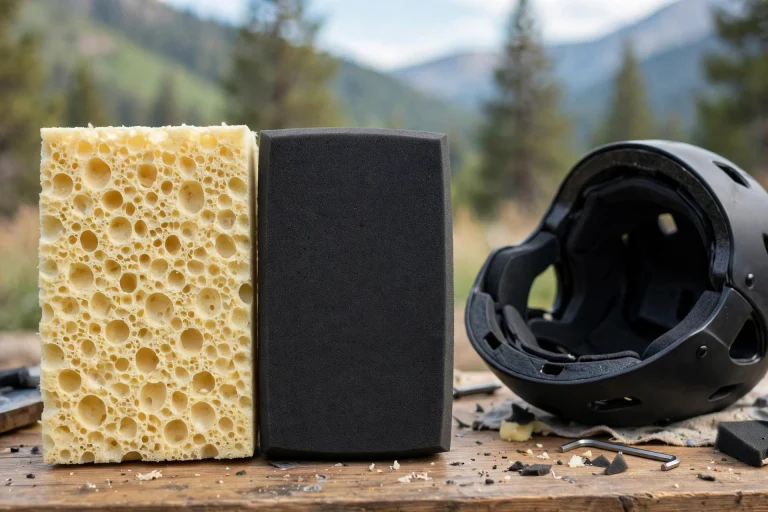
Poron XRD is a type of open-cell polyurethane foam made by a company called Rogers Corporation, and the XRD part of the name refers to a specific formulation designed for impact protection. It is soft to the touch, springy, and easy to shape, which is why it turns up in padding for helmets, body armour, sports gear, and footwear. In a helmet, it usually appears as thin pads or inserts placed where the helmet meets the head, or as a layer inside the comfort padding.
The material is best known for a property called rate sensitivity, which means it reacts differently depending on how fast it is hit. Press it slowly with your finger and it feels soft and gives way easily. Hit it fast and hard, and it stiffens up in a fraction of a second, spreading the force over a wider area before relaxing back to its soft state. That behaviour is what makes it useful as an impact material, and it is the main reason it is marketed for protective gear.
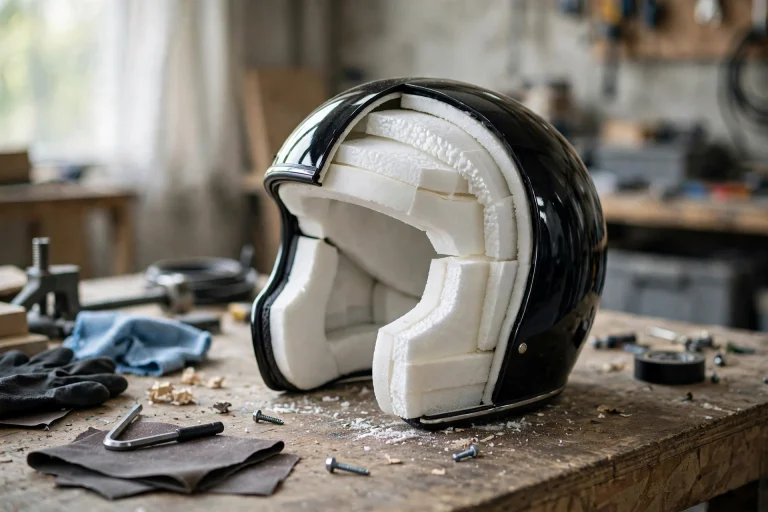
It is worth knowing that Poron XRD is not a structural helmet material in the way EPS foam is. EPS is rigid, crushes permanently in a crash, and forms the main shell of protection. Poron XRD is flexible, bounces back after an impact, and works as a supplement — an extra layer that can soften blows and improve comfort. A helmet with Poron XRD still relies on its EPS liner and outer shell for its main protection.
How Does Poron XRD Absorb an Impact?
Poron XRD absorbs impact energy in two ways. First, like any foam, it compresses when it is hit, and that compression takes energy out of the blow. Second, because of its rate-sensitive behaviour, it stiffens as the force rises, which helps spread the impact over a larger area of the helmet instead of letting it concentrate in one small spot. Spreading the force matters, because a concentrated blow is more likely to cause injury than the same energy spread across a wider surface.
The fact that it recovers after an impact is both a strength and a limit. Unlike EPS, which crushes once and must be replaced, Poron XRD springs back to shape and can absorb another knock. That makes it well suited to activities where small bumps are common, such as skateboarding, snow sports, or cycling on rough ground, where a helmet might take several light hits over its life. If you are learning about how helmets handle different kinds of impact, reading about what MIPS is for helmets can help you understand another technology that works alongside foam padding to reduce the forces on your head.
The limit is that recovery does not mean unlimited protection. A foam that springs back can still be overwhelmed by a single very hard impact, and no comfort layer can replace the job of the main EPS liner in a serious crash. In general terms, Poron XRD is best understood as a helper: it improves the helmet’s response to smaller and repeated impacts, while the EPS liner handles the big ones.
Where Is Poron XRD Used in Helmets?
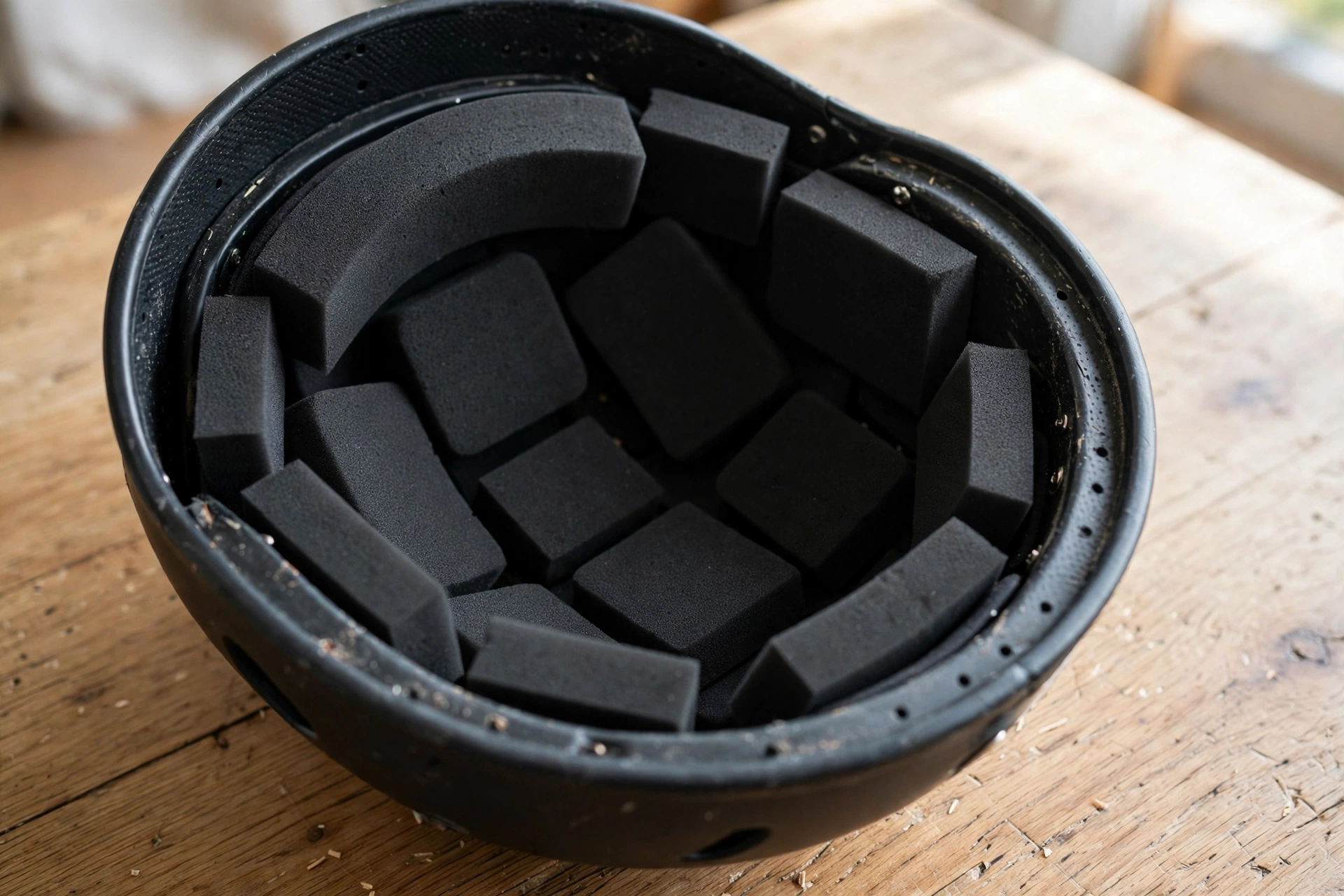
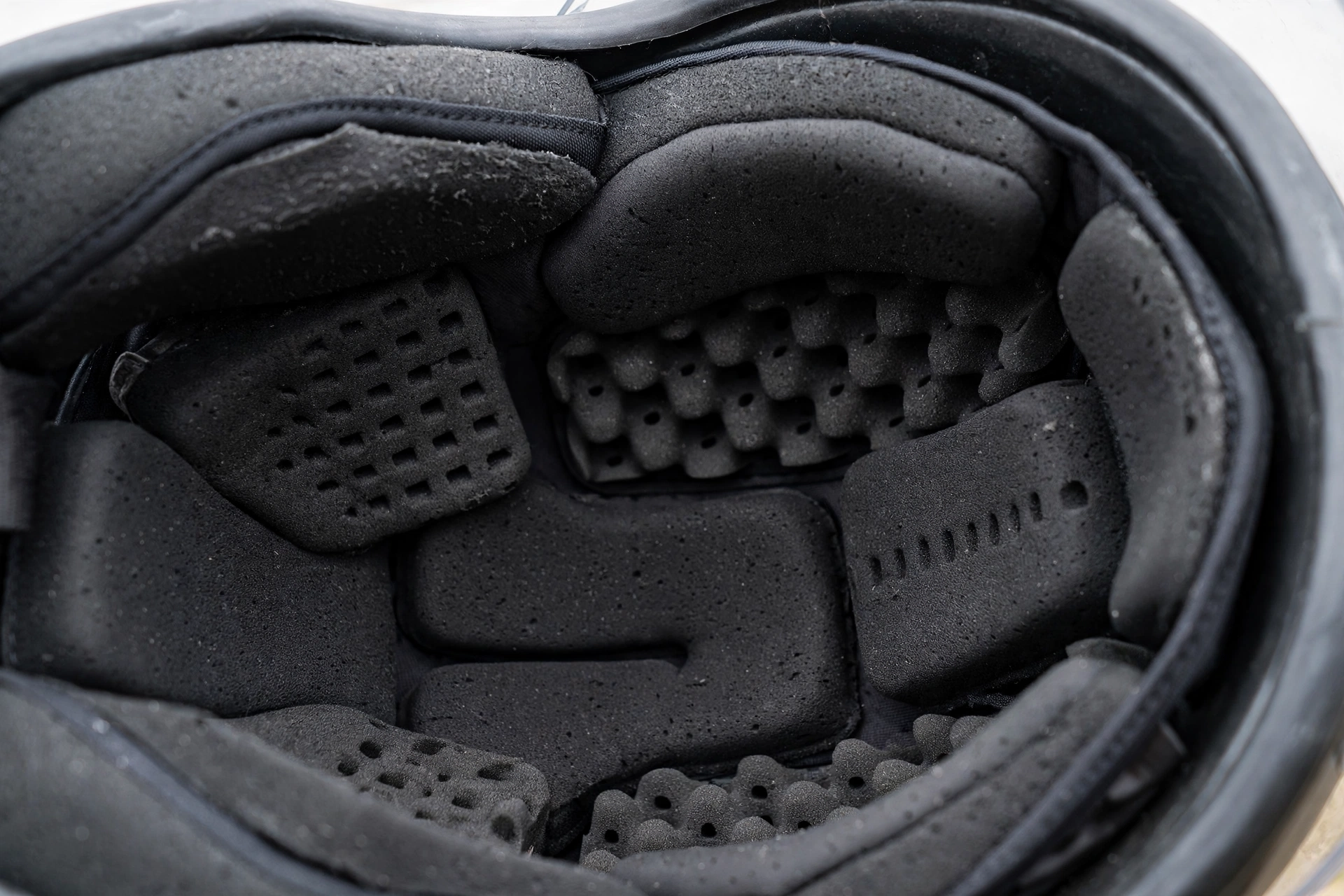
In most helmets, Poron XRD appears in the padding that touches your head. It may be used in crown pads, side pads, or cheek pads, either on its own or layered with other foams and fabrics. Some makers use it as thin inserts in key impact zones, such as the forehead or the back of the head, where an extra layer of absorption is useful without adding much weight or bulk.
It also turns up in helmets designed for activities with frequent light impacts. A skate helmet, a snow helmet, or a bike helmet used on rough trails may take many small knocks that never crush the EPS liner, and Poron XRD pads can soften those knocks and keep the helmet comfortable. In some designs, it is used in the fit system — the adjustable band or pads that hold the helmet in place — where its softness helps the helmet sit evenly on the head. It is more often mentioned in the product description or the maker’s material list than on the outside of the box, and sometimes it is simply described as impact-absorbing foam without the brand name.
Is a Helmet with Poron XRD Safer Than One Without It?
In general terms, there is no simple answer, because safety depends on the whole helmet, not on one material. A helmet with Poron XRD padding and a well-designed EPS liner may handle small and repeated impacts a little better than a similar helmet without it. But a helmet with poor fit, a thin EPS liner, or no certification for your activity will not become safe just because it contains a branded foam.
The extra padding can also improve comfort, and comfort matters more than it sounds. A helmet that feels good is a helmet you will wear every time, and a helmet left at home protects no one. The soft, flexible nature of Poron XRD means it can shape itself to the head and reduce pressure points, which can make a helmet easier to wear for long periods.
How Should You Look After a Helmet with Poron XRD Padding?
Check the pads regularly for wear. If they feel flat, torn, or no longer spring back, they may need replacing, and many makers sell replacement pad sets. A worn pad can change how the helmet fits, and a loose helmet is less protective than a snug one. If the helmet has taken a hard crash, replace the whole helmet, even if the pads still look fine — the EPS liner underneath may have crushed in a way you cannot see from the outside.
Frequently Asked Questions
Q: Is Poron XRD the same as EPS foam?
A: No. EPS is the rigid foam that forms the main protective liner and crushes once in a serious crash. Poron XRD is a soft, flexible foam used as extra padding that springs back after an impact and helps with smaller, repeated knocks.
Q: Does Poron XRD replace the need for a certified helmet?
A: No. Poron XRD is a supplement, not a substitute. Always choose a helmet certified for your activity and check the fit first; the padding is a bonus on top of those basics.
Q: Can Poron XRD padding be washed?
A: In general terms, yes, if the pads are removable. Wash them gently by hand with mild soap and let them air-dry fully before refitting. Check the maker’s care instructions, and replace pads that feel flat or torn.

Olivia
Writer at Helmet Today, covering helmet reviews, fit and riding safety.