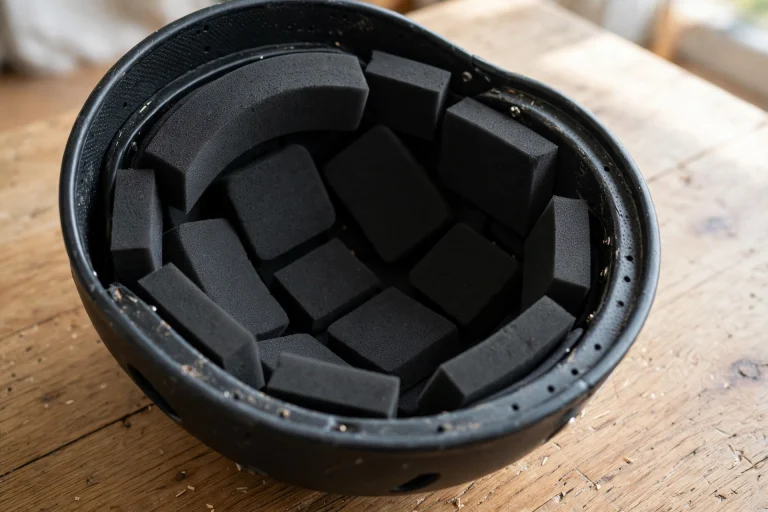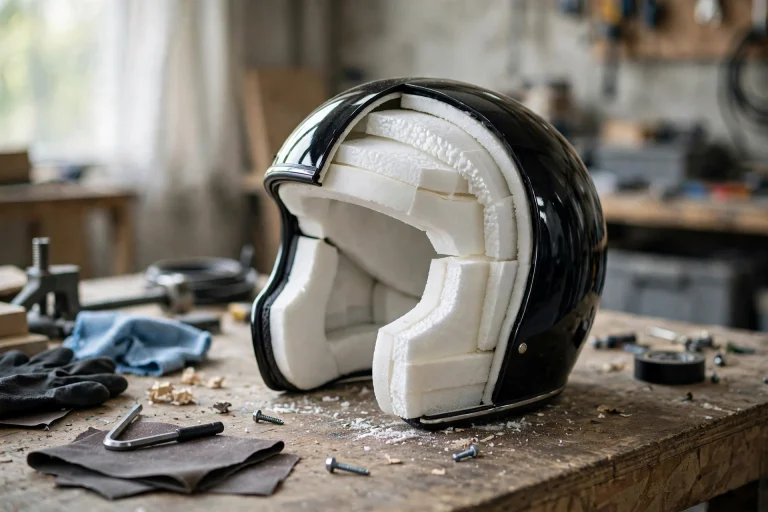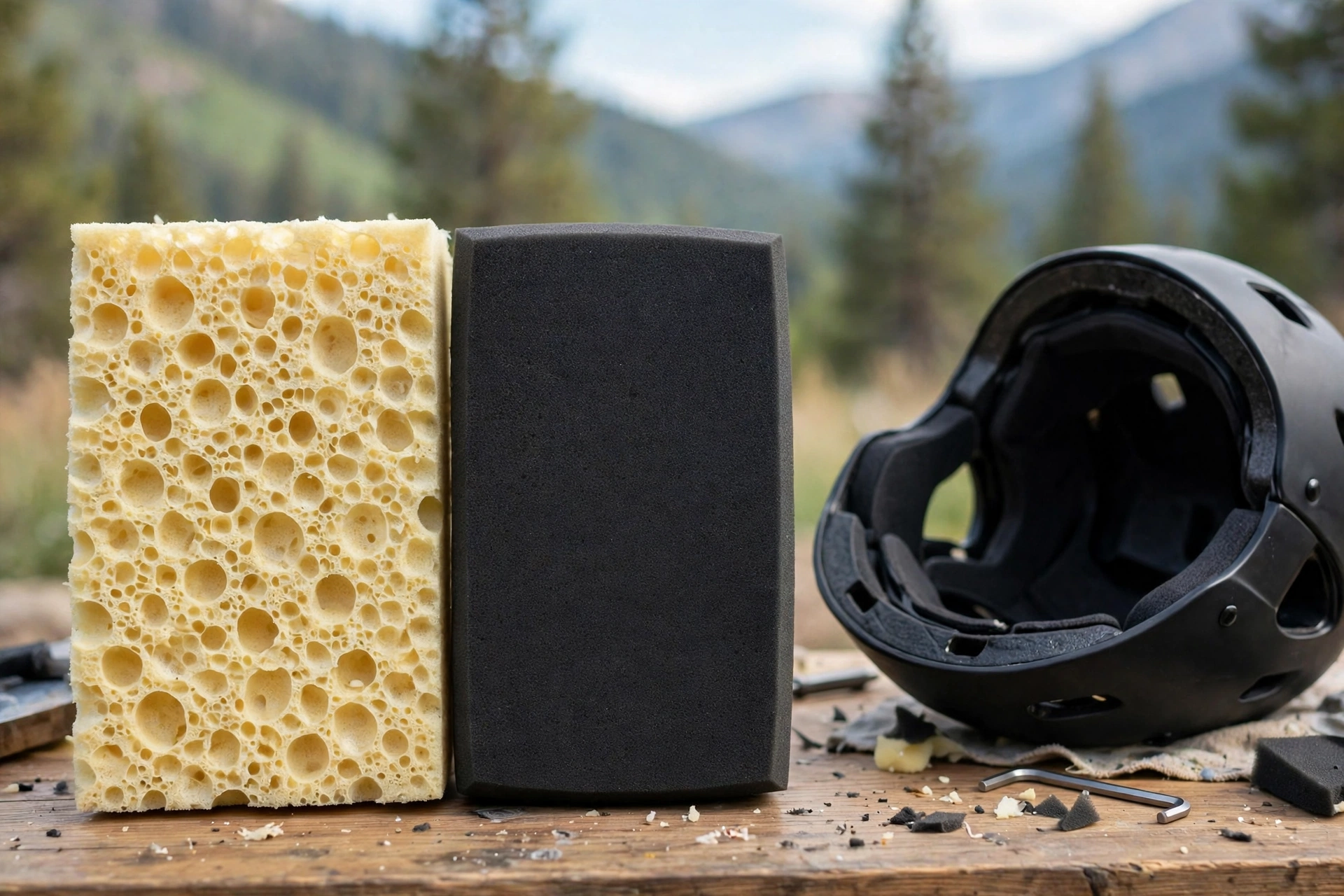
Open-cell foam and closed-cell foam are two types of foam used in helmet padding, and the difference is in their structure: open-cell foam has connected air pockets that let air and moisture pass through, while closed-cell foam has sealed pockets that block air and water. That single difference affects how each foam feels, how it breathes, how it handles sweat, and where it is best used inside a helmet. Most helmets use one or both types, often in different parts of the padding.
Understanding the difference helps when you are choosing a helmet, replacing worn padding, or wondering why one helmet feels cooler or softer than another. This guide explains open-cell and closed-cell foam in general terms, how each one works in a helmet, and which is better for comfort, hygiene, and everyday use.
What Is Open-Cell Foam in Helmet Padding?
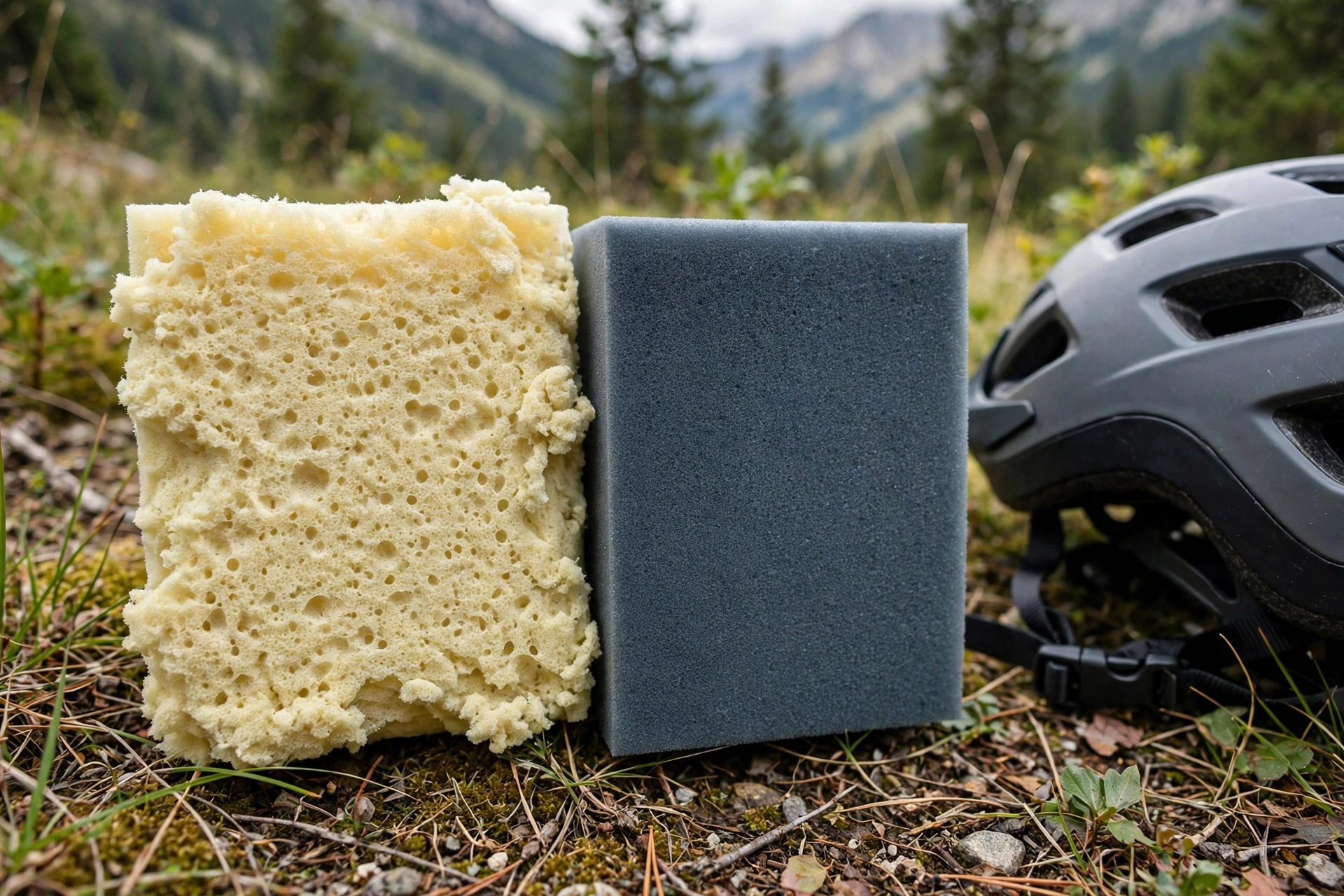
Open-cell foam is a soft, spongy foam in which the tiny cells that make up the material are connected to each other, like a network of small tunnels. Air and moisture can move through those tunnels, which is why open-cell foam feels breathable and squeezes easily under pressure. When you press it, air escapes from the cells, and when you release it, air flows back in and the foam springs back to shape.
In helmets, open-cell foam is most often used in comfort padding — the soft pads that sit against the forehead, cheeks, and crown. It is the foam you feel when you put a helmet on: soft, slightly springy, and able to mould to the shape of your head. Because it breathes, it helps air circulate and allows sweat to evaporate, which keeps the rider cooler and more comfortable on long or hot rides.
What Is Closed-Cell Foam in Helmet Padding?
Closed-cell foam is a firmer foam in which each tiny cell is sealed off from its neighbours, like a sheet of tiny separate bubbles. Air and water cannot pass through it easily, which makes it denser, firmer, and more resistant to moisture than open-cell foam. When you press closed-cell foam, it compresses less readily, and it does not soak up sweat or water in the same way.
In helmets, closed-cell foam is often used where firmness and water resistance matter. It may appear as a thin layer behind comfort padding, as a seal around vents or edges, or as padding in helmets used in wet conditions, such as water sports or winter riding. It is also used in some impact liners, where its firmness helps it hold its shape and resist compression over time. If you are learning about how helmets handle different kinds of impact, reading about what MIPS is for helmets can help you understand one of the technologies used in modern helmet design.
How Do Open-Cell and Closed-Cell Foam Compare?
The clearest difference is breathability. Open-cell foam lets air and moisture through, so it feels cooler and dries faster after a sweaty ride. Closed-cell foam blocks air and moisture, so it stays drier on the surface but can feel warmer, because heat and sweat have nowhere to go. For a rider in hot weather, open-cell padding is generally more comfortable; for a rider in rain or water, closed-cell foam has the advantage of not soaking up water.
Comfort is the second difference. Open-cell foam is softer and more flexible, so it moulds to the head and spreads pressure evenly. Closed-cell foam is firmer and holds its shape better, which can be useful for support, but it can feel hard if it sits directly against the skin. That is why most comfort pads use open-cell foam on the surface, with closed-cell foam, if it is used at all, hidden underneath as a supporting layer.
Durability and hygiene are the third area of difference. Open-cell foam can absorb sweat, oils, and odours over time, and it needs regular cleaning to stay fresh. If it is not cleaned, it can become smelly or break down. Closed-cell foam resists sweat and water, so it is easier to wipe clean and less likely to develop odours, but it can still wear out if it is repeatedly compressed. In general terms, neither type is better in every way — each suits a different job inside the helmet.
Which Foam Is Better for Helmet Padding?
For comfort padding, open-cell foam is usually the better choice. Its softness, breathability, and ability to mould to the head make it the standard material for the pads that touch the skin. Most riders will find an open-cell comfort liner more pleasant to wear, especially on long rides or in warm weather, and the fact that it can be removed and washed helps with hygiene.
For support, sealing, or wet-weather use, closed-cell foam is usually the better choice. Its firmness helps it keep its shape, and its water resistance makes it useful in parts of the helmet that are exposed to rain, sweat, or spray. Some helmets use a combination: open-cell foam for comfort on top, closed-cell foam for structure underneath. That layered approach gives the rider the best of both materials.
It is worth remembering that comfort padding is not the same as the impact liner. The impact liner — the layer that absorbs energy in a crash — is usually made from a different, firmer foam, often expanded polystyrene, which is designed to crush on impact. Open-cell and closed-cell foams discussed here are mainly about comfort and fit, not about crash protection, so do not confuse the two when choosing or replacing padding.
How Do You Care for Foam Helmet Padding?
Caring for foam padding starts with regular cleaning. Remove the pads if they are detachable, and wash them by hand in lukewarm water with a small amount of mild soap. Rinse them well, squeeze out the excess water gently without wringing, and let them air-dry completely before putting them back in the helmet. Open-cell foam holds more water than closed-cell foam, so it takes longer to dry — leave it in a well-ventilated place, away from direct heat.
Check the padding regularly for signs of wear. Open-cell foam that has gone flat, torn, or smelly despite cleaning should be replaced, because it will no longer cushion the head properly or hold the helmet in place. Closed-cell foam that has cracked or lost its firmness should also be replaced. Replacement pads are usually available from the helmet maker, and fitting the correct pads for your model matters: the wrong pads can change the fit and make the helmet less secure.
Frequently Asked Questions
Q: Is open-cell or closed-cell foam safer in a helmet?
A: In general terms, neither is safer on its own, because comfort padding is not the main impact protection in a helmet. Crash protection comes from the impact liner and shell, while open-cell and closed-cell foams mainly affect comfort, fit, and moisture handling.
Q: Can I replace open-cell foam pads with closed-cell foam?
A: You can, but it may change how the helmet feels. Closed-cell foam is firmer and less breathable, so it may feel harder and warmer. It is best to use the type of pad the maker designed for your helmet model.
Q: How often should helmet foam padding be replaced?
A: In general terms, replace padding when it feels flat, torn, or persistently smelly, or when the helmet no longer fits snugly. With regular use and cleaning, comfort pads often need replacing every year or two, depending on how much you ride.

Olivia
Writer at Helmet Today, covering helmet reviews, fit and riding safety.