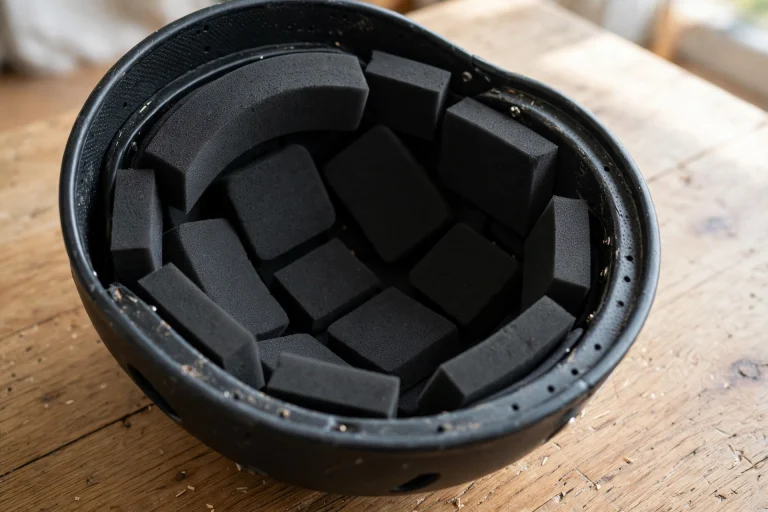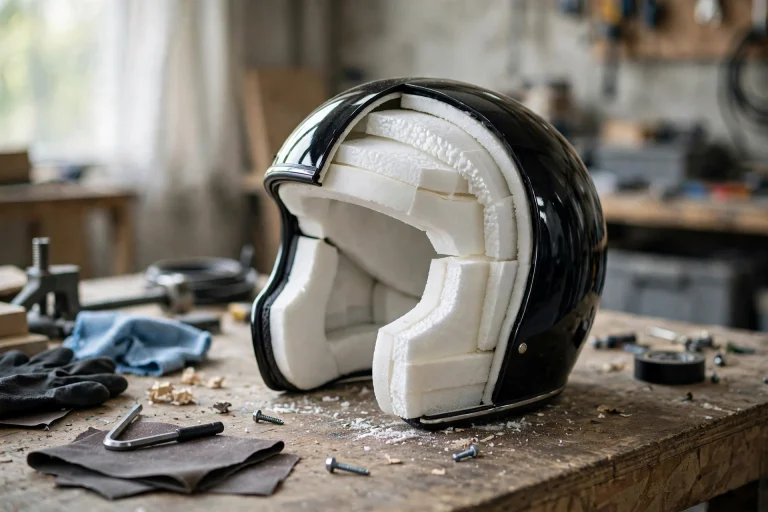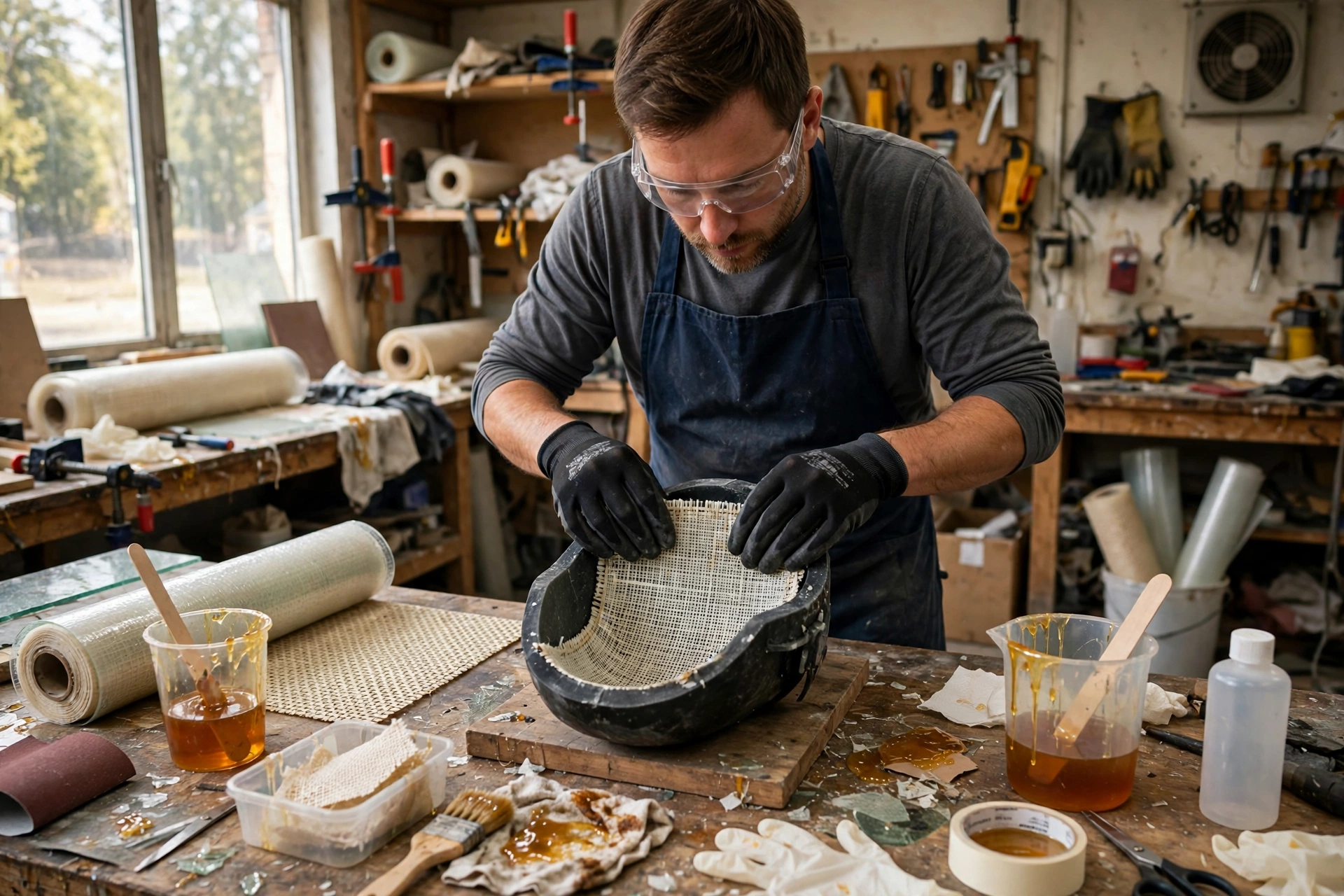
Hand-laid fibreglass helmet shells are made by placing sheets of fibreglass cloth into a mould by hand, wetting each layer with resin, and building the shell up one layer at a time until it reaches the right thickness and strength. Unlike shells that are moulded by machine or sprayed with chopped fibre, a hand-laid shell is built layer by layer by a skilled worker, who can control the direction of the fibres and the amount of resin in each part of the shell.
This traditional method is still used for many premium motorcycle and motorsport helmets, even though it is slower and more expensive than automated methods. Makers who use it argue that it produces a stronger, lighter, and more consistent shell. This guide explains how hand-laid fibreglass helmet shells are made in general terms, why the method is valued, and what it means for the rider who buys one.
What Is Fibreglass, and Why Is It Used for Helmet Shells?
Fibreglass is a composite material made from fine strands of glass woven into a cloth, then bonded together with a resin, usually a type of polyester or epoxy. The glass fibres give the material its strength, while the resin holds the fibres in place and gives the shell its shape. Together they form a material that is strong for its weight, relatively affordable, and able to absorb and spread the force of an impact across the shell.
Fibreglass has been used for helmet shells for decades, and it remains popular for good reasons. It is tougher than many plastics in a crash, because the fibres help stop cracks from spreading through the shell. It can also be repaired in some cases, unlike a cracked plastic shell, although a helmet that has been in a serious crash should still be replaced. Fibreglass shells are often a little heavier than carbon fibre shells, but they are usually cheaper, which makes them a common choice for mid-range and premium helmets.
The way the fibreglass is laid up — the number of layers, the direction of the fibres, and the amount of resin — has a large effect on how the finished shell behaves. That is why the hand-laying process matters: it gives the maker control over each of those factors in a way that automated methods do not always match.
How Are Hand-Laid Fibreglass Helmet Shells Made?
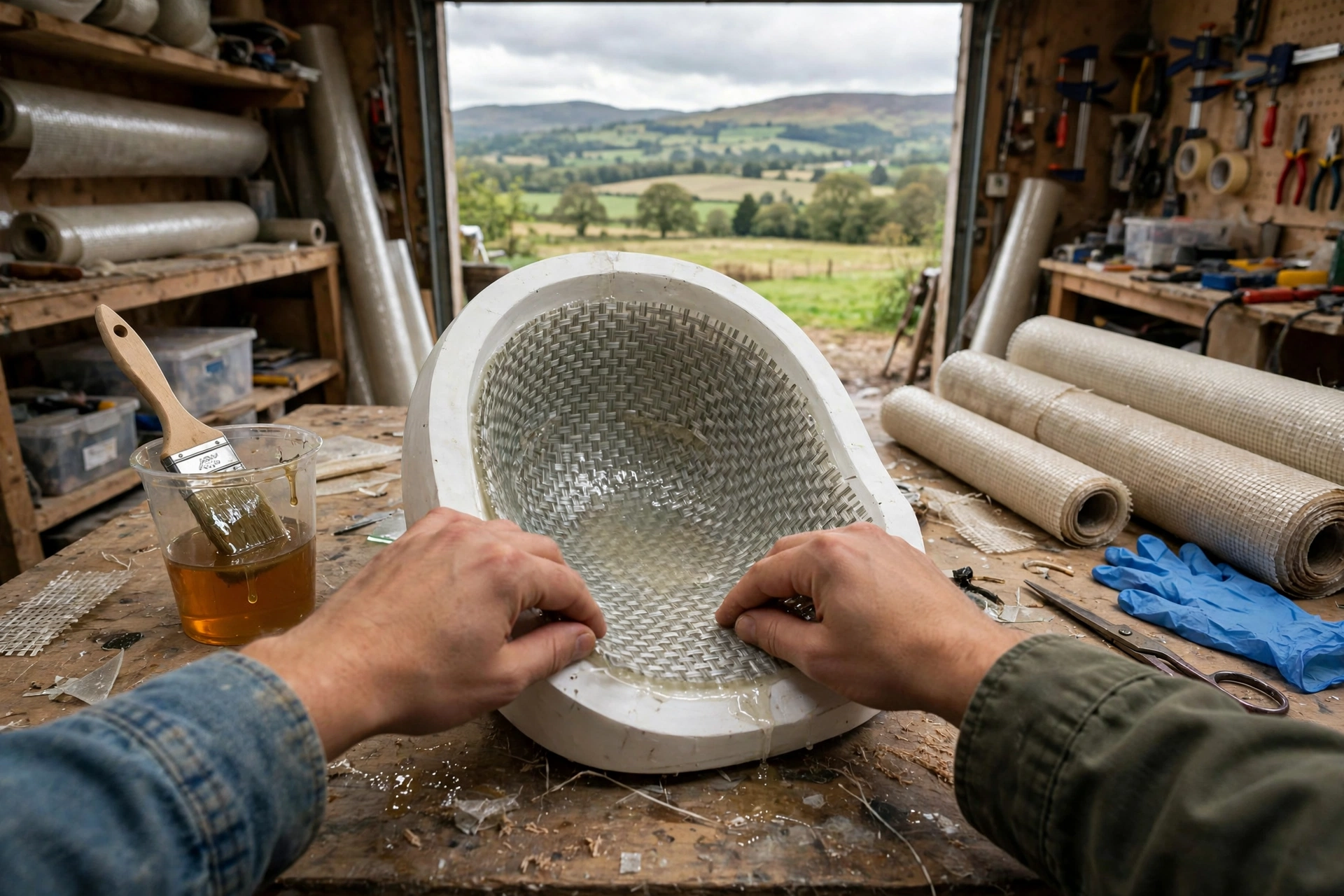
The process starts with a mould, which is a precise negative of the helmet’s outer shape. The mould is cleaned and coated with a release agent so the finished shell can be removed without sticking. A layer of gel coat — a smooth resin finish that will become the outside of the shell — is often applied first, to give the helmet its colour and glossy surface.
Next, a worker cuts sheets of fibreglass cloth to shape and places the first layer into the mould by hand, pressing it into the curves and smoothing out air bubbles. Resin is brushed or rolled over the cloth so that it soaks through the fibres. Then a second layer is added, often with the fibres running in a different direction from the first, and the process is repeated. A typical shell may have several layers, with more layers in areas that need extra strength, such as the crown, and fewer in areas where weight can be saved. If you are learning about how helmets handle different kinds of impact, reading about what MIPS is for helmets can help you understand one of the technologies used in modern helmet design.
Once all the layers are in place, the shell is left to cure — the resin hardens and bonds the layers together into a single solid piece. Depending on the resin used, curing may take hours at room temperature, or the mould may be heated to speed the process. After curing, the shell is removed from the mould, trimmed to shape, and the edges are smoothed. Vents, visor mounts, and other fittings are then cut or drilled, and the shell is inspected, painted, and polished before the liner and straps are fitted.
Why Are Hand-Laid Shells Valued?
The main reason hand-laid shells are valued is control. A skilled worker can place each layer exactly where it is needed, align the fibres to suit the stresses the shell will face, and remove air bubbles that would otherwise weaken the finished piece. Air trapped between layers is a common flaw in composite shells, and hand-laying, done well, keeps it to a minimum. That can produce a shell that is both strong and consistent from one helmet to the next.
Hand-laying also allows the maker to vary the thickness of the shell across its surface. Extra layers can be added where impacts are most likely, while thinner areas keep the weight down. That kind of tuning is harder with a machine process that applies the same amount of material everywhere. The result, in general terms, is a shell that uses its material efficiently, rather than being uniformly thick and heavy.
What Are the Drawbacks of Hand-Laid Fibreglass Shells?
The main drawback is cost. Hand-laying is slow, skilled work, and each shell takes considerably longer to make than a machine-moulded plastic shell. That labour cost is passed on to the buyer, so hand-laid fibreglass helmets tend to be more expensive than comparable helmets with moulded shells. For many riders, the extra cost is hard to justify if a cheaper helmet fits just as well and meets the same safety standard.
Consistency is another consideration. A hand-made process depends on the skill of the individual worker, and even a good worker can vary slightly from shell to shell. Reputable makers control this with strict procedures, inspection, and testing, but the risk of variation is higher than with a fully automated process. That is why quality control matters so much in a hand-laid workshop: each shell should be checked for thickness, weight, and defects before it is accepted.
How Do Hand-Laid Shells Compare With Other Shell Types?
Compared with a moulded polycarbonate shell, a hand-laid fibreglass shell is generally stronger and better at spreading impact forces, but it is also more expensive and heavier to produce. Polycarbonate shells are made quickly by injection moulding, which keeps costs down and produces very consistent results, but the material itself is less strong than a well-made fibreglass composite. For everyday riding, a good polycarbonate helmet is perfectly adequate, and many riders choose it for its value.
The best choice depends on your budget, your riding, and how the helmet fits. A hand-laid fibreglass shell is a good option if you want a strong, durable helmet and you are willing to pay a premium for the craftsmanship. But the shell material alone should not decide your purchase: fit, comfort, ventilation, and certification matter just as much, if not more, than how the shell was made.
Frequently Asked Questions
Q: Are hand-laid fibreglass helmets safer than moulded helmets?
A: In general terms, a well-made hand-laid fibreglass shell can be very strong, but safety depends on the whole helmet and its certification, not on the shell method alone. A certified moulded helmet that fits well can be just as safe as a hand-laid one.
Q: Why do hand-laid fibreglass helmets cost more?
A: Hand-laying is slow, skilled work, and each shell takes longer to make than a machine-moulded shell. The extra labour, along with inspection and finishing by hand, adds to the price.
Q: Can a hand-laid fibreglass shell be repaired?
A: Small cosmetic damage can sometimes be repaired by a specialist, but a shell that has been in a crash should be replaced rather than repaired. If you are unsure, ask the maker or a qualified repairer to inspect it.

Olivia
Writer at Helmet Today, covering helmet reviews, fit and riding safety.