A graphene helmet is a helmet that uses graphene — a single layer of carbon atoms arranged in a honeycomb pattern — as part of its shell, liner, or coating, to add strength, lightness, or heat management. Graphene is often described as one of the strongest and lightest materials known, and helmet makers have begun to explore it as an additive in composites and coatings. In practice, most so-called graphene helmets contain only a small amount of graphene mixed into another material, rather than being made of pure graphene.
The idea is appealing: a helmet that is stronger and lighter at the same time. In reality, graphene helmets are still a new and developing area, and buyers need to separate genuine innovation from marketing. This guide explains what a graphene helmet is in general terms, how graphene is used in helmets, and what to look for before paying a premium for one.
What Is Graphene?
Graphene is a form of carbon. It is a single layer of carbon atoms, each bonded to three neighbours in a flat hexagonal pattern, like a sheet of chicken wire at the atomic scale. A single layer is only one atom thick, yet it is remarkably strong for its weight and conducts heat and electricity very well. It was first isolated in a laboratory in 2004, and it has since been studied for use in electronics, batteries, and composite materials.
For helmet makers, the most interesting property of graphene is its strength-to-weight ratio. In theory, adding graphene to a composite shell could make that shell stronger without adding much weight, or allow a thinner, lighter shell with the same strength. Graphene also conducts heat well, which has led to claims about better temperature management inside a helmet. These are real properties of the material itself, but turning them into a better finished helmet is a separate challenge.
It is worth noting that pure graphene is difficult and expensive to produce in large sheets. That is why helmet makers generally use graphene in small quantities, as flakes or powder mixed into a resin, a plastic, or a coating. The result is a graphene-enhanced material rather than a graphene helmet in the literal sense, and the amount of graphene used can vary widely between products.
How Is Graphene Used in a Helmet?
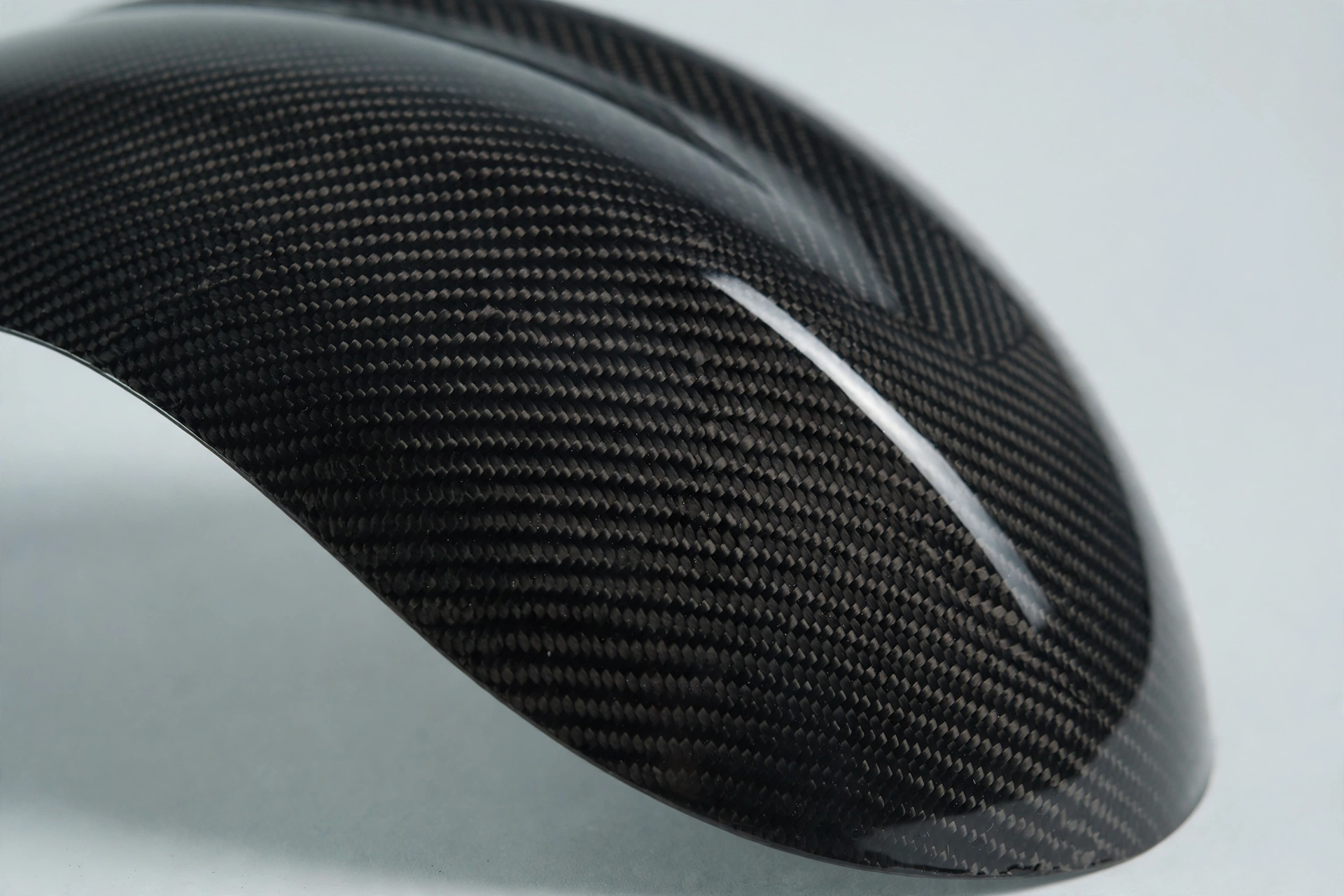
Graphene is most commonly used in the outer shell of a helmet. The maker mixes graphene flakes into the resin that binds the shell’s fibres together, often carbon fibre or fibreglass. The aim is to make the resin itself tougher and better at spreading impact forces, so the shell can be lighter or thinner for the same level of protection. Some makers also use graphene in a coating on the outside of the shell, where it is said to improve scratch resistance and help with heat dissipation.
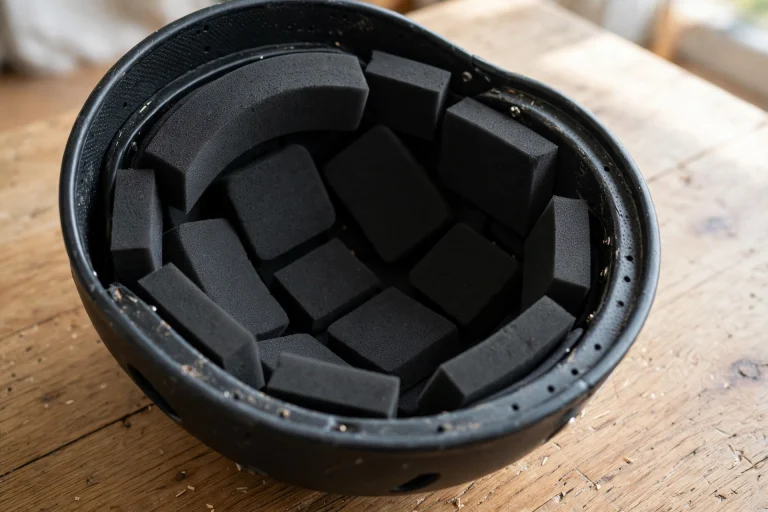
A smaller number of helmets use graphene in the liner or in comfort padding. Here the claimed benefit is usually thermal: graphene’s ability to conduct heat is said to help move warmth away from the head and keep the inside of the helmet cooler. Some liners combine graphene with other materials to create a fabric that feels cool to the touch. If you are learning about how helmets handle different kinds of impact, reading about what MIPS is for helmets can help you understand one of the technologies used in modern helmet design.
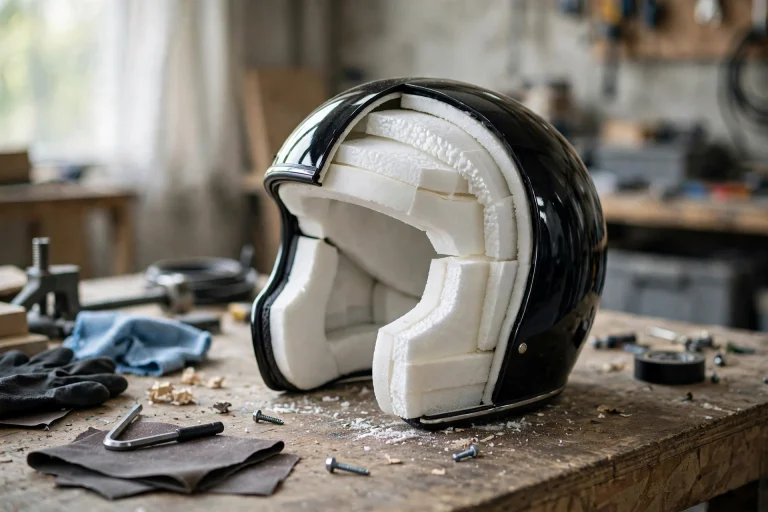
In all of these uses, graphene is an additive, not the main material. The shell is still mostly fibre and resin, and the liner is still mostly foam or fabric. That matters because the performance of the helmet depends on the whole construction, not on one ingredient. A helmet with a small amount of graphene is not automatically better than a well-made helmet without it, and a poorly designed graphene helmet can be worse than a good conventional one.

What Are the Claimed Benefits of a Graphene Helmet?
The main claimed benefit is a better strength-to-weight ratio. Makers say that a graphene-enhanced shell can be lighter than a standard shell while offering similar protection, or stronger at the same weight. For riders who wear a helmet for hours at a time, even a small weight saving can make a difference to neck comfort and fatigue, especially on long motorcycle or cycling rides.
A second claimed benefit is heat management. Because graphene conducts heat well, makers suggest that a graphene shell or liner can help move heat away from the head, keeping the rider cooler. Some also claim that graphene coatings resist scratches and weather better than ordinary finishes, which could help a helmet keep its appearance for longer. These claims are plausible in general terms, but they are difficult for a buyer to verify without independent test data.
What Should You Be Careful About When Buying a Graphene Helmet?
The first thing to be careful about is marketing. Because graphene sounds advanced and high-tech, it is an attractive word to put on a box. Some products may contain only a trace amount of graphene, too little to make any practical difference, while still being sold at a premium price. If a maker cannot explain how much graphene is used, where it is used, and what difference it makes, treat the claim with caution.
The third point is price. Graphene is expensive to produce and to work with, and helmets that use it tend to cost more than similar models without it. Before paying extra, ask whether the helmet meets the safety standard for your activity, whether the weight saving is meaningful, and whether the same money would buy a better-fitting conventional helmet. In general terms, fit, comfort, and certification matter far more than any single material claim.
Is a Graphene Helmet Worth It?
For most riders, a graphene helmet is not an essential purchase. A well-fitting, certified helmet made from established materials — such as fibreglass, carbon fibre, or polycarbonate — already offers good protection, and the difference a small amount of graphene makes is likely to be modest. If you already own a good helmet that fits well, there is no need to replace it with a graphene model simply because of the material.
In the longer term, graphene may become a more standard part of helmet construction as production costs fall and makers learn how to use it better. For now, it is best treated as an interesting development rather than a must-have feature. Choose a helmet for its fit, its certification, and its comfort, and let graphene be a secondary consideration rather than the deciding one.
Frequently Asked Questions
Q: Is a graphene helmet made of pure graphene?
A: In general terms, no. Most graphene helmets use a small amount of graphene mixed into a resin, plastic, or coating. The shell is still mainly fibre and resin, with graphene added to improve its properties.
Q: Is a graphene helmet lighter than a normal helmet?
A: It can be slightly lighter, but the difference is usually small. Any weight saving depends on how the graphene is used, and a well-made conventional helmet can be just as light, so check the actual weight before buying.
Q: Does a graphene helmet need special care?
A: In general terms, no. Care for it the same way as any helmet: keep it clean, store it away from heat and sunlight, and replace it after a crash or when it shows signs of wear. Follow the maker’s instructions for cleaning the shell and liner.

Olivia
Writer at Helmet Today, covering helmet reviews, fit and riding safety.