A 3D-printed helmet is a helmet in which one or more parts — the shell, the liner, or the internal structure — are made by 3D printing, a process that builds an object layer by layer from a digital design. Rather than moulding plastic or foam in a fixed shape, a 3D printer lays down material exactly where the design calls for it. That allows shapes and internal structures that are difficult or impossible to make with traditional manufacturing, including liners that are tuned to the shape of an individual head.
3D printing has been used in helmet development for years, mainly to make prototypes and test new designs quickly. In recent years it has also started to appear in finished helmets, especially in custom-fit models and in specialist sports helmets. This guide explains what a 3D-printed helmet is in general terms, how the printing works, and what the technology can and cannot do for riders today.
What Is a 3D-Printed Helmet?
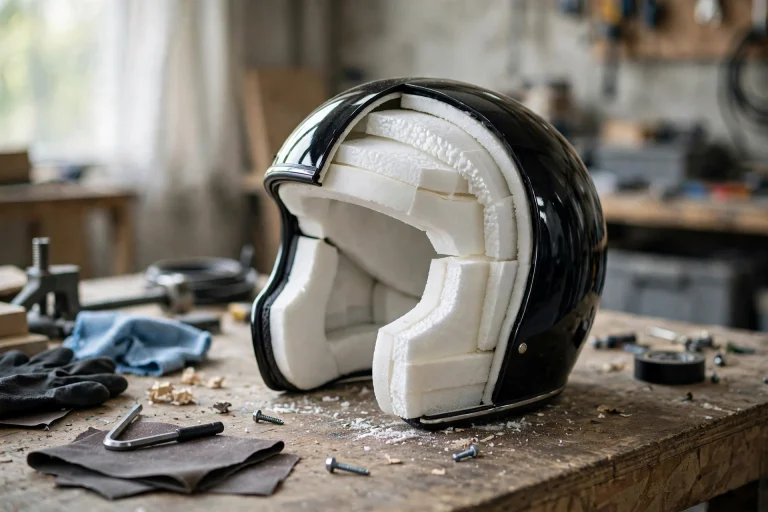
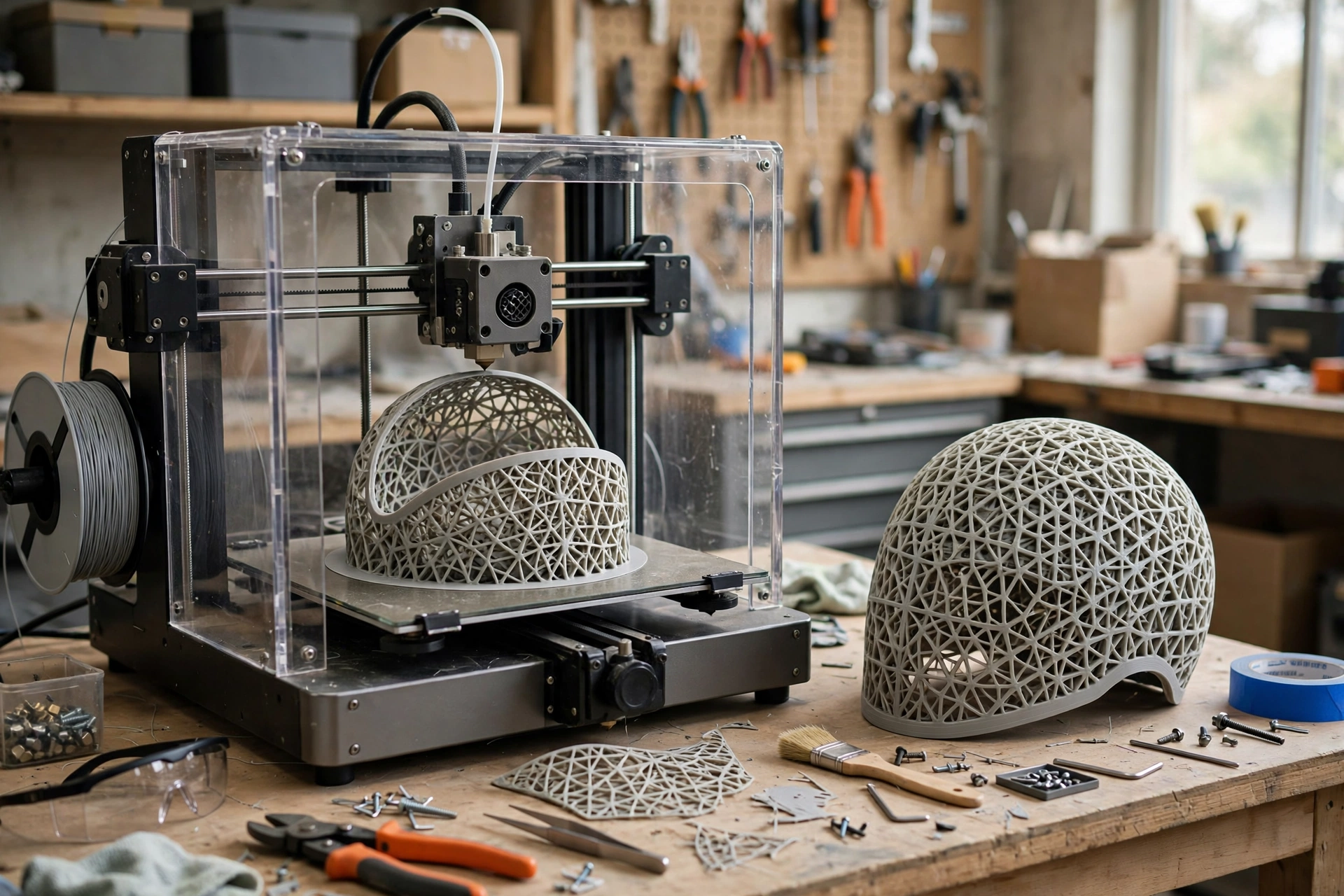
A 3D-printed helmet is any helmet that uses additive manufacturing — the formal name for 3D printing — for a significant part of its construction. The term covers a wide range of designs. In some helmets, only the outer shell is printed, while the liner is a conventional foam insert. In others, the liner itself is printed as a lattice or honeycomb structure that replaces traditional foam. A few helmets are printed almost entirely, shell and liner together, as a single piece.
The key difference from a conventional helmet is how the parts are made. A traditional helmet shell is usually moulded from plastic or composite fibre, and the liner is moulded from expanded foam. Both need expensive moulds, and changing the design means making a new mould. A 3D-printed helmet is made from a digital file, so the design can be changed on a computer and printed again without new tooling. That makes small production runs and custom shapes far more practical.
Most 3D-printed helmets on sale today are made for cycling, and a smaller number for other sports. Motorcycle helmets printed in full are still rare, because motorcycle helmets must meet demanding safety standards and the printed materials and processes are still being proven for that use. In general terms, 3D printing in helmets is a growing but still developing area, and buyers should look closely at what is actually printed and what standard the finished helmet meets.
How Is a 3D-Printed Helmet Made?
The process starts with a digital model of the helmet, created on a computer. For a standard size, the designer draws the shell and liner in three-dimensional modelling software. For a custom-fit helmet, the wearer’s head is scanned — usually with a phone app or a dedicated scanner — and the model is shaped to match those measurements. The finished design is then sent to a 3D printer as a digital file.
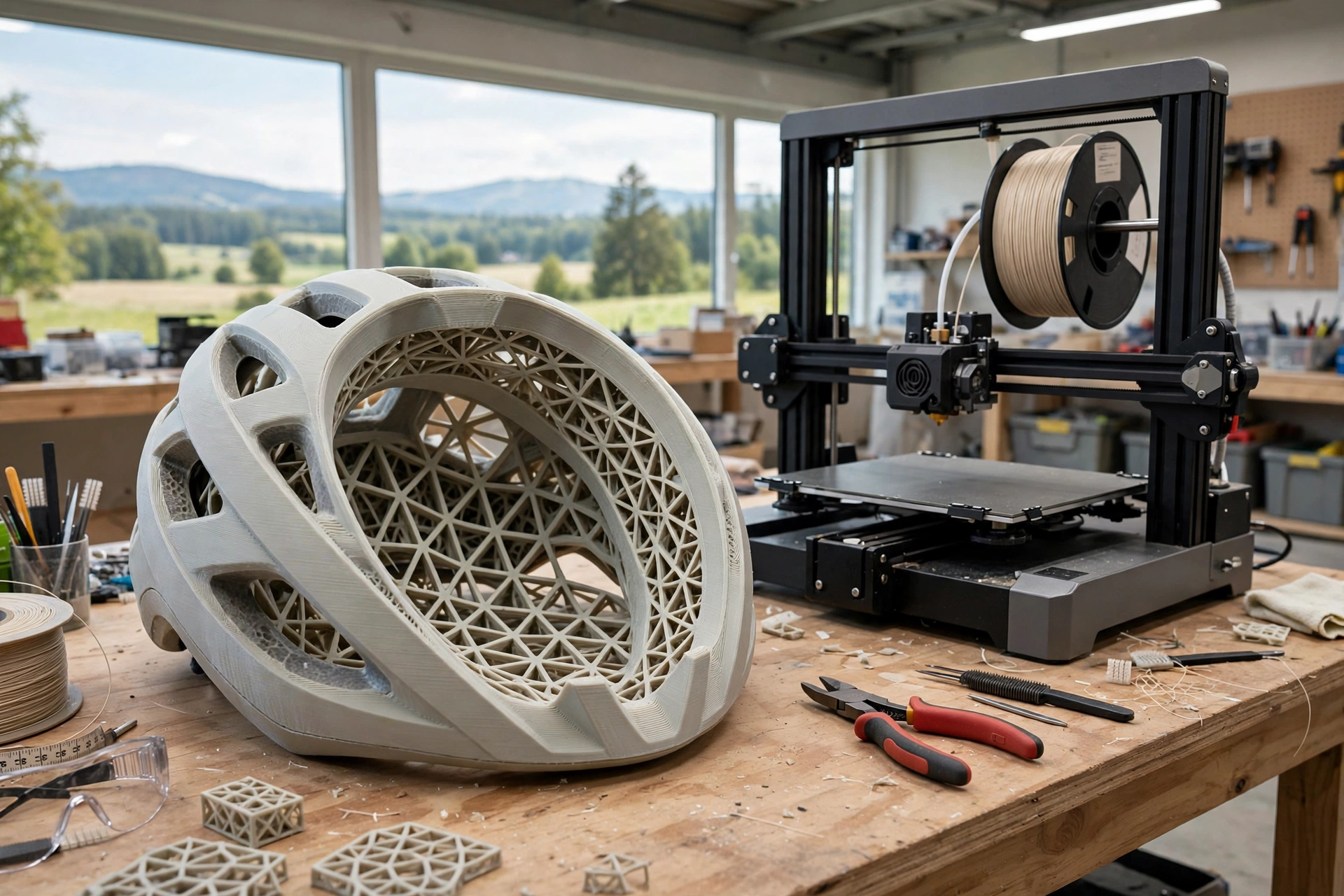
The printer builds the helmet layer by layer. Depending on the method used, it may melt a plastic filament and lay it down in thin lines, cure a liquid resin with light, or fuse a fine powder with a laser. Each layer is very thin, often less than a millimetre, and hundreds or thousands of layers stack up to form the finished part. A printed liner often uses a lattice pattern: a repeating open structure of struts and cells that can compress in a controlled way. If you are learning about how helmets handle different kinds of impact, reading about what MIPS is for helmets can help you understand one of the technologies used in modern helmet design.
After printing, the parts are cleaned, cured or cooled, and finished by hand. Rough edges are smoothed, the liner is fitted into the shell, and straps, vents, and padding are added. The finished helmet is then checked for fit and quality before it is sold. Printing a single helmet can take several hours, which is one reason 3D-printed helmets tend to cost more than mass-produced ones.
What Are the Advantages of a 3D-Printed Helmet?
The biggest advantage is customisation. Because the design is digital, a helmet can be shaped to fit one person’s head, rather than forcing that head into one of a handful of standard sizes. A custom-fit liner can reduce pressure points, improve comfort on long rides, and help the helmet stay in place. For riders who have always struggled to find a comfortable fit, that alone can be a strong reason to consider a printed helmet.
A second advantage is the freedom of design. A printed lattice liner can be made softer in some areas and firmer in others, tuning the way it responds to pressure across different parts of the head. Vents and airflow channels can be shaped precisely, rather than being limited by what a mould can produce. Designers can also test a new idea quickly: print a prototype, test it, change the file, and print again, all in a matter of days rather than weeks.
What Are the Drawbacks of a 3D-Printed Helmet?
Cost is the most obvious drawback. 3D printing is slower than moulding, and the materials and machines are expensive, so printed helmets usually cost considerably more than comparable conventional helmets. A custom-fit printed helmet can cost several times the price of a good off-the-shelf model, and buyers need to decide whether the improved fit is worth that premium.
Durability and consistency are also open questions. A printed part is built up in layers, and the bond between layers can be a weak point if the printing is not done well. The long-term behaviour of printed materials — how they age, how they cope with heat, sweat, and sunlight, and how they perform after years of use — is less well understood than the behaviour of traditional foam and shell materials, which have decades of real-world history behind them.
Should You Buy a 3D-Printed Helmet?
Whether a 3D-printed helmet is worth buying depends on what you need from it. If you have a head shape that never seems to fit standard helmets, or you ride long distances and comfort is your main concern, a custom-fit printed helmet may be worth investigating. The improved fit can make a real difference to comfort, and comfort matters because an uncomfortable helmet is one you are less likely to wear properly.
Before buying, check the basics first. Make sure the helmet meets the safety standard for your activity, whether that is cycling, skiing, or another sport. Ask what exactly is printed — the shell, the liner, or both — and what the rest of the helmet is made from. Ask about the warranty, the expected lifespan, and what happens if the helmet is damaged in a crash. A reputable maker should be able to answer those questions clearly.
Frequently Asked Questions
Q: Are 3D-printed helmets safe?
A: In general terms, a 3D-printed helmet can be safe if it is made well and meets the safety standard for its intended use. Safety depends on the design, the materials, and the testing, not on printing alone, so always check the certification before buying.
Q: How long does it take to make a 3D-printed helmet?
A: Printing alone can take several hours, and scanning, finishing, and fitting add more time. A custom-fit helmet often takes days or weeks from scan to delivery, rather than being available off the shelf.
Q: Can a 3D-printed helmet be repaired after a crash?
A: In general terms, no. Like most helmets, a 3D-printed helmet that has been in a crash should be replaced rather than repaired. Check with the maker about replacement parts for straps or pads, but do not reuse a damaged shell or liner.

Olivia
Writer at Helmet Today, covering helmet reviews, fit and riding safety.