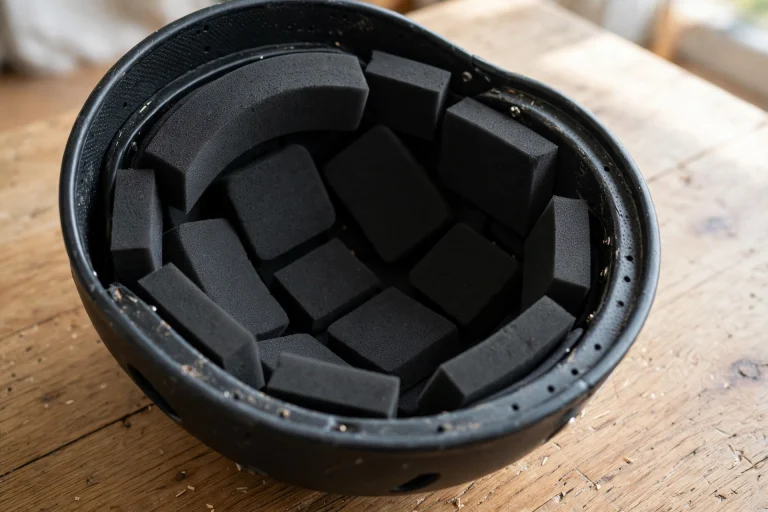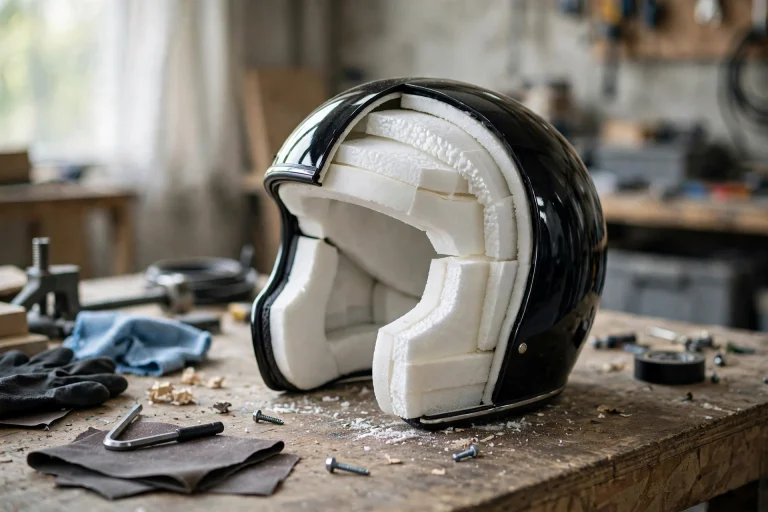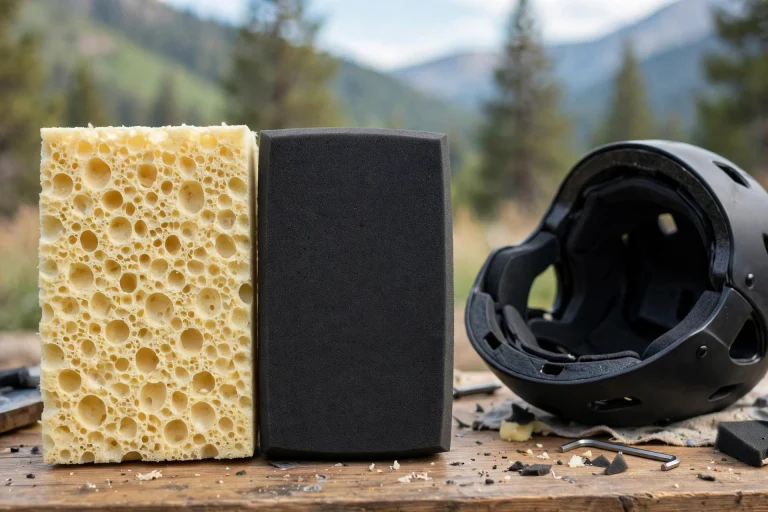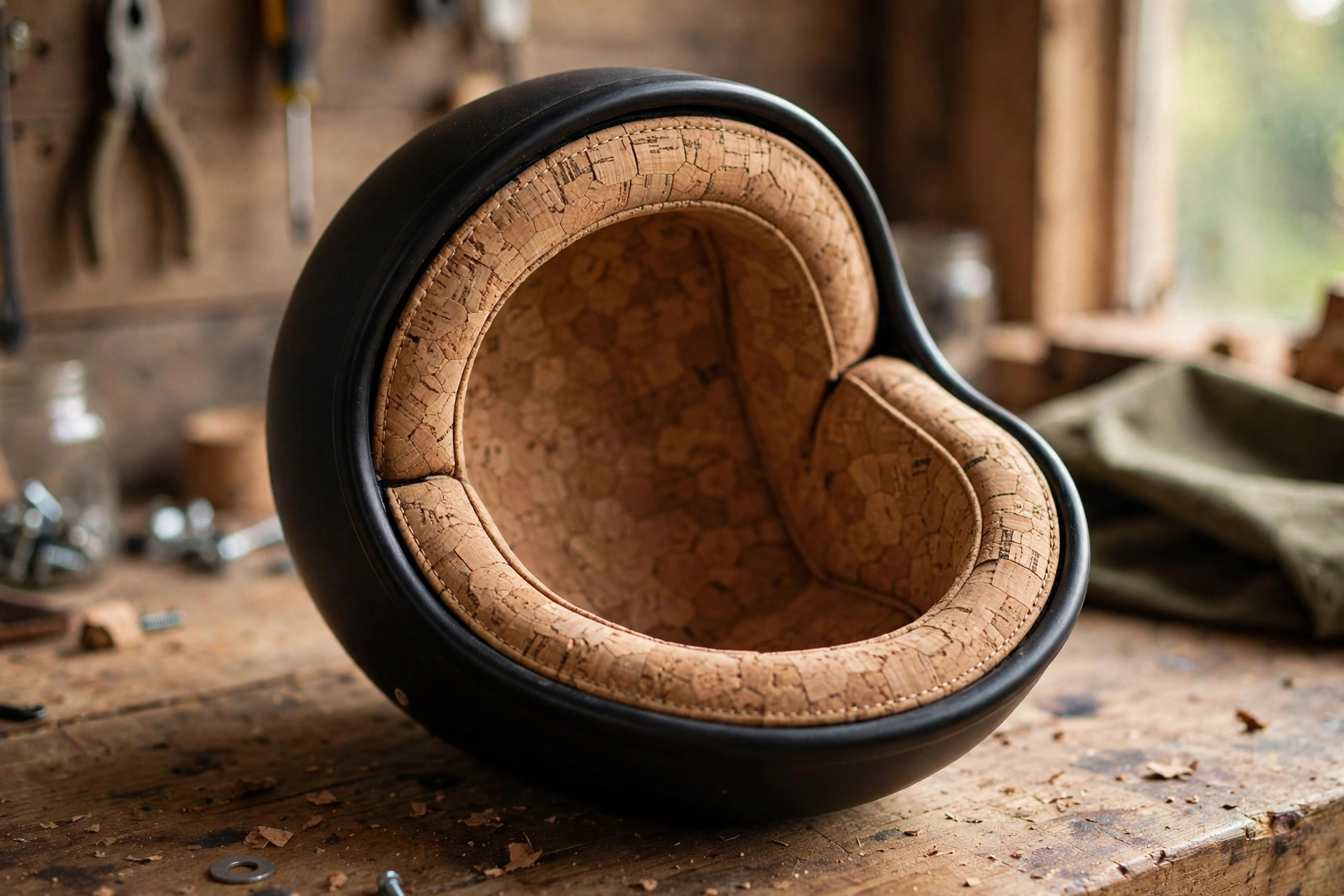
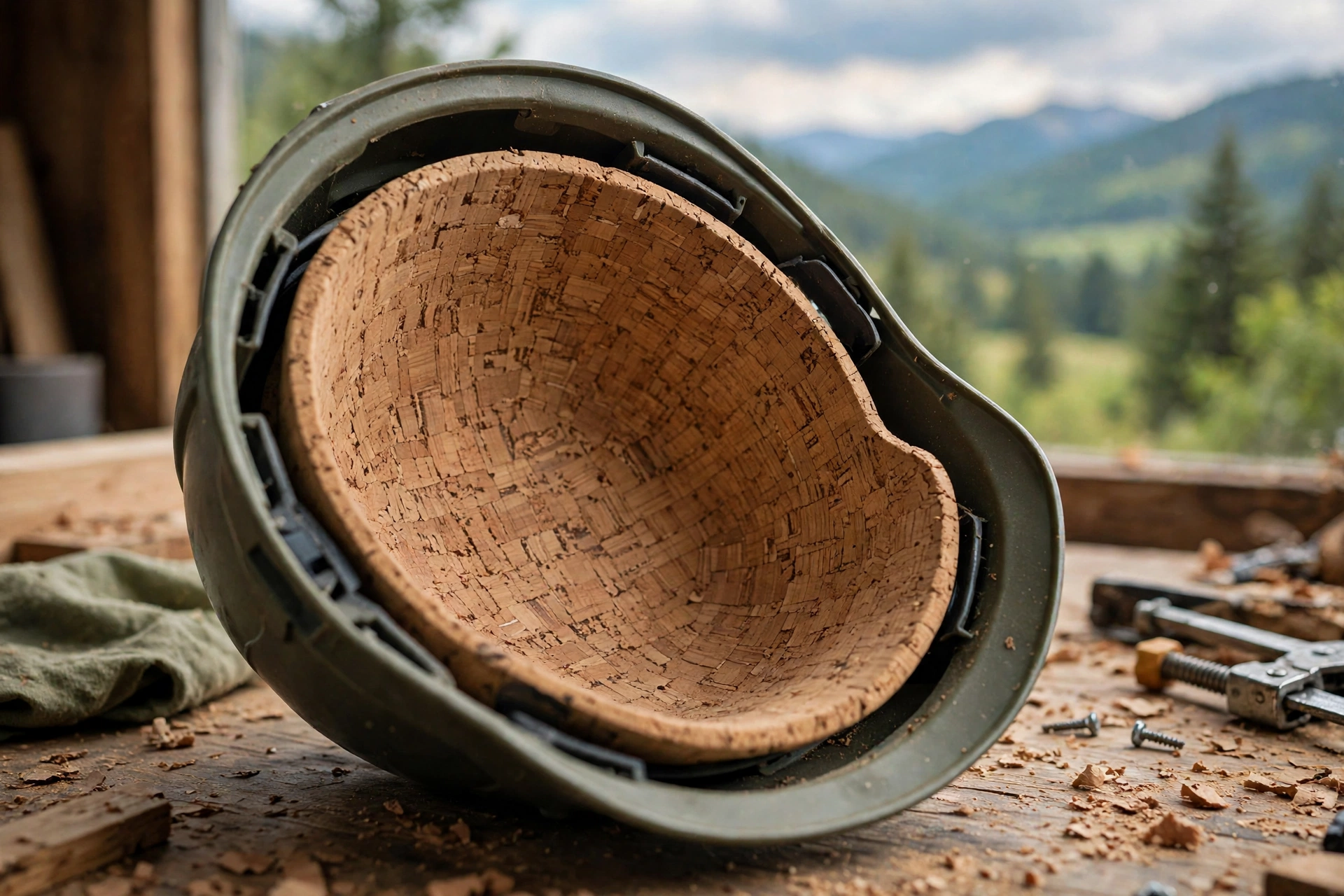
A cork helmet liner is a layer of natural cork, or cork mixed with other materials, fitted inside a helmet shell to cushion the head, absorb sweat, and improve comfort. It sits between the hard outer shell and the wearer’s head, much like the foam padding found in most modern helmets. Cork liners are less common than foam liners, but they appear in some specialist, heritage, and eco-focused helmets, where their natural feel and breathability are part of the appeal.
Cork comes from the bark of the cork oak tree, and it has been used for centuries in everything from bottle stoppers to flooring. Its appeal as a helmet material comes from its structure: it is light, springy, and full of tiny air pockets. Those qualities make it an interesting choice for a liner, although it behaves differently from the moulded foam used in most helmets today. This guide explains what a cork helmet liner is in general terms, how it works, and what to consider before choosing one.
What Is a Cork Helmet Liner?
A cork helmet liner is the soft inner layer of a helmet made wholly or partly from cork. In some helmets, the liner is a thin sheet of cork shaped to fit the inside of the shell. In others, cork granules are bonded together into a thicker pad, sometimes combined with fabric, leather, or foam for extra comfort and durability. The liner may cover the whole inside of the shell or sit in separate pads at the crown, sides, and back of the head.
The job of any helmet liner is to make the helmet comfortable to wear and to help spread pressure evenly across the head. A good liner stops the hard shell from pressing directly on the skull, fills small gaps so the helmet sits securely, and wicks away sweat during a ride or a work session. A cork liner does all of these things, and it also brings the natural properties of cork itself: it is warm to the touch, it breathes, and it has a slightly springy feel that many wearers find pleasant.
How Does Cork Work as a Helmet Liner?
Cork works as a liner because of its cellular structure. Each piece of cork is made up of millions of tiny sealed cells filled with air. When pressure is applied, those cells compress slightly and then spring back. That gives cork a natural cushioning effect, similar in feeling to a firm foam, although the two materials behave differently under a hard impact. In everyday wear, the cushioning is enough to make a helmet comfortable and to even out pressure points.
Cork is also naturally breathable and moisture-resistant. Air can move through its structure, which helps keep the head cooler than a fully sealed synthetic liner might. At the same time, cork does not absorb water readily, so it is less likely to stay damp with sweat after a ride. Many cork liners are backed with a soft fabric layer that sits against the skin, which adds comfort and makes the liner easier to clean. If you are learning about how helmets handle different kinds of impact, reading about what MIPS is for helmets can help you understand one of the technologies used in modern helmet design.
One thing to keep in mind is that a liner is only one part of a helmet. The outer shell and the impact-absorbing layer beneath it do most of the protective work in a crash. A cork liner on its own is not a substitute for a proper impact liner, and in most helmets that use cork, the cork sits alongside a foam or similar energy-absorbing layer rather than replacing it. When you look at any helmet, check what the full construction includes, not just the liner material.
What Are the Advantages of a Cork Helmet Liner?
The main advantage of cork is that it is a natural, renewable material. Cork oak bark can be harvested without cutting the tree down, and the bark grows back over time. For riders who care about the environmental impact of their gear, that is a genuine selling point. Cork is also biodegradable, unlike many synthetic foams, which can make the helmet easier to dispose of responsibly at the end of its life.
Comfort is another advantage. Cork feels warm and soft against the head, and it moulds gently to the shape of the wearer over time. It does not feel cold in winter or clammy in summer in the way some synthetic materials can. Some wearers also like the look and smell of cork, which feels more natural than plastic-based padding.
What Are the Drawbacks of a Cork Helmet Liner?
The main drawback of cork is that it is not as consistent as moulded foam. Foam can be manufactured to an exact density and shape, batch after batch, while cork is a natural material whose density and firmness can vary. That makes it harder to guarantee the same performance from every liner. For that reason, cork is rarely used as the main impact-absorbing layer in helmets that must meet strict safety standards.
Cork can also be less durable than foam in some conditions. It can crumble or flake if it dries out and becomes brittle, and it can be damaged by sharp objects or by rough handling. A cork liner needs to be kept reasonably dry and stored away from extreme heat, and it may need replacing sooner than a foam liner if it starts to break down. Replacement cork liners are also harder to find than standard foam pads, which can make maintenance more awkward.
How Do You Care for a Cork Helmet Liner?
Caring for a cork liner is straightforward, but it is a little different from caring for foam. After a ride, take the helmet off and let the liner air-dry naturally, away from direct heat or strong sunlight. Do not use a hairdryer or leave the helmet on a hot radiator, because heat can dry cork out and make it brittle. If the liner is removable, take it out from time to time and let both the liner and the inside of the shell dry fully.
To clean a cork liner, wipe it gently with a damp cloth and a small amount of mild soap, then let it dry completely before putting the helmet away. Avoid soaking the cork in water, and do not use harsh cleaners or solvents, which can damage the surface. If the liner has a fabric cover, that cover can usually be washed separately following the maker’s instructions. Check the liner regularly for cracks, crumbling, or loose pieces, and replace it if the cork has started to break apart, because a damaged liner will not sit properly or feel comfortable.
Frequently Asked Questions
Q: Is a cork helmet liner safe?
A: In general terms, a cork liner can be a safe and comfortable part of a helmet, but the liner alone does not decide safety. What matters is the whole helmet, including the shell and the impact-absorbing layer, and whether the helmet meets the safety standard for its intended use.
Q: Does a cork liner last as long as foam?
A: It can last well with good care, but cork may wear out sooner than foam if it dries out or crumbles. Regular inspection and gentle cleaning help, and a liner that is cracking or flaking should be replaced.
Q: Can I replace a cork liner myself?
A: In many helmets the liner is removable and can be swapped by hand, but replacement cork liners can be hard to find. Check with the helmet maker first, and make sure any replacement fits the shell exactly so the helmet still sits securely.

Olivia
Writer at Helmet Today, covering helmet reviews, fit and riding safety.