In general terms, the military helmet began as simple metal head protection worn by ancient soldiers, and it evolved over time into the lightweight, high-tech helmets worn by modern armed forces today. For as long as people have fought in wars, they have tried to protect their heads, and the history of the military helmet is really the history of that effort — from bronze and iron bowls shaped by hand, through steel helmets that could stop fragments and glancing blows, to modern helmets made from advanced fibres that guard against bullets, blasts, and falls as well.
What makes the military helmet interesting is that every change in its design tells a story about a change in warfare itself. New materials made lighter, stronger protection possible, and helmets changed again. This guide traces that evolution in broad eras, from the ancient world to the present day, and explains why the military helmet looks the way it does now.
How Did Ancient Soldiers Protect Their Heads?
The earliest military helmets were shaped from bronze and iron, hammered and cast into rounded bowls that covered the top and sides of the head. In the ancient world, soldiers faced swords, spears, arrows, and stones, and a metal helmet could turn aside a glancing blow or stop a falling missile that might otherwise have been fatal. These helmets were often decorated, because a helmet was also a mark of rank and identity, and a commander’s helmet might be far more elaborate than a foot soldier’s.
Ancient helmets varied widely from one culture to another. Some covered the whole face except for narrow eye slits, offering strong protection at the cost of vision and hearing. Others were open-faced, leaving the face clear so the soldier could see and breathe more easily.
In general terms, these early helmets worked well against the weapons of their time, but they had clear limits. They were heavy, hot, and expensive to make, so not every soldier had one. Even so, they established a pattern that has lasted ever since: a hard shell over the head, shaped to deflect blows away from the skull.
Why Did Helmets Disappear and Then Return?
Over time, as firearms became more common on the battlefield, the heavy metal helmet began to fade from use. A musket ball could pass through armour that would have stopped a sword, so soldiers and commanders began to see less value in carrying heavy head protection that could not stop the main threat.
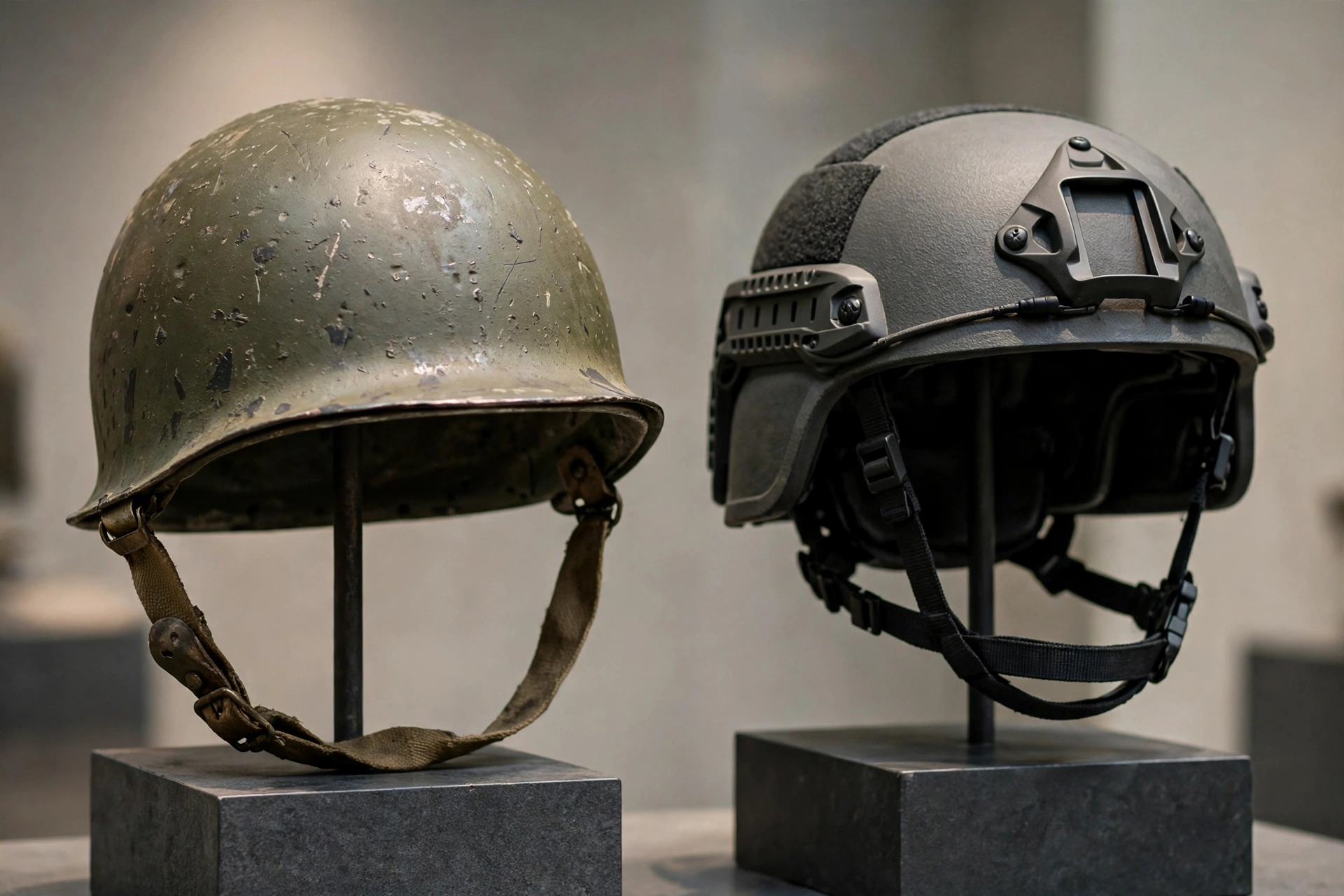
That changed when modern warfare arrived. In the great wars of the twentieth century, soldiers spent long periods in trenches and open ground, exposed to exploding shells that threw up fragments of metal and stone. Head wounds became one of the most common injuries, and armies realised that a steel helmet could protect against exactly that kind of danger — the fragments and debris from explosions, even if it could not stop a direct rifle bullet. The helmet returned, this time made from pressed steel and issued to ordinary soldiers in large numbers.
The new steel helmets were designed for mass production. They were simple, bowl-shaped, and made to be worn for long hours, with a liner inside that held the steel away from the head and absorbed some of the shock. If you are learning about how helmets handle different kinds of impact, reading about what MIPS is for helmets can help you understand one of the technologies used in modern helmet design, where managing the forces of an impact matters as much as the strength of the shell.
How Did the Steel Helmet Change Through the World Wars?
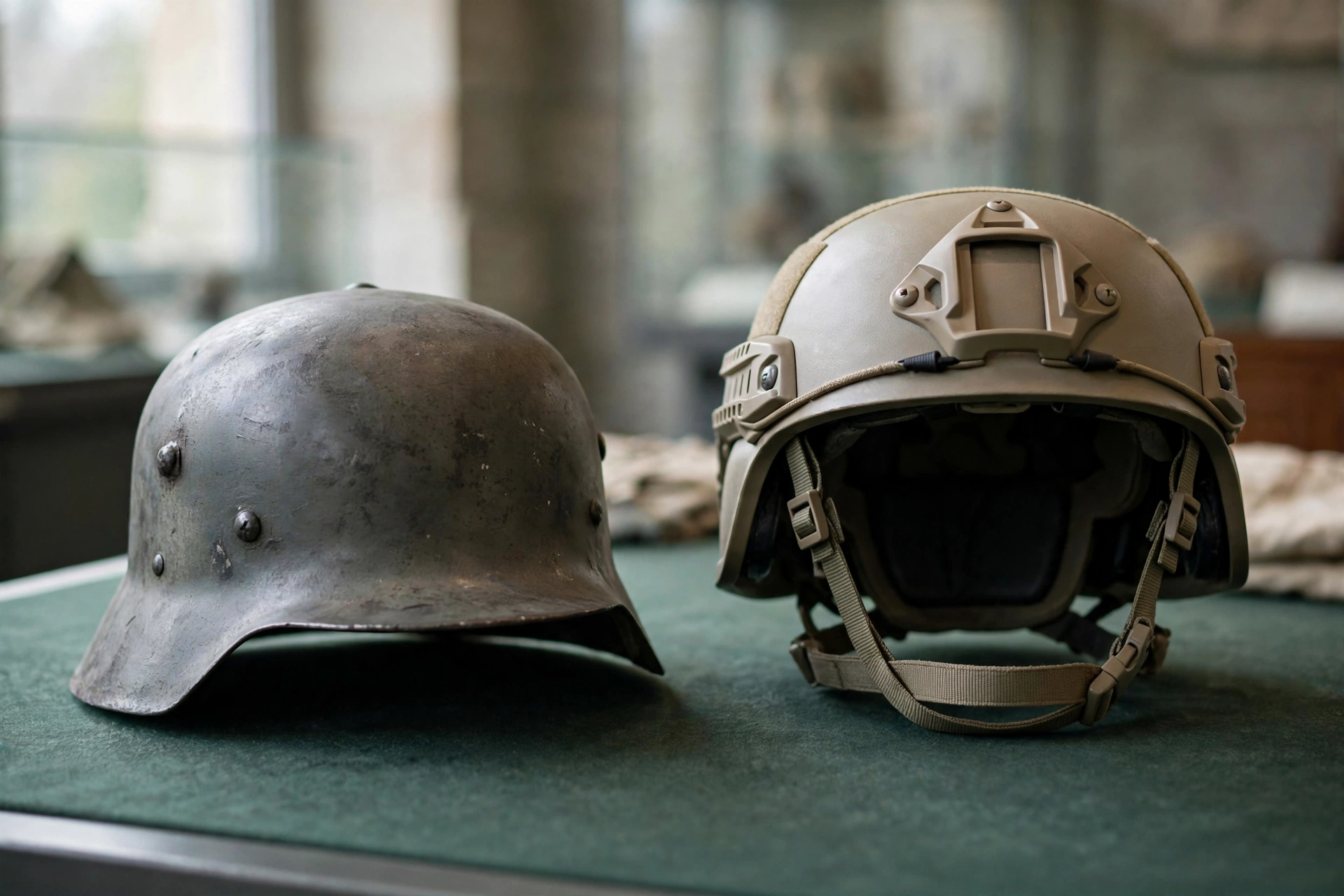
The steel helmets of the world wars were shaped by hard experience. Early designs were shallow bowls that protected the crown of the head but left the sides and back exposed. Later designs grew deeper, covering more of the head and neck, because soldiers were being wounded by fragments coming from many directions, not just from above. The shape of the helmet became a balance between coverage and comfort, and between protection and the ability to hear, see, and move freely.
Liners and straps improved alongside the steel. A good liner kept the helmet stable on the head and created a gap between the steel and the skull, which helped absorb the shock of a blow. Chin straps kept the helmet in place when a soldier was running, crawling, or taking cover. Over time, these small improvements mattered as much as the steel itself, because a helmet that slips or wobbles is less protective than one that stays where it should.
Different armies developed different shapes, and those shapes became famous in their own right. By the end of the era of the steel helmet, the basic idea was settled: every soldier should have one, and it should protect against fragments and glancing blows while staying light enough to wear all day.
What Changed When Modern Materials Arrived?
The next big change came with new materials. Steel is strong, but it is also heavy, and a heavy helmet tires the neck and limits how long a soldier can wear it comfortably. In the later part of the twentieth century, makers began to use advanced fibres and layered composites — materials that could be moulded into a helmet shape while weighing far less than steel for the same level of protection.
Modern materials also opened the door to protection against a wider range of threats. A composite helmet could be designed to resist fragments, absorb the shock of a blast, and reduce the force of a fall or a blow, all in one shell. Liners improved too, with foam padding and adjustable fit systems that spread the helmet’s weight evenly and kept it stable during movement. The result was a helmet that a soldier could wear for hours without the same fatigue that a steel helmet caused.
What Does a Modern Military Helmet Look Like?
A modern military helmet is a lightweight composite shell with a padded liner, an adjustable fit system, and rails or mounts on the outside for equipment such as night-vision devices, lights, and communication headsets. The shape is low-profile and close to the head, covering the crown, sides, and back while leaving room for hearing protection and a clear field of vision.
The modern helmet also reflects how warfare has changed. Soldiers today face a mix of threats — fragments, blasts, falls, and collisions — and the helmet must handle all of them reasonably well rather than being perfect against just one. Designers test helmets against a range of impacts, and they pay close attention to how the helmet performs when a soldier falls, bumps into something, or is caught near an explosion, because those everyday dangers can cause serious head injuries too.
Frequently Asked Questions
Q: What were the first military helmets made from?
A: In general terms, the earliest military helmets were made from bronze and iron, shaped into rounded bowls that covered the top and sides of the head. They protected against swords, spears, and arrows, and they were often decorated to show rank.
Q: Why did armies bring back helmets after they had stopped using them?
A: Helmets returned when modern warfare made head wounds from shell fragments very common. A steel helmet could protect against fragments and debris even though it could not stop a direct rifle bullet, so armies began issuing them widely again.
Q: What are modern military helmets made from?
A: Modern military helmets are generally made from layered composite fibres rather than steel, with foam padding and adjustable fit systems inside. They are lighter than steel helmets and are designed to protect against fragments, blasts, and falls.

Olivia
Writer at Helmet Today, covering helmet reviews, fit and riding safety.