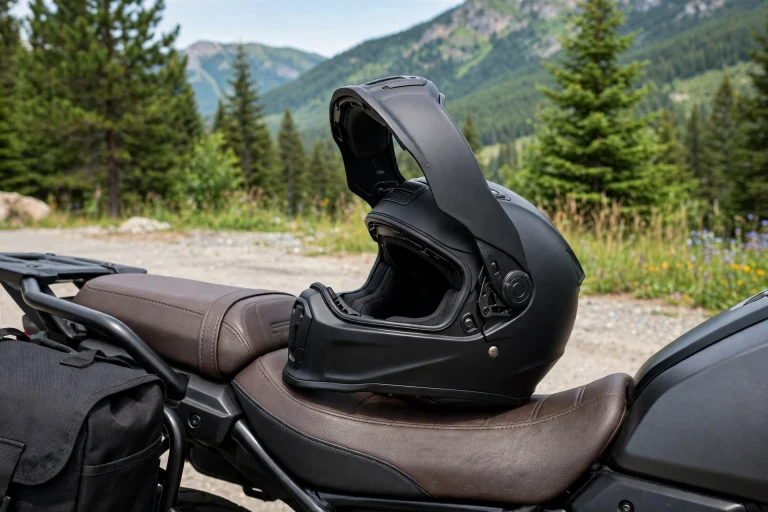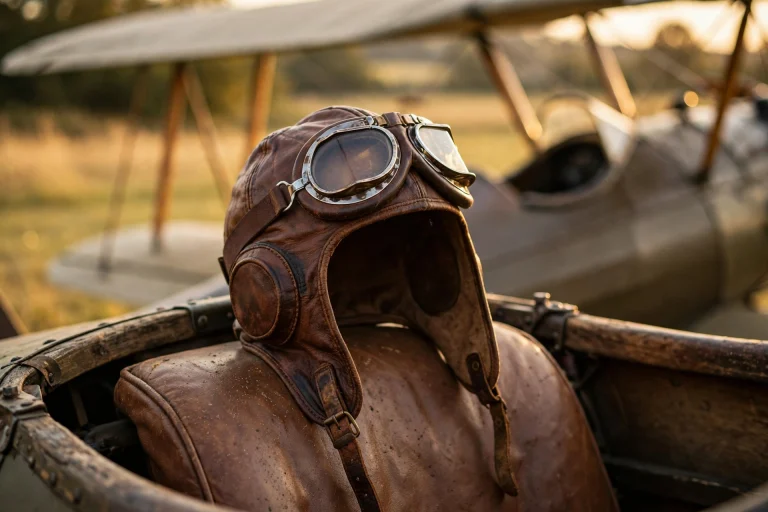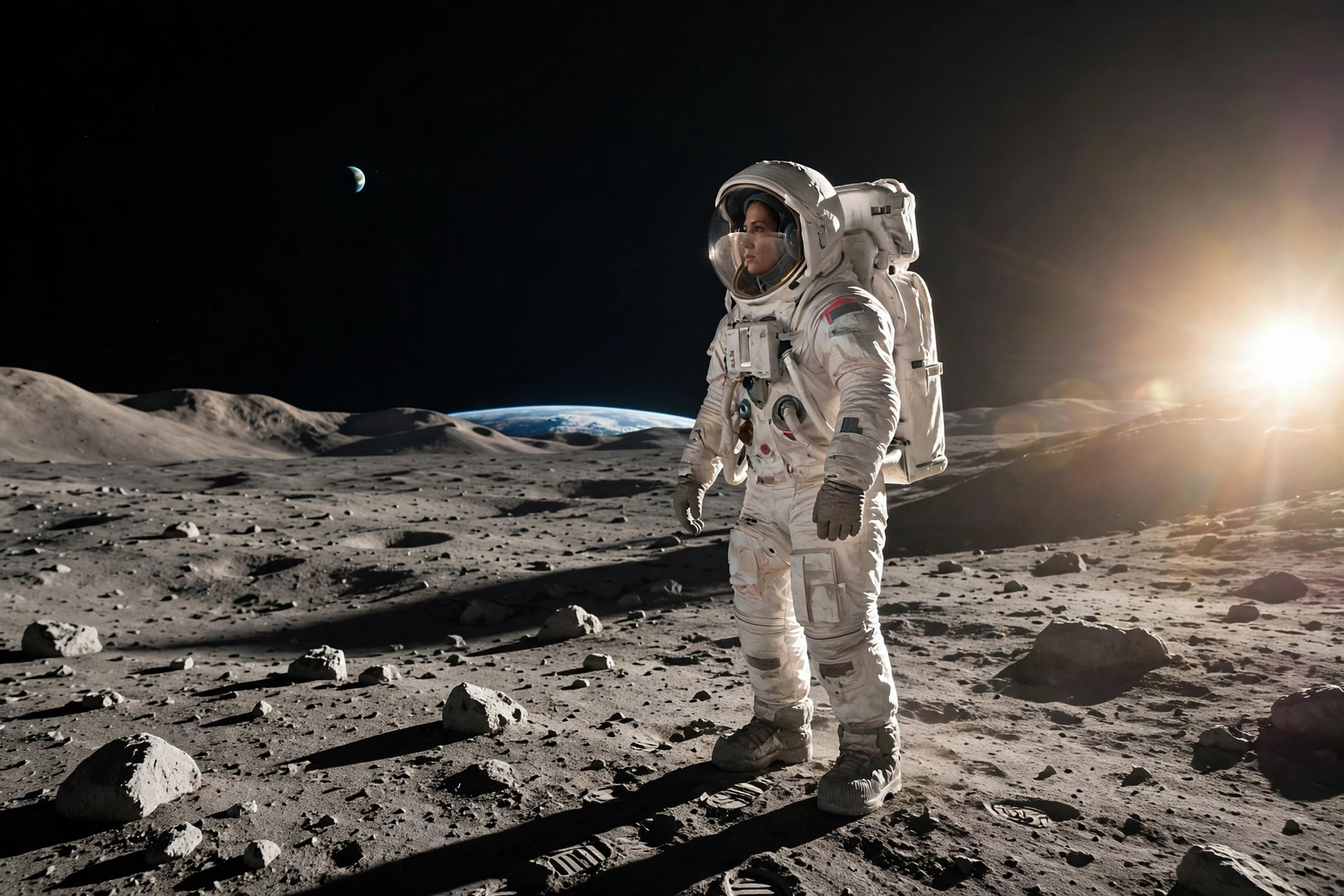
The space helmet is a pressurised, transparent bubble that forms part of a spacesuit, protecting an astronaut’s head from the vacuum of space while supplying air to breathe, and it developed from early high-altitude flight helmets into the clear domes used on spacewalks today. Unlike an ordinary helmet, it is not mainly about surviving a fall. Its job is to keep a bubble of breathable air around the head in a place where there is no air at all, while letting the astronaut see clearly and talk to the crew.
The history of the space helmet is closely tied to the history of spaceflight itself. Before anyone went into orbit, engineers had to solve problems that no helmet had ever faced: how to keep air pressure around the head, how to stop a visor from fogging or freezing, and how to let an astronaut turn their head inside a rigid suit. This guide explains how those problems were solved in general terms, from the early pressure helmets of high-altitude flight to the helmets worn on the Moon and on modern spacewalks.
Where Did the Space Helmet Come From?
The space helmet did not appear out of nowhere. Its ancestors were the pressure helmets worn by high-altitude test pilots, who flew so high that they needed a sealed helmet and an oxygen supply to stay conscious. These early pressure helmets were rigid shells with a clear visor, sealed at the neck so that air could be pumped in at a pressure the pilot could breathe. They were uncomfortable and hard to move in, but they proved that a person could work inside a bubble of pressurised air.
When space programmes began, engineers took these designs and adapted them for a much harsher environment. In space there is no air pressure at all, and temperatures swing wildly between sunlight and shadow. The helmet had to seal perfectly, because even a small leak would be dangerous, and it had to protect against tiny particles travelling at high speed, as well as against the Sun’s glare. In general terms, the move from high-altitude flying to spaceflight was a step change, but the basic idea — a sealed helmet that holds breathable air around the head — stayed the same.
How Does a Space Helmet Actually Work?
A space helmet works by creating a small, sealed environment around the head. Air is supplied through the suit, usually from a backpack or from the spacecraft’s own supply, and it flows into the helmet so that the astronaut can breathe normally. Used air is drawn away and cleaned, and the pressure inside the helmet is kept steady so that the astronaut does not feel the vacuum outside.
The clear bubble or visor is usually made from a strong, transparent material that can resist impacts from tiny particles and block harmful sunlight. Many helmets also have an outer sun visor that can be pulled down like a shade, because sunlight in space is much harsher without an atmosphere to soften it. Inside, a system keeps the visor clear, because a fogged visor would leave the astronaut effectively blind — a serious problem on a spacewalk.
Communication is built in as well. Small microphones and earphones inside the helmet let the astronaut talk to the rest of the crew and to mission control on the ground. The helmet also carries lights in some designs, so that the astronaut can see their work in the darkness of space. In general terms, the space helmet is less like a hat and more like a small room that the astronaut carries around their head.
What Changed When Astronauts Walked on the Moon?
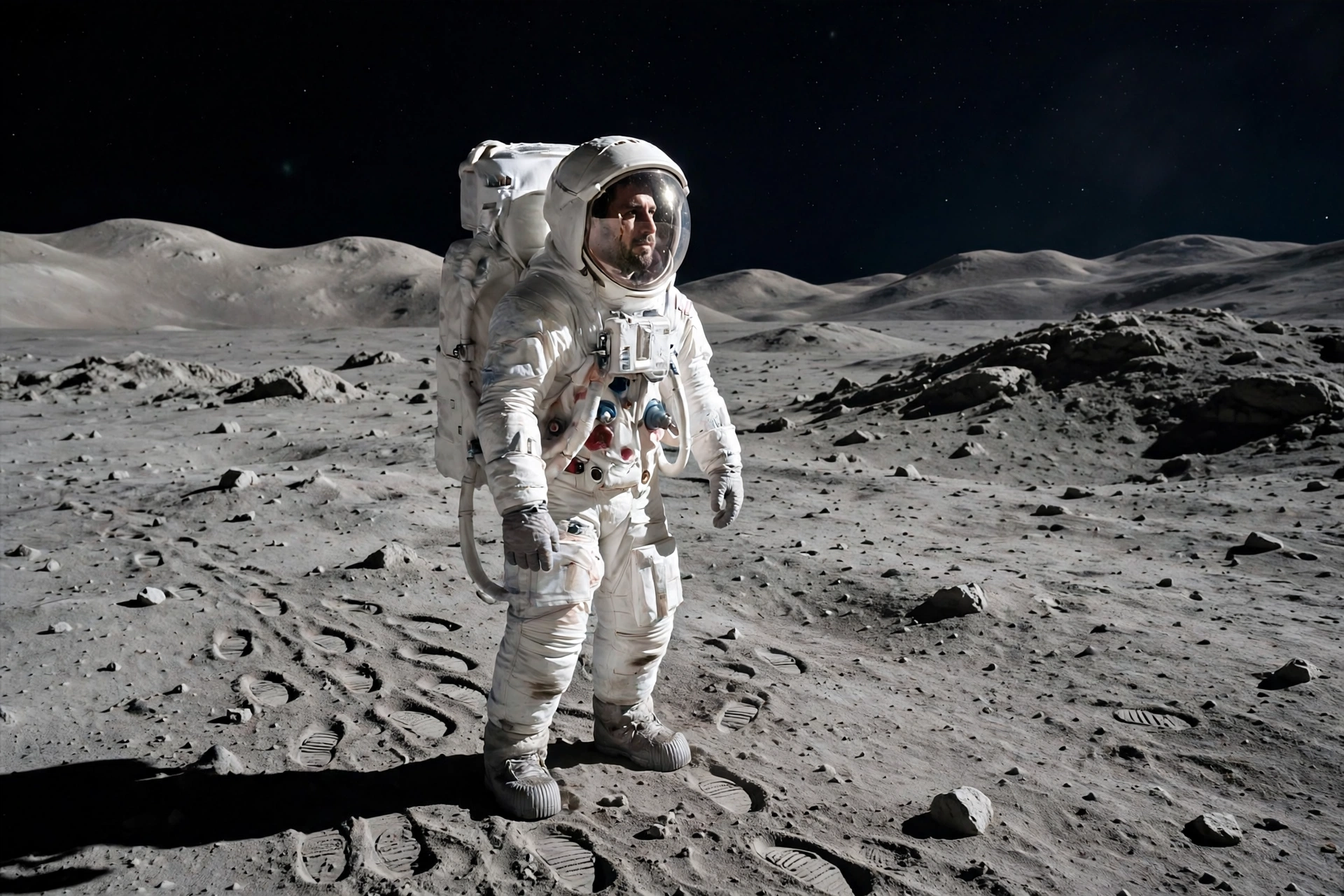
Walking on the Moon brought new challenges for helmet design. The lunar surface is covered in fine, sharp dust that clings to everything, and the temperature swings between hot sunlight and freezing shadow. Astronauts needed helmets that could cope with dust, glare, and heat, while still letting them see the ground clearly enough to walk and work. The helmets used on the Moon were larger, bubble-shaped domes that gave the astronaut a wide field of view.
These lunar helmets also had to work with the rest of the spacesuit, which was bulkier and stiffer than earlier suits because it had to protect against the Moon’s environment. The helmet’s wide bubble shape helped here, because it let the astronaut turn their head a little inside the dome rather than having to turn their whole body. A gold-tinted outer visor cut the glare of the Sun on the bright lunar surface, and it became one of the most recognisable images of the era.
How Have Space Helmets Changed Since Then?
Since the Moon missions, space helmets have become lighter, clearer, and easier to use, even though the basic job has not changed. Modern helmets for spacewalks use improved transparent materials that are stronger and less likely to scratch, and their seals and fittings are more reliable than the early designs. The bubble shape has stayed, because it gives the best all-round view, but the details — the way the visor locks, the way air flows, the way the helmet attaches to the suit — have all been refined over time.
One of the biggest changes has been in comfort and fit. Early helmets were often one-size-fits-all and could be uncomfortable on a long spacewalk. Modern designs pay more attention to the shape of the wearer’s head and to padding and ventilation, so that an astronaut can work for hours without the helmet becoming a distraction. The same principle applies to helmets on Earth: a helmet that fits well is far more likely to be worn properly. If you are interested in how helmets manage the forces of an impact on Earth, reading about what MIPS is for helmets explains one of the technologies used in modern helmet design.
What Might Space Helmets Look Like in the Future?
Future space helmets are likely to build on the bubble design rather than replace it, because a clear dome gives the best view and the most room to move the head. The changes are more likely to be in the details: better materials that are lighter and tougher, smarter systems that manage air and temperature automatically, and visors that can adjust their tint to the light without the astronaut having to do anything.
There is also interest in helmets with built-in displays, which could show an astronaut useful information — such as directions, checklists, or warnings — without them having to look away from their work. This kind of idea comes from aviation and from other fields where helmets already carry displays, and it shows how helmet design in one area can inspire another. In general terms, the future space helmet will probably look familiar from the outside and be much smarter on the inside.
Frequently Asked Questions
Q: Why is a space helmet a bubble shape?
A: The bubble shape gives the astronaut the widest possible field of view and room to turn their head inside the helmet. A flat or narrow visor would limit what they can see, which matters a great deal when working outside a spacecraft.
Q: Can an astronaut take off their helmet in space?
A: No. Outside a spacecraft or a pressurised cabin, an astronaut must keep the helmet on and sealed, because there is no breathable air in space. The helmet is part of the spacesuit system that keeps them alive.
Q: What is the gold visor on Moon helmets for?
A: The gold-tinted outer visor cuts the harsh glare of sunlight on the bright lunar surface. Without an atmosphere to soften it, sunlight in space is much stronger, and the visor protects the astronaut’s eyes and improves visibility.

Olivia
Writer at Helmet Today, covering helmet reviews, fit and riding safety.