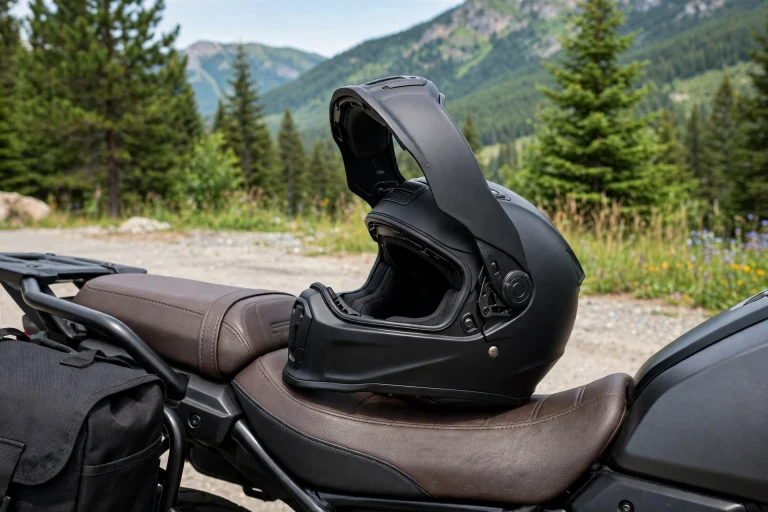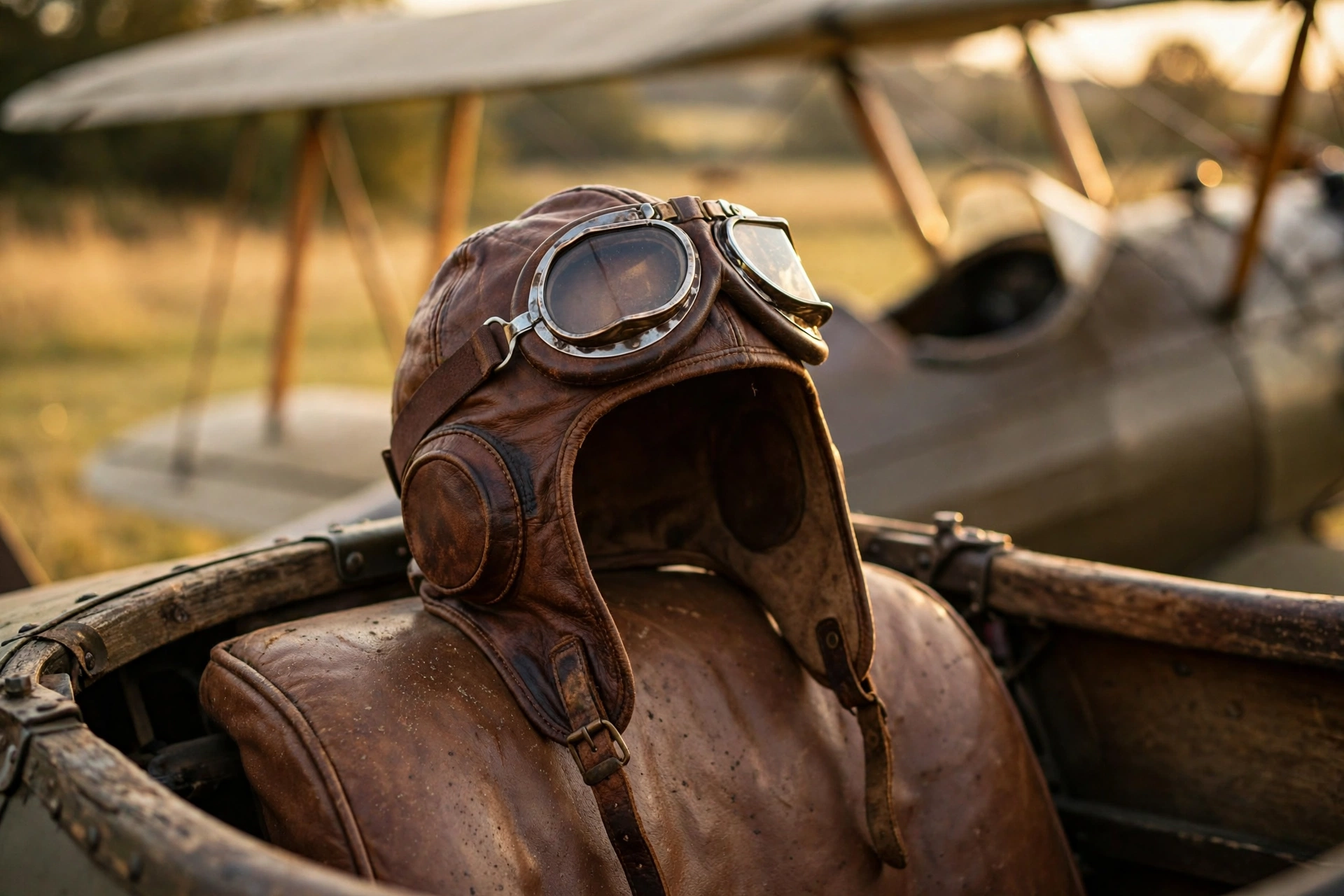
The aviation helmet began as a simple leather cap worn to keep a pilot warm and protect against wind, and it has since evolved into a specialised piece of safety equipment that protects the head, carries communications, and in some cases supplies oxygen. In general terms, its history follows the history of flight itself: as aircraft flew higher, faster, and further, the helmet had to do more than keep out the cold. Each era of aviation brought a new problem for pilots to solve, and each problem shaped the helmet of its time.
Understanding this history is useful for anyone interested in helmets in general, because aviation was one of the first fields where head protection was treated as a serious engineering problem rather than an afterthought. This guide traces the aviation helmet from its earliest leather days to the modern designs worn by pilots today.
What Did the First Aviation Helmets Look Like?
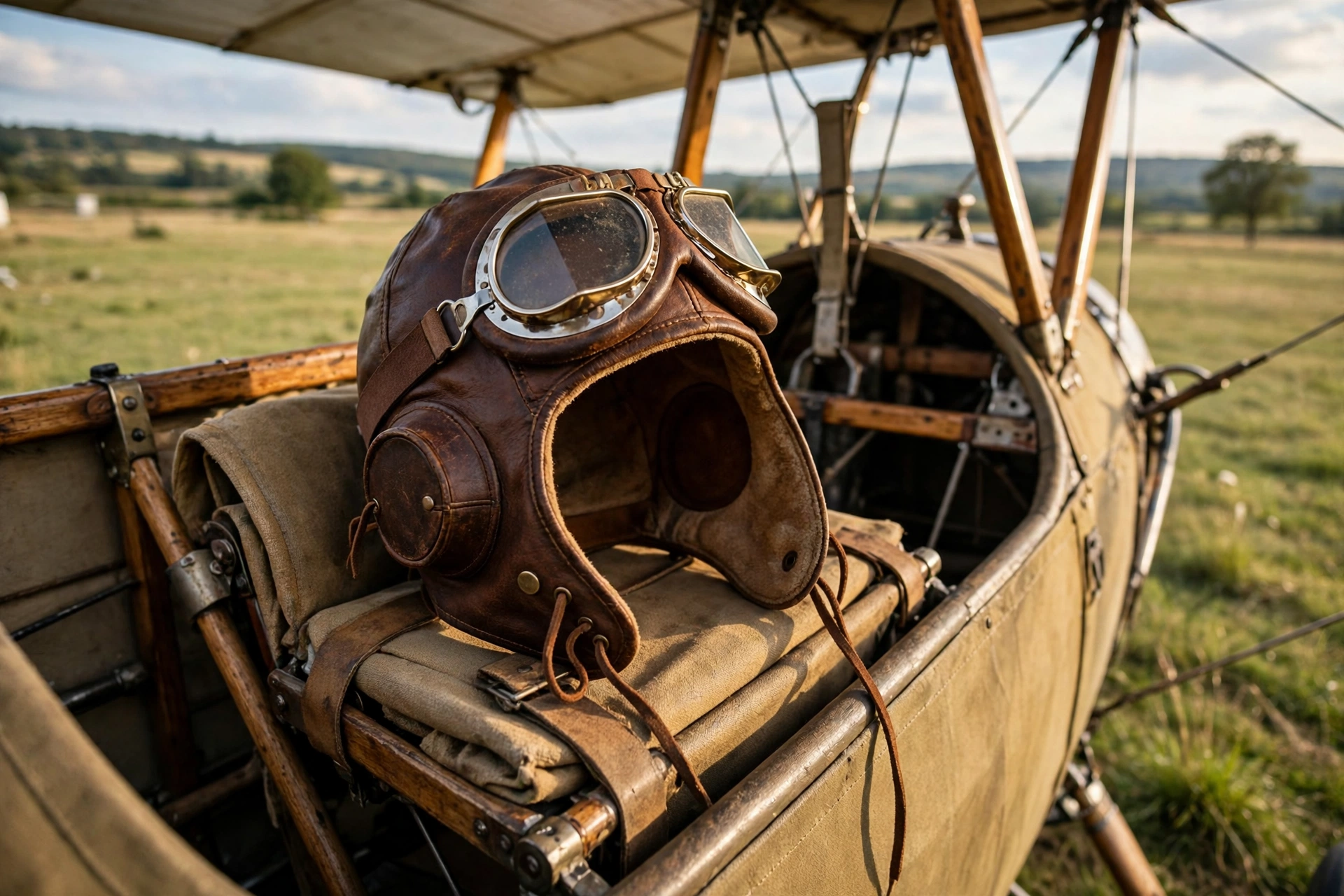
In the earliest days of powered flight, pilots flew in open cockpits with no roof, no windscreen worth the name, and nothing between them and the wind except their clothing. The first aviation helmets were soft leather caps, often lined with fleece or wool, that covered the ears and fastened under the chin. Their main jobs were to keep the pilot warm, keep the wind out of the ears, and hold a pair of goggles in place. They offered very little protection against a hard impact, because that was not what they were designed for.
These early caps were often adapted from motoring caps and other leather headgear of the time. Pilots wore them with a scarf and a heavy jacket, and the whole outfit was about surviving the cold and the slipstream rather than surviving a crash. Over time, the caps became more fitted and better made, with ear flaps that could hold the simple headphones used for early radio contact. In general terms, this period set the basic shape of the flying helmet: a close-fitting cover for the whole head, with room for the eyes, ears, and mouth.
How Did Helmets Change as Aircraft Got Faster?
As aircraft engines grew more powerful and speeds increased, the demands on the pilot’s helmet changed. Faster flight meant stronger wind, more noise, and harder landings, and the soft leather cap began to look inadequate. Designers started to add thicker padding inside the cap and stiffer materials on the outside, so that a bump against the cockpit frame or a rough landing would hurt less. The helmet began its slow shift from clothing towards protective equipment.
In general terms, this era also saw the first serious thinking about impact protection in the air. Designers borrowed ideas from other fields, such as the padded liners used in some sports and industrial helmets, and began to test how well different materials absorbed a blow. The results were modest by modern standards, but they established a principle that still guides helmet design today: a helmet should spread the force of an impact over a wider area and slow it down before it reaches the head. If you want to understand how modern helmets handle different kinds of impact, reading about what MIPS is for helmets is a useful starting point, because it explains one of the technologies used to manage rotational forces.
What Role Did Oxygen Masks and Headsets Play?
As aircraft began to fly higher, pilots faced a new problem: the air at altitude is too thin to breathe comfortably. Oxygen masks became essential equipment, and the helmet had to work with them. Designers added straps, clips, and fittings so that a mask could be held firmly against the face without slipping, and so that the pilot could still speak into a microphone while wearing it. The helmet and the mask became a single working unit.
Headsets developed in a similar way. Early pilots had simply tucked earphones under a leather cap, but as radios became central to flying, the headset was built into the helmet itself. Ear cups were shaped to seal out engine noise, and the wiring was routed through the helmet so that it would not snag on controls. This was an important step, because it meant the helmet was no longer just protecting the head — it was also the pilot’s link to the ground and to other aircraft.
These changes also made helmets more specialised. A helmet for a high-altitude pilot looked different from one for a pilot flying low and slow, because the equipment it had to carry was different. In general terms, this was the point at which the aviation helmet stopped being one generic item and became a family of designs, each matched to a particular kind of flying.
How Did Military Helmets Shape Civilian Designs?
Military flying drove much of the development of the aviation helmet, because military pilots flew the fastest and highest aircraft and faced the greatest risks. During periods of large-scale military aviation, huge numbers of helmets were made, tested, and improved in a short time, and the lessons learned were passed on to civilian flying afterwards. Hard outer shells, better padding, and stronger chin straps all appeared first in military helmets before reaching the general aviation market.
One of the most important military contributions was the idea that a helmet should be tested against a standard. Military organisations began to set out what a helmet had to survive — a certain kind of impact, a certain level of noise, a certain fit — and manufacturers had to meet those requirements. This approach later spread to helmets for motorcycling, cycling, and other sports, where standards and certification are now taken for granted. In general terms, aviation helped to create the modern idea of a helmet as a tested safety product rather than a piece of clothing.
What Does a Modern Aviation Helmet Look Like?
A modern aviation helmet is usually a hard-shelled helmet with a padded liner, a visor or goggles, and built-in communications. The shell is made from a strong, lightweight material, and the liner is shaped to fit the wearer’s head closely, so that the helmet stays in place during turbulence or a sudden movement. The fit matters as much as the materials: a helmet that moves around on the head cannot protect it properly.
Modern helmets also reflect how much flying has changed. Many pilots now fly aircraft with quiet cabins and good headsets, so their helmets are lighter and simpler than the heavy designs of the past. Others, such as helicopter pilots and aerobatic pilots, still need the full protection of a hard shell, because they work in noisy, high-vibration environments where a bump to the head is a real risk. In general terms, the modern aviation helmet is chosen for the job, not worn as a one-size-fits-all item.
Frequently Asked Questions
Q: What was the first aviation helmet made of?
A: In general terms, the first aviation helmets were soft leather caps, often lined with fleece or wool. They were mainly meant to keep the pilot warm and hold goggles in place, and they offered very little impact protection by modern standards.
Q: Why did aviation helmets become hard-shelled?
A: As aircraft flew faster and higher, pilots faced stronger wind, harder landings, and more risk of bumping the cockpit. Designers added stiffer materials and padding so the helmet could protect the head, and military testing helped turn that protection into a formal standard.
Q: Do all pilots still wear helmets today?
A: No, not all pilots wear helmets. Many airline and light-aircraft pilots fly with headsets only, while helicopter, aerobatic, and military pilots usually wear full helmets because their flying involves more noise, vibration, and risk of a head impact.

Olivia
Writer at Helmet Today, covering helmet reviews, fit and riding safety.