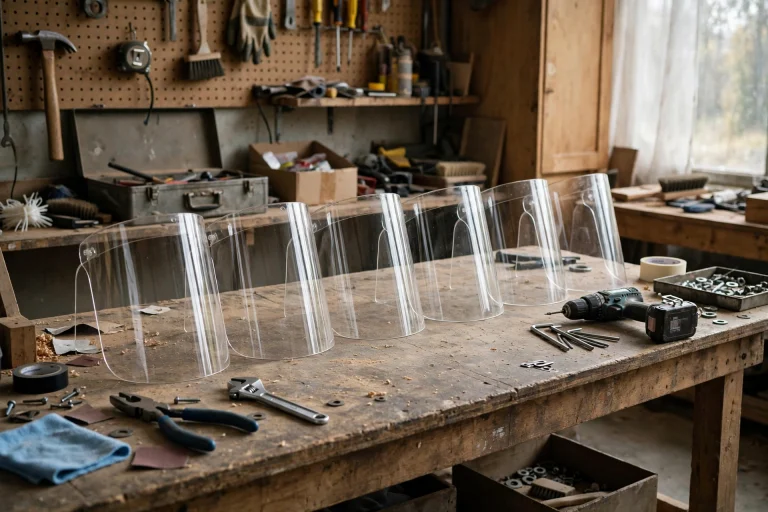
Helmet shell lamination is the process of building up a helmet’s outer shell from layers of fibre cloth and resin, pressed together and cured into a single strong, light shape. In general terms, the layers are laid one on top of another in a mould, soaked or coated with resin, and then hardened, so that the finished shell is far stronger than any single layer on its own. Lamination is used for composite helmet shells, such as those made from fibreglass or carbon fibre, and it is one of the main ways that high-quality motorcycle, racing, and sports helmets are made.
What Materials Are Used in Shell Lamination?
Shell lamination uses two main materials: fibre cloth and resin. The fibre cloth is usually made from glass fibre, carbon fibre, or a mix of fibres, woven into a fabric that can be cut to shape and laid into a mould. The fibres give the shell its strength, and different fibres are chosen for different jobs, with carbon fibre valued for its lightness and glass fibre for its toughness and lower cost.
The resin is a liquid that soaks into the cloth and, once it hardens, holds the fibres firmly in place and gives the shell its smooth, solid surface. In general terms, the resin is the glue that binds the layers together, while the fibres carry the load. The two materials work as a team: neither one would make a good shell on its own, but together they form a composite that is both strong and light.
How Are the Layers Laid Into the Mould?
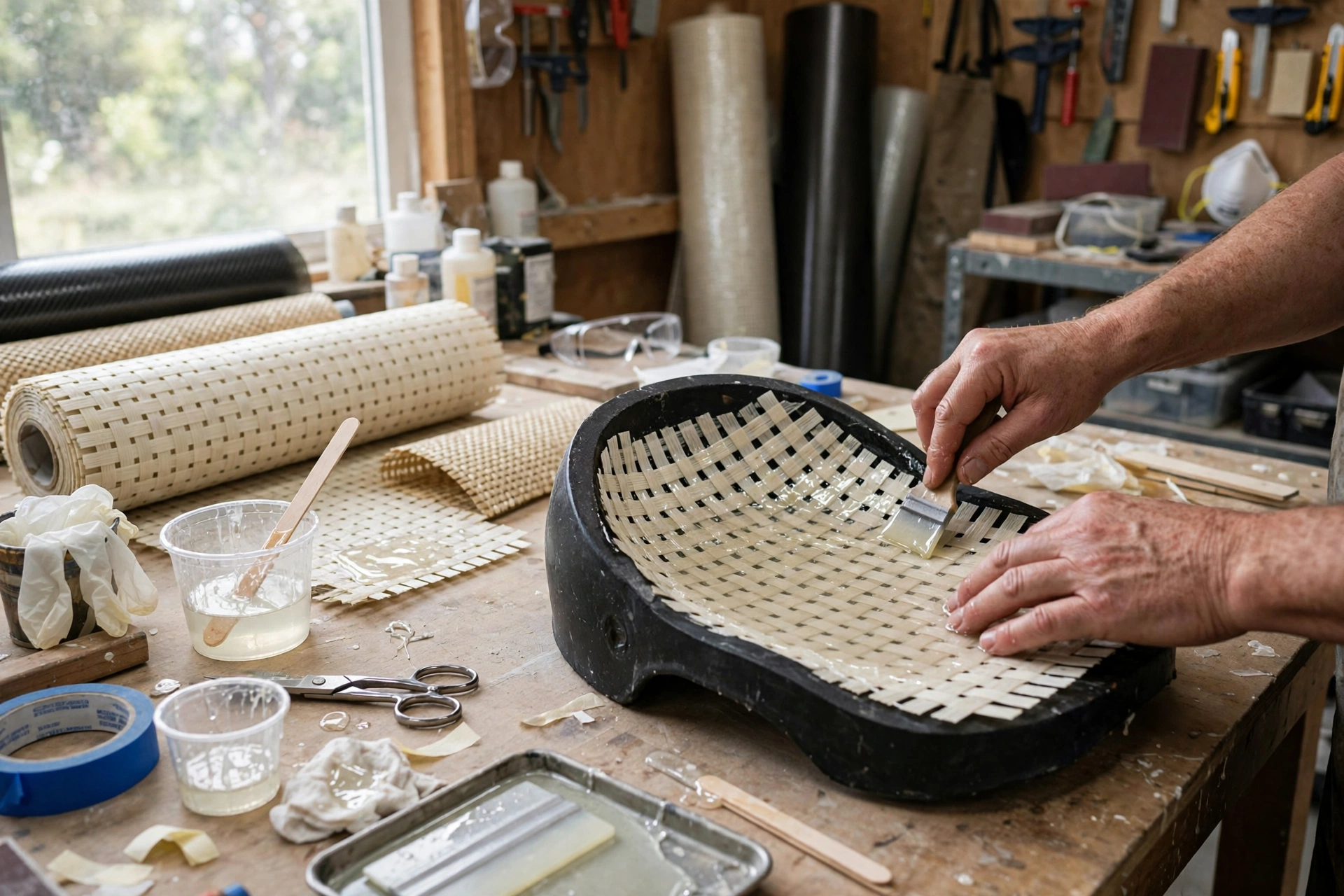
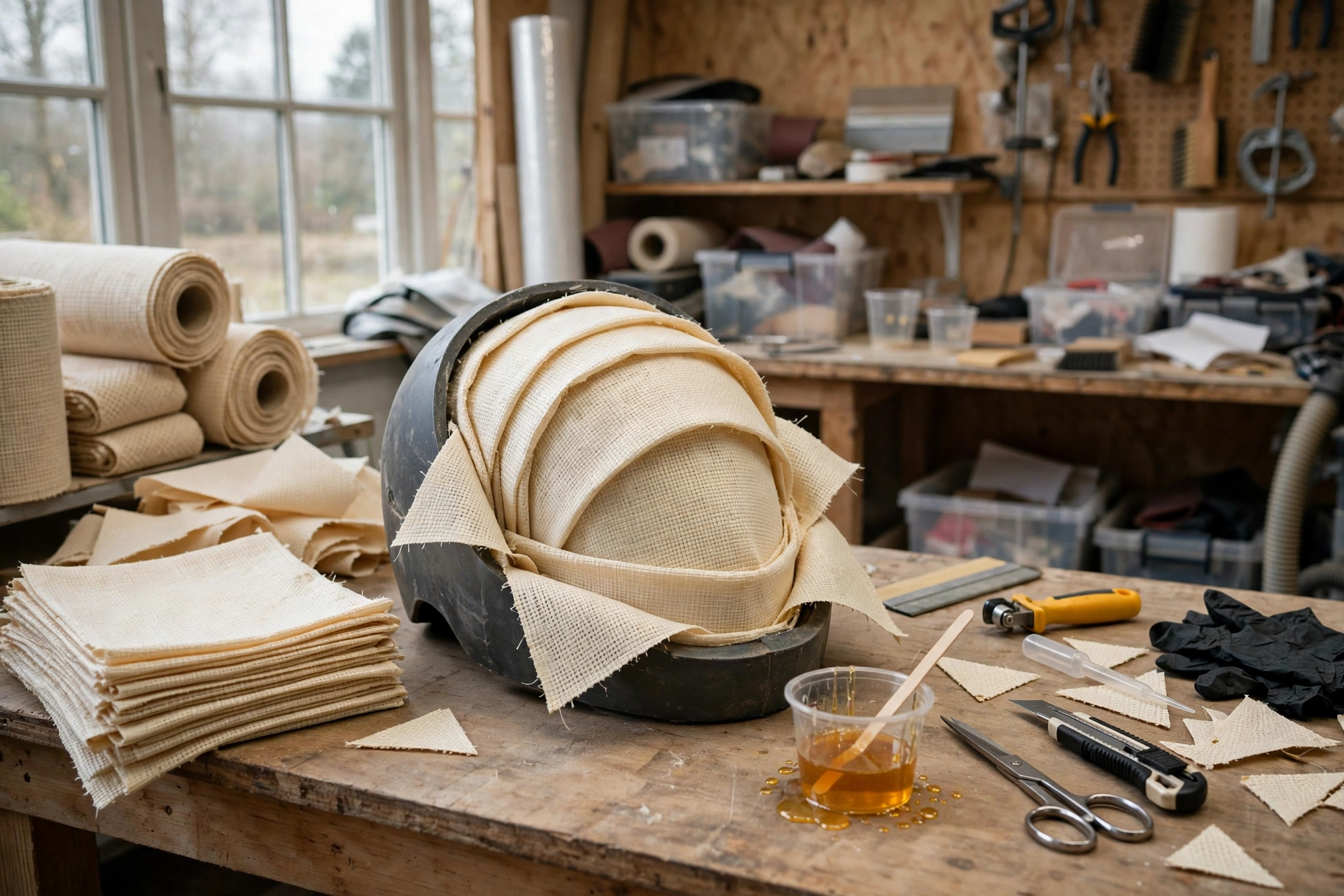
The layers are laid into a mould by hand, one at a time, with each piece of cloth cut to fit the shape of the helmet. The worker lays a sheet of cloth into the mould, smooths it into the curves, and brushes or sprays resin over it, then lays the next sheet on top and repeats the process. The number of layers depends on the design of the helmet, with more layers in the areas that need the most strength.
Each layer is usually laid at a different angle to the one below it, so that the fibres run in different directions and the shell is strong in every direction, not just one. In general terms, this cross-laying is the key to lamination: a single layer of cloth is strong along its fibres but weak across them, while several layers at different angles give strength all round. The work needs care, since air bubbles or dry patches in the layers can weaken the finished shell.
How Is a Laminated Shell Cured?
Once the layers are laid into the mould, the shell is cured, which means the resin is hardened until the shell holds its shape. The mould is usually closed and placed under pressure, often in a vacuum bag or a heated press, which squeezes out extra resin and trapped air and presses the layers firmly together. Heat may be applied to speed up the curing and to make the resin harder and stronger.
Curing can take from under an hour to several hours, depending on the resin and the design of the shell. In general terms, the shell must be fully cured before it is taken out of the mould, since a shell that is still soft will lose its shape. Once cured, the shell is removed from the mould, trimmed to its final shape, and checked for flaws such as thin spots, bubbles, or cracks.
Why Is Lamination Used for Helmet Shells?
Lamination is used for helmet shells because it makes a shell that is strong for its weight. A laminated shell can be made thin and light, yet still resist the forces of an impact, because the fibres spread the load across the whole shell rather than letting it concentrate in one spot. That strength-to-weight balance is hard to match with a single material, and it is why laminated shells are common on racing and high-end motorcycle helmets.
Lamination also lets makers shape the shell precisely and vary its thickness, adding extra layers where the shell needs more strength and fewer layers where it can be lighter. If you want to understand one of the safety technologies used in modern helmets, reading about MIPS is a good place to start, though the shell itself and the liner system are separate parts of the helmet’s protection. In general terms, a laminated shell is a sign of a helmet made with care and with performance in mind.
How Is a Laminated Shell Finished?
After curing, a laminated shell is trimmed, sanded, and finished to give it a smooth surface ready for paint or a clear coat. The edges are cut to their final shape, and any rough spots are sanded smooth, so that the shell is safe to handle and fits neatly with the liner and the fittings. The shell is then checked for flaws, and any shell with cracks, thin spots, or delamination is rejected.
The finished shell is then painted or coated, and the liner, straps, and fittings are added. In general terms, the finish is more than just looks: a good paint or clear coat protects the fibres and the resin from sunlight and moisture, which can weaken them over time. A laminated shell should be looked after like any helmet shell, kept clean, and kept out of strong solvents that could damage the resin.
What Are the Downsides of a Laminated Shell?
Laminated shells have a few downsides worth knowing. The first is cost: laying layers by hand and curing them takes time and skilled work, so laminated helmets tend to be priced higher than helmets with moulded plastic shells. The second is that a laminated shell can be damaged by a sharp knock or a deep scratch, which may crack the resin or split the layers, even if the damage is hard to see.
Laminated shells can also be affected by long exposure to sunlight and some chemicals, which can weaken the resin over time. In general terms, these are small trade-offs for most riders, and the shell will last well if it is looked after. As with any helmet, a hard impact means the helmet itself should be replaced, even if the shell still looks fine, because damage to the shell or the liner may not be visible.
Is a laminated shell stronger than a plastic shell?
In general terms, a laminated composite shell is strong for its weight and can be made thinner and lighter than a plastic shell of similar strength, but both types can meet safety standards. The best shell is the one that fits the rider and the type of riding.
Can a laminated shell be repaired?
In general terms, no. Damage to a laminated shell, such as cracks or split layers, cannot be repaired safely at home. A damaged helmet should be replaced rather than repaired.
What fibres are used in laminated shells?
Glass fibre and carbon fibre are the most common, sometimes mixed together or with other fibres. Glass fibre is valued for toughness and lower cost, while carbon fibre is valued for its lightness.

Olivia
Writer at Helmet Today, covering helmet reviews, fit and riding safety.