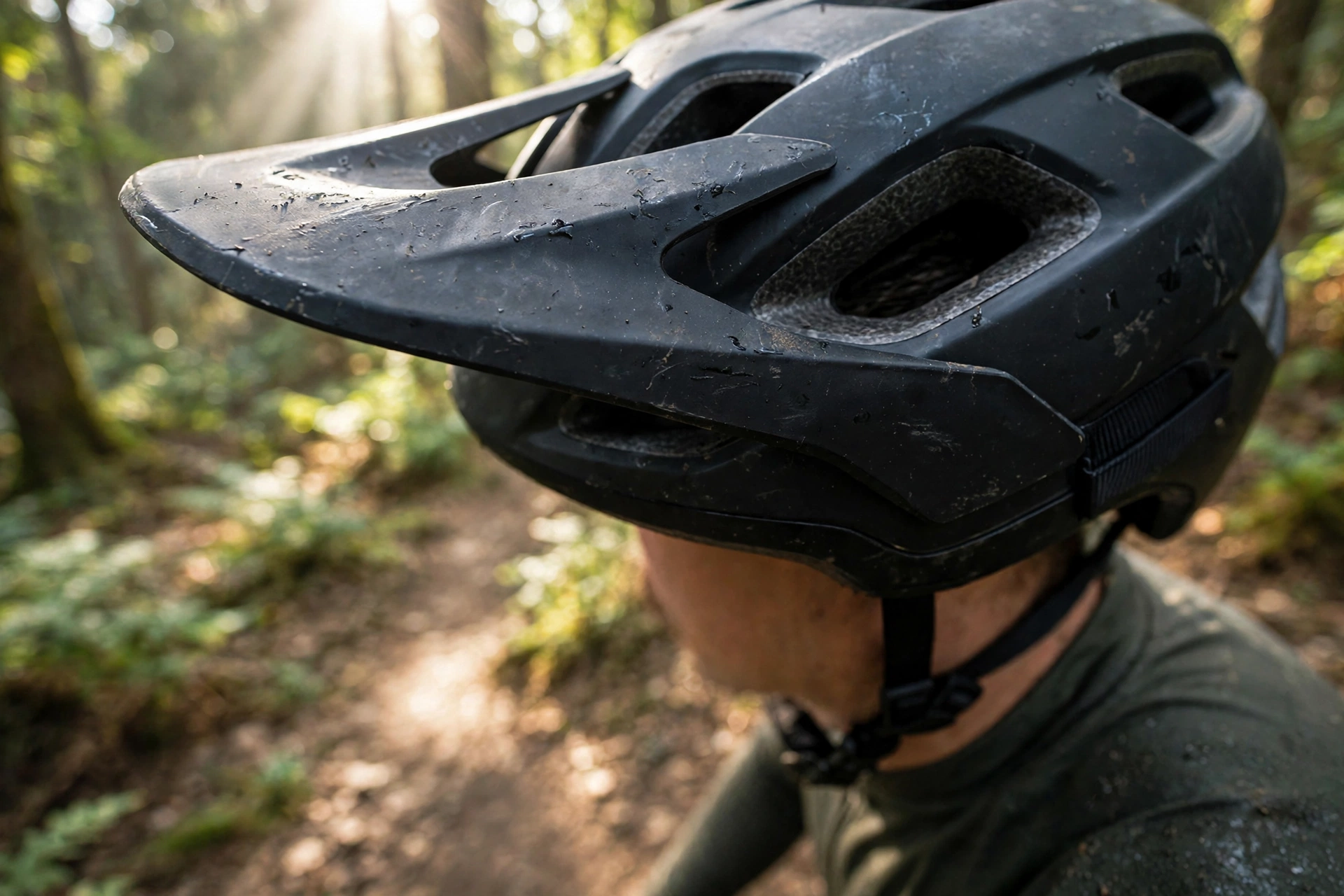
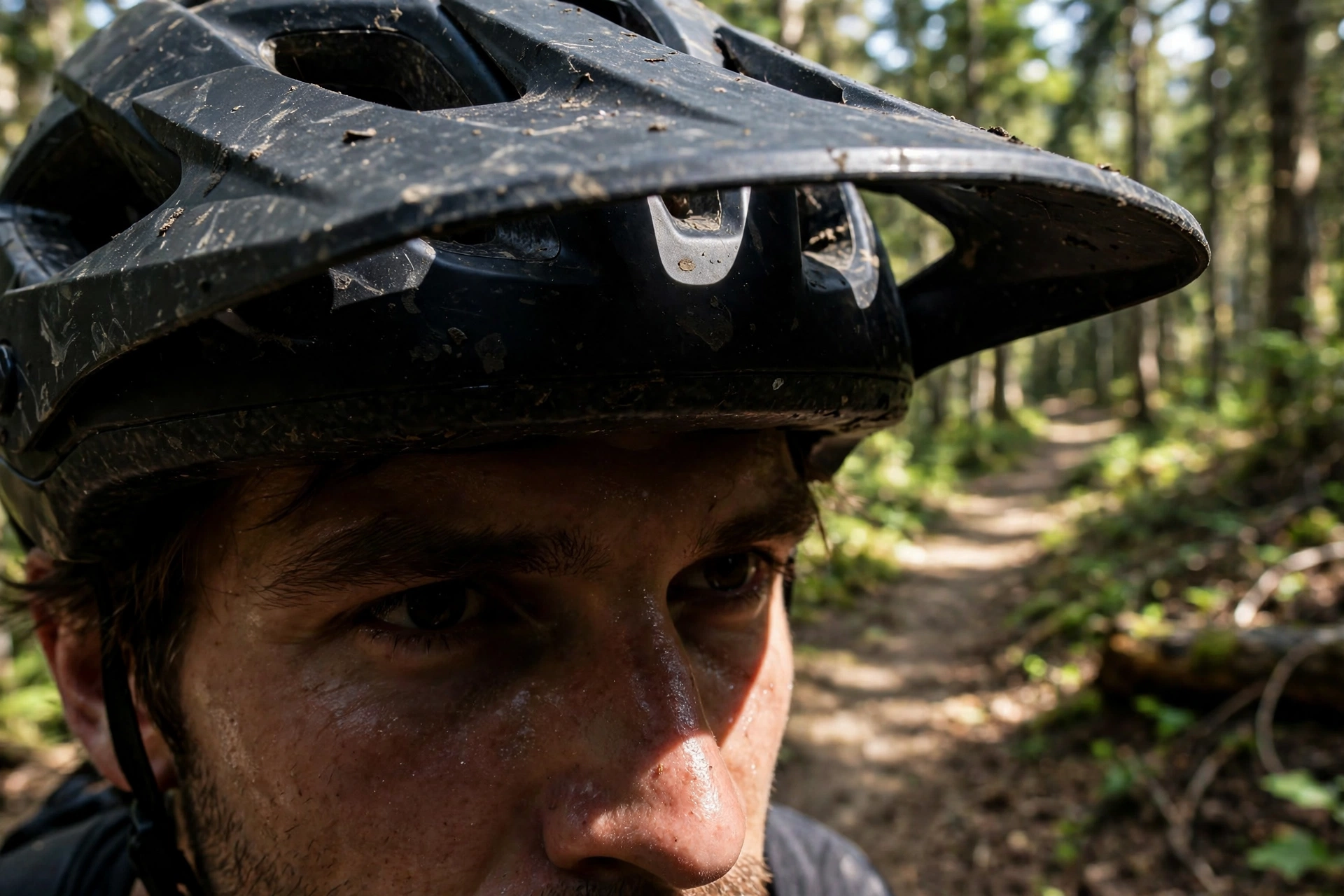
A helmet peak is most often made from moulded plastic, chosen because it is light, flexible, and tough enough to shade the eyes from sun, rain, and mud without adding much weight to the helmet. In general terms, the peak is the small brim or visor that sticks out over the front of the helmet, and it is found mainly on mountain bike, motocross, and some work helmets. The material used for a peak depends on the type of helmet and the job it has to do, but plastic is by far the most common choice, with some peaks made from flexible rubber or a mix of materials.
What Materials Are Helmet Peaks Made From?
Most helmet peaks are made from a tough moulded plastic, such as polypropylene or a similar flexible plastic, which can be shaped into a thin, curved brim and will bend rather than snap if it is hit. The plastic is light, so it does not make the helmet feel top-heavy, and it resists water, mud, and sunlight, which matters for a part that sits out in the weather on every ride.
Some peaks are made from a softer, more flexible material, such as rubber or a flexible plastic blend, which can bend a long way without breaking. These are common on motocross helmets, where the peak may hit branches or the ground. In general terms, the choice of material comes down to a balance between stiffness, so the peak holds its shape, and flexibility, so it gives way rather than breaking in a knock.
How Is a Plastic Helmet Peak Made?
A plastic helmet peak is usually made by injection moulding, a process in which melted plastic is forced into a metal mould shaped like the peak, then cooled until it hardens. The peak comes out of the mould as a finished piece, with its curve, its ribs, and its mounting holes already formed, and any rough edges are trimmed away. The process is fast and repeatable, which is why plastic peaks can be made cheaply in large numbers.
Some peaks are made by pressing a heated sheet of plastic into a mould, which gives a thinner, lighter peak that is still strong enough for its job. In general terms, both methods give a peak with a smooth finish and a consistent shape, which matters because a peak that is bent or warped will not sit straight on the helmet and may catch the wind.
How Is a Peak Fitted to a Helmet?
A helmet peak is usually fitted with screws, bolts, or clips that hold it to the front of the shell, often through small holes in the peak itself. On many mountain bike and motocross helmets, the peak is held by two or three screws, so it can be adjusted to different angles or removed altogether. Some peaks snap into place with plastic clips, which makes them quick to take off for cleaning or for riding without a peak.
The fittings are designed so that the peak can break away in a crash rather than snagging on the ground, which is an important safety detail. If you want to understand one of the safety technologies used in modern helmets, reading about MIPS is a good place to start, though the peak itself is a separate part of the helmet and does not affect the liner system. In general terms, a well-fitted peak should sit firmly, stay where it is put, and not rattle or wobble at speed.
What Does a Helmet Peak Do?
A helmet peak has two main jobs: shading the eyes and keeping rain and mud out of the face. In bright sun, the peak blocks the light from above, which helps the rider see the trail ahead without squinting. In rain, it keeps water from running down onto the face and into the eyes, and on muddy trails it stops mud thrown up by the front wheel from splashing onto the rider’s face.
The peak also gives a little protection from low branches and from stones thrown up by other riders. In general terms, it is a small part that makes a real difference to comfort, especially on long rides in changeable weather. Some riders take the peak off for road riding, where it can catch the wind, and put it back on for off-road riding, where shade and mud protection matter more.
How Do You Look After a Helmet Peak?
Looking after a helmet peak is mostly a matter of keeping it clean and checking its fittings from time to time. Mud and dirt should be rinsed off with clean water, and the peak can be wiped with a soft cloth and mild soap, then left to dry. Harsh cleaners should be avoided, since they can damage the plastic or make it brittle over time.
The screws or clips that hold the peak should be checked for looseness, since a loose peak can rattle and move at speed. If a screw is lost, it should be replaced with a matching one, following the maker’s instructions. If the peak is cracked or bent out of shape, it should be replaced, since a damaged peak may not stay in place and could catch the wind.
When Should a Helmet Peak Be Replaced?
A helmet peak should be replaced when it is cracked, bent, or no longer sits straight on the helmet, since a damaged peak can catch the wind, rattle, or break away at the wrong moment. A peak that has faded or gone brittle in sunlight should also be replaced, as it will be weaker and more likely to snap if it is hit. In general terms, a peak is a wear item, and it will need replacing sooner than the helmet itself if it is used every day.
It is also worth replacing a peak if its mounting holes have worn loose, since a peak that wobbles will not stay at the right angle. A replacement peak should match the helmet model as closely as possible, and it should be fitted following the maker’s instructions. A peak that does not fit the helmet properly is not safe to use, however strong its material may be.
Do all helmets have peaks?
No. Peaks are most common on mountain bike, motocross, and some work helmets. Road cycling helmets and most motorcycle helmets have no peak, and riders use a visor or sunglasses instead.
Can a helmet peak be removed?
Yes, in general terms. Most peaks are held by screws or clips and can be taken off, following the maker’s instructions. Some riders remove the peak for road riding, where it can catch the wind.
Does a peak make a helmet safer?
In general terms, a peak is a comfort and visibility aid rather than a safety device. It shades the eyes and keeps rain and mud out of the face, which helps the rider see clearly, but it does not add impact protection.

Olivia
Writer at Helmet Today, covering helmet reviews, fit and riding safety.