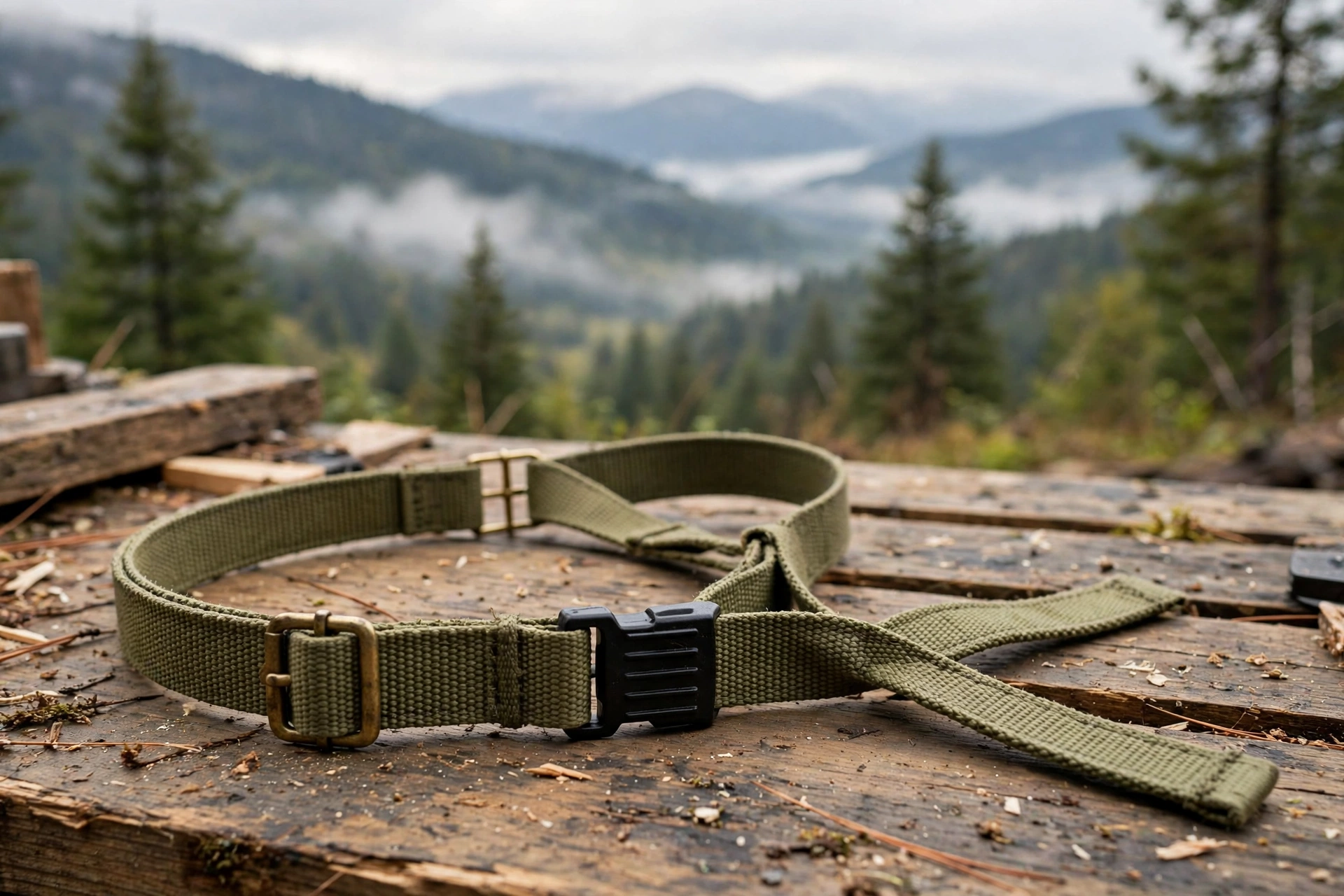
A helmet strap is most often made from woven nylon or polyester webbing, chosen because it is strong, flexible, and comfortable against the skin, and because it can hold the helmet firmly on the head without stretching. In general terms, the strap is the part of the helmet that goes under the chin and fastens with a buckle, and it is one of the most important parts of the helmet: if the strap fails, the helmet cannot stay on the head in a fall. Straps are found on almost every helmet, from motorcycle and cycling helmets to work and sports helmets, and the material used depends on the type of helmet and the conditions it will be used in.
What Materials Are Helmet Straps Made From?
Most helmet straps are made from woven webbing, a flat, strong fabric made by weaving many fine threads together. Nylon webbing is the most common choice, because it is very strong for its weight, resists wear, and does not stretch much under load. Polyester webbing is also widely used, and it is valued for its resistance to sunlight and moisture, which helps the strap last longer when it is used outdoors every day.
Some straps have a soft cover or padding where they touch the chin, often made from a soft fabric or a thin layer of foam, which stops the webbing from rubbing the skin. In general terms, the webbing gives the strap its strength, and the padding gives it its comfort. Leather straps were once common, but they are now rare, since webbing is lighter, stronger, and easier to keep clean.
How Is Helmet Strap Webbing Made?
Helmet strap webbing is made by weaving, a process in which many fine threads are interlaced on a loom to form a flat, dense ribbon. The threads run lengthways along the strap and across it, which gives the webbing strength in both directions and stops it from fraying or tearing easily. The edges of the webbing are usually sealed or woven tightly, so they do not unravel with use.
Once woven, the webbing is dyed, cut to length, and finished with heat-sealed ends to stop fraying. In general terms, the quality of the webbing depends on the fineness of the threads and the tightness of the weave: a tight, even weave gives a strap that is strong, smooth, and comfortable, while a loose weave can feel rough and wear out faster.
How Is a Strap Fitted to a Helmet?
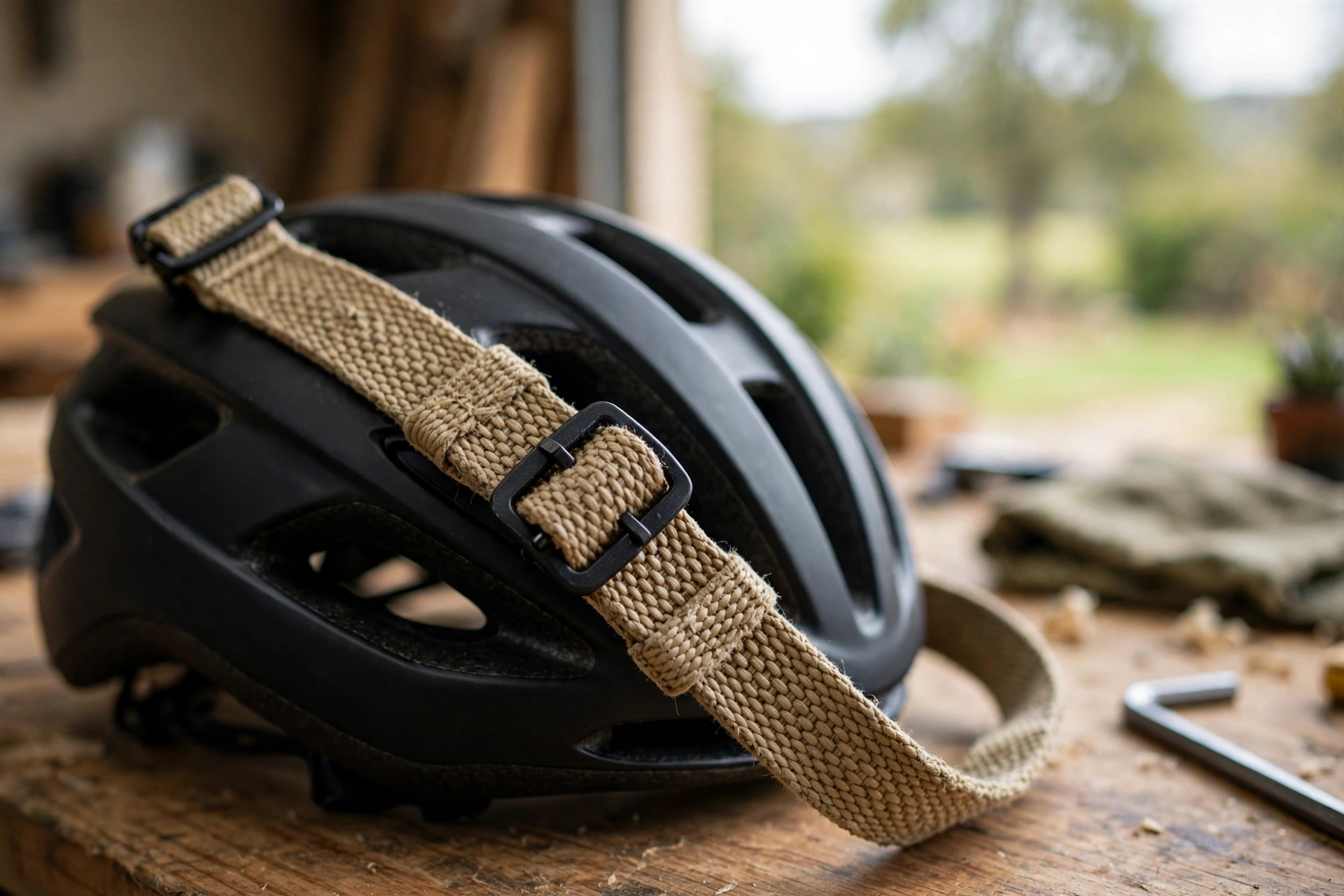
A helmet strap is usually fitted by threading the webbing through slots or anchors in the shell, or by stitching it to the liner or to a mounting point inside the helmet. The strap is often split into two parts, one on each side, which meet under the chin at the buckle, and each side may have an adjuster that lets the rider set the length so the helmet sits snugly. The stitching that holds the strap is done with strong thread, often in a box pattern, to make sure it cannot pull free.
The strap should sit flat against the head and under the chin, without twisting or digging in. If you want to understand one of the safety technologies used in modern helmets, reading about MIPS is a good place to start, though the strap itself is a separate part of the helmet’s safety system. In general terms, a well-fitted strap should be snug enough that the helmet does not move, but not so tight that it is uncomfortable.
Why Does the Strap Material Matter?
The strap material matters because the strap is the part that keeps the helmet on the head. If the strap stretches, frays, or breaks, the helmet can come off in a fall, which is why the strap must be strong enough to hold under force and durable enough to last the life of the helmet. A strap that stretches when it is wet or that weakens in sunlight is a safety problem, not just a nuisance.
The material also affects comfort. A strap made from smooth, tightly woven webbing feels soft against the skin, while a rough or stiff strap can rub the chin and neck, especially on long rides. In general terms, the best strap is one that holds firmly, stays comfortable, and suits the conditions the helmet will be used in, whether that is a daily commute or a building site.
How Do You Look After a Helmet Strap?
Looking after a helmet strap is mostly a matter of keeping it clean and checking it from time to time. Sweat, dirt, and salt can build up in the webbing, so the strap should be washed with clean water and mild soap, then left to dry fully in the air before the helmet is worn again. Harsh cleaners should be avoided, since they can weaken the fibres.
The strap should be checked for fraying, thinning, or loose stitching, because a strap that is worn through should not be trusted. The adjusters and the buckle should also be checked, since a strap that slips through its adjuster will not hold the helmet firmly. If the strap is damaged, it should be replaced, following the maker’s instructions, rather than repaired.
What Should You Check Before Buying a Replacement Strap?
Before buying a replacement strap, or a helmet with a new type of strap, it is worth checking that the strap fits the helmet and that it adjusts easily. The strap should be long enough to fasten comfortably under the chin, and the adjusters should hold their position without slipping. It should also sit flat and feel smooth against the skin, without rough edges or stiff spots.
It is also worth checking that the strap is made for the type of helmet it will be used on, since straps come in different widths and fittings. In general terms, a replacement strap should match the original as closely as possible, and it should be fitted following the maker’s instructions. A strap that does not fit the helmet properly is not safe to use, however strong its material may be.
Are nylon straps stronger than polyester straps?
In general terms, both are strong enough for helmet use. Nylon is valued for its strength and flexibility, while polyester is valued for its resistance to sunlight and moisture. Either material works well when it is woven tightly.
Do helmet straps stretch over time?
Good webbing stretches very little, but a strap can loosen slightly with long use. The adjusters should be checked from time to time, and the strap should be tightened so the helmet still sits snugly.
Can a worn helmet strap be replaced?
Yes, in general terms. Many straps can be replaced with a matching spare, following the maker’s instructions. If the stitching or the anchor point is damaged, the whole helmet may need replacing instead.

Olivia
Writer at Helmet Today, covering helmet reviews, fit and riding safety.