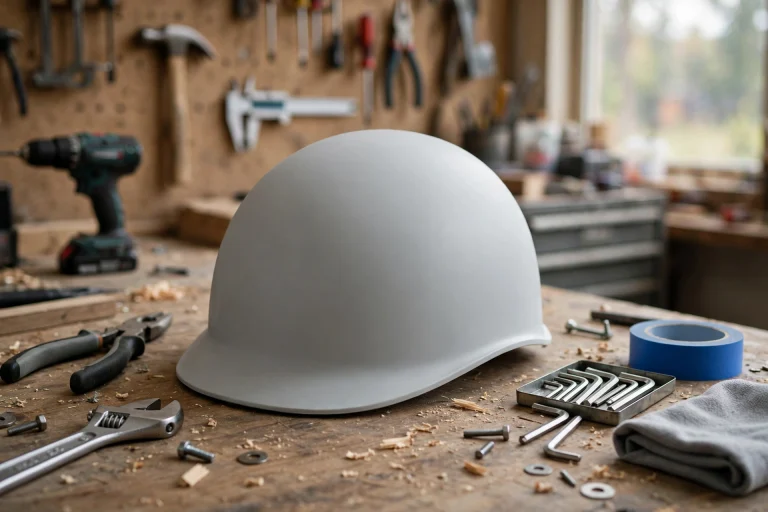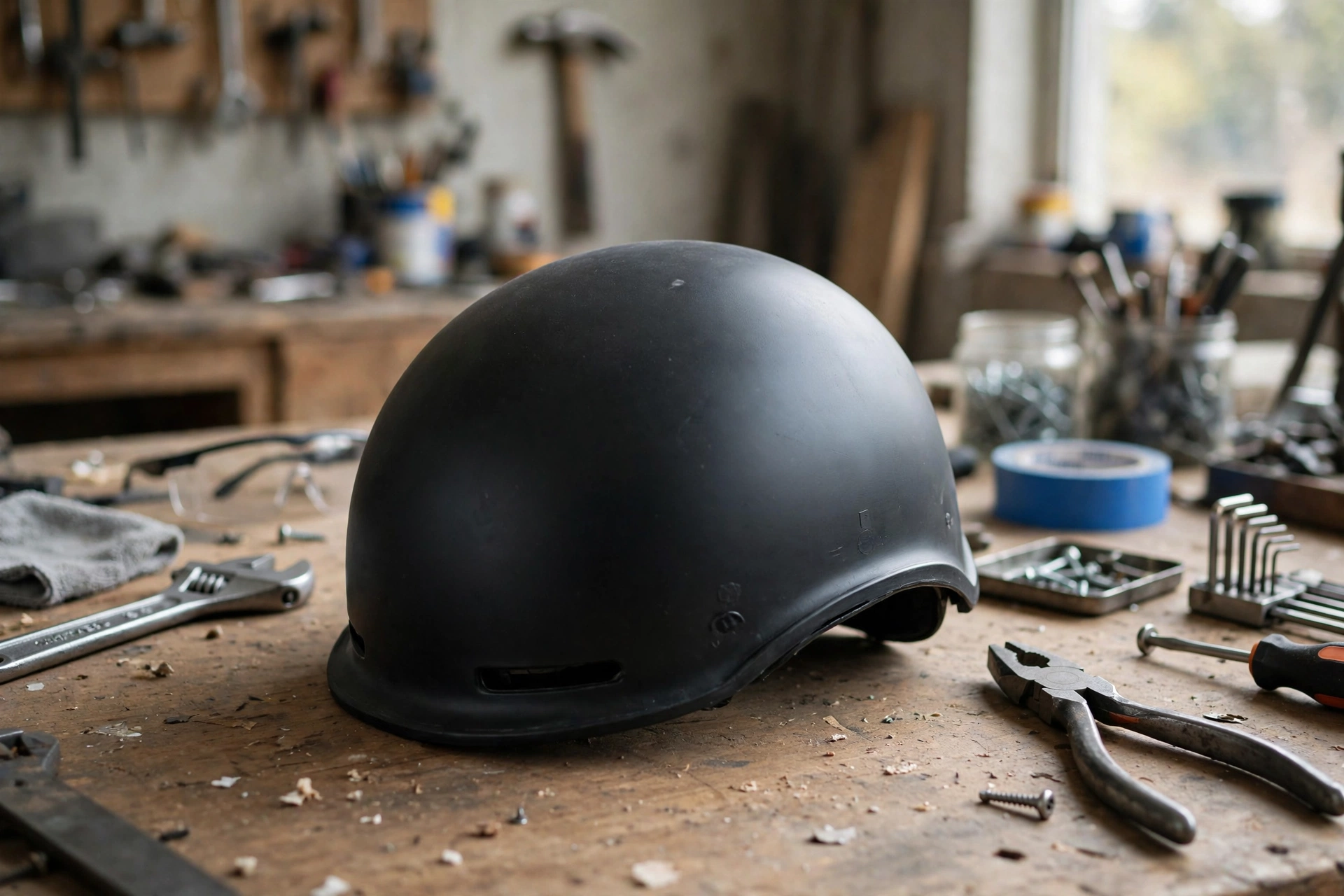
Nylon in a helmet shell is a strong, flexible plastic fibre used in the shells and parts of some helmets, valued for its toughness, its resistance to wear, and its ability to flex without breaking. In general terms, nylon is a synthetic material that can be moulded into a hard shell or woven into a strong fabric, and it is used where a helmet needs to be both light and hard-wearing, such as in some motorcycle, work, and sports helmets. Nylon is one of several plastics used in helmet making, and it is chosen where durability and impact resistance matter most.
What Is Nylon?
Nylon is a type of synthetic plastic first made as a fibre for textiles, and it is now used in a wide range of products, from clothing and ropes to car parts and helmets. It is strong, flexible, and resistant to wear, and it keeps its strength well in normal temperatures. Nylon is also resistant to many chemicals and to the wear of everyday use, which is why it is trusted in products that need to last.
In general terms, nylon is valued because it is both tough and forgiving: it can bend and flex under pressure rather than cracking, and it springs back when the pressure is removed. That combination of strength and flexibility is useful in a helmet shell, which needs to spread the force of a knock and protect the foam liner inside. Nylon can also be coloured and finished to a smooth surface, which suits helmets in many styles.
How Is a Nylon Helmet Shell Made?
A nylon helmet shell is usually made by injection moulding, a process in which small pellets of nylon are heated until they melt, then forced into a metal mould shaped like the helmet shell. The nylon fills the mould, cools, and hardens into the shape of the shell, complete with vent openings and mounting points. The shell is then taken out of the mould, trimmed, and checked for flaws.
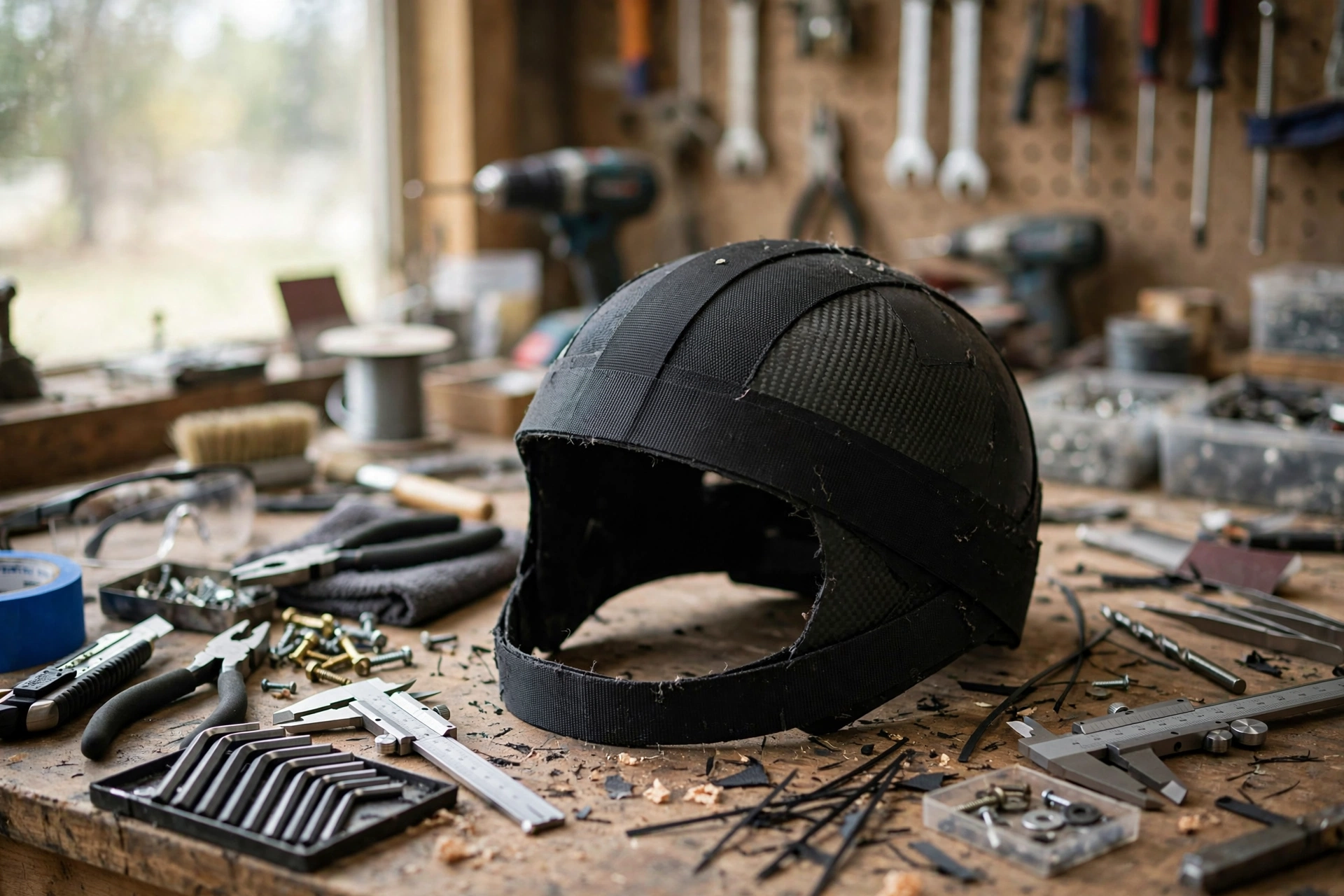
Some nylon shells are made by layering nylon fabric with resin, in a similar way to other composite shells, which gives a shell that is strong in every direction. In general terms, both methods give a shell with a smooth finish and a consistent shape, which matters because a shell that is uneven or warped will not fit the liner properly. The moulding process is repeatable, which is why nylon shells can be made in large numbers to a consistent standard.
How Does Nylon Protect the Head?
Nylon protects the head by forming a hard outer layer that spreads the force of a knock across the shell and shields the foam liner inside. When the helmet is hit, the shell spreads the load over a wider area, so the force is not concentrated on one small point, and the foam liner underneath then absorbs the energy. The shell also protects the foam from damage, weather, and everyday wear.
The toughness of nylon helps here too, since the shell can take a knock and flex slightly rather than cracking. If you want to understand one of the safety technologies used in modern helmets, reading about MIPS is a good place to start, though the shell material itself is a separate part of the helmet’s protection. In general terms, the safety of a helmet comes from the shell, the foam liner, and the fit working together, not from any single material alone.
What Are the Advantages of Nylon?
Nylon has several advantages as a helmet shell material. The first is toughness: it resists knocks, scratches, and the wear of everyday use, and it does not rust or corrode in rain. The second is flexibility: it can bend a little under pressure rather than cracking, which helps it cope with the bumps and knocks of everyday riding and working.
Nylon also resists many chemicals and holds up well in wet and dirty conditions, and it is easy to clean with soap and water. In general terms, it is a practical, durable material that gives good everyday protection, which is why it is used on helmets that are expected to take a lot of wear, such as work helmets and some motorcycle helmets.
What Are the Downsides of Nylon?
Nylon has a few downsides worth knowing. The first is that it can absorb a small amount of moisture from the air, which can change its stiffness slightly in very wet conditions, though this effect is small and the shell still works well. The second is that nylon can be affected by long exposure to strong sunlight, which can weaken it over time, so a helmet should not be left in the sun for long periods.
Nylon shells can also cost more than shells made from simpler plastics, since the material and the moulding need care. In general terms, these are small trade-offs, and the shell will last well if it is looked after. As with any helmet, a hard impact means the helmet itself should be replaced, even if the shell still looks fine, because damage to the shell or the liner may not be visible.
How Do You Look After a Nylon Shell?
Looking after a nylon shell is mostly a matter of keeping it clean and storing it properly. The shell should be washed with clean water and mild soap, then left to dry in the air, and harsh solvents should be avoided, since they can damage the plastic. The helmet should be stored in a cool, dry place, out of direct sunlight, and away from strong chemicals.
The shell should be checked from time to time for cracks, deep scratches, or soft spots, because a shell that is damaged should not be trusted. If the shell is cracked, the helmet should be replaced, following the maker’s guidance. A nylon shell is a tough, everyday material, and with simple care it will give good service for the life of the helmet.
Is nylon a safe helmet shell material?
In general terms, yes. Helmets with nylon shells are made to meet safety standards, and the material is strong, tough, and flexible enough for everyday use. The safety of a helmet comes from the shell, the foam liner, and the fit working together.
Does nylon absorb water?
Nylon can absorb a small amount of moisture, which can change its stiffness slightly, but the effect is small and a nylon shell still works well in wet weather. The helmet should be dried in the air after use in the rain.
Can a nylon shell be repaired?
In general terms, no. Cracks or damage to a helmet shell cannot be repaired safely at home. A damaged helmet should be replaced rather than repaired.

Olivia
Writer at Helmet Today, covering helmet reviews, fit and riding safety.