The history of the miner’s helmet is the story of a simple cloth cap with a lamp becoming the hard hat that protects workers underground today. For hundreds of years, miners worked in dark, low tunnels where rock could fall at any moment and there was almost no light. The helmet they wore had two jobs: to shield the head and to carry a light. Over time, better materials and better lamps turned that cap into a tough safety helmet, and the miner’s helmet became the model for the hard hat used on building sites and in factories all over the world.
What did miners wear on their heads before hard hats?
Before hard hats existed, miners wore whatever head covering was available and tough enough for the job. In many mining regions, that meant a soft cap made from thick cloth or leather, sometimes stiffened with extra layers. A leather cap could soften a glancing blow from a low roof and kept loose coal dust out of the wearer’s hair, but it offered almost no protection against a falling stone. Miners accepted this because there was no better option, and because the work was done by hand in narrow tunnels where a bulky helmet would have been in the way.
In some places, miners wore a felt hat similar to those worn by workers above ground. Felt was warm, cheap, and easy to replace, and it could be shaped to hold a small lamp. The problem was that felt soaked up water in wet mines and lost its shape. Leather was more common in deep coal mines because it shed water better and lasted longer. Neither material could pass a modern safety test, but both show the same idea that runs through the whole history of the miner’s helmet: the head covering had to be practical, cheap enough to replace, and able to carry a light.
When did the miner’s lamp change head protection?
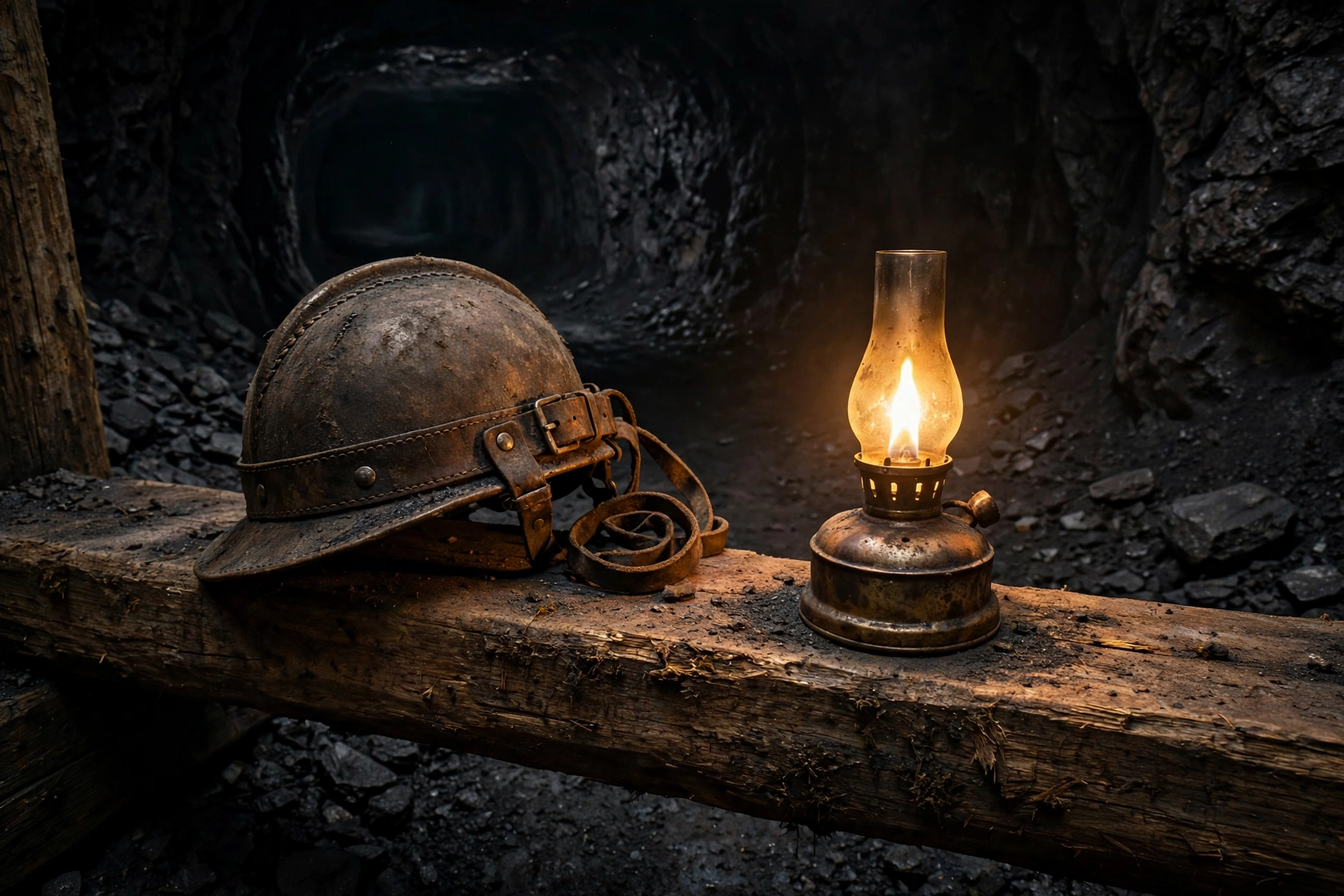
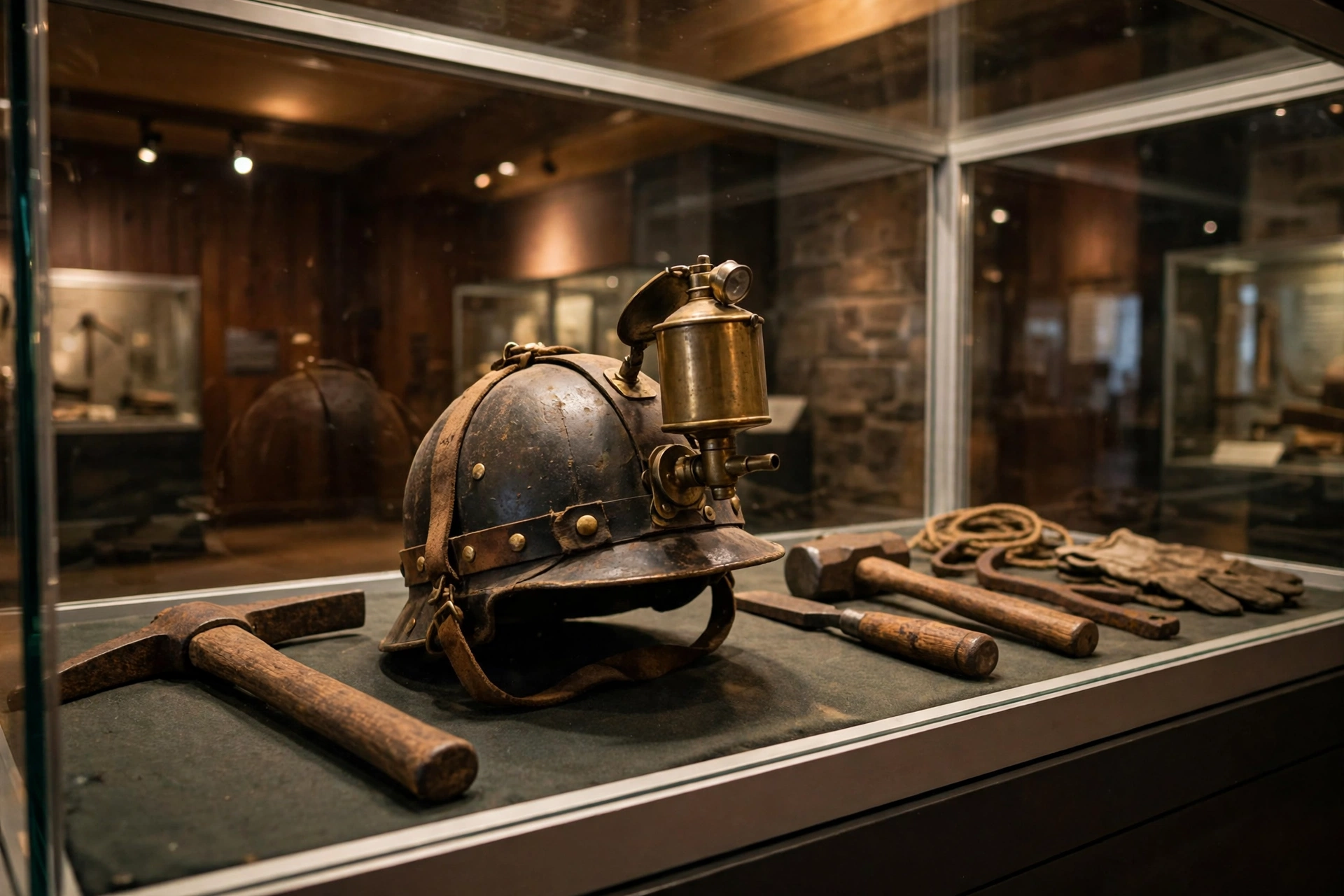
The lamp changed the miner’s helmet because it gave the cap a fixed job to do. Early miners carried candles or oil lamps in their hands, which meant one hand was always busy. The first head lamps were simple: a candle or a small oil lamp fixed to the front of a cap with a clip or a bracket. This left both hands free for digging and hauling, and it pointed the light wherever the miner looked. The cap had to be stiff enough to hold the lamp steady, and that need pushed makers towards harder materials.
The biggest change came with the carbide lamp, which became common in mines in the early 1900s. A carbide lamp burned acetylene gas made from calcium carbide and water, and it gave a much brighter light than a candle. Carbide lamps were usually worn on a bracket at the front of a cap or a hard helmet, with a water tank and a gas chamber on the miner’s belt. The bright flame was useful, but it was also a fire risk in mines where gas could be present, so flame safety lamps were used in gassy mines instead. The safety lamp, invented in the early 1800s, enclosed the flame in a mesh that let air in but kept the flame from lighting the gas around it.
How did the modern hard hat develop from mining?
The modern hard hat grew directly out of mining. In the early 1900s, a worker named Edward Bullard watched miners wearing soft caps and began to think about something stronger. He had made a protective helmet for soldiers in the First World War from steamed canvas, and after the war he adapted the idea for industry. His first hard hat, sold in 1919, was made from layers of canvas and glue, baked hard, and fitted with a suspension system inside that held the shell away from the head. That gap was the clever part: it gave the shell room to flex and spread the force of a blow before it reached the skull.
Bullard’s design was soon used on major building projects, including the Golden Gate Bridge, where workers wore hard hats to protect against falling rivets and tools. Mining companies adopted the same idea, and the miner’s helmet and the construction hard hat grew up side by side. Both used a hard outer shell and an inner cradle that kept the shell off the head. The miner’s version kept the lamp bracket at the front, while the builder’s version often did not need one.
What materials have miner’s helmets been made from?
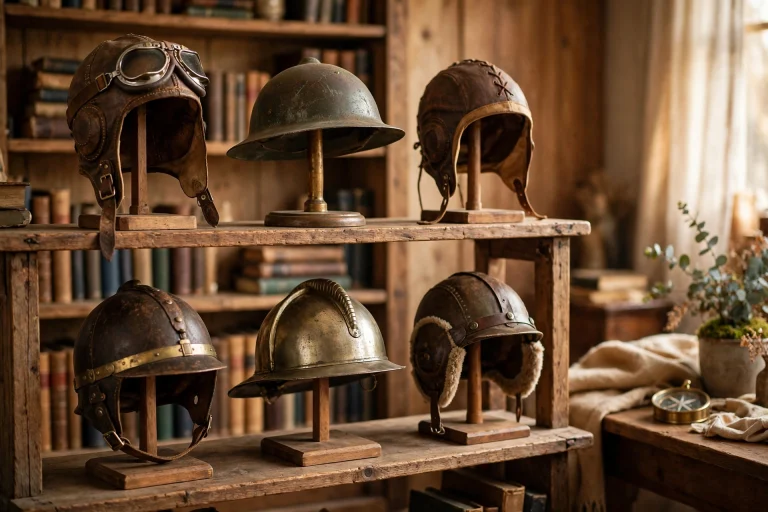
The earliest miner’s head coverings were cloth, felt, and leather, chosen because they were cheap and easy to make. Leather was the toughest of these, and a thick leather cap could last a long time in a wet mine. But leather could not stop a falling rock, and it was heavy when wet. As mines became more industrial in the 1800s and early 1900s, makers began to try harder materials, including metal and stiffened canvas.
Aluminium helmets appeared in the early 1900s and were used in mines and on building sites. Aluminium was light and strong, but it conducted electricity and heat, which made it a poor choice in mines where electrical equipment was in use. Fibreglass helmets followed and were lighter and did not conduct electricity, but they could crack if they took a hard blow and were costly to make. Some modern mining helmets also use a slip layer that lets the shell move slightly in an angled impact, an idea similar to MIPS in sports helmets.
How do today’s mining helmets differ from early ones?
Today’s mining helmets differ from early ones in almost every detail, even though the shape is familiar. The shell is lighter and stronger, the suspension is more comfortable, and the lamp is a small electric light rather than a flame. Modern helmets often have slots on the sides for ear defenders or a face shield, and many have a slot for a chin strap so the helmet stays on when the wearer bends down or climbs. Ventilation holes, when they are fitted, help keep the wearer cool in hot mines, although some mining helmets have no vents because dust and water can get in through them.
Why does the miner’s helmet still matter today?
The miner’s helmet still matters because mining is still dangerous work. Roofs can fall, tools can drop from above, and miners work in low tunnels where a bump to the head is easy. A helmet does not remove those risks, but it reduces the harm when something goes wrong. It is one of the simplest and cheapest pieces of safety equipment in a mine, and it is also one of the most visible: a mine manager can see at a glance whether everyone underground is wearing one.
When was the first hard hat made?
The first modern hard hat was sold in 1919, adapted from a First World War soldier’s helmet. It was made from layers of canvas and glue, baked hard, and fitted with a suspension inside.
Why do miner’s helmets have a lamp on the front?
Miners work in the dark, and a lamp on the helmet leaves both hands free. The front bracket holds the lamp so the light points wherever the miner looks.
What is a miner’s helmet made from today?
Most modern miner’s helmets are made from tough plastics such as high-density polyethylene or ABS, with a strap suspension inside that holds the shell away from the head.

Olivia
Writer at Helmet Today, covering helmet reviews, fit and riding safety.