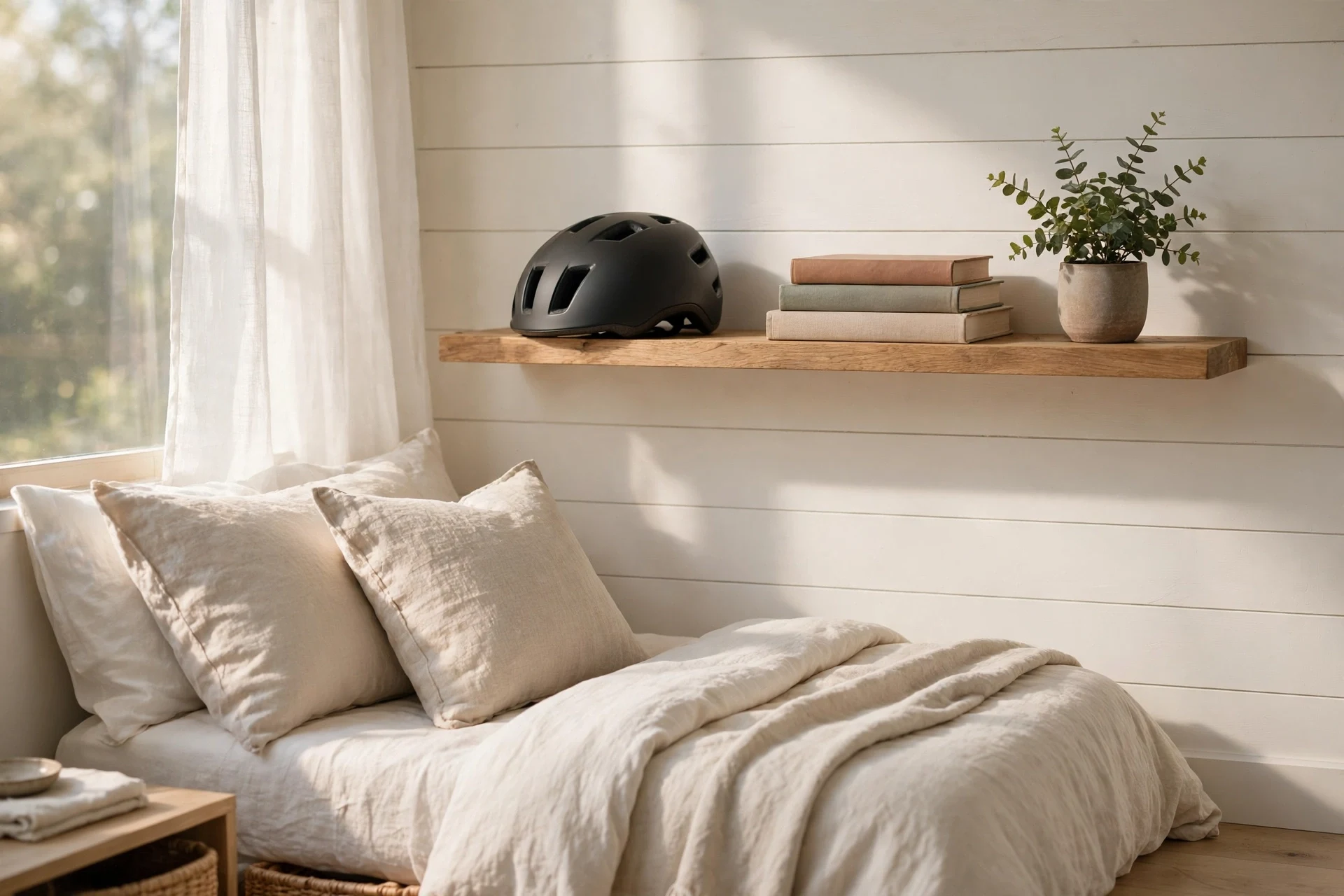
To store a helmet on a shelf, place it upright on a clean, dry shelf away from sunlight and heavy items, with the vents open so air can move through the helmet. A shelf is one of the simplest and safest places for a helmet, but it only works if the shelf is stable, the helmet sits properly, and nothing else is piled on top of it. A good shelf spot keeps the helmet clean, dry, and ready to use.
Shelves are popular because they are easy: you take the helmet off, put it on the shelf, and it stays there until you need it again. But a shelf can also be a bad home for a helmet if it is in direct sunlight, if it is cluttered with heavy boxes, or if it is so high that the helmet falls when you reach for it. A little care in choosing the shelf makes all the difference.
Which shelf is best for a helmet?
The best shelf is indoors, in a cool, dry room, away from windows and radiators. Sunlight can fade the shell and weaken the materials over time, and heat from a radiator can warp the foam liner. A shelf in a bedroom, a spare room, or a hallway with good airflow is usually a good choice.
Choose a shelf that is at a comfortable height. You should be able to lift the helmet on and off without stretching or standing on a chair. A shelf that is too high is a risk, because the helmet can slip from your hands and fall onto a hard floor.
Make sure the shelf itself is strong and firmly fixed. Helmets are not very heavy, but a shelf that sags or wobbles is a bad place for anything breakable. Check that the shelf is level, so the helmet sits flat and does not slowly slide towards the edge.
Should a helmet sit upright or upside down?
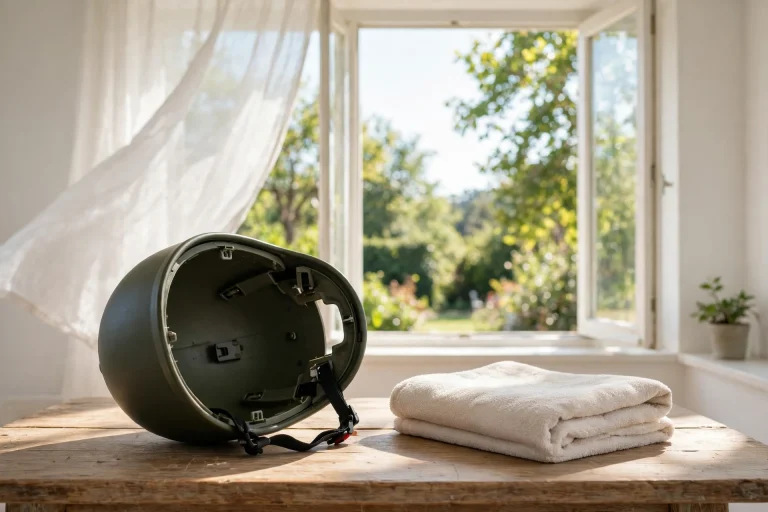
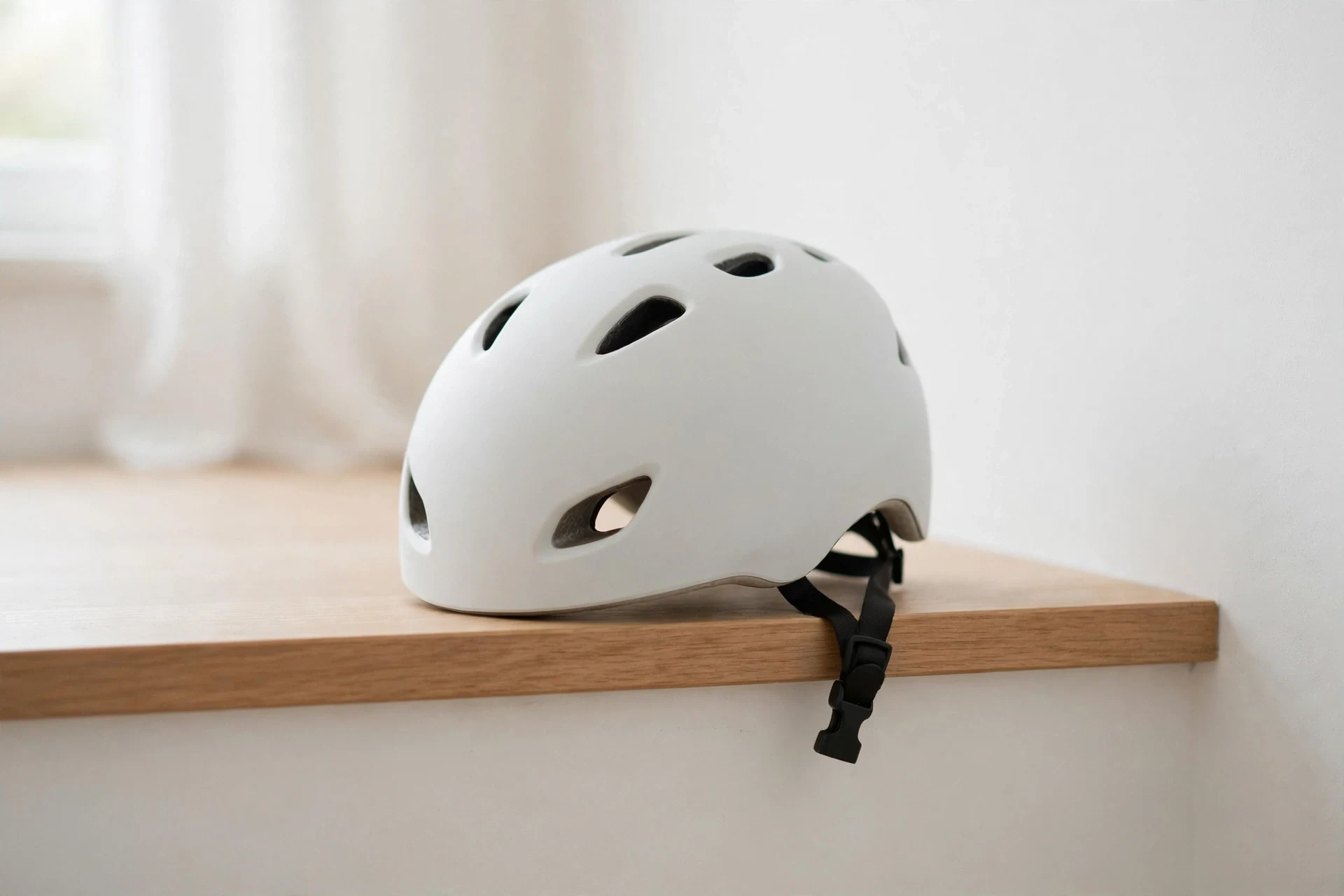
Upright is usually best. Put the helmet down so it sits on its base, with the opening facing up and the vents open. In this position the shell carries its own weight, air can move through the helmet, and any remaining moisture can dry out. The liner is not compressed, and the shape of the helmet is not stressed.
Upside down is also acceptable if the shelf is flat and clean, but it has drawbacks. The rim of the shell takes the weight, and dust can settle inside the helmet. If you do store a helmet upside down, make sure the inside is clean and dry first, and do not put anything inside it.
Do not store a helmet on its side for a long time. The shell can roll, and the weight can press on one side of the liner. If the helmet rolls off the shelf, it can crack on a hard floor, so stability matters more than the exact position.
How do you keep dust off a stored helmet?
Dust settles on any shelf, and a helmet left out for weeks can collect a layer of it. The simplest answer is a helmet bag or a clean cloth cover. A soft bag keeps dust off the shell and the liner, and it also protects the helmet from scuffs if something brushes against it.
Only use a bag once the helmet is fully dry. A damp helmet sealed in a bag can develop smells and mould, so let it air-dry after your last ride before you cover it. If you use the helmet every day, a bag may be more trouble than it is worth, and a quick wipe now and then will do instead.
Keep the shelf itself clean. Wipe the shelf when you wipe the helmet, and do not store the helmet next to dusty boxes or old clothes. A clean shelf means a clean helmet, and a clean helmet is more pleasant to wear.
What should you not stack on top of a helmet?
Do not stack anything heavy on top of a helmet. Books, boxes, tools, and bags can press on the shell and compress the liner, and a heavy item dropped onto a helmet can crack it. Give the helmet its own space on the shelf, and keep other items on a different shelf.
Do not use the helmet as a container either. It is tempting to drop gloves, keys, or a phone into a helmet on a shelf, but small hard objects can scratch the liner or dent the foam. Keep the inside of the helmet empty, and store your gloves and accessories beside it instead.
The same rule applies to hanging things from the helmet. Do not hang a bag or a coat from a helmet on a shelf, because the weight can pull it off the shelf. A helmet should sit on its own, undisturbed, until you need it.
How do you store a helmet on an open shelf?
Open shelves are common in garages, workshops, and utility rooms, and they can work well for helmets if you take care. The main risks on an open shelf are dust, sunlight, and knocks from other items, so choose a shelf away from the window and away from the workbench.
Put a non-slip mat under the helmet to stop it rolling or sliding. A small mat also protects the shell from scratches on a rough wooden or metal shelf. If the shelf is in a garage, keep the helmet away from paints, solvents, and fuel, because fumes from these can damage the shell and the foam.
If the open shelf is high, keep a small step stool nearby so you can reach the helmet safely. Never pull a helmet down by its straps from a high shelf, because it can slip and fall. Lift it with both hands and bring it down carefully.
How often should you check a helmet in storage?
Check a stored helmet every month or so, even if you are not using it. Look for dust, damp, or signs of mould, and check the shell for cracks and the straps for fraying. A helmet in storage can still be damaged by damp, heat, or pests, so a regular check catches problems early.
If you are storing a helmet for a whole season, give it a clean before you put it away. Wash the liner, wipe the shell, and let everything dry fully. Store it in a helmet bag on a clean shelf, and note the date so you know how long it has been there.
Before you use a stored helmet again, give it a quick check: look inside for insects or dust, check the straps and buckles, and make sure the liner is still firmly in place. If your helmet uses a slip layer similar to MIPS, check that it sits flat and moves freely. A helmet that has sat for months should feel fresh and fit as it did before.
Is it okay to store a helmet on a shelf in the garage?
Yes, if the shelf is clean, dry, and away from sunlight, chemicals, and heavy items. A damp or chemical-filled garage is not a good home for a helmet, so check the conditions first.
Should I keep my helmet in a bag on the shelf?
A soft helmet bag keeps dust and scuffs off, but only use it once the helmet is fully dry. A damp helmet sealed in a bag can develop smells and mould.
Can sunlight damage a helmet on a shelf?
Yes, in general terms, long exposure to direct sunlight can fade the shell and weaken the materials over time. Keep the shelf away from windows or use a cover.

Olivia
Writer at Helmet Today, covering helmet reviews, fit and riding safety.