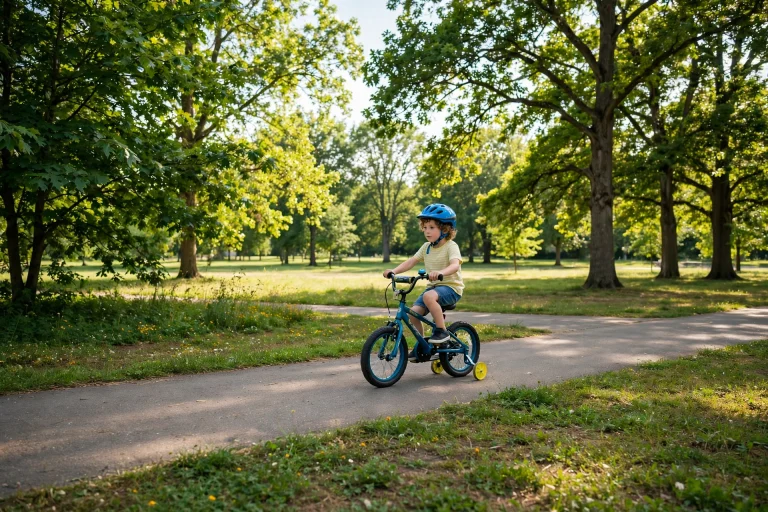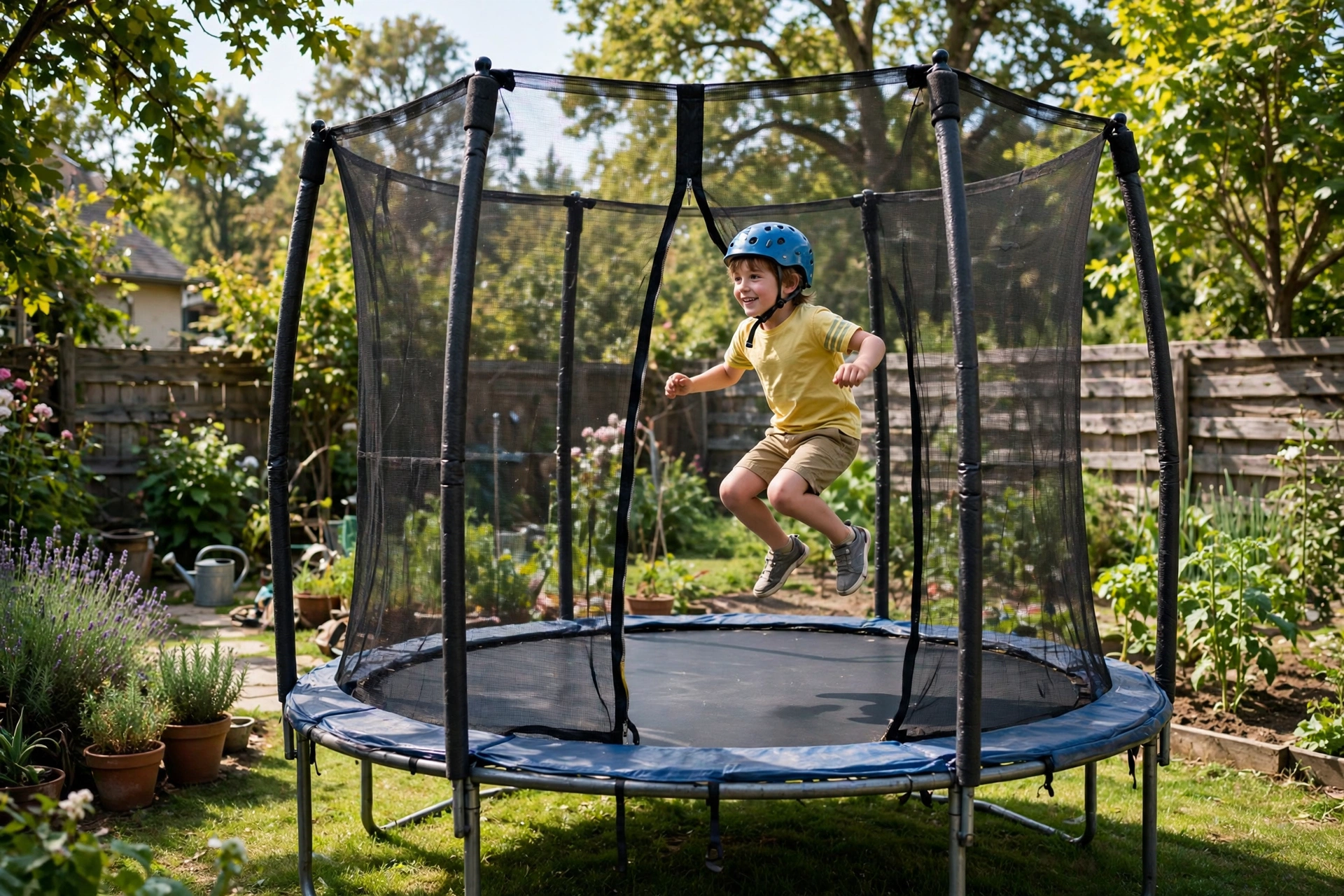
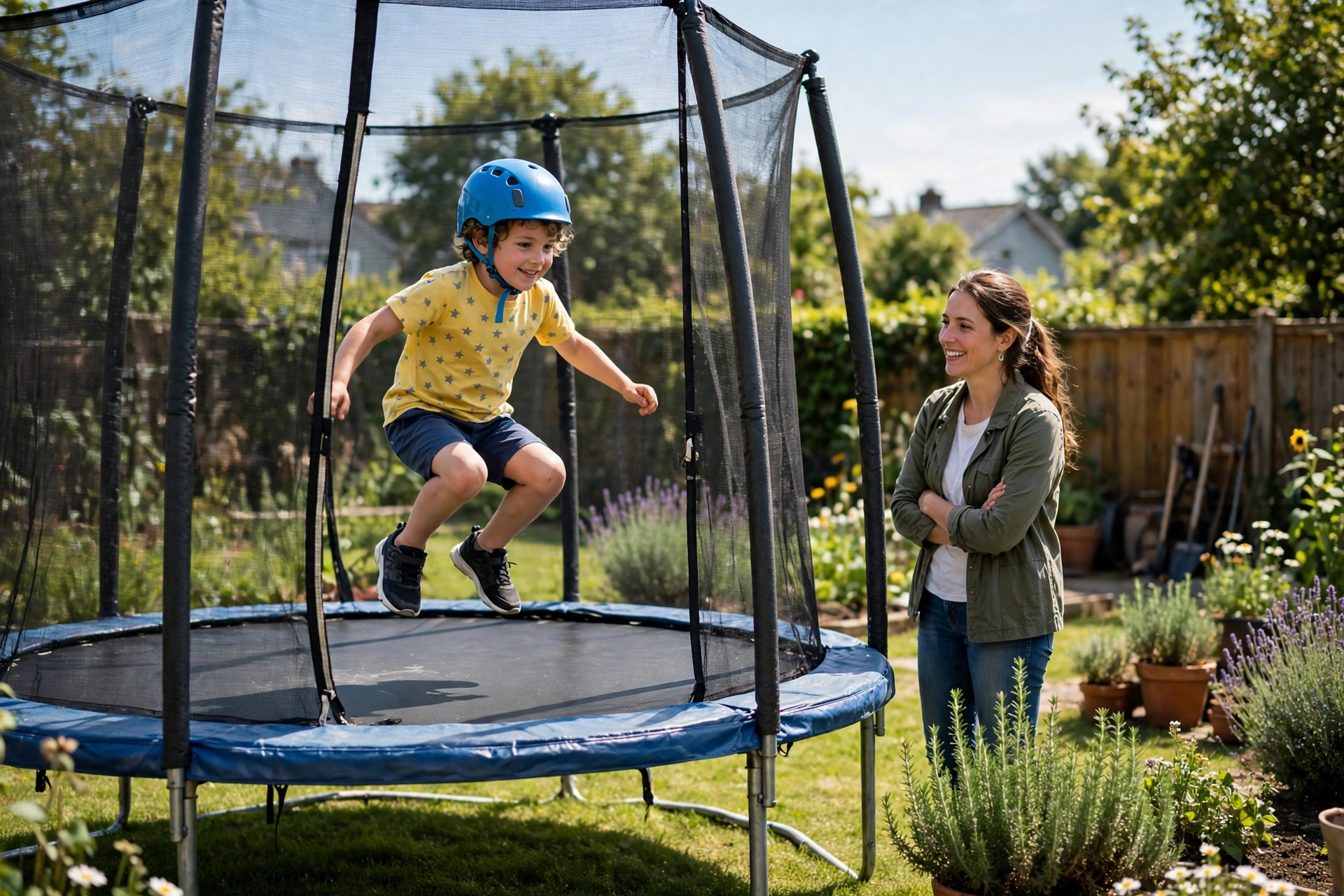
A helmet is sensible protective gear for a child’s first trampoline session, and a well-fitting kids’ helmet should be worn, with the chin strap snug and the buckle done up. Trampolining is great fun, but beginners bounce unevenly and can land awkwardly, so head protection is a sensible precaution for a first session.
A first trampoline session usually takes place in a garden or at a trampoline park, with an adult supervising. The child will be learning to bounce, land, and keep their balance, and all three take practice. A helmet protects the head if the child lands badly or bumps into the frame or another bouncer.
Why wear a helmet on a trampoline?
Trampolines are bouncy and unpredictable, especially for a beginner. A child who bounces too high, or who lands off-centre, can fall sideways or forwards, and the head can hit the trampoline mat, the springs, or the frame.
A helmet adds a layer of protection for those awkward landings. It will not stop every injury, but it reduces the risk of a head knock when a bounce goes wrong, and that is worth having for a child who is still learning how to control their bounce.
A helmet also helps the child feel more confident. A nervous beginner who knows their head is protected is more likely to relax, bounce gently, and enjoy the session, rather than tensing up and bouncing badly because they are scared of falling.
What type of helmet suits a trampoline session?
A multi-sport helmet is a good choice for a trampoline session, because it is light, comfortable, and made for activities like skating, scooting, and cycling. These helmets usually cover more of the back and sides of the head, which suits the kind of falls that happen on a trampoline.
A standard kids’ bike helmet can also work for trampolining, especially if the child already owns one that fits well. It gives good head protection, although it may cover slightly less of the back of the head than a multi-sport helmet.
Avoid helmets with a peak or a visor for trampolining, because the peak can catch or press on the face if the child lands awkwardly. A smooth, rounded helmet with no protruding parts is the best choice for bouncing.
How should a kids’ helmet fit for trampolining?
A kids’ helmet should sit level on the head, covering the forehead down to about two finger-widths above the eyebrows. It should not tilt back, which leaves the forehead exposed, or tilt forward, which blocks the child’s view.
The helmet should feel snug but not tight. When the child shakes their head gently, the helmet should stay in place, with only a small amount of movement. If it slides around easily, it is too loose, and if it leaves red marks or the child complains that it hurts, it is too tight.
Most kids’ helmets have a dial or pads inside that let you adjust the fit. Turn the dial until the helmet sits snugly, and use the pads to fill any gaps. Check the fit before the session, because bouncing can loosen a helmet that was already a little loose.
How do you adjust the straps and buckle?
The side straps should form a neat V shape just below each ear, with the straps lying flat against the child’s face. If the V sits too far forward or too far back, slide the strap adjusters until it sits just below the ear.
The chin strap should be snug enough that only one or two fingers fit between the strap and the chin. If you can fit more fingers than that, the strap is too loose, and the helmet could come off when the child bounces. If the strap is so tight that the child cannot open their mouth comfortably, loosen it a little.
Always do the buckle up before the child climbs onto the trampoline, and check that it clicks shut properly. A helmet that is not buckled is of little use in a fall, because it can fly off on impact. Make buckling up part of the routine, every time, without exception.
How do you keep a first trampoline session safe?
Only one child should bounce at a time, because two children bouncing together can collide or land on each other. Keep the session short, and let the child bounce gently at first, rather than trying high bounces or flips.
A child should be supervised at all times on a trampoline, and an adult should stay nearby during the whole session. Check that the trampoline has a safety net and padding over the springs and frame before the child starts, and clear the area around the trampoline of toys and hard objects.
Encourage the child to bounce in the centre of the mat, and to stop if they feel tired or dizzy. Short, calm sessions are better than long, wild ones, and a child who enjoys their first session is far more likely to want to bounce again.
What should a child wear for a trampoline session?
Alongside a helmet, a child should wear comfortable clothes that allow free movement, and socks with grips on the soles, which help the child keep their footing on the trampoline mat. Bare feet can slip, and ordinary socks can be slippery too, so grip socks are the safest choice.
Long sleeves and trousers give a little extra protection against scrapes, although shorts and a T-shirt are fine on a warm day. Avoid loose scarves, hoods, or dangling drawstrings, which can catch on the safety net or the springs while the child is bouncing.
Remove jewellery, watches, and anything sharp from pockets before the session starts, because these can hurt the child or damage the trampoline mat. Tie back long hair before the helmet goes on, so it does not get caught in the strap or fall across the child’s face while they bounce.
Does my child really need a helmet on a trampoline?
In general terms, yes. A helmet is sensible protective gear for a trampoline, because awkward landings and bumps can happen even on a small, gentle bounce, especially for a beginner who is still learning to control their balance.
What if my child refuses to wear a helmet?
Let them choose the colour or pattern, if you can, and explain that the helmet helps them bounce safely. Keep the session short and fun, and praise them for wearing it, rather than turning it into a battle.
Can my child wear a hat under the helmet?
It is best not to, because a hat changes the fit and can make the helmet sit too high. If it is cold, use a thin balaclava made for helmets, and check the fit again with it on. If the helmet has a MIPS liner, the same fit guidance applies.

Olivia
Writer at Helmet Today, covering helmet reviews, fit and riding safety.