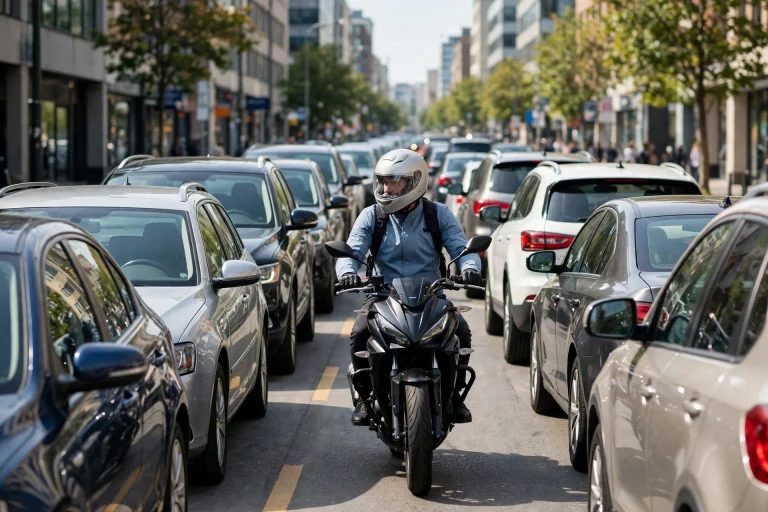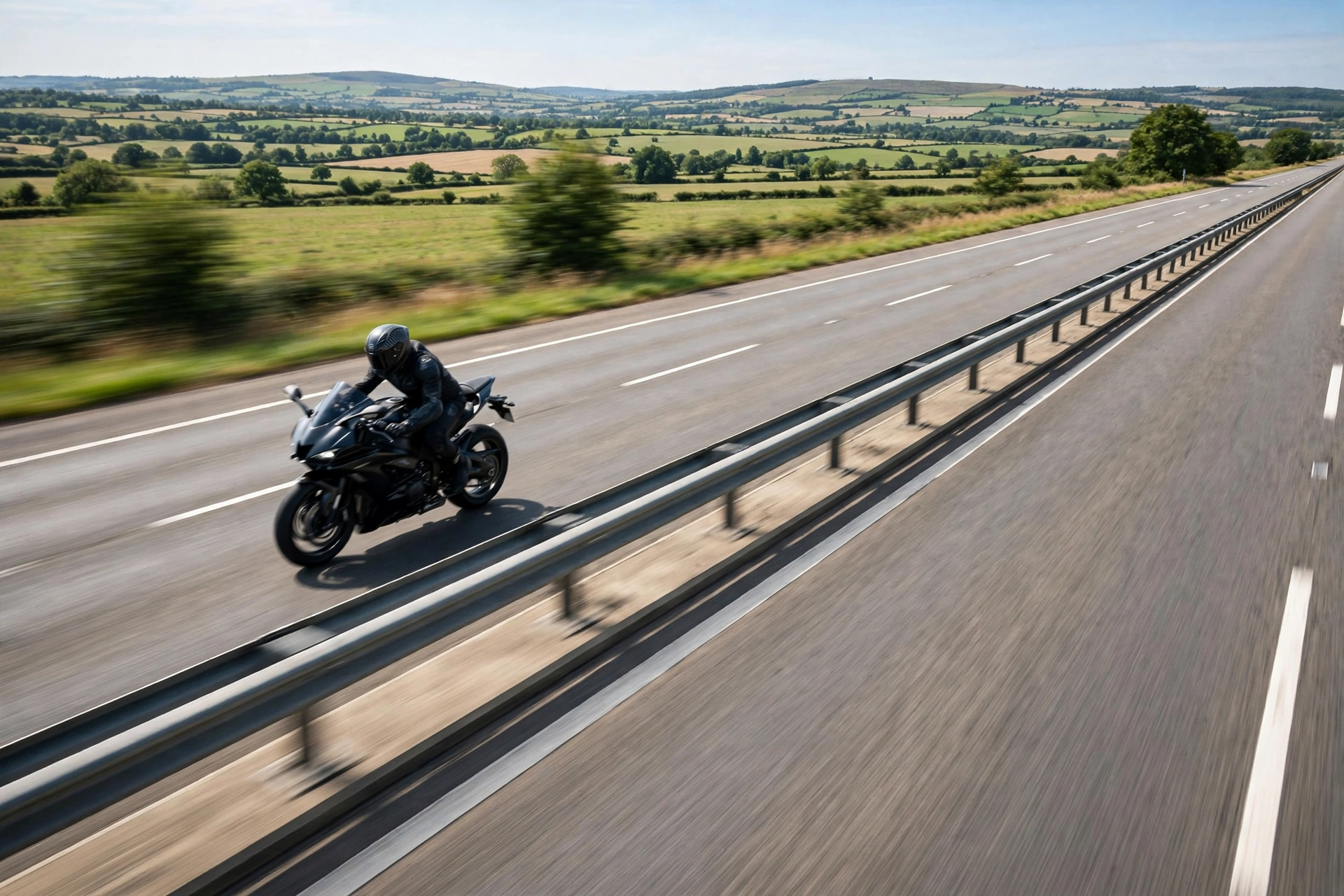
A motorcycle helmet for riding on dual carriageways is a quiet, aerodynamic full-face helmet with a clear visor and a snug fit, made to cut wind noise and buffeting at higher speeds and to stay comfortable on long, fast stretches. Dual carriageways mean steady speed, strong wind, and traffic in lanes beside you, so the helmet needs to be stable in the airflow, quiet enough to ride in for hours, and clear enough to see mirrors and traffic ahead without strain.
Dual carriageways are fast, open roads, often with two or more lanes in each direction and a central barrier. The wind at higher speeds is strong and constant, and passing lorries and coaches create gusts that buffet a helmet. A helmet that handles that airflow well makes a long dual carriageway ride far less tiring, and it helps the rider stay focused on the traffic around them.
What makes dual carriageway riding hard on a helmet?
Wind noise is the biggest issue. At higher speeds, the air rushing past the helmet creates a loud, constant noise that can tire a rider and make it hard to hear traffic. A helmet with a smooth, aerodynamic shape and a good seal around the visor and neck is quieter, and that quiet matters on a ride of an hour or more.
Buffeting is the second problem. The airflow around a lorry or a coach is disturbed, and as you pass, the wind hits the helmet in gusts that push it sideways. A helmet with a stable shape resists that buffeting, while a helmet with a tall peak or sharp edges can be pushed around. A snug fit helps too, because a loose helmet moves more in the wind.
Long exposure is the third factor. A dual carriageway ride is often a long one, and a helmet that feels fine for twenty minutes can become uncomfortable after an hour. Weight, ventilation, and pressure points all matter more on a long, fast ride than on a short trip.
How should a dual carriageway helmet fit?
The helmet should fit snug all around, with no rocking at speed. Check the fit by shaking your head gently: the helmet should move with your head, not slide around on its own. The chin strap should be snug, with one or two fingers fitting underneath, and it should hold the helmet steady when the wind pushes against it.
Pay attention to the neck roll and the seal around the bottom of the helmet. A good neck roll reduces wind noise and stops air rushing up into the helmet from below, which is a common cause of noise and cold on fast roads. A helmet with a removable chin curtain can help too, by blocking that airflow.
- The helmet sits level, with the front just above the eyebrows.
- It stays steady at speed, with no lifting or buffeting.
- The chin strap is snug and the neck roll seals well.
- You can turn your head to check mirrors without strain.

What visor works best at higher speeds?
A clear visor with an anti-fog coating is the best all-round choice for dual carriageways. It gives a true view of the road, and it works in tunnels, in shade, and at dusk, when a tinted visor would be too dark. The anti-fog coating stops the visor misting up when you slow down at a junction after a fast stretch.
A drop-down sun visor is very useful on dual carriageways. The sun is often low and ahead of you on a long, straight road, and a sun visor lets you cut the glare at the flick of a switch. A tinted visor is another option, but it is less flexible when the light changes, so a clear visor plus a sun visor is a better combination.
Make sure the visor seals well. A visor that does not seal lets wind and noise in, and at higher speeds that noise is loud and tiring. Check that the visor clicks firmly shut, and replace a worn visor seal if the helmet starts to get noisier. Some helmets also include a MIPS liner, which sits inside the shell, so check the fit and the noise level when you try the helmet on.
How do you reduce wind noise?
Choose a helmet known for being quiet. Aerodynamic shape, a good visor seal, and a snug neck roll all help, and some helmets are designed with noise reduction in mind. Trying on several helmets and checking reviews can help you find a quiet one, but the real test is a ride at speed.
Wear earplugs made for riding. They cut wind noise to a safer level without blocking out the sounds that matter, such as horns and sirens. Many riders find earplugs make a long dual carriageway ride far less tiring, and they help protect hearing over time.
How do you stay comfortable on a long fast ride?
Good ventilation helps, even at speed. Vents that can be opened and closed let you control the airflow, and a helmet with vents at the front and back keeps air moving over the head. A helmet that is too hot becomes uncomfortable quickly, and a hot rider is a tired rider.
Take breaks. A stop every hour or so lets you stretch, take the helmet off, and rest your neck. A short break also lets the helmet air out and the visor dry, so the next stretch of road is clearer and more comfortable. Plan fuel stops as rest stops, and use them well.
How do you look after a dual carriageway helmet?
Clean the helmet regularly, because fast riding coats it in insects, dust, and road grime. Wipe the shell and visor with a soft cloth and clean water, and wash the liner if it comes out, following the maker’s guidance. A clean visor is essential at speed, because a dirty visor makes it harder to see traffic ahead.
Check the visor mechanism and the vents. They should move smoothly and seal firmly, because a loose visor lets in wind and noise. If the visor seal is worn, replace it, and if the vents stick, clean them out and check they still open and close.
Store the helmet indoors, in a cool, dry place, away from direct sunlight. A helmet bag protects the shell and the visor from scratches. If the helmet has been in a crash or a hard fall, replace it, even if it looks fine, because the foam inside may be damaged.
Is a full-face helmet best for dual carriageways?
In general terms, yes. A full-face helmet is quieter, more aerodynamic, and more protective at higher speeds than an open-face helmet. A light, well-ventilated full-face helmet is a good choice for dual carriageway riding.
Why is my helmet so noisy at speed?
It is usually wind getting in through a poor visor seal, a loose neck roll, or a shape that catches the air. Check the seal, wear earplugs made for riding, and try a helmet with a smoother, more aerodynamic shape.
Should I wear earplugs on a dual carriageway?
Many riders do, because wind noise at higher speeds can be loud enough to tire you and to harm hearing over time. Choose earplugs made for riding that lower noise evenly, so you can still hear horns and sirens.

Olivia
Writer at Helmet Today, covering helmet reviews, fit and riding safety.