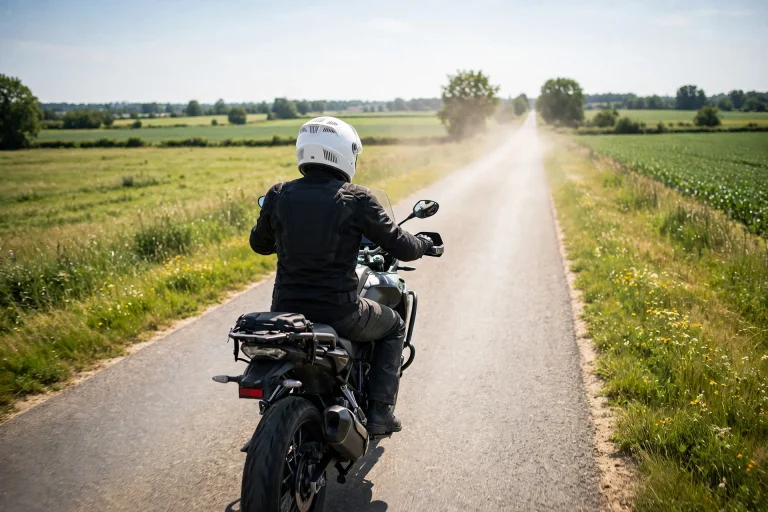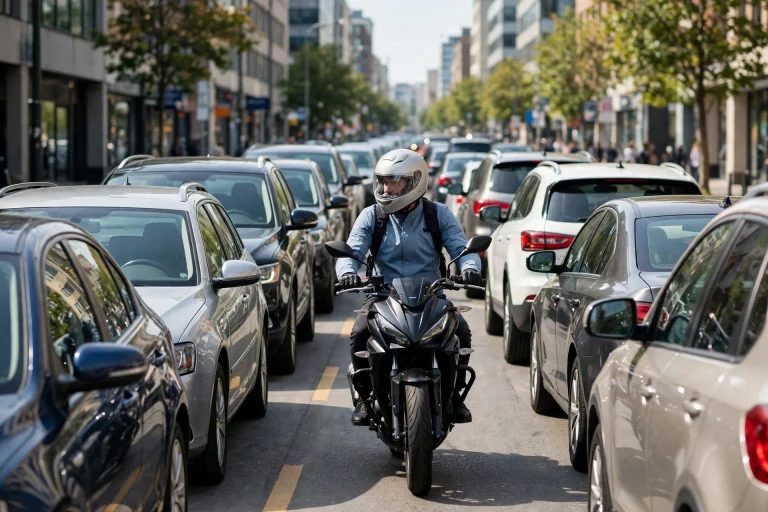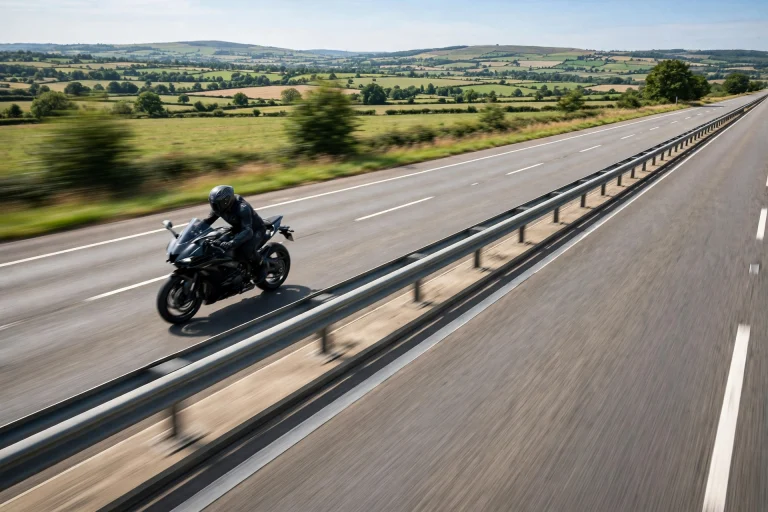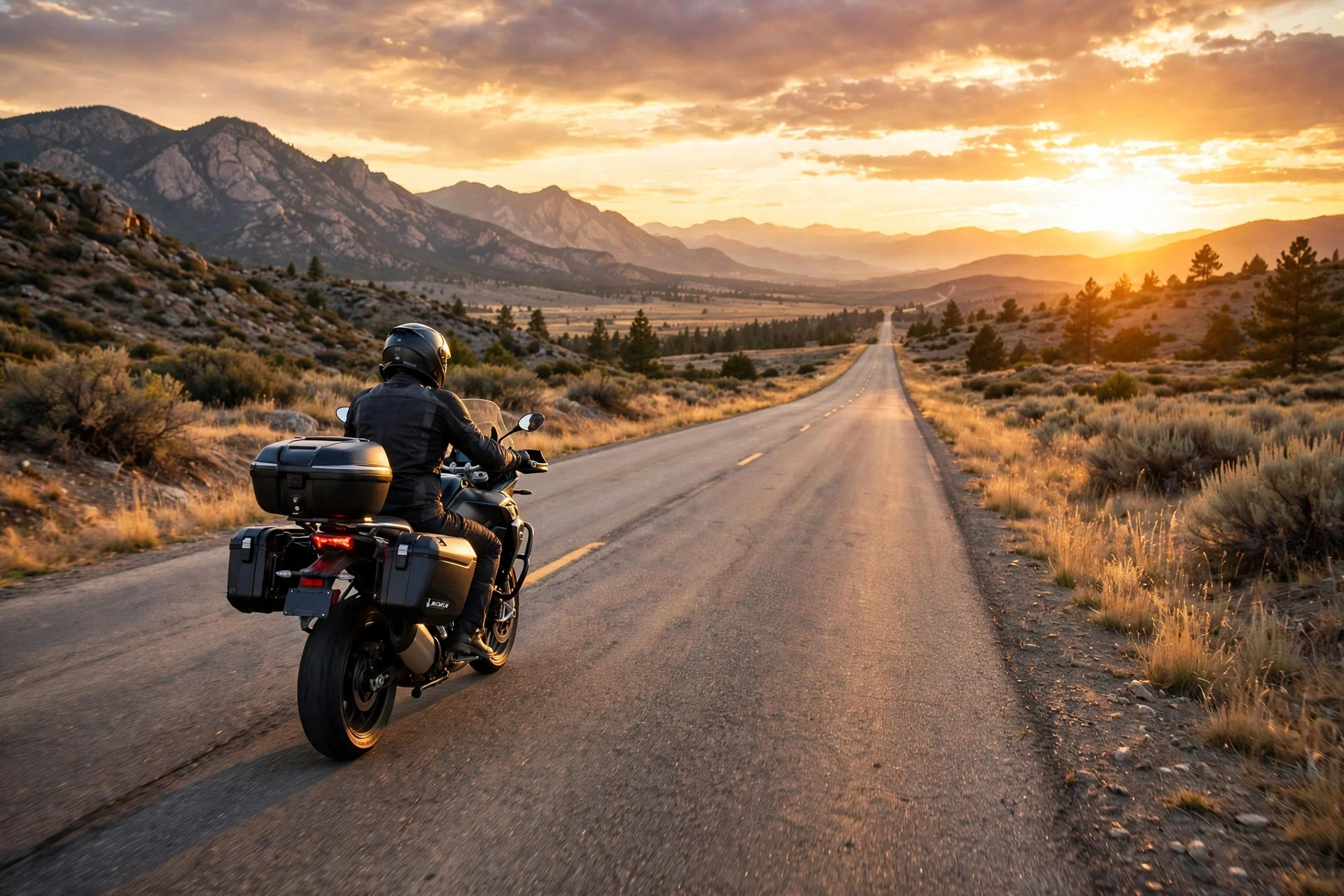
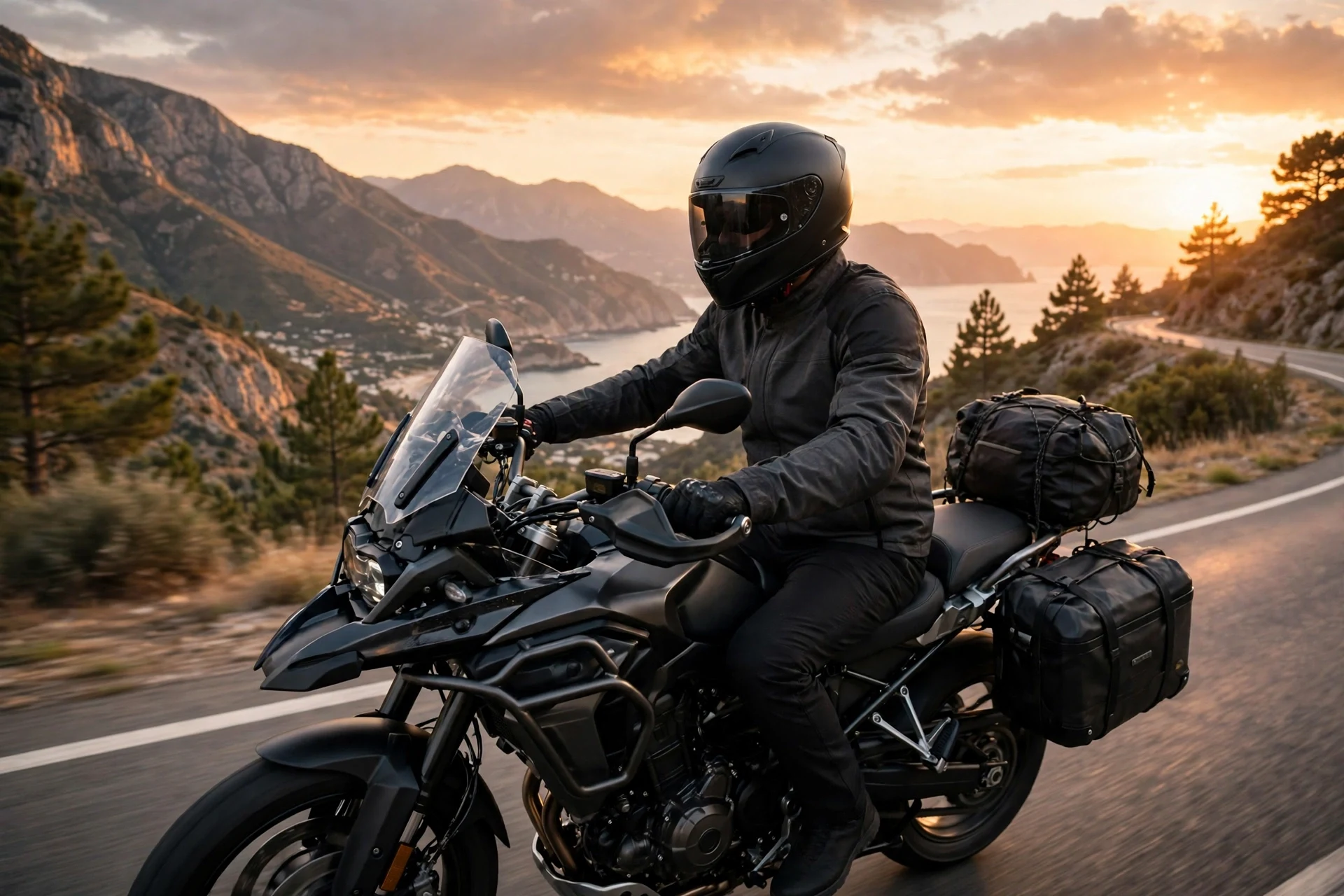
A motorcycle helmet for long-distance riding is a comfortable, quiet, well-ventilated full-face helmet that fits well for hours, protects your head on long journeys, and reduces wind noise and fatigue. Long rides ask more of a helmet than short trips do, because small problems such as pressure points, wind noise, or poor airflow become much harder to ignore after a few hours in the saddle. The right helmet for touring is therefore chosen for comfort over a whole day, not just for how it feels in the shop for five minutes.
Distance riding usually means motorways, country roads, and changing weather, often with luggage and a pillion or a riding group. A good touring helmet copes with all of that: it stays stable at speed, lets you breathe easily, keeps rain and insects out, and works well with earplugs, a communication system, or a tinted visor. In general terms, comfort, fit, ventilation, and visibility matter more than a race-bred design when the journey lasts all day.
What makes a helmet good for long-distance riding?
A good long-distance helmet starts with fit. It should feel snug all round without pressing hard on your forehead or temples, because a tight spot that feels minor at first can turn into a headache after an hour or two. The padding should sit evenly against your cheeks and the top of your head, and the helmet should not rock forward or back when you shake your head gently. Try a helmet on for at least fifteen minutes before you decide, and wear it with the glasses or balaclava you normally use.
Weight also matters on a long ride. A lighter helmet puts less strain on your neck and shoulders, especially when you are checking mirrors and junctions for hours. In general terms, a well-balanced helmet that feels light on your head is easier to live with than a heavier one, even if the difference on the scales looks small. The weight should sit evenly, not pull forward or back.
Should you choose a full-face helmet for touring?
For most long-distance riders, a full-face helmet is the natural choice. It covers your chin and jaw, shields your face from wind, rain, insects, and road debris, and usually gives the best protection against noise. On a motorway, the difference between a full-face helmet and an open-face helmet is easy to feel: less wind on your face, less noise, and less drying of your eyes over hours of riding.
A flip-up, or modular, helmet is a popular touring alternative. It gives full-face protection while riding, but the chin bar lifts so you can talk at fuel stops, drink, or cool off without taking the helmet off. That convenience is welcome on a long trip with frequent stops. Check that the chin bar locks firmly when closed, and remember that a flip-up helmet is usually a little heavier than a fixed full-face helmet of similar quality.
How important is wind noise on a long ride?
Wind noise is one of the biggest causes of tiredness on a long ride. Hours of roaring wind can leave you with a headache and ringing ears, and it makes it harder to hear traffic and your riding companions. A quiet helmet, worn with earplugs, is one of the best investments a touring rider can make. Look for a helmet with a good seal around the visor, a chin curtain, and a shape that suits the windscreen and riding position of your bike.
Noise varies a lot between helmets and bikes, and the same helmet can be quiet on one motorcycle and noisy on another. A tall screen, a low screen, or no screen at all changes the airflow around your head. If possible, test a helmet on your own bike before a long trip, and always wear earplugs on motorway stretches. Earplugs do not block out important sounds such as horns; they take the edge off the constant wind roar.
What visor setup works best for changing light?
Long rides often start in morning mist, pass through bright sunshine, and end in fading evening light, so your visor needs to cope with change. A clear visor with a built-in drop-down sun visor is a practical touring setup: you can flip the sun visor down in bright light and up again in a tunnel or at dusk without stopping. Carry a spare clear visor or a pair of clear glasses if your main visor is tinted.
An anti-fog insert or a Pinlock-style inner lens helps to keep the visor clear in cool or damp conditions. Misting is common when you slow down in traffic after a fast stretch, and a fogged visor is a real hazard. Open a vent slightly to move air across the inside of the visor, and keep the anti-fog insert clean and dry.
How should a touring helmet fit with other gear?
A touring helmet has to work with the rest of your kit. It should sit well with your jacket collar, so the collar does not push the helmet up or let cold air in at the back of your neck. A neck tube or balaclava fills the gap in cold weather and stops wind from rushing up inside the helmet. Try the helmet on with your jacket zipped up, not just with a T-shirt.
If you use a communication system, check that the helmet has space for speakers and a microphone, and that the speaker pockets do not press on your ears. Some helmets are made ready for a particular system, while others need a universal kit. Fit the system before a long trip and test it at speed, because a speaker pressing on your ear for hours is as tiring as a tight helmet.
How do you stay comfortable on a full day of riding?
Comfort on a long ride is about small habits as well as the helmet. Take regular breaks, at least every hour or two, and take the helmet off, stretch, drink water, and let your head cool down. A short break does more for your concentration than pushing on while tired. Plan your stops before you set off, so you are not tempted to skip them.
Keep the inside of the helmet clean. A removable, washable liner is a real advantage on a touring helmet, because sweat builds up over days of riding. Wash the liner and cheek pads when you get home, and air the helmet out after each day on the road. If your helmet has a MIPS liner, wipe it gently and let it dry fully before you put the comfort liner back in. A fresh liner feels better and smells better, and it keeps the padding in good shape.
Do I need a special helmet for long-distance riding?
You do not need a helmet labelled for touring, but you do need one that is comfortable for hours, quiet, and well ventilated. A good full-face or flip-up helmet that fits you well will serve most long-distance riders better than a race helmet chosen for looks alone.
Is a flip-up helmet as safe as a full-face helmet for touring?
In general terms, a good flip-up helmet worn with the chin bar locked down offers similar protection to a full-face helmet, but designs vary. Check the safety standard it meets, make sure the chin bar locks firmly, and ride with it closed.
How can I reduce wind noise on a long motorcycle ride?
Wear earplugs, choose a helmet with a good visor seal and chin curtain, and check how it works with your bike’s screen. A helmet that fits well and suits your riding position will be quieter than one that does not, whatever its price.

Olivia
Writer at Helmet Today, covering helmet reviews, fit and riding safety.