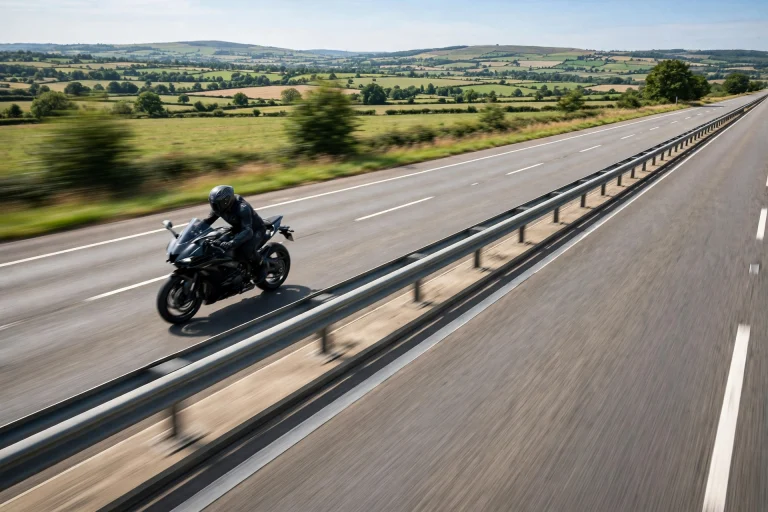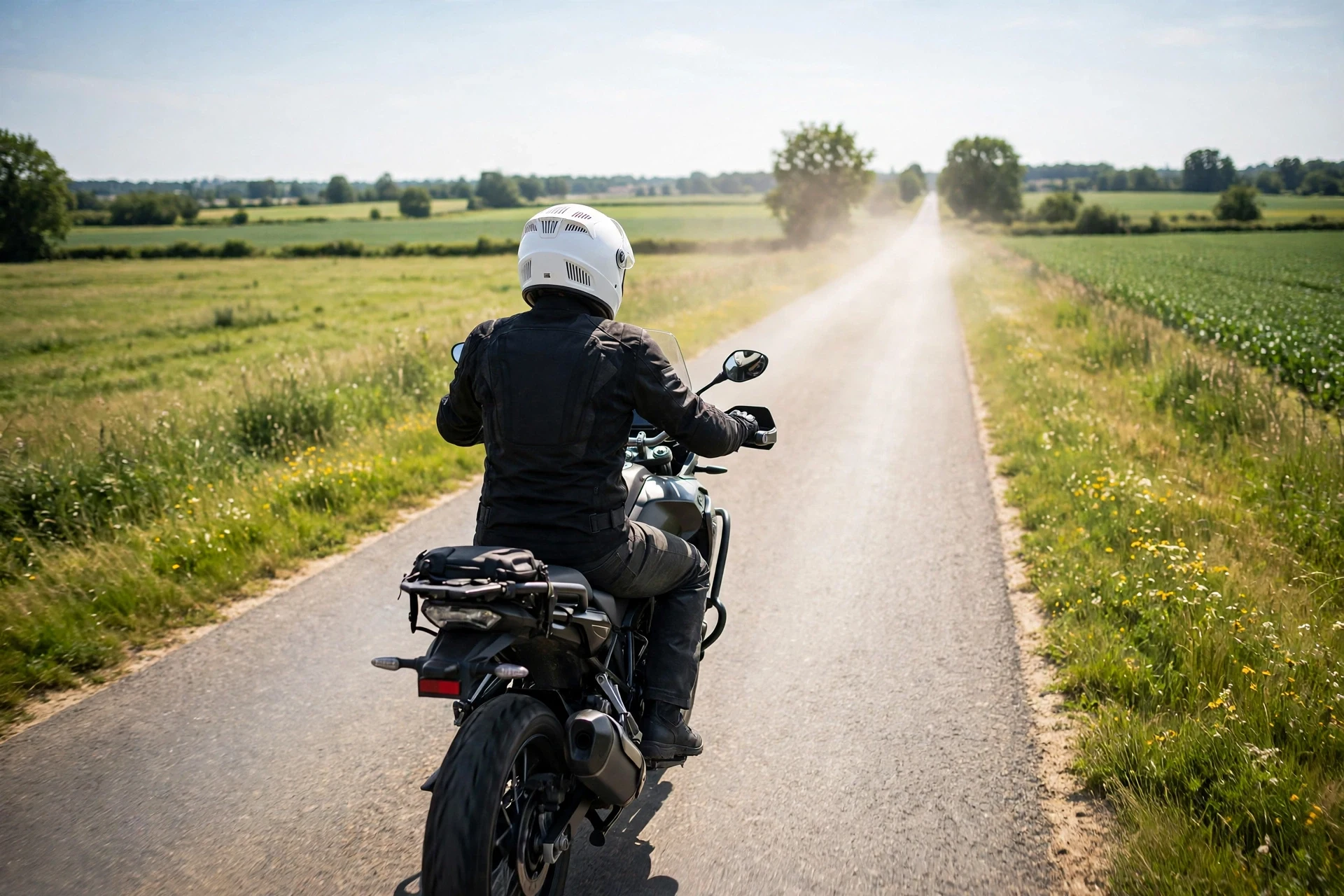
A motorcycle helmet for riding in summer heat is a light-coloured, well-ventilated full-face helmet with large adjustable vents, a moisture-wicking liner, and a clear or light-tinted visor that keeps you cool without giving up protection. Hot weather makes riding harder: sweat runs into your eyes, the liner gets damp, and a stuffy helmet can leave you tired and less able to concentrate. The right summer helmet moves air through freely, stays comfortable when wet with sweat, and shields you from strong sun.
It is tempting in a heatwave to ride with an open-face helmet or no helmet at all where the law allows, but that trade is a poor one. Your head still needs the same protection in summer as in winter, and sunburn, insects, and road debris do not take a holiday. A well-ventilated full-face helmet, worn with the right base layers and regular water breaks, is the safer and usually the more comfortable choice.
Why does heat change what you need from a helmet?
Heat changes riding in two ways: it makes you sweat, and it makes you tired. Sweat soaks the liner and pads, and if the helmet cannot dry out between rides, it starts to smell and feel damp. Tiredness creeps up faster in hot weather, because your body is working hard to stay cool while you are also watching traffic, judging gaps, and holding a riding position for hours.
A helmet traps heat around your head, so ventilation matters more in summer than in any other season. Air needs a clear path in through the front vents, over the top of your head, and out through the rear exhaust vents. If the vents are small, hard to open with gloves, or blocked by the liner, the helmet will feel like a warm box no matter how light it is.
How much ventilation do you really need?
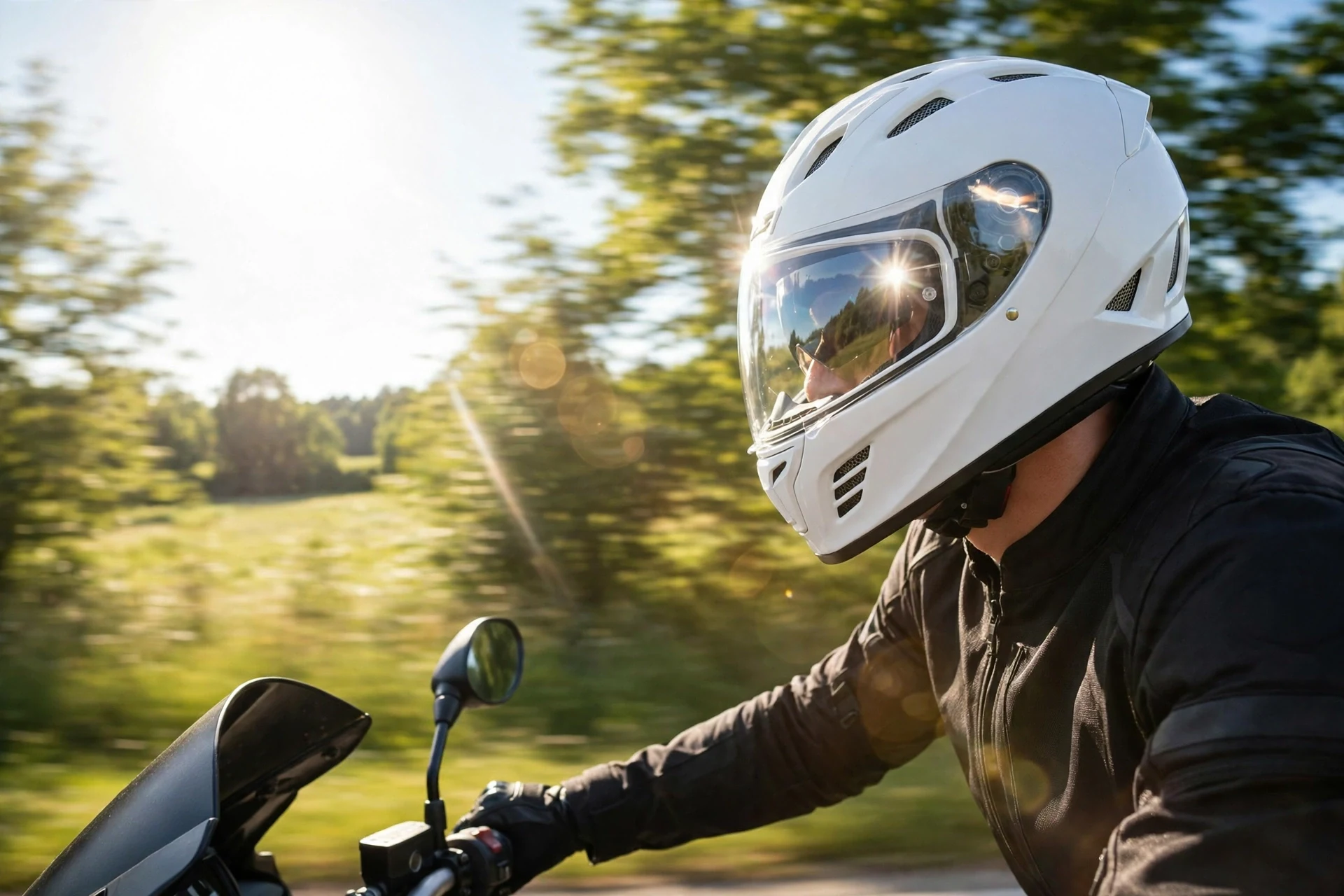
Look for a helmet with several large vents: two or three at the front and top, plus exhaust vents at the back. The vents should open and close easily with gloved hands, because you will want to shut them in a sudden shower and open them again as soon as the sun returns. A chin vent that directs air up across the inside of the visor is useful in summer, because it clears sweat mist and keeps the visor from fogging when you slow down.
Vent design matters as much as vent size. Vents that sit in the airflow of your riding position will work far better than vents hidden behind a tall screen. Sit on your own bike, in your normal riding position, and feel where the air hits the helmet. If your screen sends air over the top of your helmet, top vents may do little, and chin and side vents will do more of the work.
What liner and padding work best in hot weather?
A summer liner should wick sweat away from your skin and dry quickly. Most modern helmets use a removable liner made from a moisture-wicking fabric, and that is what you want for hot weather. The liner should be easy to take out and wash, because in summer you may need to wash it far more often than in winter. A spare liner is a useful thing to own if you ride every day in heat.
Thin, breathable cheek pads help as well. Thick pads hold heat and sweat, and they take longer to dry. Some helmets offer thinner summer pads or different pad sizes, so ask about that when you buy. The fit should still be snug, though: pads that are too thin will let the helmet move around, which is noisy and tiring.
Which visor should you use in bright sun?
A clear visor with a built-in drop-down sun visor is the most flexible summer setup. You can drop the sun visor in bright light and lift it in shade, in a tunnel, or as the sun goes down, without stopping. A dark tinted visor on its own is less flexible: it is fine in midday sun, but dangerous at dusk or in a tunnel, and you would need to carry a clear spare.
Sunglasses under a clear visor are another option, but they can press on your temples inside a snug helmet, and they fog more easily than a sun visor. If you wear glasses, a built-in sun visor is usually more comfortable. Whatever you choose, make sure you can still see clearly in shade and in low evening light.
How do you stay cool and safe on a hot ride?
Drink water often, even before you feel thirsty. Stop every hour or so in real heat, take the helmet off in the shade, and drink. Dehydration makes you slower to react and quicker to tire, and it is easy to miss while you are focused on the road. Carry water on the bike if you can, and plan stops where you can refill.
Soak your base layer or neck tube in cool water at a stop if you need to. A damp neck tube under the helmet can cool you for a while as the air flows through, although it will dry out quickly at speed. Light-coloured, breathable riding gear helps the helmet do its job: if your jacket traps heat, your head will feel hotter too.
How do you look after a helmet in summer?
Air the helmet out after every hot ride. Leave it in a ventilated spot with the vents open and the visor slightly open, so the liner can dry. Do not leave it in a hot car or in direct sunlight for hours: extreme heat can damage the liner and the shell over time, and it makes the helmet unpleasant to put on again.
Wash the liner regularly in summer, following the maker’s instructions. Most liners can be hand-washed in lukewarm water with mild soap, then air-dried away from direct heat. A clean liner dries faster, smells better, and wicks sweat better than a dirty one. If your helmet has a MIPS liner, wipe it gently and let it dry fully before you put the comfort liner back.
Check the visor seal and vents for dust and insects at the end of a summer trip. Clean the vent channels with a soft brush or a gentle blast of air, and make sure the vents still open and close freely. A vent clogged with dead insects will not move air, however large it looked in the shop.
Can I wear an open-face helmet in summer instead?
You can, but in general terms it is less protective and often no cooler at speed, because your face is exposed to hot wind, sun, insects, and debris. A well-ventilated full-face helmet usually keeps you more comfortable and better protected on a hot ride.
Does a white helmet really stay cooler than a black one?
Yes, in direct sun a light-coloured helmet absorbs less heat than a dark one, and the difference is noticeable when you are stopped. Ventilation still matters more than colour, but a light colour is a real help in summer heat.
How often should I wash my helmet liner in summer?
Wash it whenever it smells or feels damp and stiff, which for daily summer riding can mean every week or two. Air the helmet out after every ride, and keep a spare liner if you ride in heat every day.

Olivia
Writer at Helmet Today, covering helmet reviews, fit and riding safety.