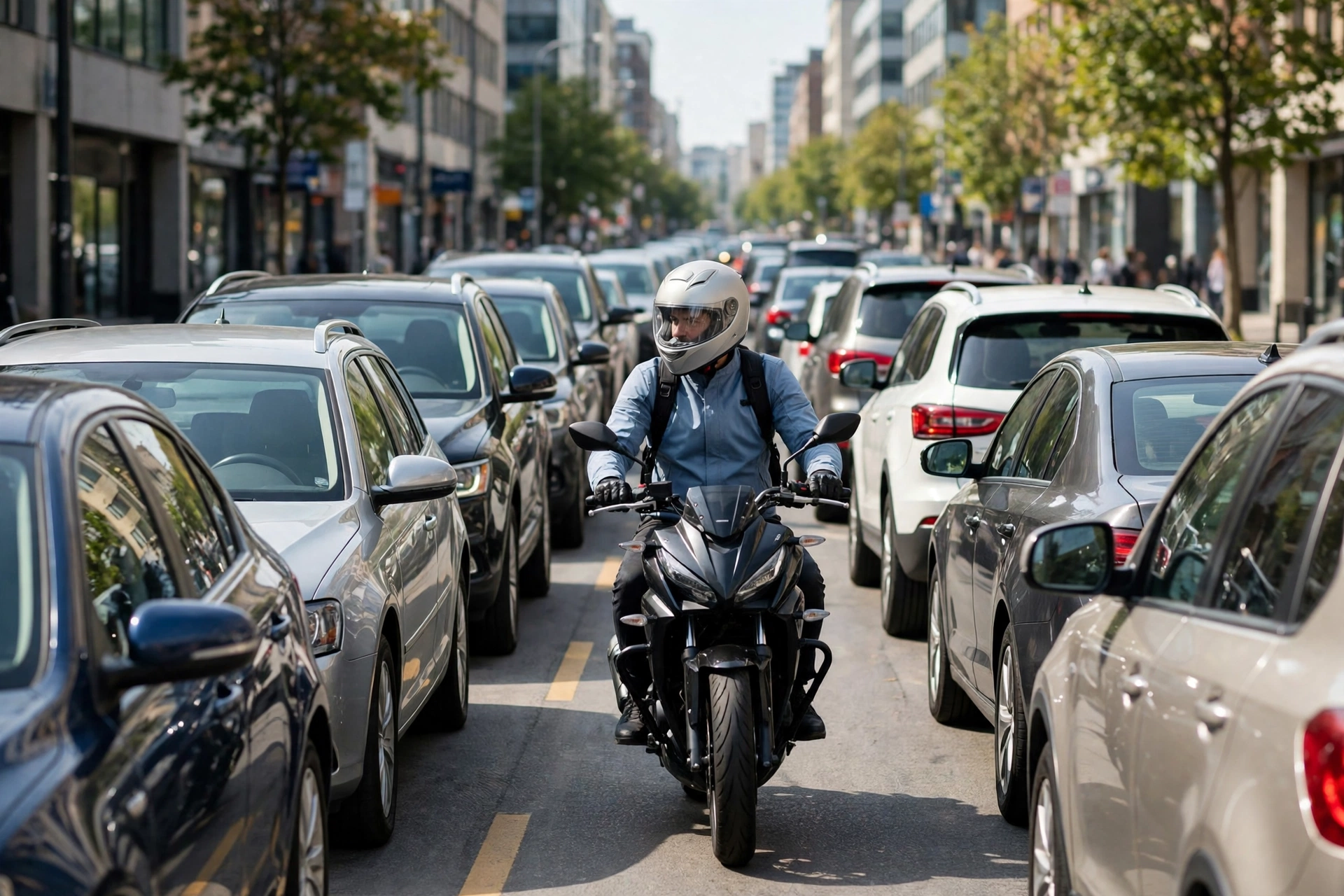
A motorcycle helmet for filtering through traffic is a light, well-ventilated helmet with a wide field of view and a clear visor, made for slow, careful movement between lanes of stationary or slow-moving vehicles. Filtering needs constant awareness: the rider must see mirrors, gaps, and drivers’ intentions, hear what is happening around them, and turn their head easily and often. A helmet that helps with all of that makes filtering safer and less tiring.
Filtering, moving through slow or stationary traffic between lanes, is a common part of riding in towns and on busy roads. It happens at low speed, but it asks a lot of the rider: gaps open and close, drivers change lanes without warning, and pedestrians cross between vehicles. A helmet that limits vision or hearing makes those hazards harder to spot, so the best filtering helmets are light, open in feel, and easy to see and hear through.
What makes filtering different for a helmet?
Speed is low, so airflow is low too. In a queue of traffic, there is little wind to cool the rider, and a helmet with poor ventilation soon feels hot and stuffy. Vents that work at low speed matter more when filtering than on the open road, because the rider spends a long time moving slowly between vehicles.
Head movement is constant. A filtering rider checks mirrors, looks over their shoulder, and scans gaps ahead, all at once. A heavy helmet makes those checks tiring, and a helmet with a narrow eye port makes it harder to spot a car pulling out or a gap closing. Light weight and a wide view are the key qualities here.
Proximity is close. When filtering, the rider passes within a metre of cars, vans, and lorries, and a wide helmet can catch a mirror or a door handle. A slim, compact helmet is easier to guide through a narrow gap, and it gives the rider more confidence in tight spaces.
How should a filtering helmet fit?
The helmet should fit snug, with no rocking, but it should not squeeze. A snug fit keeps the helmet steady when you turn your head to check a gap, and it stops the helmet sliding down over your eyes at a junction. Check the fit by shaking your head gently: the helmet should move with your head, not on its own.
Weight is very important when filtering. A light helmet is easier to wear through a long queue of traffic, and it makes the constant head checks less tiring. A heavy helmet can feel fine for a few minutes and then grow uncomfortable as the queue goes on.
- The helmet sits level, with the front just above the eyebrows.
- It stays steady when you turn your head to check gaps.
- The chin strap is snug, with one or two fingers fitting underneath.
- You can hear traffic, horns, and engines clearly with the helmet on.
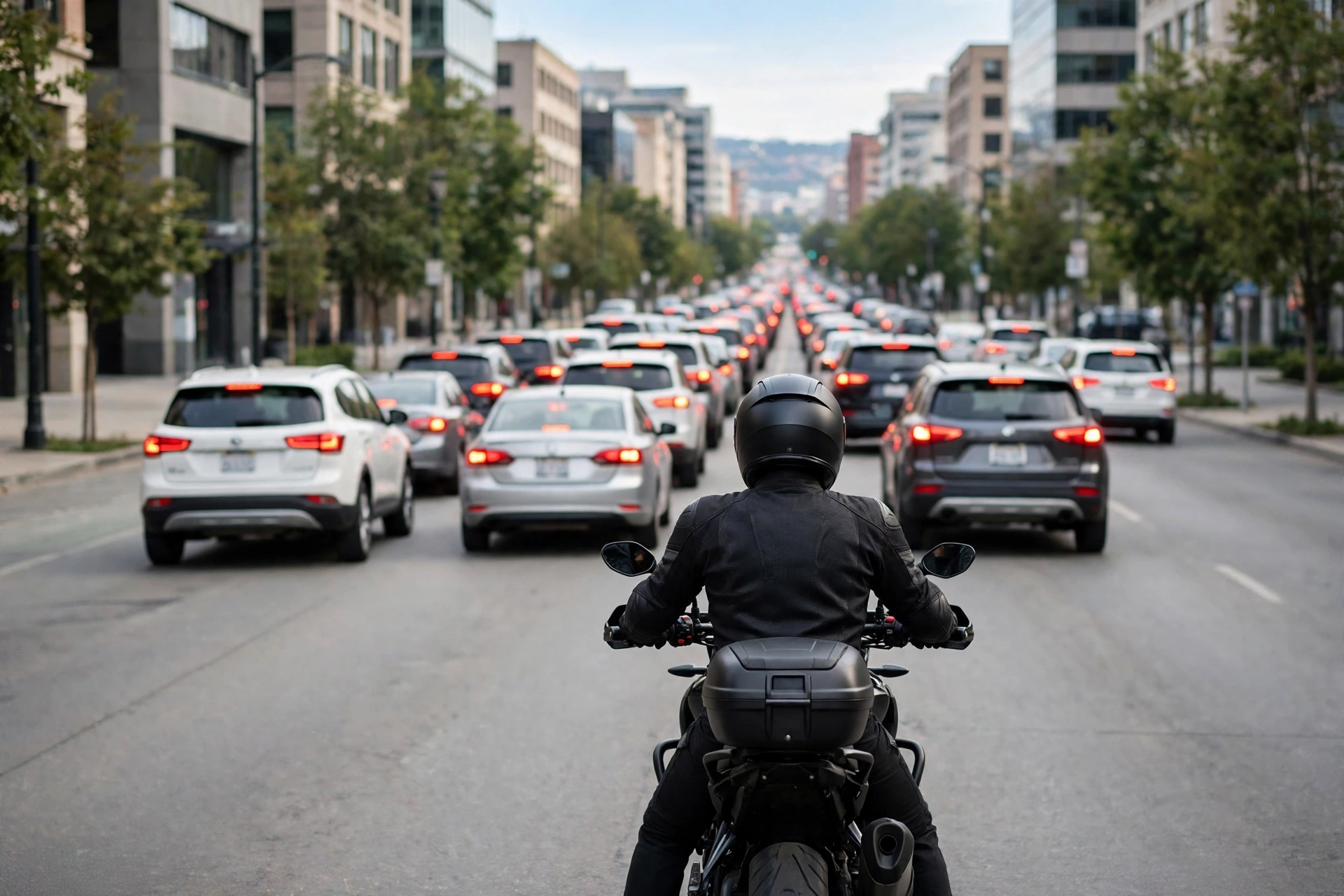
What visor works best when filtering?
A clear visor with an anti-fog coating is the best choice for filtering. It gives a true view of the road, and it works in shade, in tunnels, and at dusk, when a tinted visor would be too dark. The anti-fog coating stops the visor misting up when you stop in a queue, which is a common problem in slow traffic.
A drop-down sun visor is useful too. It lets you cut the glare from low sun between vehicles at the flick of a switch, without stopping to change visors. Sunlight in traffic often comes in sudden bursts as you move past buildings and vehicles, so a quick way to shade your eyes is a real help.
Keep the visor clean. Filtering throws up dust, exhaust grime, and insects, and a dirty visor makes it harder to spot a car pulling out or a pedestrian crossing. Wipe the visor with a soft cloth and clean water, and carry a small cloth for wiping it during a stop. Some helmets also include a MIPS liner, which sits inside the shell, so check the fit and the ventilation when you try the helmet on.
How do you stay cool in slow traffic?
Choose a helmet with large, well-placed vents that can be opened and closed easily, even with gloves on. Vents at the front and top let air in, and vents at the back let it out, and that flow works even at low speed if the vents are well designed. A helmet with a vent system that needs high speed to work will feel hot when filtering.
Open the visor a notch when you stop. Many visors have a first notch that lets a little air in without opening the visor fully, and that small gap can stop the visor fogging and keep the rider cooler. Close it again before moving off, so the visor is fully down for the ride.
How do you filter safely?
Keep your speed low and your awareness high. Filter only when traffic is slow or stationary, and at a speed that lets you stop quickly if a gap closes or a door opens. Watch for signs that a driver is about to move: a turning wheel, a mirror check, or a car edging towards a gap in the next lane.
Watch for pedestrians and cyclists. People cross between stationary vehicles, and cyclists filter too, often on the same side as you. Look ahead, listen for footsteps and voices, and be ready to stop. A helmet that lets you hear clearly helps here, because you can hear a pedestrian or a cyclist before you see them.
How do you look after a filtering helmet?
Clean the helmet regularly, because filtering coats it in dust and exhaust grime. Wipe the shell and visor with a soft cloth and clean water, and wash the liner if it comes out, following the maker’s guidance. A clean helmet feels fresher and lasts longer.
Store the helmet indoors, in a cool, dry place, away from direct sunlight. A helmet left on the bike in the sun all day can heat up, and a hot helmet is uncomfortable to put on. A helmet bag protects the shell and the visor from scratches when the helmet is not in use.
Check the helmet before each ride. Look for a visor that moves smoothly, vents that open and close, and a strap that clicks firmly. If the helmet has been in a crash or a hard fall, replace it, even if it looks fine, because the foam inside may be damaged.
Is filtering legal?
Rules about filtering vary by place, so check the rules where you ride. In general terms, filtering is a common riding practice in many areas, but it should only be done at low speed, with care, and where there is a clear gap and a good view ahead.
Why does my visor fog up when filtering?
It fogs because warm, moist air from your breath meets the cooler visor when you move slowly or stop. An anti-fog coating, a pinlock insert, or opening the visor a notch usually solves it. Keep the visor clean, because dirt makes fogging worse.
Is a full-face helmet best for filtering?
In general terms, yes. A full-face helmet protects the whole head and face, which matters when passing close to vehicles. A light, well-ventilated full-face helmet with a wide view is a good choice for filtering through traffic.

Olivia
Writer at Helmet Today, covering helmet reviews, fit and riding safety.