A bike helmet for riding in a charity ride is a comfortable, well-fitting road helmet that keeps you safe and comfortable for a long, social day in the saddle, because a charity ride is a relaxed, organised ride where people of many abilities ride together to raise money for a good cause. Charity rides are usually friendly and inclusive, with a choice of distances, feed stations, marshals, and a finish-line atmosphere. Your helmet does not need to be fast or fancy; it needs to fit well, breathe well, and let you enjoy the day without thinking about it.
Many charity riders are not regular cyclists, and some may be riding a long distance for the first time. That makes a good helmet even more important: a comfortable helmet is one you will keep on all day, while an uncomfortable one tempts you to take it off at rest stops and forget to put it back on. Choose a helmet that feels good from the first minute, and wear it on training rides before the event.
What is a charity ride?
A charity ride is an organised cycling event where riders raise money for a charity, usually by gathering sponsorship or paying an entry fee that supports the cause. Rides range from short family rides of a few miles to long day rides of a hundred miles or more, and many events offer several route options so riders can choose a distance that suits them.
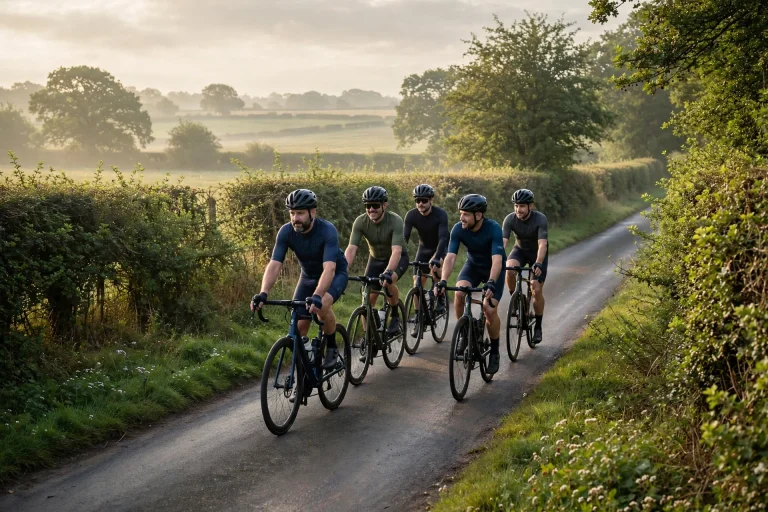
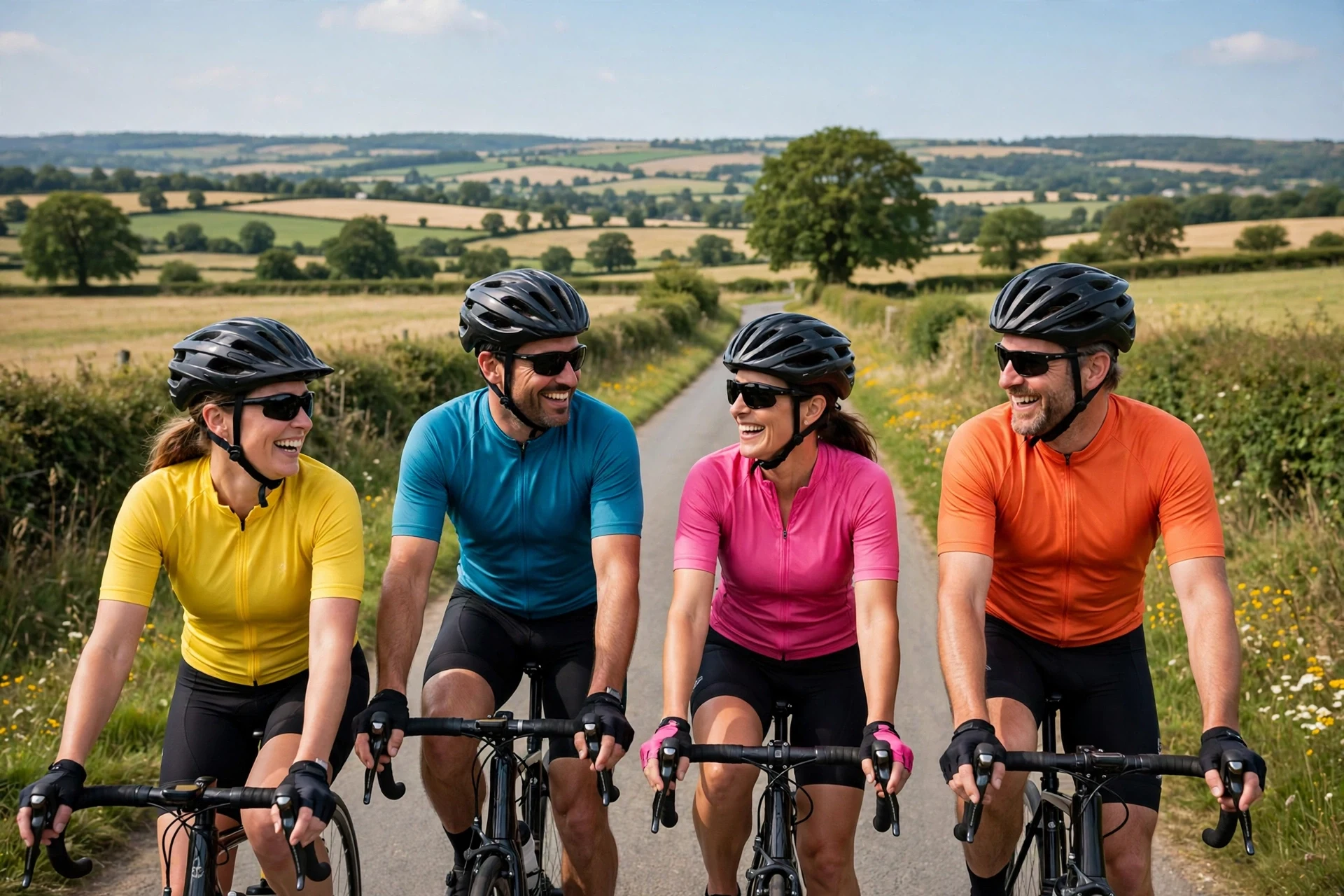
Charity rides are usually held on open roads, with a marked route, marshals at key junctions, feed stations, and mechanical support. The pace is social rather than competitive, and riders often ride in small groups, chatting as they go. The focus is on finishing, enjoying the day, and raising money, rather than on speed or racing.
What kind of helmet is best for a charity ride?
A standard road helmet is the best choice for most charity rides. It is light, well ventilated, and comfortable for hours, and it works well on flat roads, hills, and mixed surfaces. You do not need an aero helmet or a specialist design for a charity ride; comfort and fit matter far more than speed.
If you ride a hybrid or flat-bar bike, a road helmet still works well, and so does a comfortable commuter or urban helmet with a little more coverage. Choose the one that fits your head best and feels comfortable with your riding position. A helmet that suits an upright position may sit differently on a dropped-bar road bike, so try it on your own bike.
For children riding in a charity event, use a helmet made for their age and head size, with a proper fit and a working buckle they can manage. A helmet that is too big will slip and block their view, while one that is too small will hurt. Check the fit before the day, and let them wear it on practice rides so they get used to it.

How should a charity ride helmet fit?
A good fit starts with size. Measure around your head just above your eyebrows, and check the maker’s size guide. The helmet should sit level, with the front just above your eyebrows and the back covering the back of your head. It should feel snug all round, without pressing hard on any one spot.
Adjust the retention dial at the back until the helmet feels secure but not tight, and set the side straps so they meet just below your ears in a neat V shape. The chin strap should be snug enough that you can fit two fingers between the strap and your chin. Shake your head gently: the helmet should move with your head, not slide around on its own.
How do you stay comfortable on a long charity ride?
Comfort on a long charity ride is about pacing yourself and using the stops well. Ride at a pace you can hold all day, take the feed stations when you need them, and drink and eat regularly. Take the helmet off at stops, let your head cool down, and air the helmet out in the shade before you put it back on.
Ventilation helps a lot on a warm day. A helmet with large front vents and clear airflow will keep you cooler and stop sweat running into your eyes. A thin cycling cap under the helmet keeps the sun off your head through the vents and soaks up sweat, and it is easy to wash after the ride.
What about sun, rain, and visibility on a charity ride?
Charity rides are often held in spring and summer, so sun protection matters. Sunscreen on the back of your neck, your ears, and any scalp showing through the vents will stop a painful burn. A light-coloured helmet absorbs less heat than a dark one, and a cap under the helmet gives extra shade. Reapply sunscreen at feed stations on a long, sunny day.
Rain can happen on any organised ride, so be ready for it. A helmet with a peak, or a cap under the helmet, will keep rain out of your eyes, and a light waterproof jacket will keep you dry. Slow down on wet roads, especially on descents and corners, and leave more space between you and the rider ahead.
How do you prepare before the day?
Prepare your helmet and bike the week before the ride. Clean the helmet, wash the pads, check the straps and buckle, and make sure the retention dial works smoothly. Ride in the helmet at least once or twice before the event, on a ride of similar length if you can, so you know it stays comfortable for hours.
Check the event details: the start time, the route, the feed stations, and any rules about helmets and lights. If your helmet has a MIPS liner, check that it sits correctly before the ride. Plan how you will get to the start, where you will park, and what you will carry. A small saddlebag with a spare tube, a pump, and a snack is useful, and a phone in a waterproof pocket is a good idea.
Do I have to wear a helmet on a charity ride?
Most charity rides require a helmet for all riders, so check the event rules when you sign up. Even where it is not required, wearing a well-fitting helmet is the sensible choice for a long day on open roads.
Can I use my normal road helmet for a charity ride?
Yes, a normal road helmet that fits well and ventilates well is ideal for a charity ride. You do not need a special helmet, just one that stays comfortable for the distance you plan to ride.
What should children wear on a charity ride?
Children should wear a helmet made for their head size, fitted snugly and level, with the straps adjusted so it stays put. Let them practise riding in it before the event so they are comfortable wearing it all day.

Olivia
Writer at Helmet Today, covering helmet reviews, fit and riding safety.