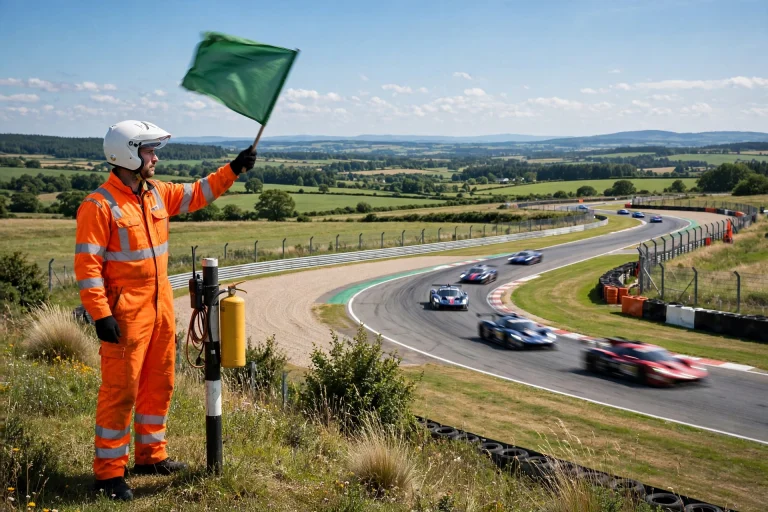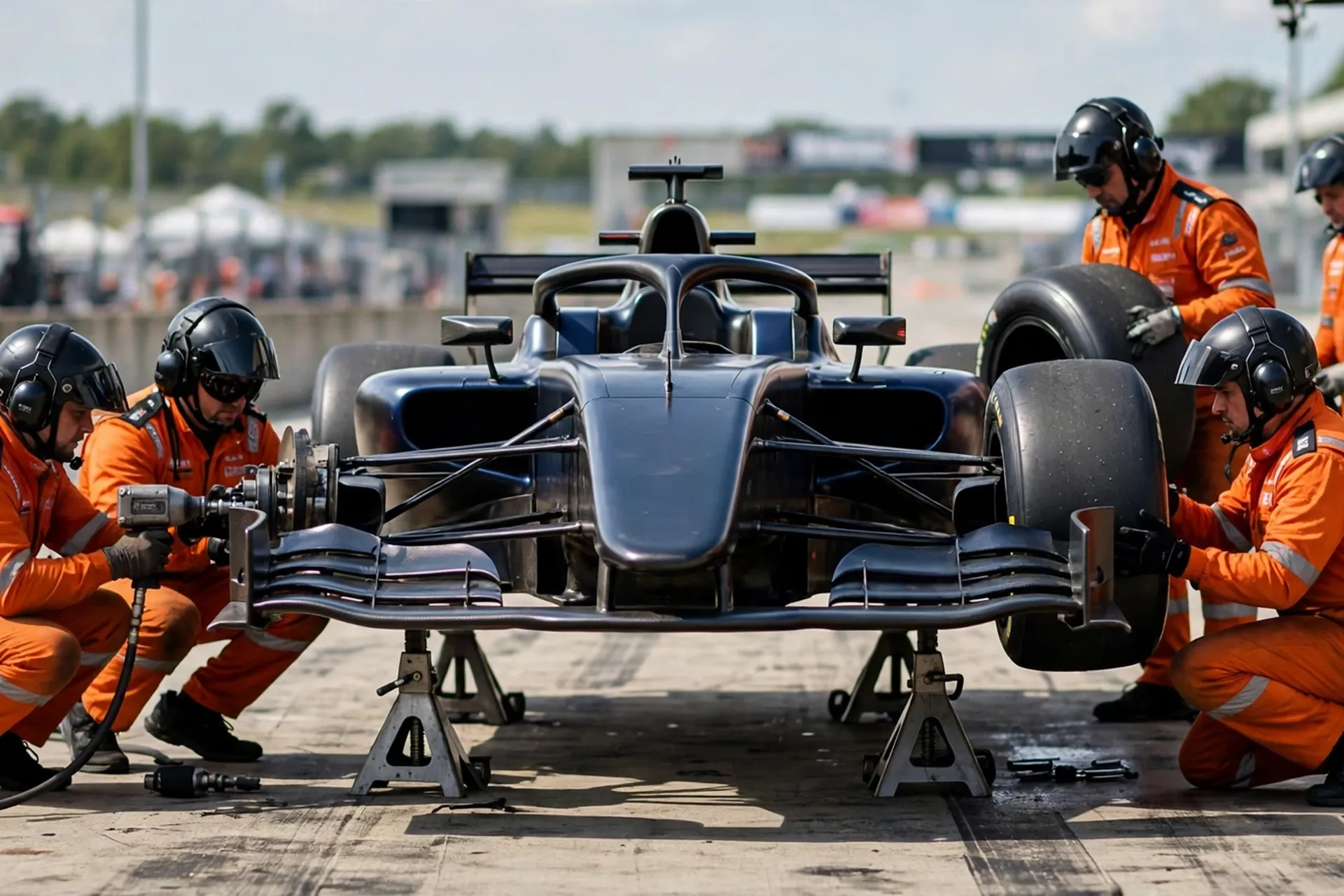
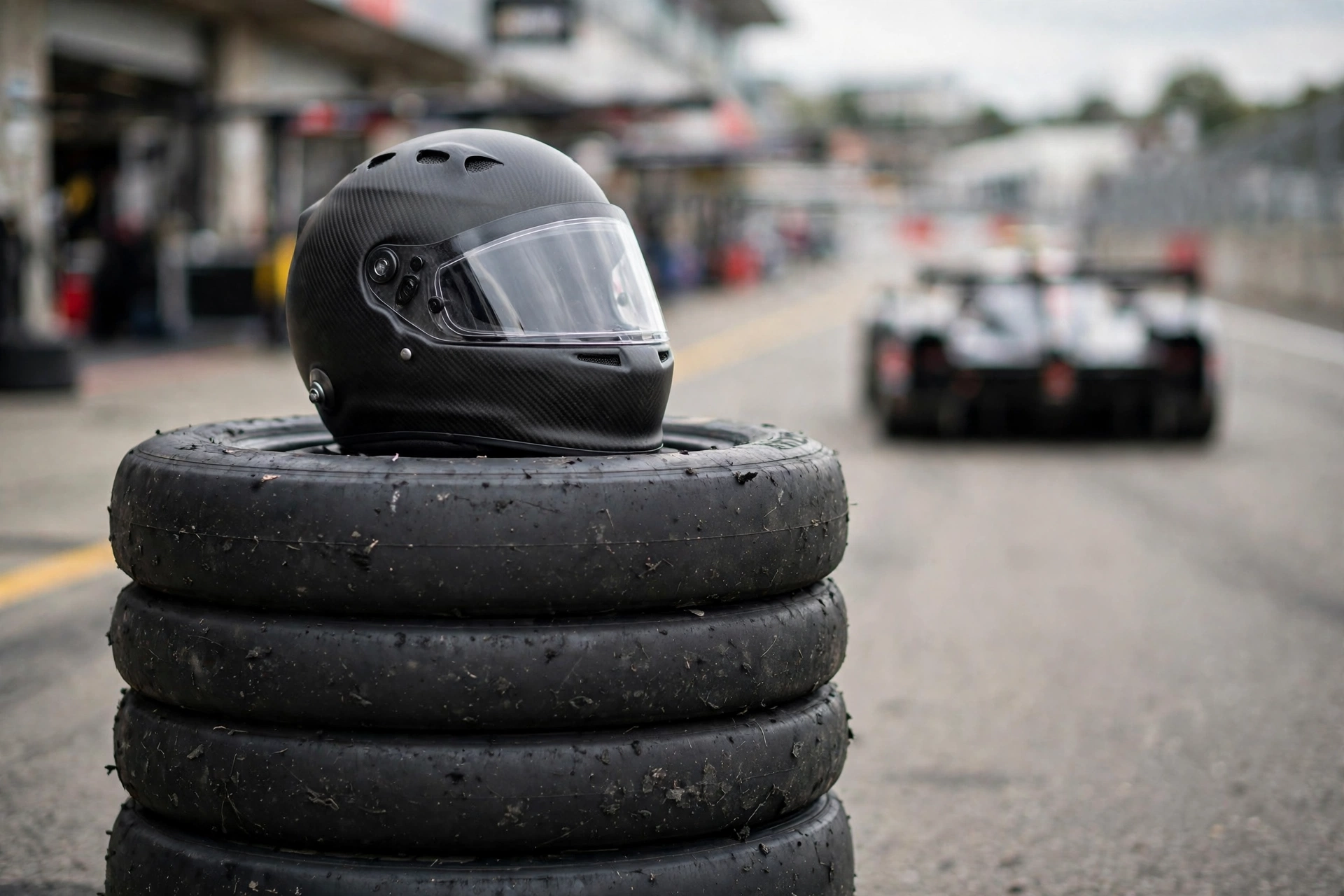
A helmet for pit crew members is a protective helmet worn by the pit crew during a race, guarding against impacts, fuel spray, and falling equipment while they work on the car. A pit stop is one of the busiest and most dangerous moments in a motor race. The crew works within centimetres of a hot, fast car, with other cars passing close by, so a helmet is a basic part of their safety kit.
During a pit stop, the crew changes tyres, refuels the car, and makes small adjustments, often in only a few seconds. The work is fast and physical, and mistakes can happen. A wheel gun can slip, a tyre can be dropped, or a car can be released too early. A helmet protects the crew member’s head from these everyday risks, and it also makes them easy to see in the crowded pit lane.
Why do pit crew members wear helmets?
Pit crew members wear helmets because the pit lane is a working area full of hazards. Cars arrive and leave at speed, and a crew member can be struck by a car or by equipment. Fuel is handled during stops, and a spill or a fire is a real risk. A helmet protects the head from a knock and from fuel spray, and it gives the wearer a little extra time to react if something goes wrong.
The helmet also protects against falling objects. Tyres, tools, and parts are lifted and carried above head height during a stop, and a dropped item can cause a serious head injury. A helmet spreads the force of the impact and reduces the risk. In a busy pit lane, the crew member’s attention is on the car, not on what is above them, so the helmet is a safety net.
What kind of helmet do pit crew members wear?
In general terms, pit crew members wear a hard hat or a motorsport helmet, depending on the rules of the series. In many top-level series, the crew wears a full-face or open-face motorsport helmet, often in the team’s colours with the crew member’s role marked on it. In other series, a hard hat similar to a construction helmet is used, in a bright colour so the crew is easy to see.
The helmet should be light and comfortable, because a pit stop is physical work and the crew may wear the helmet for the whole race. It should have good ventilation, so the crew member does not overheat, and it should fit well enough to stay in place when the wearer is bending, lifting, and moving quickly. A chin strap keeps it secure.
How should a pit crew helmet fit?
A pit crew helmet should sit level on the head, with the front edge just above the eyebrows. It should feel snug but not tight, and it should not slide forward when the wearer bends down to change a tyre. Most hard hats have an adjustment dial at the back, so the fit can be set quickly. A helmet that fits well stays put during the fast, physical work of a pit stop.
The chin strap should be fastened before the crew goes out to the pit lane. A loose helmet can be knocked off by a passing car or by a piece of equipment, which leaves the wearer unprotected. If the helmet has a visor, it should be clean and adjusted so it does not block the view of the car or the wheel nuts.
What other safety kit do pit crew members wear?
A helmet is only one part of a pit crew member’s kit. The crew wears fire-resistant overalls, which protect against fuel fires and hot parts. Gloves protect the hands from hot brakes and sharp edges, and sturdy boots protect the feet from dropped wheels and tools. The whole outfit is designed for work that is fast, hot, and close to moving machinery.
Some crew members wear a balaclava under the helmet, which gives extra fire protection for the head and neck. Ear protection is standard, either as earplugs, ear defenders, or a headset that combines hearing protection with the team radio. Eye protection may also be worn, especially by the crew member who handles fuel, because fuel spray in the eyes is a real risk.
How do pit crews practise for a pit stop?
Pit crews practise pit stops many times before a race, often using a practice car in the workshop. The crew repeats the same movements until they are fast and smooth, because a good stop can win a race and a bad stop can lose one. The helmet is worn during practice too, so the crew gets used to working in it and the fit can be checked under realistic conditions.
Practice also helps the crew learn to work together. Each member has a job, such as changing a wheel, operating the jack, or handling the fuel hose, and they must work around each other without getting in the way. The helmet can limit hearing and vision slightly, so the crew learns to use hand signals and short radio messages to stay in step.
Some helmets use a system that lets the shell move slightly in an angled impact, an idea similar to MIPS in other sports helmets. Pit crew helmets are usually simpler than racing helmets, but the principle is the same: a helmet that fits well, is in good condition, and is worn every time gives the best protection in a busy pit lane.
How should a pit crew helmet be looked after?
A pit crew helmet should be checked before every race. The shell is looked over for cracks or dents, the strap is tested, and the visor is cleaned. If the helmet has taken a knock, it should be replaced, even if the damage looks small. A helmet that has absorbed one impact may not protect the wearer a second time.
Helmets should be stored in a dry place away from direct sunlight and away from fuel and oil, which can damage the shell and the lining. A padded bag is ideal, and the helmet should not be thrown into a toolbox with heavy parts. The lining should be kept clean, and it should be washed or replaced when it becomes worn or loses its shape.
Before a race, the crew member checks the helmet once more, along with the rest of their kit. The strap is pulled tight, the visor is checked, and the fit is confirmed. This routine takes only a minute, but it means the crew can focus on the stop, knowing their helmet will do its job if it is ever needed.
Do all pit crew members wear helmets?
In general terms, yes, most major racing series require pit crew members to wear helmets whenever they work on a car in the pit lane. The exact rule depends on the series, but a helmet is standard kit for anyone working in the pit box during a race.
Can a pit crew helmet be used for other motorsport jobs?
In general terms, yes, if it meets the standard required for that role. A pit crew helmet is often similar to a marshal’s helmet, but always check the rules for the event before using a helmet in a different job.
How often should a pit crew helmet be replaced?
A pit crew helmet should be replaced after any impact, and in general terms after a few years of use, because the materials age and the lining wears. Always follow the maker’s guidance and replace a helmet sooner if it is cracked, loose, or uncomfortable.

Olivia
Writer at Helmet Today, covering helmet reviews, fit and riding safety.